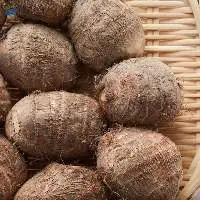
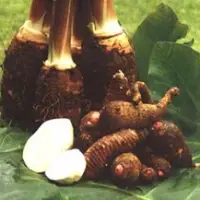
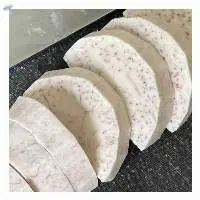
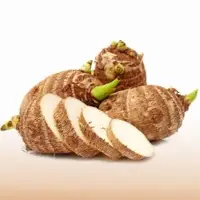
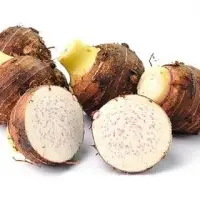
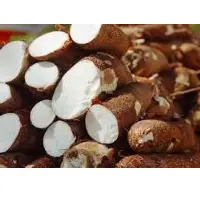
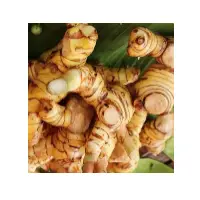
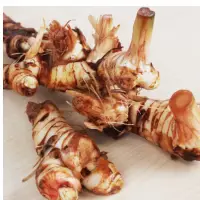
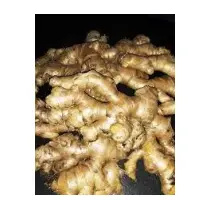
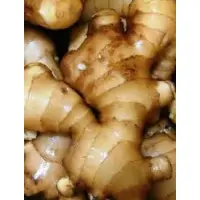
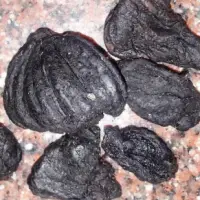
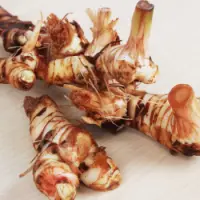
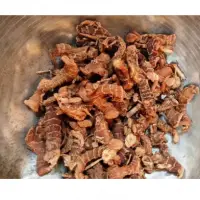
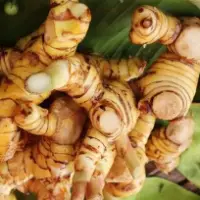
Firm, fibrous root tubers with brown hairy skin and creamy white-to-pinkish flesh. Nutty in flavor and rich in dietary fiber, thoroughly cleaned and sorted for optimal long-distance transit durability.
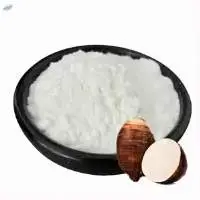
Dehydrated Colocasia Powder is a product made from the dried and powdered tubers of the Colocasia plant, also known as taro. Here are the key points about it:
Protection Process: It involves osmotic dehydration, which is a two-step process including initial water removal using a hypertonic solute solution followed by drying to reduce moisture content.
Nutrition Profile: Colocasia is rich in fiber, potassium, magnesium, vitamins C and E, and B-complex vitamins.
Flavor and Color: The powder has a mildly sweet taste and is typically white or cream with light pink flesh.
Culinary Uses: It's used in making chips, soups, curries, bhajis, and even flour. It's a staple in many tropical countries.
Natural Food Coloring: While not specifically mentioned for Colocasia, natural food colorings can be made from various fruits and vegetables, and dehydrated powders are ideal for coloring due to their concentrated pigment.
Shelf Life and Convenience: Dehydrated powders like Colocasia have a long shelf life and offer convenience in cooking, adding nutritional value and flavor without the need for fresh produce.
Health Benefits: It may improve blood sugar management, gut and heart health, aid in weight loss, and promote the growth of good bacteria.
Taro [also known as Dalo] is grown all year round in Fiji and is a stable food crop to majority of Fiji's population. It is a crop that is grown mechanically and traditionally and contains large amount of Vitamin A, /Vitamin B1, Vitamin B2 and Vitamin C. Taro is a crop planted by most families and is a source of income to most rural farmers. Taro is exported to New Zealand, Australia, Canada and other Pacific Islands.
Agricultural Marketing Authority sources it supply from the two main islands in Fiji and is touching the very untouchable areas that do not access to any market. To assist our rural farmers, AMA has a policy to pick, weighed and pay at farm gate before it is transported to the Warehouse. It is peeled, washed and is stored in blast freezers with temperatures of minus 21 degrees for 24 hours before it is packed for overseas and for our local markets
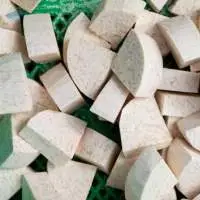
OUR PRODUCT IS OF MEDIUM SIZE FOR OPTIMAL QUALITY. The cutting is carried out mechanically, then the washing process is carefully done to avoid affecting the taste of the cooked product. The Condor Taro / Colcasia bag includes other assorted greenery carefully chopped to make cooking easier.
Wild taro root grows on the banks of streams in Thailand and is particularly popular in the north of the country. The swollen tuber is full of starch and is eaten in the same manner as potatoes.
This is primarily used in making Thai deserts.
Taro root is inedible raw and must be cooked thoroughly to leach out the calcium oxalate.
Taro has a mild nutty flavor. Taro is nutritious, and an excellent source of potassium, which is an essential mineral body for many functions.
Product Description :
Product Type : Frozen Taro
Latin name : Colocasia esculenta
Count Size (Fresh material) 200Gr-UP
Catch Area : Dong Thap, An Giang Province, Vietnam.
Product Country of Origin : Vietnam
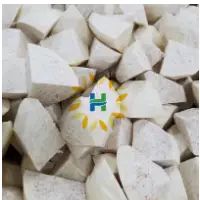
Description : Frozen Taro are made from matured taro conforming with the standard procedures & under strict hygienic conditions."
Price of product ( USD price or FOB price) :
USD 1800 - USD 2300 per MT
Product origin :
Vietnam
Key Specifications/Special Features :
Odour : Characteristics of Taro
Colour : White
Texture : Soft when defrozen
Foreign Matter (/100 g) : Absent
Minimum Order Size and Packaging details :
1kg PE/PA with rider/sticker or 10kg bulk bag. MOQ: 20'FCL
Tard Root (scientific name: Colocasia esculenta var. Esculenta) is a biennial plant in the family Araceae outlived their match without the wood. A tuberous root Inflorescences gradually reduced Big plump stalks The shorter the stem Male and female flowers on separate cores are smaller bouquet. Female flowers are green cone The male flowers are white The texture is dense tufts with seeds 1-10.
Taro is a plant that is native to Southeast Asia. Or southern Central Asia Current use of food crops grown in the islands of the West Indies posted. Africa and Asia The main islands in the Pacific. Papua New Guinea The islanders in Indonesia Taro eat several small head by the leaves and stems can be eaten when cooked. Taro flour from eating the food and snacks. Wrapped in taro leaves and steamed salted fish or other food before. Bring to boil taro in Hawaii lower profile, allowing the marinade. Food becomes a "lock"