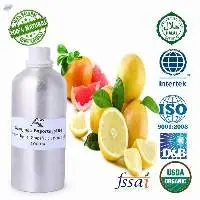
Grapefruit essential oil is an orange-tinted, citrus-scented oil frequently used in aromatherapy. Through a method known as cold-pressing, the oil is extracted from glands located in the peel of the grapefruit.
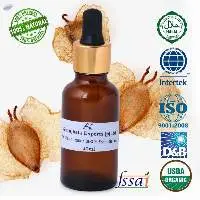
Coming from the bark of the birch tree through steam distillation, Birch essential oil has an aroma that is described as wintergreen, piney, sharp, and camphoraceous with a thin consistency. It appears as a pale yellow or colorless liquid.
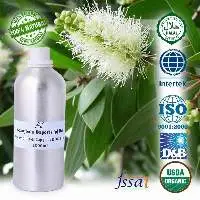
Cajeput oil is used in food and as a medicine. People use cajeput oil for colds and congestion, headaches, toothache, skin infections, pain, and other conditions, but there is no good scientific evidence to support these uses.
Cypress oil is an essential oil made from the twigs, stems, and leaves of the cypress tree. Most cypress essential oil is made from Cupressus sempervirens, also known as Mediterranean cypress. The majority of studies focus on essential oil made from this particular tree.
Shea butter fatty acid profiles
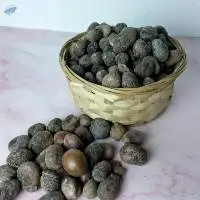
Shea butter is composed of five principal fatty acids: palmitic, stearic, oleic, linoleic, and arachidic (see Table below). About 85 to 90% of the fatty acid composition is stearic and oleic acids. The relative proportion of these two fatty acids affects shea butter consistency. The stearic acid gives it a solid consistency, while the oleic acid influences how soft or hard the shea butter is, depending on ambient temperature.
The proportions of stearic and oleic acids in the shea kernels and butter differ across the distribution range of the species. Ugandan shea butter has consistently high oleic acid content, and is liquid at warm ambient temperatures. It fractionizes into liquid and solid phases, and is the source of liquid shea oil. The fatty acid proportion of West African shea butter is much more variable than Ugandan shea butter, with an oleic content of 37 to 55%. Variability can be high even locally, and a tree that produces hard butter can grow with one that produces soft butter.
Nuts are gathered from a wide area for local production, so shea butter consistency is determined by the average fatty acid profile of the population. Within West Africa, shea butter from the Mossi Plateau region of Burkina Faso has a higher average stearic acid content, and so is usually harder than shea butter from other West African regions.[6]
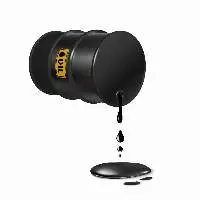
Crude oil is a naturally occurring, unrefined petroleum product that is found in the earth's crust. It is a complex mixture of hydrocarbons that varies in color from yellow to black and is used to produce a wide range of products, including gasoline, diesel fuel, jet fuel, and plastics. Crude oil is one of the most valuable commodities in the world, and its import and export are essential for many businesses to operate.
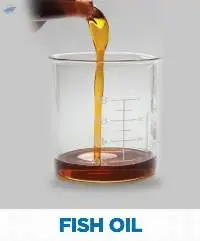
Premium Omani Fish Oil -Pure Omega-3 from the Arabian Sea
Sourced from the pristine waters off the coast of Oman, this high-quality Fish Oil is rich in essential Omega-3 fatty acids (EPA & DHA) that support heart, brain, joint, and overall health. Made from wild-caught fish and processed under strict quality standards, Omani Fish Oil reflects the purity and natural bounty of the Arabian Sea.
-Rich in Omega-3 (EPA & DHA)
-Supports heart, brain, and joint health
-Sustainably harvested from Omani waters
-Molecularly distilled for purity
-No artificial additives or aftertaste
Naturally pure. Responsibly sourced. Proudly from Oman.
Key Specifications/Special Features - "Saponification 189-195 mg KOH/g oil
Iodine value 124 - 139 g/100g oil
Unsaponifiable matter 1.5% maximum
Refractive index (ND 40oC) 1.466 - 1.470
Relative density (20 oC /water at 20 C) 0.919 - 0.925
Vitamin A 24000 - 36000 IU per kg oil
Vitamin D 2400 - 3600 IU per kg oil
Free Fatty Acid 01 015 max
Peroxide Value 10 20 meqkg max
Color Lovibond 120 150 Yellow 15 20 Red
Iodine Value Wijs 100 122
Moisture 005 max
AOM 20 hrs min
Cold Test 55 12 hrs min
Refractive Index 40oC 1460 1467
Specific Gravity 25oC 0914 0920
Saponification Value 182 193
Smoke Point 460 530oF
Flash Point 610 640oF
Fire Point 670 690oF
Fatty Acid Properties
product Name-Peanut Oil
Advantage-It is made by NON-GMO peanut and certificate
Color-Bright Golden Yellow Color
Flavor-Tastes Stronger, Delicious and Peanut Aroma.
Main Ingredients-Peanut
Allergen-Peanut
Nutrition-Energy: 3700kJ, Protein: 0g Carbohydrate: 0g Sodium: 0mg
Serving Suggestion-Mainly used for all types of meats, vegetable and noodles.
Shelf Life-24 months
Storage-Close the lid tightly and keep refrigerated after use
Certificate-HALAL, ISO, FDA, FDA
RBD CP10 Specs
FREE FATTY ACID AS PALMITIC
010 MAX
MOISTURE IMPURITIES
010 MAX
IODINE VALUE WIJS METHOD
560 MIN
MELTING POINT C
24 Degree C MAX
CLOUD POINT
100 MAX
COLOUR 5 LOVIBOND CELL
30 RED MAX
RBD CP8 Specs
FREE FATTY ACID AS PALMITIC
010 MAX
MOISTURE IMPURITIES
010 MAX
IODINE VALUE WIJS METHOD
560 MIN
MELTING POINT C
24 Degree C MAX
CLOUD POINT
80 MAX
COLOUR 5 LOVIBOND CELL 30 RED MAX
Used oil, also known as waste lubricating oil or spent oil, is petroleum-based oil that has been used in engines, machinery, or industrial equipment and has lost its original performance properties due to thermal breakdown, contamination, and oxidation.
It typically contains degraded hydrocarbons along with impurities such as water, metal particles, carbon residues, and other contaminants.
After collection, used oil can be reprocessed through refining or recycling systems or utilized as feedstock for industrial fuel applications, depending on quality and regulatory compliance.
Specifications :
Product Name : Used Oil (Waste Lubricating Oil / Spent Oil)
Appearance : Dark brown to black viscous liquid
Odor : Strong petroleum / burnt oil smell
Density @ : 15 C 0.85 - 1.05 g/cm
Viscosity : Highly variable (depends on source oil and usage)
Water Content : 1% - 10% (may vary significantly)
Sediment / Sludge : Present (may range from trace to high levels)
Flash Point : Typically 60c (can vary widely)
Sulphur Content : Variable (generally 0.5% - 3%+)
Ash Content : Higher than fresh oil due to contaminants
Storage : Stored in sealed tanks/drums; avoid leakage and contamination
Classification : Hazardous waste / recyclable industrial material
Sulphur Content : ~0.5% - 3%+