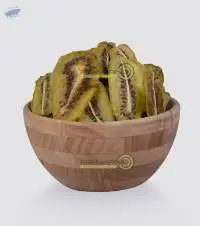
Dried kiwi is completely peeled and only the flesh of the fruit is included in the drying process. This product is packaged wholesale in 5-layer white cartons for food items. Products are produced in a completely hygienic environment and semi-automatically. The quality control unit constantly monitors how the peeled fruits are dried.
Kiwi is very sensitive and you can not store it for a long time. Fresh kiwi is not available on all days of the year. Wholesale buyers buy kiwi orchard products, And transports them to the cold stores for storage. This operation increases costs, while it is always possible to lose part of the fruit due to rot and fruit fermentation. Dried kiwi products can be stored for a long time.
PACKAGING
1kg dried kiwi sealed in clear PP plastic bags. These bags are packed in clean and strong 5-layer cardboard cartoon.
The dimension of the cartoon is 40 * 30 * 30 cm3. Inside each cartoon is 10 packs of one kilogram of dried kiwi.
56 cartoons hermetically sealed or folded and sewn; on pallets.
Marked cartoons according to Iranian standard requirements and customer's requirements.
Retail Packaging options: Kraft Stand pouches, Aluminum Foil Zip Lock, etc.
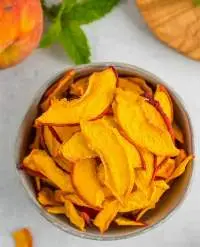
Dried Peaches: A Sweet and Nutritious Snack
If you are looking for a snack that's not only delicious but also packed with nutritional goodness, look no further than dried peaches. These sweet treats have been capturing the hearts and taste buds of food enthusiasts worldwide.
Antioxidants play a crucial role in neutralizing harmful free radicals in the body. Dried peaches are rich in antioxidants, such as phenolic compounds, which help protect cells from oxidative stress. Including these antioxidant-packed snacks in your diet can support overall well-being.
Peaches can be dried using various methods, such as sun drying, air drying, and using a food dehydrator. Each method offers a unique flavor profile and texture, allowing you to choose the one that best suits your taste.
To ensure the longevity of dried peaches, proper storage is essential. Seal them in airtight containers to keep moisture out and maintain their crispness. Store them in a cool, dark place away from sunlight and heat.
PACKAGING
1kg dried Peaches sealed in clear PP plastic bags. These bags are packed in clean and strong 5-layer cardboard cartoon.
The dimension of the cartoon is 40 * 30 * 30 cm3. Inside each cartoon is 6 packs of one kilogram of dried Peaches.
56 cartoons hermetically sealed or folded and sewn; on pallets.
Marked cartoons according to Iranian standard requirements and customer's requirements.
Retail Packaging options: Kraft Stand pouches, Aluminum Foil Zip Lock, etc.
Grape (Blue-Black)_ is well known for its taste. It contains proanthocyanidins and anthocyanins which help in reducing the risk of cancer. Grapes are an excellent source of potassium and antioxidants. They are also high in the content of vitamins and minerals.
The therapeutic value of grapes is closely linked with its richness in pure glucose. Studies have indicated that the production of energy essential for the proper functioning of the heart and organs of high physiological importance depends on the metabolism of glucose. Grapes, therefore, have a restorative effect by virtue of their easy assimilation. They are thus highly valuable in case of weak digestion, general debility and fever.
Viticulture or grape culture is as old as mankind. In India the grape in grown from 1000 AD. And it is one of the most important cash crops grown the in southern and north-western parts of the country. The tropical climate of India makes it suitable to grow, which requires around 25 deg – 30 deg C. The bangalore Blue is one of the most popular varieties grown in southern parts of India.
Nutritive value per 100g of fruit
Energy (kcal) 58-71
Calcium (mg) 20-20
Phosphorous (mg) 23-30
Iron (mg) 0.5-0.5
Carotene (ug) 3-0
Vitamin C (mg) 1-1
Fibre (g) 2.8-2.9
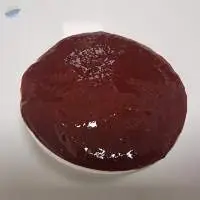
Grape (Blue-Black) Pulp
T.S.S (Brix) Min- 9
Acidity (%C/A) Min- 0.4
Composition per 100 gm
Edible Portion (%)- 65.00
Moisture (gm)- 00.60
Protein (gm)- 00.60
Fat(gm)- 00.40
Minerals (gm)- 00.98
Fibre (gm)- 02.18
Carbohydrates (gm)- 13.10
Energy (K.cal)- 58.00
Calcim (mg)- 23.00
Phosphorus (mg)- 23.00
Iron(mg)- 01.30
Vitamin c (mg)- 1.00
Vitamin B (mg)- 00.15
The Papaya (carica papaya) is widely grown throughout India. The tropical climate of the country is very conducive to its quality and high yield. With the advent of bio-technology, the fruit has been developed in many different varieties. A distinguishing feature of the papaya is the unusually high pH factor of the flesh ranging from 5.5 to almost 6.0 when at the ripe stage. It is a good source of beta-carotene and papain.
Papaya juice is gaining in popularity as it is high is nutrition content. It makes a good compound when blended with other fruits for smoothies and baby foods.
The Papaya (carica papaya) is widely grown throughout India. The tropical climate of the country is very conducive to its quality and high yield. With the advent of bio-technology, the fruit has been developed in many different varieties. A distinguishing feature of the papaya is the unusually high pH factor of the flesh ranging from 5.5 to almost 6.0 when at the ripe stage. It is a good source of beta-carotene and papain.
Papaya juice is gaining in popularity as it is high is nutrition content. It makes a good compound when blended with other fruits for smoothies and baby foods.
Physical, Chemical and organoleptic Characteristics
Acidity (% as C/A) Min 0.4
PH < 4.00
Colour : Reddish Yellow
Flavour : Characteristic
Taste : Characteristic
Microbial Characteristics
T.P.C. CFU/g < 50
Yeast CFU/g < 50
Mould CFU/g < 10
Papaya Pulp
T.S.S (Brix) Min- 9-11
Acidity (%C/A) Min- 0.4
Composition per 100 gm
Edible Portion (%)- 65.00
Moisture (gm)- 86.00
Protein (gm)- 00.60
Fat(gm)- 00.10
Minerals (gm)- 00.50
Fibre (gm)- 00.80
Carbohydrates (gm)- 7.20
Energy (K.cal)- 67.00
Calcim (mg)- 17.00
Phosphorus (mg)- 13.00
Iron(mg)- 00.50
Vitamin c (mg)- 57.00
Vitamin B (mg)- 00.49
The Guava (Psidium guajava) is a tropical fruit with a white or pink fleshy interior interspersed with small hard seeds. It contains a considerable amount of perctin. Guava is high in ascorbic acid (100 to 200 mg/100)
If would be difficult to find any place in India where the guava tree does not flourish naturally. A guava tree will produce fruit for over thirty years. There are two varieties white and pink. In many parts of India guava is harvested by hand all year round. While white guava, which is sweeter in taste, is grown on a larger scale, the pink is considered a delicacy.
Being a tropical fruit, the market for fresh guava is emerging in Europe and the United States. However, because of the unique flavor, distinct texture and rich.
Guava (White/Pink) Pulp
T.S.S (Brix) Min- 9
Acidity (%C/A) Min- 0.4
Composition per 100 gm
Edible Portion (%)- 100.00
Moisture (gm)- 81.70
Protein (gm)- 00.90
Fat(gm)- 00.30
Minerals (gm)- 00.70
Fibre (gm)- 05.20
Carbohydrates (gm)- 11.20
Energy (K.cal)- 51.00
Calcim (mg)- 10.00
Phosphorus (mg)- 28.00
Iron(mg)- 01.40
Vitamin c (mg)- 160.00
Vitamin B (mg)- 00.46