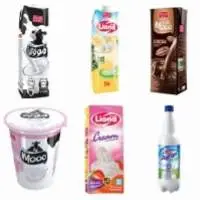
We produce all kind of Dairy product like (milk, yogurt, dough, cheese,cream,) with full and low fat according to customers need in variety of packaging payment rule ; LC and 30% cash in advance and 70% before Shipment
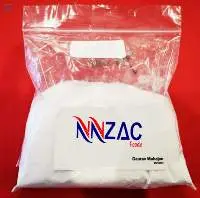
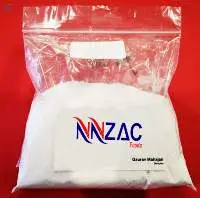
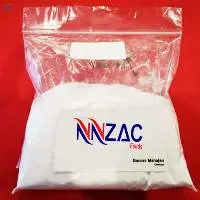
Non-Dairy Creamer F32 mainly used for giving flavor to coffee and tea. Non-dairy creamer, which is a perfect replacement for milk or cream, our company is counted as one of the major exporters, importers, and suppliers of non-dairy creamers. We have an advanced method of bringing high-quality non-dairy creamers from reliable sources. We present Creamer in the sealed packages, which not only protect the contents of the product but also extend its shelf life.
We are occupied in presenting Non-Dairy Creamer F60 in the international market. Available products have been prepared in accordance with the industry's set standards, with the help of experts capable of using better grade material and advanced techniques. In addition to this, our provided product is accessible in various packaging. Features: Free from impurities Highly effective Precise composition Composition Glucose Syrup, Sodium Caseinate, soy Protein, Vegetable oil, stablizers, emulsifier.
We are an established company engaged in the provision of superior quality Non-Dairy Creamer. The cream provided by us is not made using dairy and hence, is called non-dairy cream. This cream is available to customers at budget-friendly market prices in various sizes of packaging. This Non-Dairy Creamer is popular for its excellent quality. Features: Mouthwatering taste. Light, smooth and creamy.
Cadbury Dairy Milk is a brand of milk chocolate produced by Cadbury. The brand was introduced in the United Kingdom in 1905 and now consists of several products. Every product in the Dairy Milk line is made with exclusive milk chocolate. Available in 5 variants: - Cadbury Dairy Milk Chocolate - Cadbury Cashew Nut - Cadbury Fruit & Nut - Cadbury Black Forest - Cadbury Hazelnut Ready in 2 size ; -30 Gr x 288 pcs -62 Gr x 144 pcs
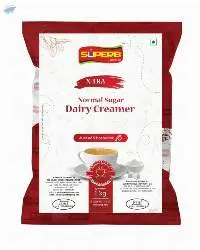
Superb Normal Sugar Dairy Creamer available in 1 kg
Dairy & Ice cream We Supply fresh dairy & Ice cream ingredients solutions for the food industry and our products are sourced from high quality, large and medium sized manufacturers. All the manufacturers that we use have high quality facilities and up-to-date quality management systems and standards, and most with the corresponding external accreditation. We are committed to providing customers with the best solutions they require. We work closely with you both commercially and technically to provide the right dairy & ice cream solutions for you. Dairy Ingredients Fruit Preperations / Jams Ripples and Sauces Cookies and Crunches Carmel and Toffees Decorated Items Fabricated Fruit Pieces Cereal Based products Whole and Processed Nuts Chocolate Based Products Liquid Flavors Soft Candy Hard Candy Frozen Fruits / Purees and Juice Concentrates Fruit Dices and peels Malt and Cocoa Products Stabilizer and Emulsifier Natural Colors and Extracts Natural Flavors and Emulsions Milk and Whey Derivatives
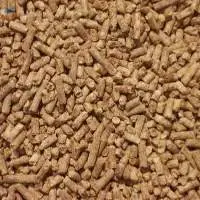
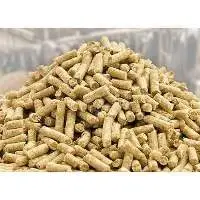
Dairy Feed: Price of product (USD price or FOB price) - Contact Product origin - Viet Nam Dairy Feed Protein: 16% min Ash: 12% max Moisture: 10% max Minimum Order Size and Packgaing details: Packing 50kg/bag, Minimum Order Quantity 20 feet container, 20 MT
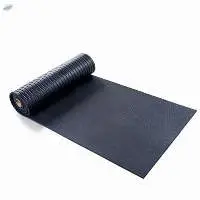
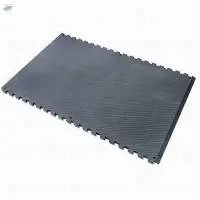
Our cow mat roll will meet all your cattle care needs from support to comfort. This continuous roll can be cut to the required length so that it fits the cowpen perfectly. Size : 120cm width*17mm thickness, 180cm width*17mm thickness Length: 30m or cut to any length
Dairy products or milk products are a type of food produced from or containing the milk of mammals. They are primarily produced from mammals such as cattle, water buffaloes, goats, sheep, camels, and humans. Dairy products include food items such as yogurt, cheese, and butter. Dairy is a vital part of the global food system, providing economic, nutritional, and social benefits to a large proportion of the world's population. Dairy Type Dairy Verities and Packaging Triangle cheese 8,16,24,32,40,48 pcs in pack carton = 24 ,36, 48 pack Istanbouli cheese salted Fita cheese light salted light salted cheese Domiatty Cheese creamy cheese Roomy old big wheel package in metal box 10 kg or as per customer's required Delivery terms - FOB, CNF, CIF. Shipping - By Air, By Sea
Fresh Malai Paneer Frozen Malai Paneer Marinated Paneer Butter Desi Ghee Milk Powder Ice Cream Milk Based Sweets
Cultures For Dairy & Meat
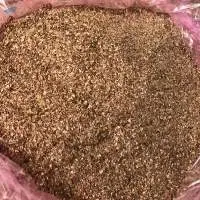
Dairy Camel Feed We are offering here the Dairy Camel Feed that is a kind of food for camels which is made by a feed pellet mill through high pressure. It is a form of feed for all camels reared for both meat and milk production. It has high protein nutrients and mineral salts useful for milk production, animal survival and production of meat. The offered Dairy Camel Feed is made for use by people who raise camel for dairy production. The feed is safe to consume. Dairy Camel Feed (CML-020717) CML 020717 should be fed to female camels to enhance the quality and quantity of the milk yield. The mix contains all the necessary proteins, vitamins, minerals and trace elements to support milk production over an extended period. Particulars Unit. Crude Protein. (% Minimum) : 16.60 Crude Fibre. (% Minimum) : 08.40 Ash. (% Minimum) : 06.80 Ether Extract (Fat). (% Maximum) : 06.90 GENERAL DETAILS Ingredients: Corn Gluten Meal, DDGS, Pluses, Essential Amino Acids, Vitamins, Minerals, Trace Minerals, Toxin Binders and Mold Inhibitor Ingredient Profile: 100% Vegetarian Moisture (% Maximum) - 12 Product Form :Â Coarse Mash Form / Pellet Form Product Branding - HAF Net Weight :Â 39 Kgs When Packed Product Pricing :Â On Unit Basis (for each 39 Kgs Packing) Production Capacity per Day :Â 450 MT/Day Factory Visit :Â Not Permissible Fumigation :Â Aluminum Phosphide or Methyl Bromide (or any as per buyer specification) Clinical Test Methodology :Â As per IS:2052 Proximate Analysis on Dry Matter Basis Hindustan Animal Feed is a leading provider of dairy camel feed. It is a clinically approved feed for the animal. We blend corn gluten meal, wheat gluten meal, soy meal, DDGS, pluses, essential amino acids, vitamins, minerals, trace minerals, toxin binders, and mold inhibitor for the production of this 100% vegetarian dairy camel feed. The product is examined according to IS:2052 Proximate Analysis on dry matter basis. The fumigation for the feed is done as per industry norms- Aluminum Phosphide or Methyl Bromide (or any as per buyer specification).
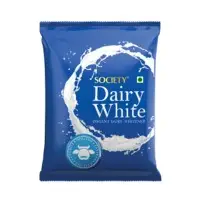
Society Dairy White (1 Kg, 500 g, 200 g) Price : 425.00 Perfect for making tea, coffee, milk beverages, breakfast cereals, milk desserts and sweets.
MalTox TS is an enzymatically modified tapioca maltodextrin. It is non-GMO, Vegan, Gluten free starch. It act as bulking agent and stabilizing agent giving smooth texture to the products. It is used in products such as powder foods, sauces, sports drink, milkshakes, health drinks, soups, etc
MALTOX- Lactose Substitute Non- Fat Solid is an Enzymatically Modified, Vegan, Gluten-Free, Plant-based, Non-GMO starch used as a Texturizing agent, Taste Improver, Bulking Agent, Volumising, Emulsifier, Fat Replacer, Stabilizer & Thickener and in Milk and Milk products. It is 100% naturally made which does not have any preservatives and Mono sodium Glutamate (MSG).
High Yielding Dairy Cattle Feed (C-060322) Dairy cattle is one of the most special breeds of cattle which are generally known for the production of greater amounts of milk and hence required to eat much healthier and nutritious food than compared to other cattle. Our company is one of the most reliable and trusted companies in this line of work and hence is offering these supreme quality dairy cattle feed to its clients at a very reasonable range of prices. We are also engaged in the line of supply, export, wholesale, and distribution of these dairy cattle feed to different regions of the country and also in abroad. Ingredients : Corn Gluten Meal, DDGS, Grains, Pluses, Essential Amino Acids, Vitamins, Minerals, Trace Minerals, Toxin Binders and Mold Inhibitor
When it comes to a barn, the flooring plays a huge role as it has to be sturdy enough to withstand the weight of the cows. Unfortunately, many animals suffer from joint issues, and the core reason behind it is the bad flooring. Hirange is one of the best rubber dairy mats manufacturers in India. Size : 120*180*2.4cm, 115*180*2.4cm By covering the flooring with the right products, such as Shelter Mate from a renowned rubber dairy mats manufacturer like Hirange, you can prevent injuries to your cows. Our dairy floor mats provide great comfort to the cows and are, therefore, an asset to the barns. Top Features Of Shelter Mate Rubber Dairy Mats : Eco-Friendly : Shelter Mate is made of natural, non-toxic and eco-friendly materials, which are easily recyclable and provide no harm to society. Premium Quality : One of the reasons we are considered as the best rubber dairy mats manufacturer is because of the top-quality dairy floor mats we provide. The manufacturing process of our rubber mats goes through multiple stages of quality control to eliminate even the slightest of defects. Technology : We have onboard the most advanced equipment and technology to make our rubber dairy mats manufacturing more useful and of high-quality. Non-Slippery : Our rubber dairy barn mats are non-slippery, which prevents the cows from hurting themselves. These mats have a soft surface attached to them, which provides proper insulation from the tough ground. Reasons Why You Should Use Shelter Mate Low Maintenance When it comes to keeping your mats neat, it can be very tedious. But our rubber dairy mats are quite low maintenance. One does not need to spend hours cleaning up. Moreover, the biggest USP of these rubber mats is that they are moisture-resistant and have a texture attached to the bottom, making the fluid go away quickly. Can be Customized Instead of having to force yourself to buy ready-made rubber dairy mats with Shelter Mate, you always have an option for customization. It is very easy to customize these mats as per your needs and pick your size, colour, design etc. No More Injuries The rubber material of Shelter Mate helps in preventing injuries to a huge extent. This is because it acts as a protection against those scratches and cracks present in the ground. It helps in protecting both humans and animals by giving them a solid grip on the flooring. Versatile One great thing about our dairy floor mats is that they are suitable for plenty of areas, including lofts, barns, gyms etc. They can be a great asset not just for animals but also for humans. Our elastic rubber diary mats make it easy to walk on hard grounds. If you are looking for an ideal rubber dairy mat for your barn, you can blindly trust Shelter Mate made by Hirange, the leading rubber dairy mats manufacturer. You can get assured products in terms of quality and pricing, and in terms of variety, you get plenty of options.
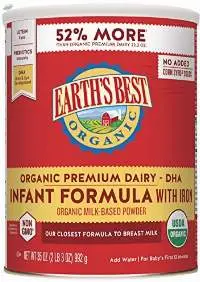
Earth's Best Organic Dairy Formula is a thoughtfully crafted infant formula designed to provide essential nutrition for babies. Produced by Earth's Best, a leading brand in organic baby products, this formula is made from high-quality, organic dairy ingredients sourced from carefully selected farms. It is enriched with vital nutrients like DHA, ARA, iron, and various vitamins and minerals necessary for healthy growth and development. Free from artificial additives, preservatives, and genetically engineered ingredients, Earth's Best Organic Dairy Formula prioritizes clean and natural nutrition for infants. With its commitment to organic standards and quality, it offers a trusted choice for parents seeking a premium and environmentally-conscious option for their little ones.
Earth's Best Organic Dairy Formula is a premium infant formula crafted from high-quality, organic dairy sources. Specially designed to provide essential nutrients for your baby's optimal growth and development, this formula offers a natural and easily digestible option. Enriched with vitamins, minerals, and essential fatty acids like DHA and ARA for brain and eye health, it supports key aspects of infant development. Free from artificial colors, flavors, and preservatives, this organic formula is a trusted choice for parents seeking a wholesome and reliable nutrition source for their little ones. With Earth's Best commitment to organic farming and quality standards, it stands as a preferred option for those prioritizing natural, healthy feeding for their infants.