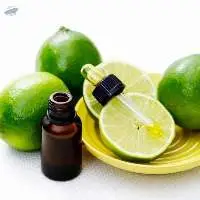
Lime Oil Distilled, Citrus Aurantifolia Peel Oil Distilled is an essential oil distilled from the acidic epicarps after the pressing the juice from the fruit of the Lime. It contains mainly D-limonene and up to 7% alpha-terpineol.
Product Name
Self-contained positive pressure air breathing apparatus with Electronic pressure gauge
Material - Alloy steel
Color - Black and White
Standard - EN 136
Cylinder volume - 6L
Working hours - 55-60mins
Working pressure - 30Mpa
Used - Firefighting
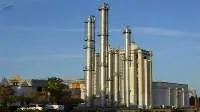
Ethanol alcohol distillation column
1. It is standard 95-96% alcohol equipment. Also it can distill pure water.
2.The distillation system has three columns and continuous distillation process.The process is the same as industrial(large scale) alcohol equipment.
Mash distillation column distills fermented mash or light alcohol to 50% alcohol ethanol .
It has red copper bubble cap trays, standard design. It auto continuously feeds material liquid, auto continuously produces 50% alcohol ethanol and auto continuously discharges waste, ethanol discharge in waste 0.05%, better than international standard requirements.
The first rectification distillation column increases alcohol degree to 70-75% , separates fusel oil and high boiling point Impurities. It auto discharges waste water, ethanol discharge in waste 0.05%, better than international standard requirements.
The second rectification distillation column increases alcohol degree to 95%, separates low boiling point impurities like acetaldehyde and methanol .
3. The rectification system uses industrial(large scale) standard process, but the whole set alcohol equipments are installed in one frame, like integration module, even you can run it by a button.
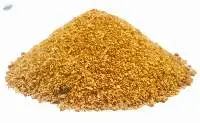
PFAD Is a by-product from refining Crude Palm Oil. It is a light brown solid at room temperature, melting to a brown liquid on heating. Palm Fatty Acid Distillate is used in soap industries, animal feed industries and as raw materials for oleochemical industries. Vitamin E can be extracted from PFAD.
Specifications:
Free Fatty Acids (as palmitic) 70% min
Moisture & Impurities 1.0% max
Saponifiable Matter 95% min(basis 97%)
DDGS - Distilled Dried Grains with Solubles
Protein + Fat: 36% Min
Protein: 26% Min
Moisture: 12% Max
Ash: 7% Max
Fiber: 10% Max
Aflatoxin: 20 PPB Max
Vomitoxin: 5 PPM Max
DDGS is a co-product of the ethanol production process. It is made from the grain remnants after the starch has been fermented to produce ethanol and is commonly used as animal feed. Here are some key points about DDGS:
Composition: DDGS is rich in protein, fiber, and fat, making it a nutritious feed ingredient for livestock, including cattle, swine, poultry, and fish. It provides essential nutrients that can complement other feed components.
Production Process: The production of DDGS involves drying the spent grains from the distillation process. The solubles, which contain nutrients, are added back to the dried grains, enhancing their nutritional value.
Benefits: DDGS is valued for its high protein content and digestible fiber, which can improve the feed efficiency of livestock. It is also considered a cost-effective feed option due to its nutrient density.
Market and Trade: The demand for DDGS has been growing globally as livestock producers seek alternative protein sources. The U.S. is one of the largest producers and exporters of DDGS, with significant markets in Asia, Europe, and Latin America.
Sustainability: Utilizing DDGS as animal feed contributes to the sustainability of the ethanol production process by minimizing waste and making use of by-products.
PFAD Is a by-product from refining Crude Palm Oil. It is a light brown solid at room temperature, melting to a brown liquid on heating. Palm Fatty Acid Distillate is used in soap industries, animal feed industries and as raw materials for oleochemical industries. Vitamin E can be extracted from PFAD.
Specifications:
Free Fatty Acids (as palmitic) 70% min
Moisture & Impurities 1.0% max
Saponifiable Matter 95% min(basis 97%)
Palm Fatty Acid Distillate (PFAD)
Palm Fatty Acid Distillate (PFAD) is made from refining crude palm oil. It is used for many industries such as soap industries, animal food industries and also is used as raw materials for bio-diesel and chemical industries.PFAD is a by-product from the palm oil production, PFAD has considerable value, and is more or less 100% utilized. It is used as feedstock for many different products for animal feeds, laundry soaps, the oleochemical industry, and combustion for local power/process heat2 PFAD is also a source of vitamin E, squalene and phytosterols - substances valuable for the nutraceutical (dietary supplements and functional foods) and cosmetic industries. These substances may be extracted and isolated from PFAD.
Typical Specification :
FFA : 70% Min
M&i : 1.0% Max
TFM : 95% Min
Packing : 185 KGS Nett In Used Steel Drums
Minimum Order : 18.130 MTS (1 x 20' GP Container)
We offer the below products:
Used Cooking Oil(UCO)
Used Vegetable Oil
Sesame Oil
Corn Oil
Vegetable oil
Soy bean Oil
Sunflower oil
Jatropha Oil
Palm Oil CP8 CP6 CP10
Crude Rapeseed oil and many more
The high content of proteins and fats and involvement of yeast in the initial production stages ensure that DDGS has excellent nutritional characteristics and is preferred by farmers all over the world as a key component of the animal feed mixtures for all basic animal species.
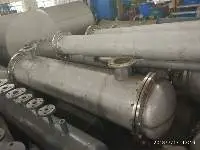
PFA and PTFE materials are widely used in the production of distillation & rectification apparatus due to their unique physical and chemical properties. The following are the advantages and applications of distillation & rectification apparatus made of these two materials:
Advantages
1. Corrosion resistance:
Both PFA and PTFE have extremely strong corrosion resistance and can resist the erosion of a variety of strong acids, strong bases, organic solvents and oxidants. This makes them perform well when handling corrosive substances and can ensure the stability and safety of the distillation & rectification process.
2. High temperature resistance:
Both can maintain stable performance in high temperature environments. The operating temperature range of PTFE can reach -200â?? to +250â??, while PFA can reach -200â?? to +260â??, which makes them suitable for high-temperature distillation & rectification processes.
3. Good sealing performance:
Distillation & rectification apparatus made of PFA and PTFE materials usually have excellent sealing performance, which can effectively prevent leakage problems in the distillation process and improve distillation efficiency and product quality.
4. No pollution:
When these two materials come into contact with high-purity chemical reagents, there is almost no dissolution of impurities, which can maintain the purity of the product and is suitable for fields with extremely high purity requirements.
5. Easy processing:
We are a factory that supports customization. PFA and PTFE materials are very flexible in the design and manufacture of distillation & rectification apparatus.
Distillationcolumn For Ethanol Alcohol Plant
1.It is standard 95-96% alcohol equipment.Also it can distill pure water.
2.Thedistillationsystemhasthree columnsandcontinuousdistillationprocess.The process is thesame as industrial(large scale) alcohol equipment.
a.Mash distillationcolumn distillsfermentedmash or light alcoholto 50% alcohol ethanol .
It has red copper bubble cap trays, standard design. It auto continuously feeds material liquid, auto continuously produces 50% alcohol ethanol and auto continuously discharges waste,ethanol discharge in waste 0.05%, better than international standard requirements.
b.The first rectification distillation column increases alcohol degree to 70-75% ,separates fuel oil and high boiling pointImpurities.It auto discharges waste water,ethanol discharge in waste 0.05%, better than international standard requirements.
c.The second rectification distillation column increases alcohol degree to 95%,separateslow boiling pointim purities like acetaldehyde and methanol .
3.The rectification system uses industrial (large scale) standard process, but the whole set alcohol equipments are installed in one frame, likeinte gration module, evenyoucan run it by a button.
Crown Portland Composite Cement is CEM-II/A-M which is a cement consisting of Clinker, Gypsum, Pulverized Fuel Ash (PFA), Blast Furnance Slag and Limestone designated by the specifications of BDS EN 197-1: 2003; CEM -II/A-M (V-S-L), 42.5 N. PCC is the most suitable cement for constructions in Bangladesh. CEM â?? II /A-M contains 80-94% Clinker, which is substantially higher than CEM â?? II/B-M containing 65 â?? 79% Clinker that provide us extra advantage in strength development and increase concrete performance.
Both slag & fly ash (PFA) are used in PCC. Percentage of SiO2 in PFA is higher than slag which is advantageous to gain more long-term strength and ensure durable concrete. This type of cement is used for large constructions all around the world and it has been used during the last few decades.
The hydration process of normal cement produces Calcium Silicate Hydrate CHS & Calcium Hydroxide Ca(OH)2. Calcium Hydroxide Ca(OH)2 does not contribute to gain strength and it is the weak part of reaction which is not suitable for concrete. Since PFA contains higher portion of reactive silica and slag contains alumina, it helps to convert Ca(OH)2 into CSH to gain further strength.