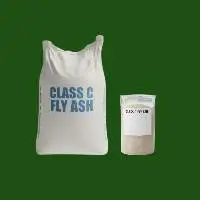
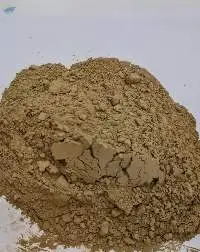
- Source: Produced from the combustion of younger lignite or sub- bituminous coals.
- Composition: Contains a high percentage of calcium oxide (CaO), typically more than 20%. It also includes silica, alumina, and iron oxide.
- Properties: Exhibits both pozzolanic and self-cementing properties. The high lime content allows it to harden and gain strength independently when mixed with water.
- Key uses: Used in concrete when early-stage strength development is needed. Its self-cementing properties can allow for a partial replacement of cement in a concrete mix.
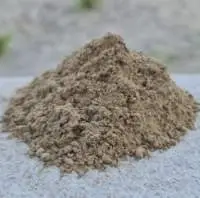
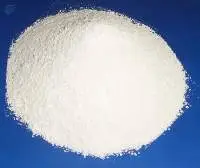
- Source: Derived from the combustion of harder, older anthracite or bituminous coals.
- Composition: Primarily composed of silica (silicon dioxide, SiO2), alumina (aluminum oxide, Al2O3), and iron oxide (Fe2O3). It has a low calcium content, typically less than 10%.
- Properties: Possesses pozzolanic properties, meaning it requires a cementing agent like hydrated lime or Portland cement to react with water and form a cementitious compound. It has no self-cementing properties on its own.
- Key uses: Used in concrete to increase its long-term strength, reduce permeability, and enhance resistance to sulfate attacks.
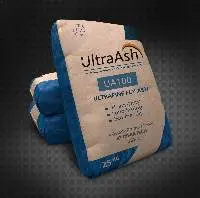
We are provide good quality of Ultrafine fly ash material with best rate Guru Corporation has strong position to supply Fly ash at different grades for different usages on a global scale.
Coal Fly Ash
CFA could be used in huge quantities in two areas: ash dyke construction and low-lying region filling [26,27,28]. In several affluent countries, CFA has been utilized successfully as a structural filler.
Fly ash is a finely divided residue made from the combustion of pulverized coal that can be used to increase concrete durability and workability, while reducing permeability.
fly ash has a wide variety of applications and uses, though it is primarily known for improving the durability and workability of concrete mixes. Fly ash is also a filler in paints, adhesives, and metal and plastic composites. It's commonly used as structural fill for road construction and fly ash can be used to make bricks, ceramic tiles, plaster, Portland cement, and ready-mix cement.
Fly Ash is a fine, powdery by-product generated during the combustion of pulverized coal in power plants. It is widely used as a supplementary cementitious material and in the production of cement, concrete, bricks, blocks, and other construction products.
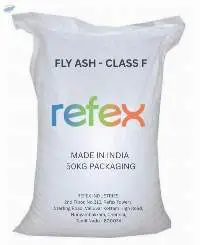
Fly Ash ( Our Product ) & Grade is Class F or Class C
Price of product: To be discussed with the direct international customers.
Product origin: India
Key Specifications/Special Features: ASTM C 618
Minimum Order Size: 500 MT
Packaging details: 1.4 MT or 1.5 MT Jumbo Bags or Break Bulk
Advantages
Pozzolanic material suitable for cement and concrete applications
Helps improve workability and durability of concrete
Can reduce conventional cement consumption
Suitable for bricks, blocks and other construction products
Consistent fine-powder form for industrial processing
Useful for large-scale infrastructure and construction projects
Available for bulk domestic and export supply
a. Name of product. Fly Ash
b. Price of the product. To be discussed with suppliers
c. Product origin - India
d. Key Specifications/Special Features
e. Harmonization System (HS) Code : 26219000
f. Minimum Order Size : 28000 KGS
g. Packaging details. Jumbo Bag, Weight. 1400 Kgs
Fly ash is one of the residues generated in combustion, and comprises the fine particles that rise with the flue gases. Ash which does not rise is termed bottom ash. In an industrial context, fly ash usually refers to ash produced during combustion of coal. Fly ash is generally captured by electrostatic precipitators or other particle filtration equipments before the flue gases reach the chimneys of coal-fired power plants, and together with bottom ash removed from the bottom of the furnace is in this case jointly known as coal ash. Depending upon the source and makeup of the coal being burned, the components of fly ash vary considerably, but all fly ash includes substantial amounts of silicon dioxide (SiO2) (both amorphous and crystalline), being endemic ingredients in many coal-bearing rock strata.
Advantages to Fly ash
Greater long term strength
Improve Workability
Excellent Thermal Insulation
Reduce Permeability
Low heat of hydration
Increased sulphate resistance
Increased corrosion resistance
Reduced Alkali - Aggregate Reaction
Fly ash is very good resource material. It can advantageously used in cement and concrete works as well as fill applications. Flyash is transported to fly ash storage silo. Fly ash is loaded in close tankers and transported to RMC plants. Fly ash is also available in bags.
Portland cement when mixed with water produce cementitious material in this process free lime is also liberated. This free lime cause of porosity in concrete, however if fly ash available in the mix, free lime will reacts with fly ash to produce additional cementitious materials which produce additional strength and make the concrete denser, thus increase its durability, the present of fly ash also helps reducing heat of hydration.
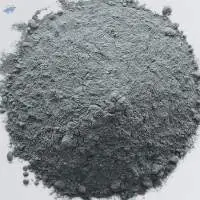
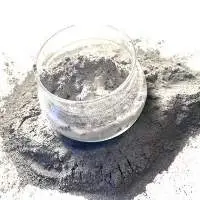
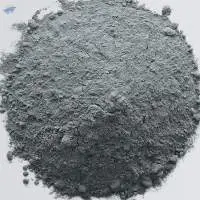
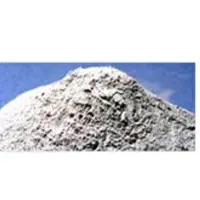
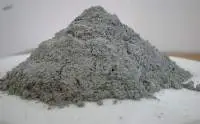
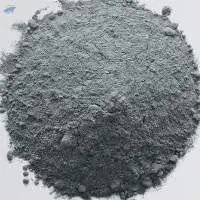
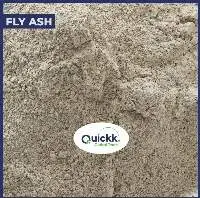
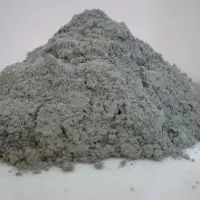
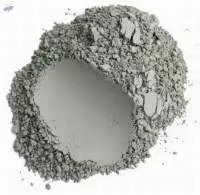
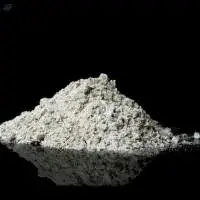
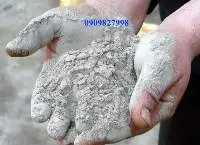
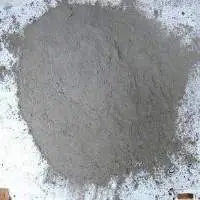
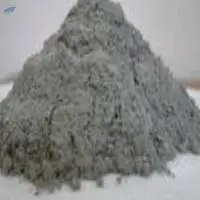
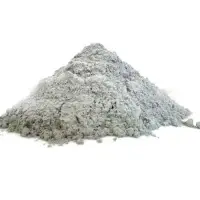
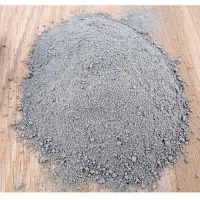
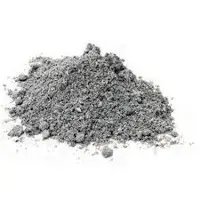
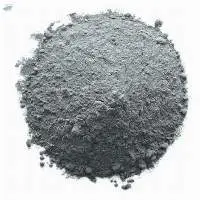
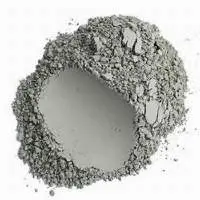
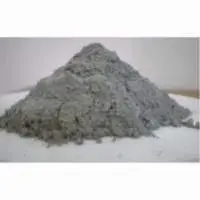
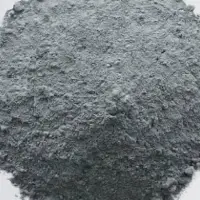
Fly ash is a fine gray powder consisting mostly of spherical, glassy particles that are produced as a byproduct in coal-fired power stations. Fly ash has pozzolanic properties, meaning that it reacts with lime to form cementitious compounds. It is commonly known as a supplementary cementitious material.
Fly ash is suitable for a wide variety of applications and uses, including:
â?¢ Concrete
â?¢ Dams
â?¢ Flowable fill
â?¢ Mines
â?¢ Landfills
â?¢ Geopolymer concrete
Fly ash is also known as flue-ash or simply ash.
Fly ash significantly improves concrete performance and also provides many benefits in cement and non-cement applications. Also, when treated with sodium hydroxide, fly ash appears to function well as a catalyst for converting polyethylene into a substance similar to crude oil in a high-temperature process called pyrolysis.
Fly Ash is a fine, powdery by-product generated during the combustion of pulverized coal in thermal power plants. It is collected from flue gases through electrostatic precipitators and bag filters. Due to its pozzolanic properties, fly ash reacts with lime and water to form cementitious compounds, making it an excellent material for cement, concrete, construction, and various industrial applications.
Fly ash is a finely divided residue made from the combustion of pulverized coal that can be used to increase concrete durability and workability, while reducing permeability.
We are actively engaged in the export of high-quality Fly Ash to Bangladesh and are strategically expanding our market presence across neighboring countries in South Asia. Leveraging our expertise in bulk cargo handling, port operations, and international logistics, we provide a reliable and efficient supply chain solution for cement manufacturers, ready-mix concrete producers, infrastructure projects, and other industrial consumers.
Key Highlights
Exporting Fly Ash to Bangladesh
Expansion into neighboring international markets
Expertise in bulk cargo shipment and vessel operations
Reliable sourcing and supply chain management
Focus on quality assurance and timely delivery
Serving cement, construction, and infrastructure sectors
Cement Manufacturers
Ready-Mix Concrete
Infrastructure Projects
Fly ash is a by-product of coal burning at the utility plants. As coal is burned, non-combustible mineral impurities in coal evaporate andcondense into tiny particles of glass, almost totally spherical inshape. The individual particles are very small, like talcum powderand are carried up and out of the boiler in the flow of exhaust gasesleaving the boiler after the coal is consumed.
The fly ash particlesare removed from the exhaust stream in bag houses or electrostatic precipitators and then stored for later shipment
The difference between fly ash and Portland cement becomes apparentunder a microscope. Fly ash particles are almost totally spherical inshape allowing them to flow and blend freely in mixture. Thatcapability is one of the properties making fly ash adesirable admixture of concrete.
Product Description :
Fly ash is a fine powder that is a byproduct of burning pulverized coal in electric generation power plants. Fly ash, being primarily pozzolanic, can actually replace a percentage of the Portland cement, to produce an even stronger, more durable and more environment friendly concrete.
The initial compressive strength is low but as days pass, flyash concrete gains more strength and eventually
has a lot more strenght as compared to normal Portland cement.Significantly reduce the release of CO2 in
atmosphere.Can be used for construction of structure above/under water
Product: Fly Ash (ASTM C618 CLASS F)
Price Of Prodiuct :
USD 36--USD 55 PER MT
Product Origin :
INDIA
Key Specifications/Special Features
Grade Standard : ASTM618/ BS 3892
Physical State : Powder
Colour : light Grey , Grey
Usage : Industrial
Lead Time : 10-12 Days , Negotiable
Minimum Order Size and Packgaing details :
MOQ- One 20 ft conatiner
Packing: 1.4 Mt Jumbo Bags with Inner Liner,
As per client requirement
Our Fly Ash is pure and free from impurities, Our Fly Ash is perfectly suitable for the making of Fly Ash bricks and for building and construction industries and it is cost effective.
Fly Ash is available in two grades such as:
CLASS F CLASS C
Based on customers requirements we can customize the size, grade and packing.
Fly ash is a by-product produced while burning finely ground coal in a boiler to produce electricity. It is removed from the plant exhaust gases primarily by electrostatic precipitators or baghouses and secondarily by scrubber systems. Physically, fly ash is a very fine, powdery material, composed mostly of silica. Nearly all particles are spherical in shape. Fly ash is a pozzolan, a siliceous material which in the presence of water will react with calcium hydroxide at ordinary temperatures to produce cementitious compounds. SiO2, Al2O3, Fe2O3 and occasionally CaO are the main chemical components present in fly ashes.
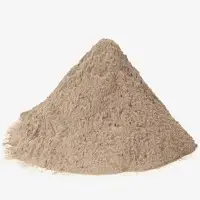
Fly ash significantly improves concrete performance in different ways and also provides many benefits in cement and non-cement applications. Fly Ash colour can vary from grey and dark grey, yellowish tan and light to brownish.
ADVANTAGES OF FLY ASH IN CONCRETE
Fly Ash is a Pozzolan
Improves concrete workability and lowers water demand
Sulfate and Alkali Aggregate Resistancet
Rise in compressive strength over time
Environment friendly
CEMENTATION Fly Ash is optimized for its fineness while reducing the water demand and improving the chemical compositions to maximise its benefits when used in concrete. Fly-ash can also be used as an add-on to concrete mixture with pozzolanic and/or latent hydraulic properties.
We at CEMENTATION selectively collect fly ash and subject to rigorous testing, further refines these collected materials to produce quality fly ash products meeting the needs of our customers.
Fly ash, also known as flue-ash is a residue which is generated during combustion and consists of fine particles. There are impurities in coal which mostly consist of clays, limestone and dolomite particles. These turn up into ash as they cannot be completely burned.
Fly ash is useful in a number of ways and is one of the most researched upon mineral source. It is mainly a pozzolanic substance which contains aluminum and silicon material which in return due to the presence of water can take form of cement.
A lot of research and development initiative have been taken place across the globe to build and develop technologies that can utilize the full potential of fly ash. Royal Mineral takes care to ensure flawless production stages.
Fly ash is a finely divided residue made from the combustion of pulverized coal that can be used to increase concrete durability and workability, while reducing permeability.
As fly ash contains aluminous and siliceous components, it may form cement when mixed with water if the calcium content of the fly ash is high enough. Similarly, mixing fly ash with lime and water can create a substance similar to Portland cement.
Fly ash can be separated into two main types, known as:
Class F
Class F fly ash contains particles covered in a type of melted glass allowing it to reduce the risk of concrete expansion and increase resistance to sulfates and alkali-aggregate reactions.
Class C
Class C fly ash contains a higher percentage of calcium oxide, making it more effective in strengthening structural concrete.
Applications & Benefits of Fly Ash:
Fly ash is used in commercial and industrial sectors for improving the durability and workability of concrete mixes.
Fly ash is also used as filler in paints, adhesives, and metal and plastic composites.
It's commonly used as structural fill for road construction and fly ash can be used to make bricks, ceramic tiles, plaster, Portland cement, and ready-mix cement.
Fly Ash a byproduct derived from the combustion of coal encompasses the finely dispersed particles that ascend with the flue gases The ash which accumulates at the bottom is referred to as bottom ash Prior to venting through the chimneys of coalfired power plants Fly Ash is diligently captured by electrostatic precipitators and other particle filtration equipment When combined with bottom ash extracted from the furnaces base it collectively assumes the nomenclature of coal ash The specification of Fly Ash varies significantly contingent upon the coal type in use however it consistently contains notable quantities of silicon dioxide and calcium oxide CaO both intrinsic constituents of numerous coalbearing rock strata Our establishment headquartered in India boasts a distinguished reputation as a Fly Ash Exporter catering to diverse sectors including cement ready mix concrete steel refractories and the construction industry
Prominent Applications of Fly Ash encompass
1 Manufacture of Portland Pozzolanic Cement Performance Enhancement in Ordinary Portland Cement OPC
2 Partial Replacement of OPC in Cement Concrete
3 HighVolume Fly Ash Concrete
4 RollerCompacted Concrete Employed in Dam and Pavement Construction
5 Production of Ash Bricks and Other Building Materials
6 Construction of Road Embankments Structural Fills and LowLying Area Development
7 Utilization as a Soil Amendment in Agriculture and Wasteland Development
Fly Ash can be categorized into two types based on the coal used
Class F Fly Ash This type results from the combustion of anthracite and bituminous coal Class F Fly Ash typically contains lower levels of lime usually under 15 percent but higher proportions of silica alumina and iron exceeding 70 percent
Class C Fly Ash Produced by burning lignite or subbituminous coal Class C Fly Ash exhibits selfcementing properties It often possesses a higher lime content frequently exceeding 15 percent and sometimes reaching as high as 30 percent This elevated CaO content contributes to the distinctive selfhardening attributes of Class C Fly Ash
Both Class F and Class C Fly Ash are outcomes of coal combustion in largescale power plants Following collection in electrostatic precipitators or baghouses Fly Ash is transferred to substantial silos for distribution To ensure consistency and quality Fly Ash is classified according to precise particle size specifications when required
Our minimum order quantity is one container reflecting our commitment to meeting the diverse needs of our clientele
Fly ash is a fine ash obtained from the exhaust gas after coal combustion. Fly ash is the main solid waste discharged from coal-fired power plants. The main oxides of fly ash in thermal power plants in Vietnam.
The fly ash provided by us is purchased selectively to ensure purity, no impurities.
Thanks to our expertise in this industry, we are able to offer you the best quality Fly Ash Powder.
We are one of the famous companies in the market specializing in manufacturing and exporting all kinds of industrial chemicals, minerals and super high-grade fly ash.
Packing: Jumbo bags 1 ton/bag - 2 tons/bag, bulk cargo or can be packed according to customer's request.
Grey
Shipping: Negotiable
- Ability to supply 50,000 tons/month.
-Payment terms: TT, LC
Application: Fly ash as building material, road construction, agriculture, cement, concrete
For more detailed product information, please contact the information below.
Fly ash is produced from the burning of pulverized coal in a coal-fired boiler. It is a fine-grained, powdery particulate material that is carried off in the flue gas and normally collected from the flue gas by means of electrostatic precipitators , bag houses, or mechanical collection devices such as cyclones.
Fly ash is commonly used in production of concrete. It is applied as a supplementary cementing material. Initially the idea was to use fly ash for economical reasons - on one hand to utilize fly ash which is an industrial by product, on the other to reduce the amount of costly cement. However, it appears that application of fly ash in concrete has a lot of benefits, mainly by reduction of unwanted hydration heat.
Cement can be replaced with fly ash in concrete. It reacts (si) with ca (oh)2 and produces more csh gel which contributes to strength. With reduced cement, hydration heat will be reduced and hence there is strength gain.
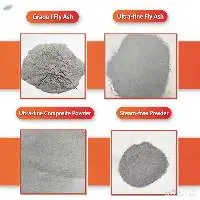
3: Ultrafine Fly Ash UFFA (Flagship Product): Highly processed, micro-sized fly ash that provides exceptional workability, reduced permeability, early strength gain, and is an ideal substitute for silica fume at much more competitive prices.
Business Type Exporter, Supplier, Trader
Raw Material Cement
Color Grey
Condition Dry
Preferred Buyer From
Location Worldwide
Product Details
Form Powder
Application Building Construction
Type Fly Ash
Country of Origin India
At We Care, we provide the best fly ash in Meerut, Uttar Pradesh for your business. We are your trusted wholesale fly ash supplier in India. We take customer satisfaction seriously and endeavor to be among the best fly ash exporters.
Unparalleled Quality
As a reliable fly ash supplier in India, we source what we offer from reliable companies. We make use of the most up-to-date technology to meet the unique requirements of the market. With the application of our fly ash, you can count on the same performance any time you use it.
Versatile Applications
The fly ash that We Care supplies has multiple roles and can be used in various applications. In construction and many other sectors, you can rely on our fly ash as the perfect option for your project. Be it improving the soil quality or reinforcing concrete, trust us, as your fly ash exporters in India.
Unbeatable Pricing
At We Care, we acknowledge the pivotal role cost-effectiveness plays in your business operation. This is just the reason why we offer reasonable rates without compromising the quality of our fly ash. Be confident that we will provide you with the finest value for your money.
Our team is highly committed to delivering quality at every step. Through the whole process, starting with the first inquiry, we will be at your service to help you. Whatever service you may needâ??product selection or logisticsâ??we will be your reliable partner at all times.
Call us now to learn more about our fly ash solution.
Fly ash is a fine particulate residue generated during the combustion of pulverized coal in thermal power plants. Pulverisation involves grinding coal into a very fine powder to ensure more efficient and complete combustion.
When coal is burned, non-combustible minerals in the fuelâ??such as silica, alumina, and ironâ??melt and fuse into tiny glass-like particles. These particles are carried away with flue gases and are captured using electrostatic precipitators or bag filters, resulting in what is known as fly ash. The material is ideal for use in cement, concrete, AAC blocks, and other construction applications.
Fly Ash is a fine, powdery byproduct produced form burning pulverized coal in thermal power plants for producing electricity. It primarily consists of silica, alumina and iron oxide. Due to its pozzolanic properties. Fly ash is widely used in making concrete, blocks, bricks, and road base materials. It enhances workability, durability, and reduce water consumption. Using fly ash helps in waste management and reduces pollution.
Applications
Fly Ash used as a Pozzolana in Cement, Cement Mortar and Concrete and as an admixture in Mortar and Concrete/ as a part of cement replacement.
1) Cement Production
2) Ready Mix Concrete
3) Self- Compacting Concrete
4) Mass Concrete
5) Roller Compacted Concrete
6) Lightweight Concrete
Dry Class F Fly Ash powder from thermal power plants is a fine, pozzolanic material rich in silica, alumina, and iron oxide, with low calcium content. It is widely used in cement, concrete, bricks, and soil stabilization due to its strength-enhancing, eco-friendly, and cost-saving properties.
�?�°??? Product Overview
Origin: By-product of coal combustion in thermal power plants.
Collection: Captured dry from electrostatic precipitators (ESP) or bag filters.
Appearance: Fine powder, light grey to dark grey in color.
Nature: Pozzolanic material reacts with calcium hydroxide in cement hydration to form cementitious compounds.
Fly ash is fine powder by-product from coal-fired power plant. It is widely used as mineral admixture for concrete, cement, mortar and AAC block production.
Grades: Grade I & Grade II, complying with GB/T1596-2017.
Advantages: improve concrete workability, reduce hydration heat, increase durability.
Packing: 25kg woven bag or bulk in jumbo bag.
MOQ: 50 tons, FOB China port. Stable supply, COA test report available.
An essential input for construction, fly ash is witnessing a sharp rise in demand throughout India and Bangladesh. Falcon International is a renowned supplier of this foundation material. We deal with F grade fly ash that is fully checked under various parameters to ensure superior quality. The powdered building material has high combustion rating with the following features:
Acid resistant
Algae proof
Rapid hardening
The components of fly ash include silica and glass revealing pozzolanic properties. Captured especially with the help of electro-static precipitators the by product of coal forms hydraulic cement, used for concreting.
Falcon Internationala's fly ash supplies bear a special feature; the product reacts with calcium hydroxide to form a durable binder. Besides, the particle components are known for their excellent ball-bearing impact producing concrete with very less usage of water.
The fly ash produced has to undergo rigorous processing and are quality checked for performance and finesse. Size, shape, glass content and distribution of the product is ascertained during processing to understand whether the supplies will meet global concrete standards. The supplies are especially popular among our clientele for being consistent and predictable.
Whether its hardened or fresh concrete, fly ash makes for a great component resulting in solid foundation. Following are the extra features of our fly ash supplies:
Enhanced durability
Better workability
Extended setting time
Falcon Internationalâ??s fly ash supplies help improve shape and grading of a structure. Also, structures facing bleeding can be corrected with our high grade product. The cementing commodity is hugely in demand for its application in areas where thermal cracking is common. Locations, where aggressive environments prevail witness thermal cracking of structures, which can be widely treated with the help of fly ash.
Falcon International's fly ash supplies are highly in demand for construction purposes since the fine grade commodity can strengthen a structure to 100%. Following are its fundamental applications:
Cementing
Plastering
Concreting
The product is popular for its ready-mix properties and is widely used to create pre-cast as well as pre-stressed concrete. Falcon International's fly ash supplies demand less use of water and sand for concrete making.
We are manufacture of fly ash bricks. Our fly ash are best replacement of conventional red clay bricks and are 100% eco-friendly and does not create any sort of pollution during manufacturing process and can save up to 30%-40% of initial and overhead cost along with other advantages over burnt red clay bricks.
Currently we are manufacturing bricks of size 230/110/75 mm as per is standards and do guarantee the quality and finish of the bricks. Are certified by laboratory department of jadavpur university.
Fly Ash is by product generated during combustion of coal, and comprises the fine particles that rise with the flue gases. Ash which is collected from the bottom is termed bottom ash. Fly ash is collected by electrostatic precipitators or other particle filtration equipment before the flue gases reach the chimneys of coal-fired power plants and together with bottom ash removed from the bottom of the furnace is in this case jointly known as coal ash. Depending upon the type of coal being used, the specification of Fly Ash varies considerably, but Fly Ash contains substantial amounts of silicon dioxide and calcium oxide (CaO), both being endemic ingredients in many coal-bearing rock strata. We are a reputed Fly Ash Exporter based in India and are supplying Fly Ash different cement, ready mix concrete, steel, refractories and construction industries.
The Major Utilization Areas Of Fly Ash :
- Manufacture of Portland Pozzolanic Cement & Performance improver in Ordinary Portland cement (OPC).
- Part replacement of OPC in cement concrete.
- High volume Fly Ash concrete.
- Roller Compacted Concrete used for dam & pavement construction.
- Manufacture of ash bricks and other building products.
- Construction of road embankments, structural fills, low lying area development.
- As a soil amender in agriculture and wasteland development.
Types of Fly Ash:
- According to the type of coal used fly is classified into two types. Anthracite and bituminous coal produces Fly Ash classified as class F. Class C Fly Ash is produced by burning lignite or sub-bituminous coal. Class C Fly Ash has self-cementing properties.
- Class F and Class C Fly Ash are products of the combustion of coal in large power plants. Fly Ash is collected in electrostatic precipitators or baghouses, and then transferred to large silos for shipment. When needed, Fly Ash is classified by precise particle size requirements, thus assuring a uniform, quality product.
- Class F Fly Ash is available in the largest quantities. Class F is generally low in lime, usually under 15 percent, and contains a greater combination of silica, alumina and iron (greater than 70 percent) than Class C Fly Ash.
- Class C Fly Ash normally comes from coals which may produce an ash with higher lime content generally more than 15 percent often as high as 30 percent. Elevated CaO may give Class C unique self-hardening characteristics.
We are an innovative and value driven company in the business of Building Products, Chemicals & Minerals. It is further classified in the below table:
1. Fly Ash
2. Caustic Soda Flakes
3. GGBFS
4. Cenosphere
Recons Group is the synonym of quality for the last 24 years supplying diversified building products, Chemicals & Minerals all across the country and abroad. Our company has over the years developed a robust network & very strong clientele list in Middle East & African countries.
STANDARD FEATURES
Abrasion Resistant
Anti Skid
Anti Static
Cushionong Effect
DIP PU Construction
Dual Zipper for smooth Donning & Diffing
Extra Ankle Protection
Genuine Soft Cow Leather
High Flexing
Light Weight
Odour Free
Oil and Acid Resistant
Sweat Absorption
Optional Features
High Voltage Insulation
INDUSTRY
Aviation
Defence and Security
BOOT CARE
* Clean your footwear regularly using high quality products that are suitable for the cleaning purpose. NEVER use caustic or corrosive cleaning agents.
* When footwear is not in use clean the sole and store in a well-ventilated area. Never store the footwear underneath heavy items or in contact with sharp objects. If the footwear is wet allow it to dry slowly and naturally away from direct heat sources before storage.
* To put on and take off footwear always fully undo fastening systems. Use a shoe horn to wear shoes. Only wear footwear of a suitable size. Products which are either too loose or too tight will restrict movement and will not provide optimum levels of protection and comfort.
* The shoe should be used for the purpose for which it has been designed.
Some facts about feet-
* Most of the muscles are in your feet. Thus you should wear comfortable shoes.
* The body temperature is regulated through your feet
* Maximum number of nerves go through your feet.
100% COMFORT GUARANTEED
* Quality leather upper and high quality breathable lining materials are used for proper air circulation in shoe for keeping the feet cool and odour free.
* Construction of lasts based on extensive survey enabling the lasts/shoes to be manufactured for better fit providing maximum comfort.
* Wider Steel and Ultra light Weight Composite Toe caps which provides more room for finger movements enhancing comfort.
* Cushioned Insoles providing better comfort.
* Shock absorbing PU midsole with low density providing uniform cushioning and comfort.
* Light Weight PU for a featherlite feel even during high stress working conditions.
Soda ash
Sodium carbonate in scientific name, soda soda in common name, stone alkali, washing alkali, chemical formula Na2CO3, belonging to In salts, sodium carbonate containing ten crystal water is colorless crystal, crystal water is unstable, easy to weathering,
It becomes a white powder Na2CO3, a strong electrolyte, with salt connectivity and thermal stability, easily soluble water, its aqueous solution is basic.
Light / Dense Soda Ash
Sodium Carbonate (Na2CO3), commonly known as Soda Ash, may well have been the third "industrial chemical" used by man; perhaps employed sometime after salt (NaCl) and lime (CaO).
Total Alkalinity (as Na2CO3) % by mass 99.0
Chloride (as NaCl) % by mass 0.30-0.40
Iron (as Fe2O3) % by mass â?¤0.005
Matter insoluble in water % by mass 0.08
Sulphates (as Na2SO4) % by mass 0.07
Bulk Density gm/liter (Light Ash) 540-630
Bulk Density gm/liter (Dense Ash) 950-1200