Please click here to check who's online and chat with them.

Find Verified Onion Suppliers, Manufacturers and Wholesalers

Jun-17-22
Supplier From Amphoe Bang Phli, Samut Prakarn, Thailand
 Inquire Now  
PRODUCT INFO
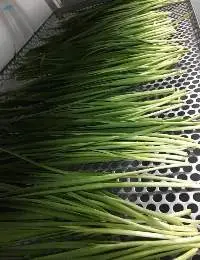
Spring onions are comprised of small round to oval bulbs, averaging 2 to 5 centimeters in diameter, attached to a straight, layered stalk of overlapping leaves. The bulbs are smooth, firm, crisp, and succulent, found in bright white to red hues, depending on the variety. There may also be a cluster of fresh, flexible, and fine tan roots attached to the bulb's base. The slender, tubular leaves have a stiff, thick, and crunchy consistency and are hollow, bearing dark green hues on the edges and lightening to a pale green tone near the bulb. Spring onion bulbs contain sugars and are absent of the gases developed in more mature bulbs, creating a sweet and mild, mellow flavor. The leaves have a stronger taste and contribute herbaceous, pungent, and grassy nuances.

USES
Spring onions contain vitamin A to maintain healthy organ functioning, vitamin C to strengthen the immune system, and vitamin K to promote faster wound healing. The onions also provide calcium to protect bones and teeth, potassium to balance fluid levels within the body, antioxidants to reduce inflammation, and other nutrients, including phosphorus, magnesium, and copper.

Season
Spring onions are available year-round.
Jun-17-22
Supplier From Amphoe Bang Phli, Samut Prakarn, Thailand
 Inquire Now  
PRODUCT INFO
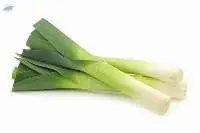
Leeks look like scallions (or green onions), but they're a lot larger. And their mild flavor and ease of preparation make the vegetable a favorite addition to soups, stews, pastas and more. Generally, the taste of leeks can be described as a mild onion that is slightly sweet. The younger the leek, the more delicate its flavor and texture. These are preferred for raw preparations.are a bulbous vegetable with white flesh and leafy green tops. The bulb, however, is not round, but just slightly larger than the stem nearest the roots. The more rounded the bulb, the older the leek.

SEASONS
Leeks are available year-round.
Jun-17-22

Chinese Chive

MOQ: Not Specified
Supplier From Amphoe Bang Phli, Samut Prakarn, Thailand
 Inquire Now  
PRODUCT INFO
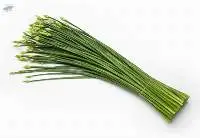
Chinese Chive Leaves present a straw-like stem. It is tubular, have onion taste and a subtle taste of garlic, hollow and dark green with pointy end. Each stem can grow up to 20 inches (half a meter). Moreover, such stems are of a lighter green than its onion counterpart. The flowers are really small and altogether creates a spherical bunch at the top. Each tiny flower has 6 petals, and it is pink/purple.

USES
You'll mainly use the leaves of your Chinese chives, but if you don't cut too much, the plants will produce edible flowers too. Since they're perennial, you'll get harvests for years to come. Eat the leaves fresh, or add them to your cooking for a light garlic flavour. The clump-forming plants are quite attractive, so this perennial will look good in your flower garden too! And unlike many other edibles.

SEASON
Chinese Chive are available year-round.
Jun-17-22
Supplier From Amphoe Bang Phli, Samut Prakarn, Thailand
 Inquire Now  
PRODUCT INFO
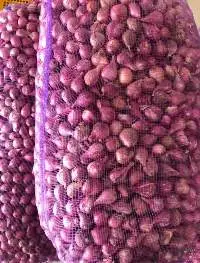
Thai Shallots are small in size and are oblong in shape with a rounded center tapering to pointed, slightly curved ends. The bulbs are encased in dry, papery, thin bright red skin that easily flakes when touched. Inside the skin, there are clusters of 2-3 cloves of individually wrapped segments similar to garlic, and the firm, dense, and juicy cloves are pale white, almost translucent, with red-purple rings. Thai Shallots are aromatic, pungent, sweet, and crisp when raw and when cooked, they develop a sweet, savory flavor with notes similar to garlic.

SEASON
Red Shallots are available year-round.
Jun-17-22
Supplier From Amphoe Bang Phli, Samut Prakarn, Thailand
 Inquire Now  
PRODUCT INFO
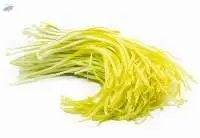
Yellow chinese chive Leaves grow in clumps of slender, elongated leaves averaging 15 to 20 centimeters in length and have a cylindrical appearance ending in a curved tip. The leaves are thin, delicate, and flat, notably solid and not hollow. Yellow chinese chive Leaves are wider than common garden chives and showcase pale shades of yellow and white, the coloring dependent on the growing conditions. Each leaf has a crisp, succulent, and tender consistency and is easily damaged as they are fragile in nature. Yellow chinese chive Leaves are known for their robust, garlic-like aroma and have a clean, vegetal flavor mixed with mildly sweet nuances of garlic and onions.

USES
Yellow chinese chive leaves and peppery, Chinese celery tastes similar to regular celery, only much stronger - it is rarely eaten raw. Toss in stir-fries, fried rice dishes or vegetable sautes. Pair with ham, lamb, chicken, turkey or game entrees. To store, place in a perforated plastic bag refrigerate. Do not wash until ready to use. To clean, rinse quickly under water. Gently shake off excess water pat dry.

SEASONS
Yellow chinese chive leaves are available year-round, with peak seasons in the spring and summer.
28 Onion Suppliers
Short on time? Let Onion sellers contact you.
Nov-23-20

Galangal

MOQ: Not Specified
Supplier From Amphoe Bang Phli, Samut Prakarn, Thailand
Supplier Of Herbs   |   Onion   |   Garlic   |   Ginger   |   Bell Pepper   |   Lemon   |   Green Onions   |   Ties
 Inquire Now  
Galangal rhizomes widely vary in size and shape and have a cylindrical, branched appearance with many shoots and bulbous knobs. The semi-smooth skin is light brown to tan, firm, hard, and is covered in darker brown rings. Underneath the woody skin, the flesh is pale yellow to ivory and is fibrous, dense, and aqueous with a spicy, floral aroma. Galangal is crisp and has a pungent, earthy, woodsy, and mustard-like flavor with subtle citrus undertones.

PRODUCT INFO
Galangal, botanically classified as Alpinia officinarum, is the underground rhizome of a tropical shrub that belongs to the Zingiberaceae family. Also known as Siamese ginger and Thai ginger, there are two main species of Galangal known as Greater Galangal and Lesser Galangal, varying in size, shape, and taste, but both species are used to flavor culinary dishes. Galangal has been utilized for its medicinal properties in Asia for thousands of years and is predominately used today to flavor Southeast Asian cuisine. Galangal adds a warm, sweet, and pungent flavor to dishes, similar to ginger but stronger in flavor, and can be found in fresh, dried, and powdered form.

USES
Galangal is primarily used in Southeast Asian cooking, lightly crushed or pounded as an aromatic to add an earthy and pungent flavor. The rhizome can be thinly sliced and added to stir-fries, boiled into curries, cooked into satay, mixed in applesauce, lightly tossed into salads, or used to flavor soups such as tom kha gai, a Thai coconut soup, or samlor kor ko, which is a Cambodian vegetable soup. It can also be used in stews, rice, and noodle dishes. Galangal is often mixed into seafood dishes as it has a flavor that can mask fishiness and is also commonly boiled into a tea. The rhizome can be found fresh or in dried and powdered form, and when ground, the flavor becomes milder but earthier. Galangal root pairs well with meats such as poultry and fish, shellfish, garlic, onions, tamarind, chiles, lemongrass, bell peppers, and green onions. The fresh rhizome will keep 1-2 weeks when stored in the refrigerator, and ground Galangal will keep up to one year when stored in a cool, dry, and dark place.

SEASONS
Galangal is available year-round.
Jun-17-22
Supplier From Amphoe Bang Phli, Samut Prakarn, Thailand
Supplier Of Chives   |   Milk   |   Onion   |   Garlic   |   Ties
 Inquire Now  
PRODUCT INFO
Chinese chives flower (Dok-Kui-Chai) is a biennial plant. in the same circle as the onion There is a rhizome underground. The rhizome is small and clumping, looks round, the stem is wrapped. With the surrounding leaf sheaths are green, the leaves are single, arranged alternately, the leaves look like garlic leaves. long flat leaves with parallel edges The base of the leaves is covered with interlacing interlaces. At the base of the stem, it is green with a spicy taste. strong odor bouquet looks like an umbrella round and then bloom There are small flowers on the stem. The flower stalks are long, round and stump. The petals are white, fragrant, the stem is green. has a sweet, crispy taste bring to cook There are many different menus. Thailand has many varieties planted.

USES
Help nourish milk Helps to treat gonorrhea, helps to nourish sex, helps to nourish the kidneys, helps to treat hives helps maintain bones help prevent cancer Help reduce cholesterol levels in the blood. help prevent diabetes help treat diabetes Help cure tuberculosis, cure colds, help cure otitis media. Helps to cure nosebleeds, cure vomiting, cure diarrhea, cure flatulence, cure indigestion, help drive parasites, help heal hemorrhoids, cure gallstones, help cure urinary congestion, help disinfect, cure poisonous insect bites. help heal purulent wounds Helps heal black and green bruises, relieve pain, heal inflamed wounds, help build red blood cells Helps reduce intestinal inflammation Help prevent colon cancer.

SEASONS
Chinese chives flower is available year-round.
Jun-17-22
Supplier From Amphoe Bang Phli, Samut Prakarn, Thailand
 Inquire Now  
PRODUCT INFO
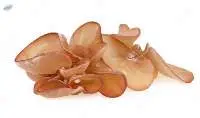
Ear mushrooms are small to medium in size, averaging 3-8 centimeters in diameter, and are curved and wavy with an ear-like or cup-like shape. The fruiting bodies are brown to dark brown with a slippery or gelatinous texture and can be made up of smooth, wavy edges or many folds and wrinkles with some veining. With age, the gill-less and stemless fungus darkens, and the spores range in color from yellow, cream, to white. When cooked, Wood Ear mushrooms are firm, crunchy, and toothsome with a mild, musty flavor. Ear mushrooms contain iron, protein, fiber, and vitamins B1 and B2


USES
Ear mushrooms are best suited for cooked applications such as boiling, stir-frying, and sauteing. Before cooking, the fungus should be rinsed, and any tough patches should be removed. Used for their chewy and toothsome texture, they can be added to soups, salads, or stir-fries and readily absorb accompanying flavors. Ear mushrooms are commonly added to Chinese hot and sour soup and to Szechwan and Hunan cuisine to soak up the spicier flavors. Outside of China, ear mushrooms are most commonly found in dried form and can easily be reconstituted. To rehydrate, the fungus should be soaked in water for at least half an hour. Ear mushrooms pair well with potatoes, fermented black beans, green onions, onions, ginger, soy sauce, red wine vinegar, sesame oil, cilantro, parsley, bay leaves, allspice, snow thistle, cucumber, bamboo shoots, green peas, tofu, pork, ham, shrimp, and crab. They should be used immediately and will only keep for a couple of days when wrapped in paper towels and stored in the refrigerator.

Season
Ear mushrooms are available from early summer through early winter, while the cultivated versions are available year-round.
Jun-24-22
Supplier From Amphoe Bang Phli, Samut Prakarn, Thailand
Supplier Of Herbs   |   Sauces   |   Onion   |   Tomato   |   Garlic   |   Carrot   |   Celery
 Inquire Now  
PRODUCT INFO
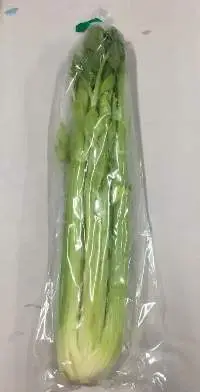
ative to the Mediterranean region and cultivated over three thousand years, celery is a biennial, herbaceous plant of the Umbelliferae, botanically named Apium graveolens. A member of the carrot family and related to anise, parsley and parsnips, celery was first recorded as a food plant in France in 1623.
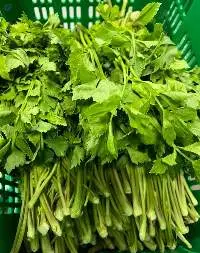
Thai celery is hydroponically grown, with long, thin stalks and mature, full leaves. Similar in size to cilantro or parsley, baby celery has an intense celery flavor that is much stronger than that mature celery heads. The strong celery flavor is concentrated in the leaves, though the entire plant is edible.


USES
Thai celery is not typically used as a substitute for mature celery because the stalks are small and thin. Use celery leaves in pestos, sauces, soups, salads or as an herb. Pair with carrots, mushrooms, asian vegetables, citrus, tomatoes, garlic and onion. Baby celery stalks may be used as an aromatic or chopped and combined with the leaves in cooked preparations. Refrigerate baby celery, keeping dry and well wrapped until ready to use.

Season
Hydroponically grown baby celery is harvested year-round.
Jun-17-22
Supplier From Amphoe Bang Phli, Samut Prakarn, Thailand
Supplier Of Herbs   |   Sauces   |   Onion   |   Tomato   |   Garlic   |   Ginger   |   Shallots
 Inquire Now  
PRODUCT INFO
Sadao leaves are small to medium in size and are elongated and oval to lanceolate in shape. The green leaves are thin and tear easily and have a smooth texture. The edges of the leaf can vary with some jagged spots mixed with flat sides. The leaves grow on small, but thick stems and each stem can grow 5-15 leaflets. Sadao leaves are tender and have a very bitter taste. The sadao plant also bears fragrant white flowers that are edible and offer a bitter, green flavor when cooked. Sadao leaves are an excellent source of antioxidants such as rutin and quercetin.

USES
Sadao leaves are best suited for cooked applications such as boiling, sauteing or stir-frying. The young leaves are often parboiled or pickled and eaten as an accompaniment to other dishes. Sadao leaves are also traditionally served with Nam Pla Wan, which is a Thai dipping sauce that uses tamarind juice, fish sauce, dried chilis, shallots, and palm sugar. This sweet sauce helps cut the bitterness of the Sadao leaves to create a sweet and sour, savory combination. Sadao leaves pair well with meats such as chicken, pork, beef, and white fish, tomatoes, aromatics such as garlic, ginger, and onions, fish sauce, and other sweet dipping sauces. Sadao leaves will keep up to a week when stored fresh in the refrigerator.

SEASON
Young neem plant are available year-round.
Jun-17-22
Supplier From Amphoe Bang Phli, Samut Prakarn, Thailand
Supplier Of Herbs   |   Sauces   |   Onion   |   Tomato   |   Garlic   |   Carrot   |   Celery
 Inquire Now  
PRODUCT INFO
Native to the Mediterranean region and cultivated over three thousand years, celery is a biennial, herbaceous plant of the Umbelliferae, botanically named Apium graveolens. A member of the carrot family and related to anise, parsley and parsnips, celery was first recorded as a food plant in France in 1623.
Baby celery is hydroponically grown, with long, thin stalks and mature, full leaves. Similar in size to cilantro or parsley, baby celery has an intense celery flavor that is much stronger than that mature celery heads. The strong celery flavor is concentrated in the leaves, though the entire plant is edible.


USES
Baby celery is not typically used as a substitute for mature celery because the stalks are small and thin. Use celery leaves in pestos, sauces, soups, salads or as an herb. Pair with carrots, mushrooms, asian vegetables, citrus, tomatoes, garlic and onion. Baby celery stalks may be used as an aromatic or chopped and combined with the leaves in cooked preparations. Refrigerate baby celery, keeping dry and well wrapped until ready to use.

Season
Hydroponically grown baby celery is harvested year-round.
Jun-17-22
Supplier From Amphoe Bang Phli, Samut Prakarn, Thailand
Supplier Of Fresh Vegetables   |   Seeds   |   Onion   |   Tomato   |   Garlic   |   Carrot   |   Cucumber   |   Radish   |   Cherry Tomatoes   |   Shallots   |   Green Onions   |   Ties
 Inquire Now  
PRODUCT INFO
Green Thai papayas widely vary in size, ranging from 15-50 centimeters in length and 10-20 centimeters in diameter, and are oval and elongated in shape. The thin skin is smooth, slightly waxy, firm, and green. Underneath the surface, the flesh is crisp, white with pale green edging, and dense with a central seed cavity filled with white pith and many inedible seeds. When raw, Green Thai papayas are crunchy with a very mild and neutral taste similar to the flavor of jicama or cucumber. Green Thai papayas are a good source of vitamins A and C and also contain folate, magnesium, manganese, and potassium. Green Thai papayas are best suited for both raw and cooked applications such as boiling or sauteing. The fruits are most well-known for their use in som tan, which is a Thai salad that mixes Green Thai papaya with fish sauce, lime, chile, garlic, and varying vegetables. Green Thai papaya can also be added to stews, pickled for extended use, grated, fried, and mixed with small shrimp to make okoy, or cooked into sour curries such as gaeng som. In Thailand, Green papaya is also blended into soups and is heavily spiced with chiles as the fruit has minimal flavor and showcases other spices. Green Thai papaya pairs well with long beans, carrots, daikon radish, chiles, cherry tomatoes, cilantro, green onions, shallots, turmeric, and peanuts. The unripe fruits will keep for a couple of days at room temperature but will then begin to ripen. Once ripe, papayas will keep up to one week when stored in the refrigerator.

USES
In Thailand, papaya is believed to have anti-inflammatory properties and is used medicinally to help cleanse the digestive system. The leaves and sap are also used in traditional medicine to reduce the itchiness of insect bites and general swelling in the body. In addition to topical use, dried leaves are commonly steeped into a tea and are believed to stimulate digestion. Elongated papaya varieties are often seen in markets sold in slender pieces, stored over ice, so locals can buy the pieces daily as needed. Many Thai families also grow papaya in their home gardens to utilize the fruits, leaves, and sap year-round in medicinal and culinary applications.

Season
Green Thai papayas are available year-round in tropical climates.
Jun-17-22
Supplier From Amphoe Bang Phli, Samut Prakarn, Thailand
Supplier Of Fresh Vegetables   |   Sauces   |   Onion   |   Tomato   |   Garlic   |   Carrot   |   Celery
 Inquire Now  
- Native to the Mediterranean region and cultivated over three thousand years, celery is a biennial, herbaceous plant of the Umbelliferae, botanically named Apium graveolens. A member of the carrot family and related to anise, parsley and parsnips, celery was first recorded as a food plant in France in 1623.
- Baby celery is hydroponically grown, with long, thin stalks and mature, full leaves. Similar in size to cilantro or parsley, baby celery has an intense celery flavor that is much stronger than that mature celery heads. The strong celery flavor is concentrated in the leaves, though the entire plant is edible.
- Baby celery is not typically used as a substitute for mature celery because the stalks are small and thin. Use celery leaves in pestos, sauces, soups, salads or as an herb. Pair with carrots, mushrooms, asian vegetables, citrus, tomatoes, garlic and onion. Baby celery stalks may be used as an aromatic or chopped and combined with the leaves in cooked preparations. Refrigerate baby celery, keeping dry and well wrapped until ready to use.
- Hydroponically grown baby celery is harvested year-round.
Jun-17-22
Supplier From Amphoe Bang Phli, Samut Prakarn, Thailand
Supplier Of Fresh Vegetables   |   Milk   |   Seeds   |   Onion   |   Garlic   |   Lemon   |   Coconut Milk
 Inquire Now  
PRODUCT INFO
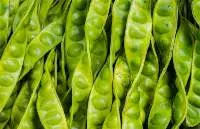
Peteh beans (Sator) pods are medium to large in size, averaging 30-45 centimeters in length, and are long, wide, ribbon-like, and sometimes twisted in shape. The green pods grow in clusters on tall trees, and when immature, the pods are flat and almost translucent. As they mature, the seeds begin to form within the pod causing protrusions, and the pod becomes tough, hard, and vibrant green. Inside the pod, there is a cream-colored, slippery film that encases the seeds and each pod can hold 15-20 seeds. The seeds are pale green and are similar in size to almonds. Peteh beans have an unusual smell, often compared to natural gas, and are crisp, soft, and tender with a rich and pungent flavor. Peteh beans (Sator) contain fiber, iron, calcium, potassium, vitamin C, riboflavin, and thiamin.

USES
Peteh beans (Sator) are best suited for cooked applications such as roasting, stir-frying, deep-frying, and sauteing. When young, the pods do not contain fully developed seeds and can be used whole in stir-fries or consumed raw, pickled, or fried. When mature, Peteh beans must be peeled before cooking and can be boiled in coconut milk or stir-fried with shrimp, curry paste, garlic, and chilies. It can also be roasted in the pods and eaten similar to edamame. To remove the seeds, carefully use a sharp knife to cut the pod or scrape the outer layer off into a bowl. Peteh beans can be dried, causing the seeds to turn black, and stored for extended use, or the beans can be pickled in a sour brine, creating a slightly rubbery texture without the loss of flavor. Peteh beans pairs well with chilies, garlic, onions, turmeric, lemongrass, kaffir lime leaves, shrimp paste, oyster sauce, shrimp, beef, pork, or poultry, and rice. The beans will keep for a week when stored in a cool and dry place and will keep for a couple of months when fermented.

SEASON
Peteh Bean is available year-round.
Nov-23-20
Supplier From Amphoe Bang Phli, Samut Prakarn, Thailand
Supplier Of Herbs   |   Sauces   |   Soy Sauce   |   Onion   |   Garlic   |   Ginger   |   Cabbage   |   Spinach
 Inquire Now  
SKU: 217537123517253
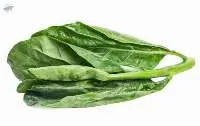
Morning glory, is a hollow-stemmed semi-aquatic plant with long lance-like leaves. It's used throughout Asia but is perhaps best known by visitors to SE Asia who've seen theatrical street vendors cook it, then throw it across the street to be served up to goggled eyed and gasping tourists!

PRODUCT INFO
Chinese Morning Glory, botanically classified as Ipomoea aquatica, grow on an herbaceous, trailing vine that is found in humid, tropical lowlands and belongs to the Convolvulaceae, or morning glory family. Also known as Kangkung, Kankun, Chinese spinach, Water spinach, River spinach, and Swamp cabbage, Chinese Morning Glory are a popular leaf vegetable prized for its crunchy stems and tender leaves and can be found in most Southeast Asian cuisines.

USES
Chinese Morning Glory can be consumed raw or in cooked applications such as steaming, boiling, or stir-frying. Young shoots can be made into a salad and served with green papaya, but the fragile leaves need to be washed thoroughly before use. Chinese Morning Glory are commonly stir-fried in oil and served as a side dish or combined with other vegetables and meats to make a complete meal. They can also be used in curries, soups, and coated in a batter and fried to make a crispy appetizer. Chinese Morning Glory pair well with aromatics such as ginger, garlic, and onions, chili peppers, bay leaves, nam phrik, vinegar, soy sauce, fish sauce, sesame oil, peanut sauces, cuttlefish, and meats such as chicken, pork, and beef. They are highly perishable when fresh and will keep up to 1-2 days in the refrigerator.

SEASONS
Chinese Morning Glory is available year-round.
Jun-17-22
Supplier From Amphoe Bang Phli, Samut Prakarn, Thailand
 Inquire Now  
PRODUCT INFO
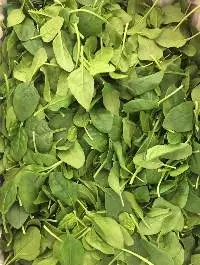
Spinach is a leafy green producing succulent, dark green, spoon-shaped leaves. It offers a subtle, yet assertive vegetal flavor often with iron or metallic notes. Depending upon variety and maturity, Spinach can be sweet, earthy, nutty and even tangy.

USES
Spinach can be eaten fresh or cook and stands up well to heat, baking and sauteing. Use as in a salad mix or as a dark, leafy green. It is highly versatile and pairs well with spring vegetables, citrus, berries, eggs, nuts, bacon, pasta, cream and fresh cheeses. Flavor with Indian or Middle Eastern spices, creams, ginger, garlic, shallots, chiles and soy. Spinach will keep, dry and refrigerated, for one to two weeks.

SEASONS
Crayon Spinach is available year-round.
Jun-17-22

Kale

MOQ: Not Specified
Supplier From Amphoe Bang Phli, Samut Prakarn, Thailand
Supplier Of Fresh Vegetables   |   Soy Sauce   |   Potato   |   Onion   |   Garlic   |   Ginger   |   Cabbage   |   Lemon
 Inquire Now  
PRODUCT INFO
Kale is a non-heading, leafy form of wild cabbage that comes in a range of shapes, sizes, and colors, such as blue-green, yellow-green, white, red, or purple. Different cultivars are classified by differences in their stem length and their leaf structure, as some are flat and others are frilly. The standard Kale we usually find in the grocery store is pale to deep green with large, ruffle-edged leaves and long stems. It is hardy and fibrous when fully mature, and tender enough to be used as a raw salad green when young. The pale green stems are tough and typically removed, while the tightly curled leaves are chewy yet succulent. Depending on the variety, Kale can sometimes be spicy, other times a bit sweet, and usually slightly bitter. In general, Kale offers an earthy flavor with a nutty sweetness that is accentuated when cooked.

USES
Considering its many forms and stages of harvest, Kale is an incredibly versatile green in the kitchen, and can be used raw or cooked. Young Kale leaves add an earthy flavor to raw salad green mixes, and fully mature Kale is one of the few leafy greens that doesn't shrink much when it's cooked. It's great sauteed, roasted, stewed, and even baked into Kale chips. Just be careful not to over-cook it, as it can develop a more bitter taste. Kale is also often added raw to smoothies, juices, and salads. To prep Kale for use, whether raw or cooked, first remove the tough and fibrous stems. A quick and dirty way to do it is to hold the stem in one hand and strip leaves along the stem away from you. You can also cut the leaves into thin, confetti-like ribbons. A quick massage can help the process of breaking up the cellulose structure of Kale. You can drizzle it with olive oil, salt, and lemon juice, and rub the leaves together in your hands to get a slightly sweeter, much silkier Kale. This leafy green pairs well with garlic, onion, sesame, soy sauce, ginger, smoked or roasted meats, potatoes, grains, oregano, thyme, red pepper, cream, Parmesan cheese, and more. To store Kale, wrap the leaves in a loose bundle with a paper towel or a thin cotton kitchen towel, place them in a large, sealable bag, and refrigerate in the crisper drawer for up to a week.

SEASONS
Kale is available year-round with a peak season in winter.
Jun-17-22

Purple Eggplant

MOQ: Not Specified
Supplier From Amphoe Bang Phli, Samut Prakarn, Thailand
Supplier Of Fresh Brinjal   |   Soy Sauce   |   Onion   |   Tomato   |   Garlic   |   Ginger   |   Eggplant   |   Ties
 Inquire Now  
PRODUCT INFO
Purple eggplants are long and thin, averaging 15-20 centimeters in length and 5 centimeters in diameter. These fruits can be crooked or straight, and its thin outer skin ranges from violet to bright purple. The inner flesh is cotton white, semi-firm, and nearly seedless. Purple eggplants have a mild and sweet flavor without the bitterness associated with eggplant.

USES
Purple eggplants are best suited for cooked applications such as braising, stir-frying, sauteing and grilling. Their tender flesh cooks quicker than most Purple eggplant varieties, and its flavor and texture will be at its peak when baked. Stir-frying Purple eggplant is the most popular preparation method as the eggplant has a meaty and flavorful texture. Purple eggplant holds up well to spicy, sweet, and savory flavors. Complimentary ingredients include cumin, garlic, ginger, cilantro, fermented beans, chilies, soy sauce, vinegar, mushrooms, onions, sesame oil, chicken, pork, chickpeas, lentils, hardy greens, and summer vegetables such as tomatoes and squashes. Purple eggplant will keep up to one week when stored in a cool and dry place.

SEASON
Purple Eggplant is available year-round.
Nov-23-20
Supplier From Amphoe Bang Phli, Samut Prakarn, Thailand
Supplier Of Fresh Vegetables   |   Seeds   |   Onion   |   Tomato   |   Garlic   |   Okra   |   Turnip   |   Basil   |   Lemon
 Inquire Now  
SKU: 364115376135191
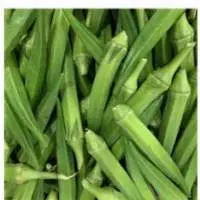
Green okra has a torpedo-shaped pod ranging in length of five to six inches when harvested mature. The pods are pale lime to lime green color, their exterior has furrowed lengthwise grooves. The skin can often be fuzzy to prickly, which can cause an allergic reaction to sensitive skin. The flesh bears a tender spongy membrane with many small white seeds. Okra is known less for its lean flavor and more for its sticky sap that creates the flesh's gelatinous texture.

PRODUCT INFO
Green Okra is a member of the mallow family along with cotton, cocoa and hibiscus. The okra plant produces broad oak-shaped leaves with bold yellow and white hibiscus-like blossoms. The fruits sprout in vertical patterns from the plant's stems. The sign of a plant flowering indicates fruits will develop quickly within 3-5 days. Young fruits must be harvested daily as the fruits are known to grow so fast you can almost see them growing in front of your eyes. One plant can produce up to 100 okra. Okra left on the stem too long will become tough and essentially unfit for use. Okra is grown for fresh-eating but it also has many other purposes. Okra plants are grown commercially for pickling and canning alone or as a canned soup ingredient, while the seeds are also harvested for making oil and in some cultures are ground and used as a coffee substitute or supplement.

USES
With okra, harvesting young tender fruits and knowledge of how to cook it are two key ingredients. Okra is historically not eaten alone, rather paired in a multitude of recipes alongside ingredients with bold, complex flavors and varying textures. Okra is most often used as a soup or stew ingredient, though its textures and flavors are truly enhanced when fried and grilled. Okra pairs well with basil, bacon, beet greens, butter, cream, garlic, ham, lemon, kale, onions, parsley, olive oil, pickled vegetables, chile peppers and peppercorns, paprika, tomatoes and turnips.

SEASONS
Okra is available year-round
Jun-17-22
Supplier From Amphoe Bang Phli, Samut Prakarn, Thailand
Supplier Of Herbs   |   Shrimps   |   Ginger   |   Broccoli   |   Lettuce   |   Shallots   |   Ties
 Inquire Now  
PRODUCT INFO
Cha plu leaves are another ingredient we are lucky to have available to us at Southeast Asian markets. It is a mild flavored leaf that is well-suited for making wraps, as it is generally enjoyed in Thailand and in Laos where it is known as cha plu leaf.Many mistake this for another leaf used by many in South and Southeast Asia to wrap the areca nut and called "betel leaf" are used as a wrapper in the dish 'Mieng Kham'. This is a traditional Thai dish, containing an assortment of fillings, like peanuts, shrimps, shallots with lime and raw ginger. Bai Cha Plu has been seen all over Asia, from South to the East. Similar to the Thai Betel edible leaf, but not as bitter. If you are making Mieng, substitute any mild flavour leaf for Fish Mint. Real Thai Recipes suggests to replace either the lettuce or Chinese Broccoli. Thai Bai Plu Cha is also shredded up as one of the vegetables in a Thai rice dish �¢??Kao Yum�¢??. Alternatively, for an Asian twist on a traditional English dish, use this leaf for meals like soups and salads.

USES
The leaves are used to wrap up as a snack, known as "Miang Kham" and are commonly used as vegetables in curry. (local food in the north) has properties as an expectorant, expels wind and helps moisten the throat.

SEASON
Chaplu leaves are available year-round.
28 Onion Suppliers
Short on time? Let Onion sellers contact you.
See what buyers and suppliers are discussing in Onion import export community