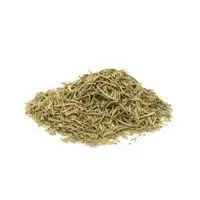
Rosemary is an aromatic member of the mint family native to the Mediterranean region where it is utilized as a treasured culinary spice. It is a flowering evergreen, producing thin, needle-like leaves which are harvested for food or medicine. Rosemary plants are commonly cultivated and easily grown in many household gardens. They can grow prolifically and prefer full sun and well-drained soil, but can also thrive in pots on the windowsill.
There are many cultivators of rosemary worldwide, each with unique growth and flowering characteristics. Nevertheless, the flavor of rosemary is not highly variable and makes an excellent addition to many traditional dishes.
Rosemary adds a delightful flavor to cuisine all across the world. The younger leaves are preferred for a sweeter flavor, standing up well to cooking, even at high temperatures. The smell of rosemary is piney and fresh; familiar but also distinctive. It is baked into breads and crackers, and is classically used as a rub for pork and lamb.
Rosemary leaves and essential oil are used in herbal medicine. Food manufacturers add rosemary to meats and sauces as an antioxidant and stabilizer. The herb is also used to make liqueurs, such as Benedictine and Danziger Goldwasser.
Medicinally, rosemary is approved by the German Commission E to support healthy digestion. It is also approved externally for healthy circulation and alleviation of joint pain. The oil is frequently used for aromatherapy, and has been shown to enhance alertness.
Botanical name: Lippia citriadora
INCI: Lippia citriodora leaf/flower oil
CAS No: 8024-12-2
EINECS No: 285-515-0
Country of origin: Morocco
Extraction method: Steam Distilled
Part used: Leaves
Color: Golden yellow transparent liquid
Gravity: 0.886 to 0.920
Major constituents:
Verbenone, linalool, geranial.
Common uses: Verbena essential oil has been used for cramps, indigestion, liver congestion, anxiety, insomnia, nervous tension and stress related conditions. The dried leaves are still used as a popular household tea in Europe as a refreshing, uplifting drink and to restore the liver after a hang-over. It is also popular in France, Europe, and USA in perfumery and citrus colognes
Manufacture of all food packaging printed in cardboard or paper for restaurant pastries, food factories, boxes of tea, dates, cheese, butter... boxes for cosmetics ...
Botanical name: Citrus aurantium
INCI: Citrus aurantium amara (orange) leaf oil
CAS No: 8014 -17-3
EINECS No: 277-143-2
Country of origin: Morocco
Extraction method: Steam distillation
Part used: Leaves and twigs
Color: Pale yellow
Gravity: 0.889-0.893
Major constituents: geraniol, linalool, nerol, y-terpineol, geranyl acetate, linalyl acetate, myrcene, neryl acetate and trans-ocimene.
Common uses: Petitgrain oil can help with nervous exhaustion and stress-related conditions and in particular anger and panic. It calms and soothes the mind, while relaxing the body, easing breathing, reducing rapid heart beat, relaxing muscle spasms and stomach pains. It is great oil to use for convalescing after an illness and also for insomnia and helps to clear up a greasy skin, acne and excessive perspiration, while toning the skin.
We celebrate our ancestors traditions through soulfully sourced artisanal homeware handpicked from villages and cooperatives across our North-African homeland of Morocco. We share our treasured finds with you to connect Moroccan artisans and their ancient crafts with modern market access so they can continue doing what they love, and preserve the artistry of traditional handmade products for future generations.
Essential oils are concentrated extractions from plants, which are good for reducing stress, treating fungal infections and promoting good sleep. A process called distillation turns the â??essenceâ?? of a plant into a liquefied form for many medicinal and recreational uses. Our essential oils has been certified by USDA Organic and EcoCert.