Supplier From
Jakarta,
Kota Jakarta,
Indonesia
Supplier From
Jakarta,
Kota Jakarta,
Indonesia
What is Xanthan Gum? The Ultimate Food & Industrial Stabilizer Guide
The Science of Stability: Why Xanthan Gum is Indispensable to Modern Manufacturing
Look at the ingredient label of your favorite salad dressing, a premium gluten-free bakery mix, or even a heavy-duty bottle of automotive polish. Chances are high that you will spot a hardworking hydrocolloid (a substance that forms a gel with water) near the bottom: Xanthan Gum.
Despite its complex-sounding chemical name, Xanthan Gum is a naturally derived ingredient that has fundamentally revolutionized how modern product formulators handle texture, fluid mechanics, and long-term emulsion shelf life. For food processors and industrial manufacturing leads looking to scale production, understanding how to secure and utilize this versatile polymer is key to product success.
What is Xanthan Gum and How is it Made?
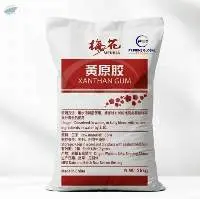
Xanthan Gum is a high-molecular-weight polysaccharide. It is produced through the aerobic fermentation of simple carbohydrates (typically glucose or sucrose derived from corn, soy, or wheat) using a specific bacterium called Xanthomonas campestris.
Once the fermentation process is complete, the resulting broth is purified, precipitated using alcohol, dried, and ground into a fine, highly soluble powder.
When added to liquid formulations even in microscopic quantities often under 1% by weight it completely transforms fluid behavior, creating incredible thickness and reliable suspension properties.
Grade : Food / Industrial / Pharma
E Number : E415
CAS No. : 11138-66-2
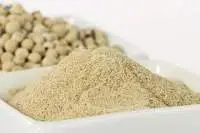
Appearance : Cream-white to light-yellow powder
Viscosity : 1,200 - 1,800 cP typical
pH (1% solution) : 6.0 - 8.0
Loss on drying : 15% typical
Particle size : 80 - 200 mesh
Solubility Soluble/dispersible in water
Pyruvic acid : 1.5% typical
Ash : Grade/specification dependent
Microbiology : Controlled according to applicable grade