Anise Spirit (Espiritu de Anis)
Camphor Spirit (Espiritu de Alcanfor)
Cinnamon Spirit (Espiritu de Canela)
Eucalyptus Spirit (Espiritu de Eucalipto)
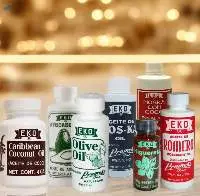
EKO Alcoholado with Eucalyptus
Peppermint Spirit (Espiritu de Menta)
Clove Spirit (Espiritu de Clavo)
Almond Oil (Aceite de Almendra)
Avocado Oil (Aceite de Aguacate)
Caribbean Coconut Oil
Coconut Oil (Aceite de Coco Liquide)
Olive Oil (Aceite de Oliva)
Palm Oil (Manteca de Corojo) Rosemary Oil (Aceite de Romero)
Sesame Oil (Aceite de Ajonjoli)
Eucalyptus Oil (Aceite de Eucalipto)
Mos ka Oil
Mos ka Oil with Coconut
Peruvian Balsam Oil Copaiba Balsam Oil Chamomile Oil (Aceite de Manzanilla) Castor Oil (Aceite de Higuereta)
Shark Oil ( Aceite de Tiburon)
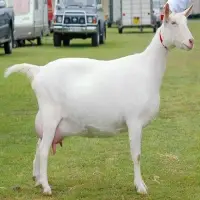
Pure Bred Boer Goats/ White Saanen Goats
Age: 3 to 8 months old
Average Weight 45 - 55 Kg each
Milking Capacity : 30 and more liters per day
Certification: Pedigree, Veterinary Certificate
Regularly vaccinated, wormed and feet trimmed
Our animal are well-bred champions, free from parasite and other disease, current on vaccination and regularly vet checked by our qualify surgeon.
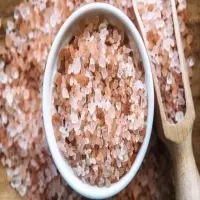
What Is Himalayan Salt
Pink Himalayan salt or Halite is rock salt mined from the Punjab region of modern Pakistan. It is chemically similar to table salt containing 98% sodium chloride with some mineral impurities which gives it its pinkish hue. Like table salt, It is primarily used as a food additive but is also used as a material for cooking and food presentation, decorative lamps, and spa treatments. Himalayan salt is marketed with claims that it benefits health, but no clinical evidence exists for such claims.
History
Early records indicate that the of mining of Himalayan salt began with the Janjua people in the 1200s. It is mostly mined at the Khewra Salt Mine in Khewra, Jhelum District, Punjab, which is situated in the foothills of the Salt Range hill system in the Punjab province of the Pakistan to the Indo-Gangetic Plain.
Composition & Uses
IMPORTANT FACT #1
Himalayan salt is chemically similar to table salt. Some salts mined in the Himalayas are not suitable for use as food or industrial use without purification due to impurities.Some salt crystals from this region have an off-white to transparent color, while impurities in some veins of salt give it a pink, reddish, or beet-red color
Geology
Himalayan salt is mined from the Salt Range mountains, the southern edge of a fold-and-thrust belt that underlies the Pothohar Plateau south of the Himalayas. Himalayan salt comes from a highly folded, faulted, and stretched thick layer of Ediacaran to early Cambrian evaporites of the Salt Range Formation.
This geological formation consists of crystalline halite interwoven with potash salts, covered by gypsiferous marl and interlayered with beds of gypsum and dolomite with infrequent seams of oil shale. These strata and the overlying Cambrian to Eocene sedimentary rocks have been thrust southward over younger sedimentary rocks and eroded to create the Salt Range.
Although Himalayan salt is sometimes marketed as Jurassic Sea Salt, this salt precipitated in subsiding rift basins along the edge of Gondwanaland.
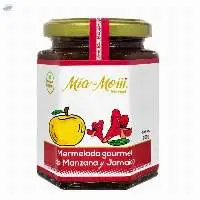
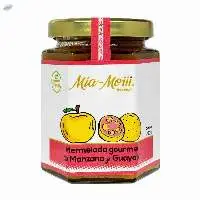
Gourmet Jam: Apple and Jamaica
An aromatic mix between the sweet apple and the acidity of the Jamaica flower.
A delicious jam based on Golden Apple 77% and Jamaica flower 11%