1.Operating temperature range:-20 to +45
2.Storage temperature:-40 to 70
3.Switching frequency:1khz to 200khz
4.Withstanding voltage:1500/3750vac for 1 minute between primary and secondary
5.Insulation resistance:500vdc 100m¦¸ miin. Between primary&secondary.
1.Operating temperature range:-20 to +45
2.Storage temperature:-40 to 70
3.Switching frequency:1khz to 200khz
4.Withstanding voltage:1500/3750vac for 1 minute between primary and secondary
5.Insulation resistance:500vdc 100m¦¸ miin. Between primary&secondary.
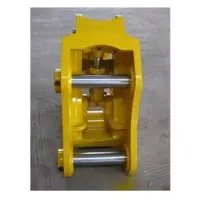
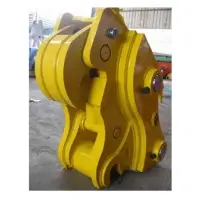
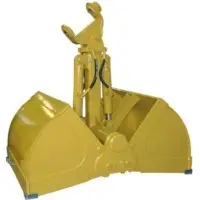
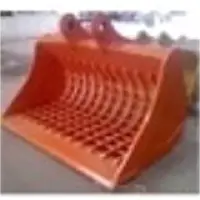
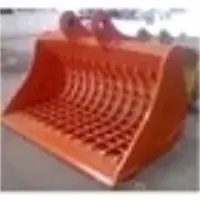
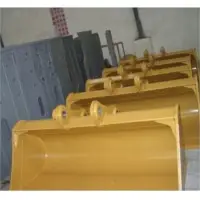
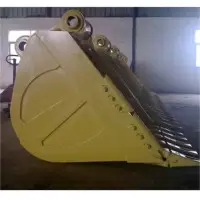
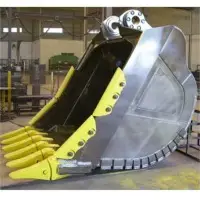
4. Main pivot point is fitted with greaseable,replaceable bushes for years of trouble-free operation.
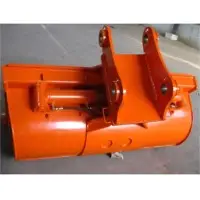
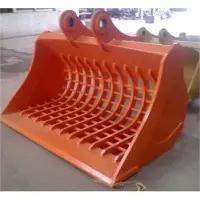
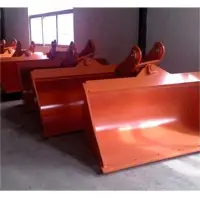
5.The tilting mechanism allows the bucket to rotate at various angles in order to form the surface to the desired shape without repositioning the machine.
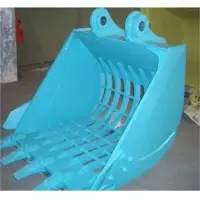
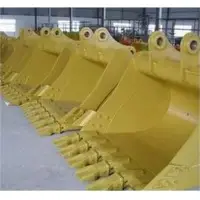
4.Compact pivot point and hanger to provide the most loading capacity.
5.Main pivot point is fitted with greaseable,replaceable bushes for years of trouble-free operation.
6.The tilting mechanism allows the bucket to rotate at various angles in order to form the surface to the desired shape without repositioning the machine.
Sunny plastic metal limited is a professional company engaged in selling all kinds of waste foam scraps such as furniture foam scrap, mattress foam scrap, bra foam scrap, memory foam scrap, shoes foam scrap and used foam scrap.
We are located in dongguan city and have convenient transportation access which nearby shenzhen and guangzhou, we own the largest factory here with more than 100 million tons of foam scraps in stock, so goods can be supplied very soon no matter how many containers you want, we promise that all our foam scraps are 100% dry, trim and without any other materials like water, fabric or skin.
Grade A pu foam scrap factory,high quality low density mixed colors,maximum 5%skin.PU furniture thicker foam,18-26kg/m3,300-600kg /bale,can load 20-22tons in one 40hq container.
Place of Origin: China
Brand Name:Fung Billion
Model Number:
Packing Export Memory Foam Sponge Scrap Hot Selling in U.A.E.
Packing:In compressed by bales
Colour:Multi color available
Quality:Grade AA
Weight:200-300kg/bale
Density:15kg/m3--30kg/m3
Packaging & Delivery
Packaging Details
In compressed by bales, 200kg--300kg/bale, 15kg/m3--30kg/m3
Delivery Time:3-5 days
Packaging & Shipping
Packaging Detail: In compressed by bales
Shipping Detail: Shipment within a week after receiving 30% deposit
The EP/LP core range was specially
designed for wideband transformer
applications where low build height is a
must. The board area occupied by the
assembly is almost a square, allowing
high packing densities on the PCB.
The bobbins have two rows of pins
allowing easy design of multiple output
transformers.
Cores are available in high permeability
materials, including the new low
THD material 3E55, for wide band
transformers and in power materials for
small power transformers.
P cores with solid centre poles have approximately a 15% higher effective area than the corresponding P cores with central hole. This makes them more suitable for applications where high fl ux densities are used. This will be the case in power conversion where the P core is still popular mainly because of its excellent magnetic shielding. This helps to avoid EMI problems, especially
at higher switching frequencies.
PM cores are a variation on classic P cores, suitable for large high power transformers and energy storage chokes. They have larger wire slots facilitating easy assembly, but still the good shielding of a closed core shape.
PM cores can be found in transmission and radar equipment and in various high power industrial installations.
RM cores were designed for use in high Q, high stability fi lter inductors.
Their shape allows economic utilization of surface area on the PCB. The range is standardized in IEC 431 and is available worldwide from many suppliers. The sizes are based on the standard PCB grid distance. RM 5, for instance, fi ts on a board space of 5 x 5 modules of 2.5 mm grid. Coil formers and clips were optimized for automated winding and mounting.
The slots provide suffi cient space for leads of windings. Magnetic shielding is not as good as with P-cores, but still
effective.
The shape of EI cores, more precisely a core set consisting of an E core and an I core, is magnetically equivalent to an E core set with shorter legs. For typical characteristics, see therefore the E core section.
A disadvantage of the classical P core design has always been the narrow wire slots, making it diffi cult to make strong coil formers with integrated solder pins.
In the PTS design this problem is solved by cutting away the sides of both core halves. This creates ample room for wires and coil former fl anges.
A range of special PTS coil formers is available but also most standard P core accessories can be used.
U cores, with rectangular crosssections, are easy to produce and are relatively inexpensive. For this reason they are very popular in low cost applications such as interference fi lters and output chokes in radio and TV equipment. There is no real optimization for transformer winding designs and the core is rather bulky.
Large U cores like U93 and U100 are suitable for very high throughput powers. They can be stacked to form transformers, capable of handling several kW's in applications such as
industrial HF welding.
The ER core design is derived from the original E core and, like
ETD and EC cores, has a round centre pole and outer legs with a
radius to accomodate round coil formers.
These cores are mainly used for power transformers. The round
centre pole allows the use of thicker wires while the shorter turn
length keeps the copper losses low.
PQ cores, like RM/I cores, have round
solid centre poles and round winding
areas.
On the outside the design is
rectangular. Top and bottom of a core
set are completely fl at, allowing good
thermal contact with heat sinks.
PQ cores are mainly used in power
conversion. Therefore they are only
offered in power materials. For most
core sizes matching coil formers are
available.
EPX cores were derived from EP cores
specially for pulse transformers in ISDN
and ADSL applications. In comparison
to EP cores they feature an increased
centre pole area and achieve the same
AL and THD performance in a smaller
core volume. The new EPX designs,
complete with SMD bobbin and clip,
satisfy the need for slimmer pulse
transformers.
They are available in the high permeability
material 3E6 for ISDN pulse
transformers and in the low harmonic
distortion material 3E55 for ADSL
wideband applications. Power materials
are introduced along with these.
A disadvantage of the classical P core
design has always been the narrow
wire slots, making it diffi cult to make
strong coil formers with integrated
solder pins.
In the PT design this problem is solved
by cutting away the sides of one core
half. This creates ample room for wires
and coil former fl anges.
A range of special PT coil formers is
available but also most standard P core
accessories can be used.
The ER core design is derived from
the original E core and, like ETD and
EC cores, has a round centre pole and
outer legs with a radius to accomodate
round coil formers.
These cores are mainly used for power
transformers. The round centre pole
allows the use of thicker wires while the
shorter turn length keeps the copper
losses low.
Planar ER cores are very suitable to
build small SMD or planar power and
signal tranformers. For the 3 smallest
sizes matching SMD coil formers and
clips are available.
The EQ core design is derived from
the ER and PQ. The range is optimized
for use in compact AC/DC notebook
adapters and DC/DC converters.
For instance, the EQ30 has the
capability to handle a power range of
50 to 70 W (fl yback topology) in an
enclosed casing of a notebook adapter
or 100 to 150 W in low profi le DC/DC
converter .
The advantages of EQ cores are a
simple core shape, round centre pole,
high Ae value , a large winding window,
low profi le and a large surface area for
heat dissipation.
The ETD core design is a further
development of
E cores. They are optimized for use
in SMPS transformers with switching
frequencies between 50 and 200
kHz. The designation ETD (Economic
Transformer Design) implies that this
design achieves maximum throughput
power related to volume and weight
of the total transformer. Shielding is
somewhat improved compared with
E cores. The matching coil formers
are suitable for many winding types
and can be handled on automatic
equipment.
Economic Flat Design (EFD) power
transformer cores offer a signifi cant
advance in circuit miniaturization. Their
low build height and high throughput
power-density make them ideally suited
to applications where space is at a
premium.
Throughput power of a ferrite core
transformer is essentially proportional
to its volume. So the transformer
is one of the main limitations in a
DC-DC converter's size. Now, with
the introduction of the EFD system, a
signifi cant reduction in transformer core
height has been achieved.
EFD transformer cores combine
both extreme fl atness with a very
high throughput power-density for
frequencies up to 1 MHz and higher.
Every transformer, based on the EFD
range, has a lower building height than
any other existing low-profi le design
with the same magnetic volume. This
is achieved by placing the centre pole
of the core always in the centre of
the fi nished transformer, thus making
maximum use of the winding area.
The PH core range consists of potcore
halves specially designed for use in
proximity switches. Their shape is
derived from the IEC standard P-core
range. Outside diameters are adapted
to fi t standardized sizes of proximity
switch housings.
Since the cores are used as
halves, their height is increased to
accommodate the winding.
A complete range of coil formers is
available.
Application
Its mostly used for the production of re-bonded foam for
furniture, mattress, bedding, pillow, Insoles, sports padding,
carpet padding and carpet underlay or used for the production of shredded foam for
pillow fillings, cushion fillings, toy fillings.
1.Operating temperature range:-20 to +45
2.Storage temperature:-40 to 70
3.Switching frequency:1khz to 200khz
4.Withstanding voltage:1500/3750vac for 1 minute between primary and secondary
5.Insulation resistance:500vdc 100m¦¸ miin. Between primary&secondary.
Custom transformer, audio transformers, toroidal transformers, ei transformers, ac transformers (220v to 110v or 110v to 220v), low frequency transformer.Manufacture, oem/odm