Please click here to check who's online and chat with them.

Find Verified Ice Creams Suppliers, Manufacturers and Wholesalers

Top Supplier Cities : Minburi   Bangkok   -  
Jun-24-22

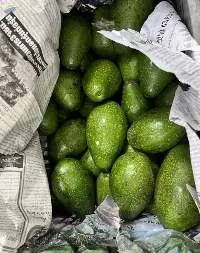
Thai Avocado

MOQ: Not Specified
Supplier From Amphoe Bang Phli, Samut Prakarn, Thailand
 Inquire Now  
PRODUCT INFO
Avocado fruits are becoming more popular in Thailand. Apart from being consumed as fresh fruits for their palatability, food value with high protein, vitamin E and digestible fat content, their oil is used also in the cosmetic industry.


USE
Their rather neutral flavour profile allows the avocados to be paired with almost any ingredient and menu, both sweet and savoury. One of the proudly presented was ripe avocado chunks served with the refreshing coconut ice cream, with optional extra Japanese red bean topping.

Season
July marks the opening of the avocado season in Thailand and the best time of the year.
Jun-17-22
Supplier From Amphoe Bang Phli, Samut Prakarn, Thailand
 Inquire Now  
PRODUCT INFO
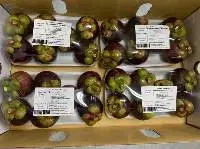
Mangosteens are a delicious treat often referred to as the "Queen of Fruit." They're about the size of a tangerine, and they have a thick purple shell which contains the soft, white edible fruit inside. Mangosteen is a must-eat fruit in Thailand! The flavor is a combination of strawberry, peach and vanilla ice cream. The white flesh is very sweet with a very slight tartness. The tartness is caused by the thick skin that tightly encases the fruit. Mangosteen is known in Thailand as the a 'queen of fruits' due to its extensive health benefits.

SEASON
Mangosteen is availble between Apr/May - September.
Nov-23-20
Supplier From Amphoe Bang Phli, Samut Prakarn, Thailand
 Inquire Now  
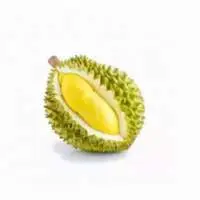
Durian is a tropical fruit distinguished by its large size and spiky, hard outer shell.

It has a smelly, custard-like flesh with large seeds.

There are several varieties, but the most common one is Durio zibethinus.

The fruit's flesh can range in color. It's most commonly yellow or pale yellow, but can also be red or green.

Durian grows in tropical regions around the world, particularly in the Southeast Asian countries of Malaysia, Indonesia, and Thailand.
The most poppular variety for export is Monthong, Chanee, Kradum, Kanyao, Volcano and a few other.

Frozen Peeled Durian use maturity / ripeness level to freeze at -18 degree celsius with this process the shelf life can be up to 2 years in the good condition.

PRODUCT INFO
Durian can be export as Whole Fresh Durian, size from 2-6kgs with at least 3 lobes to maximum 6 lobes.
Depends on destinaton regulation on the chemical and pesticide restriction. Fresh Whole Durian can export both sea & air.
The ripeness level is depending on transit time using for transport to destination plus shelf life for sell at destination.
Durian can also be export as Peeled Fresh Durian in retail package. This is more convenient than Whole Fresh Durian
which is sophisticated to whom that have less knowledge of how to notice the ripeness level (sotfness of the Durian meat).

USES
Durian can be consumed cooked or raw. It provides a distinctive taste to any dish and is often used in Asian cuisine to flavor ice cream, cakes, and other baked goods.

Durian's outer shell must be removed before eating. Place durian stem side down on a sturdy counter. Then, slice into the spiny skin about 3â??4 inches deep. Use your hands to pull the skin apart and reveal the fruit. Durian is divided into pods. Each has a pit or a stone that should be removed prior to eating.

SEASONS
Durian can be produced all year round
Nov-23-20

Fresh Durians

MOQ: Not Specified
Supplier From Amphoe Bang Phli, Samut Prakarn, Thailand
 Inquire Now  
Durian is a tropical fruit distinguished by its large size and spiky, hard outer shell.

It has a smelly, custard-like flesh with large seeds.

There are several varieties, but the most common one is Durio zibethinus.

The fruit's flesh can range in color. It's most commonly yellow or pale yellow, but can also be red or green.

Durian grows in tropical regions around the world, particularly in the Southeast Asian countries of Malaysia, Indonesia, and Thailand.
The most poppular variety for export is Monthong, Chanee, Kradum, Kanyao, Volcano and a few other.


PRODUCT INFO
Durian can be export as Whole Fresh Durian, size from 2-6kgs with at least 3 lobes to maximum 6 lobes.
Depends on destinaton regulation on the chemical and pesticide restriction. Fresh Whole Durian can export both sea & air.
The ripeness level is depending on transit time using for transport to destination plus shelf life for sell at destination.
Durian can also be export as Peeled Fresh Durian in retail package. This is more convenient than Whole Fresh Durian
which is sophisticated to whom that have less knowledge of how to notice the ripeness level (sotfness of the Durian meat).

USES
Durian can be consumed cooked or raw. It provides a distinctive taste to any dish and is often used in Asian cuisine to flavor ice cream, cakes, and other baked goods.

Durian's outer shell must be removed before eating. Place durian stem side down on a sturdy counter. Then, slice into the spiny skin about 3-4 inches deep. Use your hands to pull the skin apart and reveal the fruit. Durian is divided into pods. Each has a pit or a stone that should be removed prior to eating.

SEASONS
Durian can be produced nearly all year round
Jun-17-22

Langsat Fruit

MOQ: Not Specified
Supplier From Amphoe Bang Phli, Samut Prakarn, Thailand
Supplier Of Fresh Fruits   |   Ice Cream   |   Sauces   |   Seeds   |   Basil   |   Lychee
 Inquire Now  
PRODUCT INFO
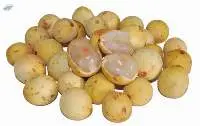
Langsat fruits are small to medium in size, averaging 3-7 centimeters in diameter, and are round to slightly oval in shape, growing in large clusters of approximately ten fruits. The thick rind is hard, leathery, and tan to pale yellow, developing brown spots and blemishes as the fruit matures. The rind is also covered in fine hairs giving the fruit a fuzzy appearance. Underneath the surface, there is a white, spongy, and very bitter layer that is easily separated and peeled, and the flesh is thick, translucent-white, and is typically divided into 1-5 segments. These segments are juicy, tender, and soft with a texture similar to grapes, and the flesh may be seedless or contain a few bitter seeds. Langsat fruits are very sour when young, but as they mature, the fruits develop a sweet-tart flavor with light acidity, reminiscent of grapefruit and pomelo. Langsat is an excellent source of vitamins A, B, C, and E, fiber, and also contains some iron, phosphorus, potassium, and calcium.

USES
Langsat is best suited for raw applications as its sweet and tangy flavor is showcased when consumed fresh, out-of-hand. The rind is easily peeled and removed from the flesh, and the segments can be consumed whole, discarding the small bitter seed. Langsat can be served as a snack or as a fresh dessert. It is also commonly segmented and mixed into fruit salads, green salads, juiced or blended into fruit drinks, or coated in syrups for a sweeter flavor to add to ice cream, desserts, and pastries. In addition to fresh preparations, Langsat can be combined into sauces, jams, and jellies for a sweet-tart preserve. Duku pairs well with other tropical fruits such as snake fruit, lychee, and rambutan, mint, basil, and cilantro. The fruits will keep for 3-4 days at room temperature and up to one week when stored in the refrigerator.

SEASON
Langsat fruits are available year-round in Southeast Asia, with a peak season in the fall through early winter.
10 Ice Creams Suppliers
Short on time? Let Ice Creams sellers contact you.
Nov-23-20

Jackfruit (Kanon)

MOQ: Not Specified
Supplier From Amphoe Bang Phli, Samut Prakarn, Thailand
Supplier Of Fresh Fruits   |   Milk   |   Ice Cream   |   Seeds   |   Potato   |   Jackfruit   |   Potato Chips   |   Ties
 Inquire Now  
PRODUCT INFO
Jackfruit spread through the rest of India and on to South-east Asia. The tree is large and the fruit itself grows not at the tip of limbs but rather out of the trunk. The jackfruit is the largest tree-born fruit in the world. A single pod can reach a length of nearly a meter and weigh close to 40 kilograms.

USES
The Jackfruit bulbs can be eaten fresh, frozen, cooked or pureed. Younger Jackfruit is added to curries and can be roasted or baked and eaten as a vegetable. It is often shredded and used as a meat substitute. Riper Jackfruit bulbs are added to salads. Make jam or ice cream from pureed bulbs. Boiling Jackfruit bulbs in milk and then straining off the liquid will result in a custard-like consistency once it has cooled. Jackfruit can be dried and then fried in oil, salted and eaten like potato chips. Jackfruit seeds can be roasted and eaten like chestnuts or dried and ground into flour. Jackfruit does not keep well once it is ripe. Unused portions of prepared fruit can be refrigerated for a few days or frozen for a few weeks.
Jackfruit is very nutrient-dense. It is a great source of fiber, protein and vitamin B. It also contains potassium, iron and calcium. The deep yellow-orange color of the Jackfruit bulbs is the result of phytonutrients like beta-carotene, giving the fruit powerful antioxidant properties.

SEASON
Jackfruits can be produced nearly all year round.
Nov-23-20
Supplier From Amphoe Bang Phli, Samut Prakarn, Thailand
Supplier Of Herbs   |   Cakes   |   Milk   |   Ice Cream   |   Soy Sauce   |   Garlic   |   Ginger   |   Basil   |   Lemon   |   Mandarin   |   Coconut Milk
 Inquire Now  
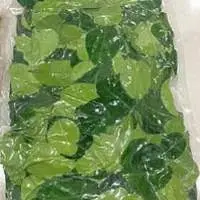
Kaffir lime leaves are small to medium in size and oblong in shape, averaging 3-5 centimeters in diameter and 8-12 centimeters in length. The top of the thick leaves is glossy and deep green, while the underside of the leaves is porous and a pale, matte green. Kaffir lime leaves grow in pairs and grow in a double leaf formation, which means two leaves grow on either side of the stem and appear to mirror each other. There is a prominent central midrib or vein and the tips of the leaves can be slightly rounded or very pointed. Kaffir lime leaves have a strong citrus taste and aroma that is said to be a blend of mandarin orange, lemon, and lime.

PRODUCT INFO
Kaffir lime leaves, botanically classified as Citrus hystrix, grow on a thorny bush that can grow to be 1-10 meters in height and belong to the Rutaceae, or citrus family along with oranges, lemons, pomelos, and grapefruit. The kaffir lime plant is valued for its fragrant leaves and its fruit's peel and is popularly used in culinary and medicinal applications in Southeast Asia. Also known as the Kieffer lime, Bai Magrood, Thai lime, Limau Puru, and Makrut limes, Kaffir limes have been given new names in various cultures to respect and avoid the use of derogatory words. In South Africa, kaffir is an offensive slang word used in racist connotations, so many retailers have taken to calling the fruit by its scientific name, while others prefer the Thai word for the fruit, Makrut lime.

USES
Kaffir lime leaves can be used in both raw and cooked preparations such as boiling, steaming, and saut�?�©ing. They can be used fresh, dried, or from a frozen state and the thick leaves are never consumed whole, but rather steeped and later removed, or sliced very thinly. Kaffir lime leaves can be sliced and used in salads or shredded and used in fish cakes. They are also widely used in soups such as tom yum and hot and sour shrimp, curries, fried rice, pastes, and stir-fries. Their herbal citrus flavor can be used to infuse desserts such as custard and ice cream. Kaffir lime leaves pair well with lemongrass, basil, cardamom, curry leaves, mint, tamarind, turmeric, cumin, galangal, ginger, garlic, soy sauce, sesame oil, jasmine rice, meats such as lamb, chicken and pork, mussels, and coconut milk. They will keep up to two weeks when stored fresh in the refrigerator and up to one year when stored in a sealed container in the freezer.

SEASONS
Kaffir Lime Leaves is available year-round.
Nov-23-20
Supplier From Amphoe Bang Phli, Samut Prakarn, Thailand
Supplier Of Herbs   |   Cakes   |   Milk   |   Ice Cream   |   Soy Sauce   |   Garlic   |   Ginger   |   Basil   |   Lemon   |   Mandarin   |   Coconut Milk
 Inquire Now  
Kaffir lime leaves are small to medium in size and oblong in shape, averaging 3-5 centimeters in diameter and 8-12 centimeters in length. The top of the thick leaves is glossy and deep green, while the underside of the leaves is porous and a pale, matte green. Kaffir lime leaves grow in pairs and grow in a double leaf formation, which means two leaves grow on either side of the stem and appear to mirror each other. There is a prominent central midrib or vein and the tips of the leaves can be slightly rounded or very pointed. Kaffir lime leaves have a strong citrus taste and aroma that is said to be a blend of mandarin orange, lemon, and lime.

PRODUCT INFO
Kaffir lime leaves, botanically classified as Citrus hystrix, grow on a thorny bush that can grow to be 1-10 meters in height and belong to the Rutaceae, or citrus family along with oranges, lemons, pomelos, and grapefruit. The kaffir lime plant is valued for its fragrant leaves and its fruit's peel and is popularly used in culinary and medicinal applications in Southeast Asia. Also known as the Kieffer lime, Bai Magrood, Thai lime, Limau Puru, and Makrut limes, Kaffir limes have been given new names in various cultures to respect and avoid the use of derogatory words. In South Africa, kaffir is an offensive slang word used in racist connotations, so many retailers have taken to calling the fruit by its scientific name, while others prefer the Thai word for the fruit, Makrut lime.

USES
Kaffir lime leaves can be used in both raw and cooked preparations such as boiling, steaming. They can be used fresh, dried, or from a frozen state and the thick leaves are never consumed whole, but rather steeped and later removed, or sliced very thinly. Kaffir lime leaves can be sliced and used in salads or shredded and used in fish cakes. They are also widely used in soups such as tom yum and hot and sour shrimp, curries, fried rice, pastes, and stir-fries. Their herbal citrus flavor can be used to infuse desserts such as custard and ice cream. Kaffir lime leaves pair well with lemongrass, basil, cardamom, curry leaves, mint, tamarind, turmeric, cumin, galangal, ginger, garlic, soy sauce, sesame oil, jasmine rice, meats such as lamb, chicken and pork, mussels, and coconut milk. They will keep up to two weeks when stored fresh in the refrigerator and up to one year when stored in a sealed container in the freezer.

SEASON
Kaffir Lime Leaves is available year-round.
Jun-23-22
Supplier From Amphoe Bang Phli, Samut Prakarn, Thailand
Supplier Of IQF or Frozen Vegetables   |   Cakes   |   Milk   |   Ice Cream   |   Soy Sauce   |   Garlic   |   Ginger   |   Basil   |   Lemon   |   Mandarin   |   Coconut Milk
 Inquire Now  
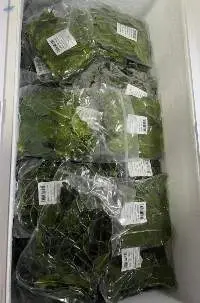
Kaffir lime leaves are small to medium in size and oblong in shape, averaging 3-5 centimeters in diameter and 8-12 centimeters in length. The top of the thick leaves is glossy and deep green, while the underside of the leaves is porous and a pale, matte green. Kaffir lime leaves grow in pairs and grow in a double leaf formation, which means two leaves grow on either side of the stem and appear to mirror each other. There is a prominent central midrib or vein and the tips of the leaves can be slightly rounded or very pointed. Kaffir lime leaves have a strong citrus taste and aroma that is said to be a blend of mandarin orange, lemon, and lime.

PRODUCT INFO
Kaffir lime leaves, botanically classified as Citrus hystrix, grow on a thorny bush that can grow to be 1-10 meters in height and belong to the Rutaceae, or citrus family along with oranges, lemons, pomelos, and grapefruit. The kaffir lime plant is valued for its fragrant leaves and its fruit's peel and is popularly used in culinary and medicinal applications in Southeast Asia. Also known as the Kieffer lime, Bai Magrood, Thai lime, Limau Puru, and Makrut limes, Kaffir limes have been given new names in various cultures to respect and avoid the use of derogatory words. In South Africa, kaffir is an offensive slang word used in racist connotations, so many retailers have taken to calling the fruit by its scientific name, while others prefer the Thai word for the fruit, Makrut lime.

USES
Kaffir lime leaves can be used in both raw and cooked preparations such as boiling, steaming. They can be used fresh, dried, or from a frozen state and the thick leaves are never consumed whole, but rather steeped and later removed, or sliced very thinly. Kaffir lime leaves can be sliced and used in salads or shredded and used in fish cakes. They are also widely used in soups such as tom yum and hot and sour shrimp, curries, fried rice, pastes, and stir-fries. Their herbal citrus flavor can be used to infuse desserts such as custard and ice cream. Kaffir lime leaves pair well with lemongrass, basil, cardamom, curry leaves, mint, tamarind, turmeric, cumin, galangal, ginger, garlic, soy sauce, sesame oil, jasmine rice, meats such as lamb, chicken and pork, mussels, and coconut milk. They will keep up to two weeks when stored fresh in the refrigerator and up to one year when stored in a sealed container in the freezer.

Season
Kaffir lime leaves are available year-round.
Apr-09-21

Dried Kaffir Lime Leaves

MOQ: 100  Kilograms
Sample Available
Supplier From Amphoe Bang Phli, Samut Prakarn, Thailand
Supplier Of Herbs   |   Cakes   |   Milk   |   Ice Cream   |   Soy Sauce   |   Oils   |   Garlic   |   Ginger   |   Basil   |   Lemon   |   Mandarin   |   Coconut Milk   |   Ties
 Inquire Now  
The kaffir lime tree is native to tropical Southeast Asia and was spread to neighboring regions via exporters and trade routes. Today Kaffir lime leaves are available in fresh markets and frozen in specialty grocers in Asia, Southeast Asia, Africa, the United States.

PRODUCT INFO
Kaffir limes are widely used in Thailand as a household ingredient. Essential oils are extracted from the fruit's peel and are used for cleaning products, shampoos, and as a method to kill lice. The fruit's zest is used to flavor curries and soups, and the leaves are also crushed and used as potpourri or placed in a hot bath for a citrus aroma. Kaffir lime plants are so common and frequently used in Thailand that the majority of rural households have their own trees growing in their backyards.

Kaffir lime leaves are small to medium in size and oblong in shape, averaging 3-5 centimeters in diameter and 8-12 centimeters in length. The top of the thick leaves is glossy and deep green, while the underside of the leaves is porous and a pale, matte green. Kaffir lime leaves grow in pairs and grow in a double leaf formation, which means two leaves grow on either side of the stem and appear to mirror each other. There is a prominent central midrib or vein and the tips of the leaves can be slightly rounded or very pointed. Kaffir lime leaves have a strong citrus taste and aroma that is said to be a blend of mandarin orange, lemon, and lime.

USES
Kaffir lime leaves contain some antioxidants. They also contain limonene and citronella, which both contribute to the flavor and fragrance of the leaves and have been shown to have antimicrobial properties.
Kaffir lime leaves can be used in both raw and cooked preparations such as boiling, steaming, and saut�©ing. They can be used fresh, dried, or from a frozen state and the thick leaves are never consumed whole, but rather steeped and later removed, or sliced very thinly. Kaffir lime leaves can be sliced and used in salads or shredded and used in fish cakes. They are also widely used in soups such as tom yum and hot and sour shrimp, curries, fried rice, pastes, and stir-fries. Their herbal citrus flavor can be used to infuse desserts such as custard and ice cream. Kaffir lime leaves pair well with lemongrass, basil, cardamom, curry leaves, mint, tamarind, turmeric, cumin, galangal, ginger, garlic, soy sauce, sesame oil, jasmine rice, meats such as lamb, chicken and pork, mussels, and coconut milk. They will keep up to two weeks when stored fresh in the refrigerator and up to one year when stored in a sealed container in the freezer.

SEASON
Kaffir Lime Leaves is available year-round.
10 Ice Creams Suppliers
Short on time? Let Ice Creams sellers contact you.
  • First page
  • Next
See what buyers and suppliers are discussing in Ice Creams import export community