Please click here to check who's online and chat with them.

Find Verified Heat Exchangers Suppliers, Manufacturers and Wholesalers

GOLD Member
VERIFIED
Nov-05-21
Supplier From Pune, Maharashtra, India
 Inquire Now
Jan-22-23
Supplier From Ankleshwar, Gujarat, India
 Inquire Now  
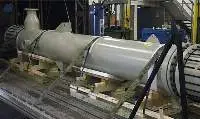
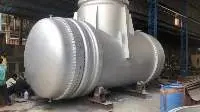
FITZER offers inhouse designed and manufactured graphite shell and tube heat exchangers. Graphite shell and tube heat exchanger is used to cool down or heat up ultra-corrosive chemicals.
We provide wide range of size in graphite shell and tube heat exchangers with our prime focus on performance and reliability. Our extended and highly customizable heat exchangers portfolio enables us to provide particularly adapted solutions. All our graphite shell and tube heat exchangersâ?? designs are totally modular to best fit with individual process specifications. The diameter, number, and length of tubes, the number of passes on tube side, the type, number, and opening of baffles on the shell side can be set to best meet the velocities, pressure drops, and heat transfer requirements.

Customer Benefits :
Outstanding Corrosion Resistance â?? Our graphite material is high corrosive resistant at high temperature
Multipass construction on process side as well as service side.
Robustness Shell and Tube Heat Exchanger are robust in design
Easy to install
High operational safety
Reliability High operational performance with no moving part
Low Maintenance Cost â?? Fast and reliable services for repair and spare parts.
Sturdy, compact, and modular design
Long Lifetime Self-protected metal shell, Premium quality graphite, customized design, no moving part.
Product Warranty
Jan-21-23

Heat Pipe Heat Exchanger

MOQ: 1  Sets
Sample Available
Supplier From Ankleshwar, Gujarat, India
 Inquire Now  
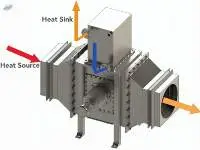
Flue Gas Heat Recovery Study

Every 20C heat recovered from Flue Gases translates to ~1% improvement in Boiler efficiency.

For flue gases with SOx and/or sooty, particulate material

Conventional heat exchangers suffer from cold spot and SOx condensation corrosion due to cold spots. Also, sooty flue gases offer challenges with respect to cleaning and maintenance in conventional exchangers.
HPHE operates at isothermal conditions and hence does not suffer from cold spot formation. Flue gases can be cooled close to the condensation temperature allowing higher heat recovery. Automated or manual in-situ cleaning of HPHE makes it an ideal exchanger for sooty flue gases.
This study focuses on a boiler producing 6 t/h saturated steam at 10 bars. Two fuel cases have been considered for this study, Briquettes and Natural Gas.
Briquette fired boiler
The flue gases will contain a high amount of particulate/soot. The evaporator section of the HPHE for this case has non finned smooth heat pipes and is fitted with an Ultra-Sonic soot blower.

The graph on the right shows the Cost Saved per year and HPHE CAPEX for 60, 80, 100, 120 �°C heat recovered from flue gases, assuming the flue gas exits the boiler at 200�°C.


Savings is calculated based cost of steam @ Rs 2.3/kg

Savings is calculated based cost of steam @ Rs 4.2/kg
Natural Gas fired boiler
The HPHE for this case will have fins in the evaporator section to improve the overall heat transfer. In case there is SOx in the flue gas, the gases can be cooled to a temperature close to the dew point at the stack exit.

The graph on the left shows the Cost Saved per year and HPHE CAPEX for 60, 80, 100, 120 �°C heat recovered from flue gases, assuming the flue gas exits the boiler at 200�°C.

The shown Savings and CAPEX figures are estimated values. Connect with us to find our the exact cost savings and HPHE CAPEX for your project.
Dec-31-22
 Inquire Now  
A heat exchanger is a system used to transfer heat between a source and a working fluid. Heat exchangers are used in both cooling and heating processes. The fluids may be separated by a solid wall to prevent mixing, or they may be in direct contact.

Classification of heat exchangers:
1. Classification according to construction:
Tubular heat exchangers.
Plate heat exchangers.
Extended surface heat exchangers.
Regenerative heat exchangers.

Pipe in pipe heat exchangers:
Hairpin heat exchangers (often also referred to as â??double pipesâ??) are characterized by a construction form which imparts a U shaped appearance to the heat exchanger. In its classical sense, the term double pipe refers to a heat exchanger consisting of a pipe within a pipe, usually of a straight-leg construction with no bends. However, due to the need for removable bundle construction and the ability to handle differential thermal expansion while avoiding the use of expansion joints (often the weak point of the exchanger), the current U-shaped configuration has become the standard in the industry.
Nov-01-22
 Inquire Now  
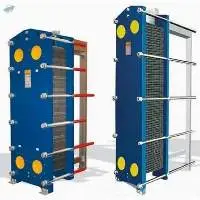
Removable Plate Heat Exchanger:

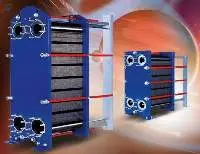
The Removable plate heat exchanger is a new type of high-efficiency heat exchanger composed of a series of metal sheets with a certain corrugated shape. Thin rectangular channels are formed between the various plates, and heat is exchanged through the halves. Plate heat exchanger is an ideal equipment for liquid-liquid and liquid-vapor heat exchange. Under the same pressure loss, the heat transfer coefficient is 3-5 times higher than that of the tubular heat exchanger, the floor area is one third of that of the tubular heat exchanger, and the heat recovery rate can be as high as 90% or more.

This product is suitable for chemical, machinery, food, beverage, medicine, residential heating, hot water supply, air conditioning and other departments. Intermediate heat exchangers used in conjunction with boilers, intermediate heat exchangers in high-rise buildings, etc., soda ash industry, synthetic ammonia, alcohol fermentation, resin synthesis cooling, etc.

Detachable plate heat exchanger is a new type of energy-saving heat exchange device with high heat transfer effect, compact structure, small footprint, easy operation, convenient cleaning, disassembly and maintenance, and easy to change the heat exchange area or process combination, etc. advantage.

1. The Removable plate heat exchanger has a compact structure with a small footprint, and the heat exchange area per unit volume is 2 to 5 times that of the shell-and-tube type. Unlike the shell-and-tube type, the maintenance site for drawing out the tube bundle is not reserved, so the same For heat exchange, the plate heat exchanger covers an area of â??â??about 1/5~1/8 of the shell and tube heat exchanger.

2. It is easy to change the heat exchange area or process combination. As long as a few plates are added or reduced, the purpose of increasing or reducing the heat exchange area can be achieved; by changing the plate arrangement or replacing a few plates, the required process combination can be achieved. It is almost impossible to increase the heat transfer area of â??â??shell and tube heat exchangers to adapt to new heat exchange conditions.

Removable plate heat exchanger is a kind of heat exchanger that is widely used in heat exchangers. It is widely used in chemical, machinery, food, beverage, medicine and other occasions. Users should select and use according to actual needs and the advantages and characteristics of heat exchangers are used to choose, and well-known brand products are also very important.
1438 Heat Exchangers Suppliers
Short on time? Let Heat Exchangers sellers contact you.
Nov-01-22
 Inquire Now  
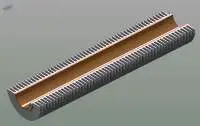
The Extruded Fin Tube also known as� Bimetallic Fin Tube� is one of the most preferred finning processes for various applications.

Manufacturing process:
Fin is produced by the rolling method (three-roll oblique rolling). Its working principle is: The smooth tube is lined with a mandrel, the tube material is driven by the roller blade to make a spiral linear movement, and is rolled by the roller. The hole pattern composed of the groove and the core rod is gradually processed with fins on its outer surface. In order to facilitate the formation of fins, the rolling parts adopt three stages of biting, rolling, and shaping during the deformation process, so that the processed fins are complete, smooth, and regular. The finned tube produced by this method is based on the base tube and the outer fin is an organic whole, so there is no problem of contact thermal resistance loss and electrical corrosion. It has good heat transfer efficiency and strong resistance to deformation. Extruded finned tubes consist of a light pipe and fins â??attachedâ?? to it. The structural parameters are mainly the inner diameter and outer diameter of the finned tube, the wall thickness of the finned tube, the fin pitch, the fin thickness and the fin height.

Material Options:
We offer the widest range of material in the industry and can extend it on request in case of special requirements for heat conductivity, mechanical properties or corrosion resistance. Below are our regular materials` combination.
A. Copper aluminum composite finned tube
B. Steel aluminum composite finned tube
C. Pure aluminum finned tube
D. Pure copper finned tube

Fin Height Options:
A. Low finned tubes
The fins of the low finned tube are extruded directly from the tube material. The fin height is only 1-2 mm. The common low fins are 1.6 mm in the shell- and-tube heat exchanger. This kind of finned tube does not need to consider the contact thermal resistance with the tube.

B. Middle finned tubes
The fin height of the finned tube is about 3.2 mm, which is often used in pressure vessel equipment such as shell and tube heat exchangers.

C. High finned tubes
The finned tubes are usually used in air heat exchangers, whose height is lower than 16mm, depending on working conditions.

D. Customized specification, please reach to us for more details.

Extruded Finned Tubes Characteristic:
A. High heat transfer performance and low contact thermal resistance
B. The contact area between fins and tubes is large, and the connection is tight and firm.
C. Good corrosion resistance, stable performance for long-term use.
D. Fins have good rigidity and are not easy deform.
E. Light weight and Low cost.
F. Low air resistance
G. Easy to clean
Nov-01-22
 Inquire Now  
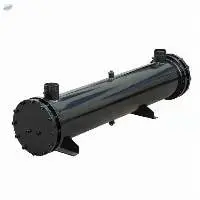
Shell and tube heat exchanger is a device that transfers part of the heat of hot fluid to cold fluid,
also known as heat exchanger. Shell and tube heat exchangers are general-purpose equipment in chemical, petroleum, power, food and many other industrial sectors, and play an important role in production. There are many types of heat exchangers, but according to the principle and method of heat exchange between cold and hot fluids, they can be basically divided into three categories: partition type, hybrid type and regenerative type. Among the three types of heat exchangers, the partition wall heat exchanger is the most widely used.

According to the different heat exchange tube bundles, the partition heat exchanger is divided into: FPR floating coil heat exchanger, LWR threaded tube heat exchanger, and WMH eddy current heat film heat exchanger.

Advantages of shell and tube heat exchangers:

1. High heat transfer coefficient: threaded pipe is a high-efficiency heat transfer element combining internal and external threads made of red copper or stainless steel with high thermal conductivity. The threaded pipe heat exchanger made of it has little fluid resistance. , then a strong turbulent flow is formed, which greatly improves the heat release coefficient inside and outside the tube. After testing, the total heat transfer coefficient of steam-water heat exchange is 3000~6000W/m2, and the total heat transfer coefficient of water-water heat exchange is 2500~5500W/m2.

2. Compact structure: This product has a large heat transfer area per unit volume. The total heat transfer coefficient is high, so the floor space is greatly reduced, saving materials and space.

3. Not easy to scale: Due to the special concave-convex structure of the threaded pipe, multi-flow layers and rotary scouring are generated inside and outside the pipe. In addition to the thermal expansion and contraction of the pipe, impurities will not remain inside and outside the pipe wall, so it is not easy to scale. , the long-term operation effect is good.

4. Not easy to leak: The sealing circumference of this product is short, the thick thread of the threaded pipe is similar to an expansion joint, and it has its own compensation ability. The thermal stress of the heat exchanger is small, and it is not easy to leak.

5. Easy installation: This series of heat exchangers has two types: horizontal and vertical, which are easy to install in different positions.

6. Compulsory supervisory inspection, reliable quality: manufactured, inspected and accepted in strict accordance with GB150-1998 "Steel Pressure Vessel", GB151-1999 "Shell and Tube Heat Exchanger" and related standards, and accepted "Pressure Vessel Safety Technology Supervision Regulations" supervision.
Oct-12-24

Heat Exchanger

MOQ: Not Specified
Supplier From Mumbai, Maharashtra, India
 Inquire Now  
Welcome to A.S Engineers & Fabricators, where innovation meets excellence. We are thrilled to introduce our latest breakthrough: the Heat Exchanger. Engineered with precision and crafted with care, our Heat Exchanger is poised to redefine the standards of heat transfer efficiency in diverse industrial applications.

In today's dynamic industrial landscape, optimizing heat transfer is essential for enhancing productivity, reducing energy consumption, and ensuring the reliability of critical processes. With this in mind, our team at A.S Engineers & Fabricators has developed a state-of-the-art Heat Exchanger that promises unmatched performance and reliability.

MOC:- SS304,SS316,SS316l,Carbon Steel

Strategies by heat Exchanger
Fluid Selection: Choose the right fluids based on their thermal conductivity and heat capacity to maximize heat transfer efficiency. Matching the properties of the fluids to the application ensures optimal performance.

Flow Control: Implement proper flow control mechanisms to regulate the movement of fluids within the Heat Exchanger. This ensures uniform heat distribution and prevents the formation of hot spots or cold spots, enhancing overall efficiency.

Temperature Monitoring: Utilize advanced temperature monitoring systems to continuously monitor the temperature of the fluids entering and exiting the Heat Exchanger. This allows for real-time adjustments to optimize heat transfer performance and maintain desired operating conditions

Efficient Heat Transfer
Our heat exchanger ensures efficient transfer of heat between two fluids, allowing you to maintain optimal temperatures in your processes

Cost-Effective Solution
By effectively utilizing heat exchange principles, our product helps you save on energy costs, making it a cost-effective solution for your operations

Enhanced Performance
With improved heat transfer efficiency, our heat exchanger boosts the performance of your equipment and processes, leading to increased productivity

Customizable Designs
We offer customizable designs tailored to your specific requirements, ensuring that our heat exchanger seamlessly integrates into your existing systems

Durable Construction
Built with high-quality materials and precision engineering, our heat exchanger is durable and reliable, providing long-lasting performance in demanding industrial environments

Easy Maintenance
Designed for easy maintenance and servicing, our heat exchanger minimizes downtime and ensures smooth operation, allowing you to focus on your core business activities
Nov-01-22
 Inquire Now  
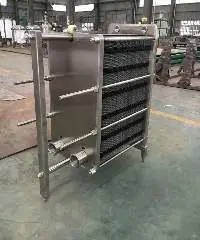
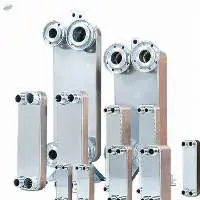
Industrial equipment Brazed plate heat exchanger is a new type of high-efficiency heat exchanger made of a series of metal sheets with a certain corrugated shape stacked and brazed. Thin rectangular channels are formed between various plates, and heat is exchanged through the plates. Compared with the conventional shell and tube heat exchanger, its heat transfer coefficient is much higher under the same flow resistance and pump power consumption, and it has a tendency to replace the shell and tube heat exchanger within the applicable range.

Applications:

Refrigeration: used as condenser and evaporator

b. HVAC: intermediate heat exchangers used in conjunction with boilers, intermediate heat exchangers in high-rise buildings, etc.

c. Chemical industry: soda ash industry, ammonia synthesis, alcohol fermentation, resin synthesis cooling, etc.

d. Metallurgical industry: heating or cooling of aluminate mother liquor, cooling of steelmaking process, etc.

e. Machinery industry: cooling of various quenching fluids, cooling of reducer lubricating oil, etc.

Design Parameters

Flow range: 1-2000 m3/h

Working pressure: vacuum-8.2MPa

Operating temperature: -195-538C

Interface size: 1"-DN300 welding, flange, thread and other connection forms

Corrosion resistance: Welding seal without rubber gasket, choice of various metal and alloy materials, super corrosion resistance, longer service life.

Application field:

Crude oil, natural gas purification and chemical products; chemical industry; pharmaceutical and specific chemicals; injection control systems;

HVAC, district heating, thermal power plants; food processing; cooling tower heat recovery

Process requirements

Pickling temperature: Raising the pickling temperature is conducive to improving the descaling effect. If the temperature is too high, it will aggravate the corrosion of the pickling solution to the heat exchanger plates. Through repeated tests, it is found that the pickling temperature should be controlled at 60.

2) Concentration of pickling solution: According to repeated tests, the pickling solution should be prepared according to the concentration of formic acid 81.0%, water 17.0%, buffer 1.2%, and surfactant 0.8%, and the cleaning effect is excellent.

3) Pickling method and time: The pickling method should be carried out by a combination of static soaking and dynamic circulation. The pickling time is static soaking for 2h first, and then dynamic circulation for 3~4h. During the pickling process, samples should be taken frequently to test the pickling concentration. When the difference between the two adjacent test concentrations is less than 0.2%, the pickling reaction can be considered to be over.

4) Passivation treatment: After pickling, most of the scale and metal oxides on the surface of the plate heat exchanger will be dissolved and fallen off, exposing new metal, which is very easy to corrode. The sheet is passivated.
Jan-22-23

Graphite Block Heat Exchanger

MOQ: 1  Sets
Sample Available
Supplier From Ankleshwar, Gujarat, India
 Inquire Now  
FITZER has designed and manufactured over 5000 units of graphite block heat exchanger which are one of the most reliable, flexible and compatible heat exchangers in the market for corrosive Process. We provide a wide range of Graphite Block Heat Exchanger in Cylindrical, Cubical and Shell and Tube Type Design with a premium graphite quality guarantees a reliable and efficient operation even in robust condition for our customer.

FITZER graphite block heat exchanger is adapted to the heating, cooling, evaporation, condensation and absorption of highly corrosive liquid chemicals. Thus, these are used in various applications like absorber, coolers, condensers, heaters and evaporators. We provide customized design of graphite block heat exchanger based on deep understanding of our customers need with optimizing design.

Totally customized design: number of blocks, size of blocks and number of passes can be adjusted
Design pressure: -1 barg (full vacuum) to +10 barg (145 psig)
Design temperature: -60 to +210�°C (-76 to 446�°F)
Heat transfer area: up to 150 m2
Block diameter â?? 100 to 1000 mm diameter
Different drilling diameters on process and service sides to avoid fouling process
Maximum block diameter: 1000 mm
Thermal expansion compensation ensured by tie rods and helical springs
Graphite blocks are impregnated with different resin such as Phenolic Resin impregnated or PTFE impregnated graphite block.
Blocks design and manufacture cylindrical SR series block or cubical SC series block
Special features as far application such as gas liquid separator, multi entry utility flow, end chamber cooling, multi-pass arrangement depending on application
PTFE Bellows â?? fitted to graphite nozzles
Design: according to European PED, ASME code, Chinese Pressure Vessel code and other national pressure vessel codes on request
Application:
Graphite block heat exchangers are used as Condensers, Coolers, Heaters, Reboilers, Evaporators (Forced circulation, thermosiphon, falling film, etc.) in industries like Agrochemicals, Pharmaceuticals, Metal processing etc.

Industrial processes
Hydrochloric acid
Hydrofluoric acid
Phosphoric acid
Sulfuric acid
Bromohydrin acid
EpichlorohydrinVinyl
chloride monomer
Fire retardants
Flavors and fragrances
VitaminsCrop protection
Fumed silica
Silicones
Titanium dioxide
Fine chemicals
Active pharmaceutical ingredients
Carbon steel and stainless-steel pickling
Copper electrolysis
Epichlorohydrin
Vinyl chloride monomer
Fire retardants
Flavors and fragrances
Vitamins
Isocyanates
Viscose
Polycarbonate
Coagulants
Treatment, purification and concentration of spent acids
Sulfuric acid dilution
And many other corrosive processes
Nov-01-22
 Inquire Now  
The professionally designed stainless steel roller combined with the movable tightening baffle makes the on-site disassembly and assembly of the heat exchanger fast and convenient, and can effectively reduce the wear of the load on the upper guide rod,
and the roller body is not easy to induce, thus preventing the occurrence of locking. Reliable operation, high efficiency, environmental protection, space saving and convenient maintenance are the basic and harsh requirements for current
ships and marine engineering equipment. More than 30 varieties of heat exchangers ensure that the requirements for various working conditions of marine heat exchangers (central cooler/jacket water cooler/lubricating oil cooler/fuel oil cooler/air conditioner, etc.) The efficient solution ensures the normal operation of the ship's cooling system for a long time.

The optional configuration of heat exchanger accessories (interface metal flanges, marine pressure and temperature gauges, post-insertion filters, etc.) also provides a user-friendly service for shipyards and shipowners.

Features:

Advanced board pattern design, high efficiency and environmental protection.

Compact structure and small footprint.

Excellent sheet, high reliability.

Good and reliable seal with less leakage.

After-sales service system, maintenance is assured.

Application range:

Capacity range: 0.1m3/h to 3000m3/h

Operating pressure: 1.6MpaG

Operating temperature: 150

Plate Material: Stainless Steel 304, 316L, Ti, Ti-Pd, 904L, SMO254, Hastelloy, Nickel Ni

Gasket material: NBR, EPDM, HNBR, FKM (VITON-A, VITON-B, VITON-G), etc.
Sep-03-26

Air Cooled Heat Exchanger, Industrial Grade

$1.00K - $10.00K / Set (FOB)
MOQ: Not Specified
 Inquire Now  
Our air cooled heat exchangers (ACHEs) are designed for reliable and efficient cooling or condensing of process fluids in demanding industrial environments. The core component, finned tube bundle, is manufactured with precision to ensure optimal heat transfer performance and long service life.

Key Specifications:

Tube Material: Carbon Steel / Stainless Steel (SS304/SS316L) / Alloy Steel / Titanium (customizable)

Tube OD: 10mm â?? 76mm (as per client's drawing)

Tube Length: Up to 15,000mm (customized)

Fin Type: L-type / LL-type / KL-type / Extruded (as per requirement)

Design Code: ASME Sec.VIII Div.1 / TEMA / GB/T 151 (client's specified code acceptable)

Applications:

Thermal power plants

Petrochemical and chemical processing

Oil and gas refineries

Pharmaceutical manufacturing

Waste-to-energy plants

HVAC systems

Manufacturing Capabilities:

Tube-to-tubesheet welding, expansion, or welding-expansion combination

Full penetration welding and heat treatment (if required)

100% NDT (RT/UT/PT/MT) and hydrostatic/pneumatic leak testing before delivery

Defect rate < 0.5%

Warranty: 12 months

Packaging & Shipping:

Fixed by external wooden frame + internal blocks, with airbags filled in gaps to prevent shifting

Loaded in 40OT (Open Top High Cube container), 6 sets per container

All wooden packaging is ISPM-15 compliant with IPPC stamp

Quality Certifications:
ISO9001, ISO14001, ISO45001, BV Welding Certification, ASME U-Stamp (if applicable)

Why Choose Us:

Full customization based on client's drawings and process requirements

Quick response to technical inquiries

Competitive pricing with guaranteed quality

On-time delivery

Contact us today with your drawings and specifications for a tailored quotation!
Apr-17-26
Supplier From Thane, Mahrashtra, India
 Inquire Now  
Product Name: Heat Exchangers
Product Grade: Industrial Grade
Product Description:
Heat exchangers for efficient thermal transfer in industrial systems including food and chemical processing.
Price Range: On Request
Inco Terms: FOB / CFR / CIF
Nov-08-22
 Inquire Now  
A double pipe heat exchanger is a sort of heat exchanger which includes concentric pipes parted through a mechanical closure. The name of this heat exchanger indicates that it makes use of pipes to exchange heat among fluids. One pipe has hot fluid whilst the opposite pipe has cold fluid. These two fluids do not mix with each other as they are separated by pipes. This heat exchanger is likewise known as a jacketed u-tube, jacketed tube, hairpin, and pipe-in-pipe heat exchanger.

The double pipe heat exchanger has a small pipe this is surrounded by some other huge pipes. One fluid glide withinside the small pipe, and the opposite fluid acts through the annulus among the 2 pipes. The internal wall of the small pipe is the heat switch surface. The complete warmness switch system takes vicinity withinside the huge tube. In this way, the internal pipe works as a conductive barrier. The outside facet consists of fluid gliding thru the tube facet or inside. This heat exchanger might also additionally have one pipe or a package deal of pipes (however decrease than 30 pipes). The huge pipe has decreased by 2 hundred mm in diameter. In a few conditions, the internal pipe has vertical fins to enhance the heat switch coefficient among operating fluids.

Double pipe heat exchangers are used for small heat switch areas (e.g., 14 m2). The collection connection to elevate the heat switch place wishes greater area and greater accessories, which results in a better strain loss. In addition, it isnâ??t always viable to boom the number of fluid passages on each side. This heat exchanger isnâ??t always exceptionally appropriate for grimy drinks due to the fact the grimy liquid will clog it, and the cleansing of this exchanger could be very hard. The essential benefit of the double pipe warmness exchanger is that it has a smooth operation and easy design.
Nov-01-22
 Inquire Now  
Inner Grooved Heat Exchanger Tube EN12735 For Heat Interchanging Field
Nov-07-17
 Inquire Now  
Sterile E.O gas
Filter material Static cotton
Bacterial filter rate 99.99977%
Virus filter rate 99.99926%
Capacity 32ml
Resistance
Cmh2o@15l/min <1.0
Cmh2o@30l/min <2.5
Cmh2o@60l/min <3.5
Temperature (vt500m)32
Humidity ( (mgh2o@500ml vt) >30
Weight 24g
Sampling port Yes
Patients Adult
Used for Machine / patient
Tidal volume 250-1500ml
Nov-07-17
 Inquire Now  
Sterile E.O Gas
Filter Material Static Cotton
Bacterial Filter Rate 99.99977%
Virus Filter Rate 99.99926%
Capacity 45mL
Resistance
cmH2O@15L/min <1.0
cmH2O@30L/min <2.5
cmH2O@60L/min <3.5
Temperature (Vt500m)>32
Humidity ( (MgH2O@500mL Vt) >36.8
Weight 30g
Sampling Port Yes
Patients Adult
Used for Machine / Patient
Tidal Volume 250-1500mL
Nov-07-17
 Inquire Now  
Sterile E.O Gas
Filter Material Static Cotton
Bacterial Filter Rate 99.99977%
Virus Filter Rate 99.99926%
Capacity 12mL
Resistance
cmH2O@15L/min <0.5
cmH2O@30L/min <1.1
cmH2O@60L/min <2.0
Temperature (Vt150m)>29
Humidity ( (MgH2O@250mL Vt) >30
Weight 12g
Sampling Port Yes
Patients Children
Used for Patient
Tidal Volume 50-600mL
Nov-07-17
 Inquire Now  
Sterile E.O Gas
Capacity 16mL
Resistance
cmH2O@15L/min <0.4
cmH2O@30L/min <0.5
cmH2O@60L/min <1.2
Temperature (Vt500m)>29
Humidity ( (MgH2O@500mL Vt) >30
Weight 12g
Sampling Port Yes
Patients Adult
Used for Patient
Tidal Volume 50-600mL
Nov-07-17
 Inquire Now  
Sterile E.O Gas
Capacity 16mL
Resistance
cmH2O@15L/min <0.5
cmH2O@30L/min <1.2
cmH2O@60L/min <2.5
Temperature (Vt500m)>28
Humidity ( (MgH2O@500mL Vt) >28
Weight 12g
Sampling Port Yes
Patients Adult
Used for Patient
Tidal Volume 250-1500mL
1438 Heat Exchangers Suppliers
Short on time? Let Heat Exchangers sellers contact you.
See what buyers and suppliers are discussing in Heat Exchangers import export community