Gasoline is a refined petroleum product consisting primarily of hydrocarbons in the gasoline boiling range It is formulated for sparkignition internalcombustion engines used in passenger vehicles motorcycles generators and other equipment
Common Grades Regular and premium gasoline commonly identified by octane rating such as RON 91 RON 95 or RON 98 depending on the market
Octane RatingGradespecific commonly RON 9198
Density 15C Typically approximately 720 775 kgm depending on formulation and specification
Sulfur Depends on applicable national specification modern lowsulfur gasoline may be limited to approximately 10 ppm
LNG is natural gas consisting primarily of methane that has been cooled to approximately 162C 260F so that it becomes a liquid Liquefaction reduces its volume by roughly 600 times making LNG practical for longdistance storage and transportation
Energy Content Typically around 4855 MJkg depending on composition
Appearance Clear colorless cryogenic liquid LNG itself is generally odorless
Kerosene is a refined petroleum product consisting mainly of hydrocarbons in the kerosene boiling range. It is used for heating, cooking, lighting, industrial processes and as a feedstock for certain applications.
Density @ 15C : Typically approximately 0.78 - 0.82 g/cm
Boiling Range Approximately 150 - 300C, depending on grade and specification
Flash Point : Typically 38C, with the exact requirement depending on the applicable standard
Sulfur Content Grade- and market-dependent; low-sulfur grades may be required for modern applications
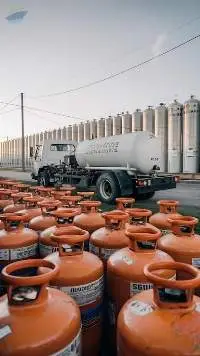
LPG is a liquefied mixture primarily consisting of propane, butane, or a combination of the two. Commercial-grade LPG is used as a fuel for heating, cooking, industrial processes and certain engine applications. ASTM D1835 covers LP gases intended for domestic, commercial and industrial heating and engine fuels.
Key Specifications
Composition, vapor pressure, relative density, volatile residue, corrosion and other properties depend on the applicable LPG grade and market specification
Description : Naturally occurring unrefined petroleum extracted from underground reservoirs. It is primarily composed of hydrocarbons and is used as feedstock in petroleum refineries to produce gasoline, diesel, jet fuel, fuel oils, lubricants, bitumen, petrochemicals and other refined products.
Typical API Gravity : 20 - 45 API, depending on crude grade
Sulfur Content Typically : 0.1 - 3.5 wt%, depending on origin
Water & Sediment : Typically 1%
Salt Content : Typically 100 PTB
460 Industrial And Automotive Suppliers
Short on time? Let Industrial And Automotive sellers contact you.
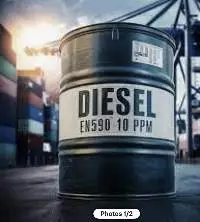
High-quality automotive diesel fuel manufactured to the EN 590 specification, with sulfur content limited to a maximum of 10 mg/kg (10 ppm). Designed for modern compression-ignition diesel engines.
Applications & ComplianceEmissions Support: Compatible with Euro 5 and Euro 6 engines using advanced after-treatment like DPF (Diesel Particulate Filters) and SCR (Selective Catalytic Reduction).Common Uses: Passenger cars, heavy-duty commercial fleets, buses, agricultural machinery, and industrial logistics
Jet A1 is a kerosenetype aviation turbine fuel used primarily by commercial and international aviation It is designed for reliable turbineengine operation including at high altitude and low temperatures
Freezing point : 47C
flash point : 38C
density at 15C typically 775 840 kgm
viscosity at : 20C 80 mm
Bitumen is a highly viscous, semi-solid hydrocarbon material produced primarily from petroleum refining. It is widely used as a binder in asphalt pavement, road construction, waterproofing, roofing and industrial applications.
Excellent binding: binds aggregates together to form durable asphalt pavement.
Water resistance: helps protect underlying construction materials from moisture.
Durability: provides resistance to traffic loads and environmental exposure.
Flexibility: accommodates
EN590 diesel is a low-sulfur automotive diesel fuel formulated for compression-ignition diesel engines. It is widely used in passenger vehicles, trucks, buses, generators, agricultural machinery and heavy equipment.
Cetane Number : Minimum 51
Cetane Index : Minimum 46
Density @ 15C : 820 - 845 kg/m
Sulfur Content Maximum : 10 mg/kg (10 ppm)
Flash Point : Minimum 55C
Virgin D6 is marketed as a straight-run or unblended residual petroleum fuel used as an industrial fuel, boiler fuel and, where the specification permits, marine bunker fuel.
Typical API Gravity : Approximately 19 - 30 API, depending on grade/origin
Density @ 15C : Approximately 950 - 1,010 kg/m for commonly marketed residual-fuel grades.
Viscosity @ 50C : Up to approximately 380 cSt for heavy residual grades; some commercial D6 grades are considerably lower.
Sulfur : Highly grade-dependent; commonly 0.5 - 3.5 wt%. VLSFO variants may be â?¤0.5 wt %.
Flash Point : Typically 60°C for residual-fuel specifications.
Lithium carbonate Li2CO3 98.5 % Min
Magnesium (Mg) 0.80 % Max
Potasium (K) 0.20 % Max
Sodium (Na) 0.35 % Max
Calcium (Ca) 0.40 % Max
Clorine (Cl) 0.40 % Max
Sulfate (SO) 0.50 % Max
Carbonate (CO) 79.80 % Max
Iron (Fe) % Max
Boron (B) 0.10 % Max
Humidity 0.19 %
Solubility (g/100g) 1.20 �± 0.05
pH 9.0 a 11.60
Density (g/cm3) 2.11 g/cm (at 20�° C)
Insoluble solids 0.1 %
Granulometry 150 �¼m
Organoleptic characteristics:
Color White powder
Flavor Saline
Aspect Finely granulated
Smell No smell
Available Quantity : 1500 tons/month
Origin: Brazil
Shipping Terms: FOB
Origin Port: Port of Salvador
Payment Terms: LC
Customs Tariff No:
2836 91 00
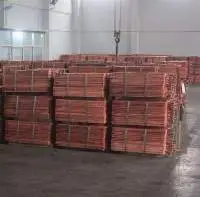
CU Cathodes
Currently 40`000 tons available on stock
Monthly loading min. volume 15`000 MT- 20`000 MT
FOB Port. Mersin TURKEY or Train direct from Baschkent Ã??ZBEKISTAN
Origin: Ã??ZBEK
Please let me know if you are interested Prices LME oriented - 6 %
Full amount after Loading, SGS new one is available
460 Industrial And Automotive Suppliers
Short on time? Let Industrial And Automotive sellers contact you.