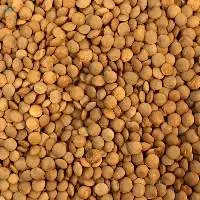
We specialized in working with grain market. We mainly deal with whole red lentils , Mung beans, Faba beans, Oat meals and others from Australia, Canada, India. Packaging are according to the buyer's requirements. Buyers can discuss the payment method with us.
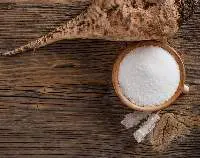
White table sugar comes from either sugarcane or sugar beet and is usually sold without its plant source clearly identified. This is because chemically speaking the two products are identical.
Refined table sugar is pure, crystallized sucrose, much in the same way that pure salt is simply sodium chloride. Sucrose is found naturally in honey, dates and sugar maple sap, but is most concentrated in sugarcane and sugar beet.
The refining process renders the original plant irrelevant as the sucrose is completely extracted from the plant that produced it.
Sugar beets are grown in climates that are too cold for sugarcane. The low sugar content of the beets makes growing them a marginal proposition unless prices are relatively high. In 2000 Russia, the United States, Germany, France and Turkey were the world's five largest sugar beet producers.
Mysoor dhal bran is made from dried, ground whole mysoor dhal. The lentils are cleaned, roasted and then ground into flour after removal of the testa or the seed-coat.
Masoor dhal is power-packed with nutrients and has immeasurable benefits. It is low in fat content and very high on protein. It can fulfill the nutritional and dietary requirements of your farm animals.
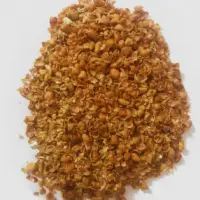
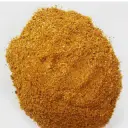
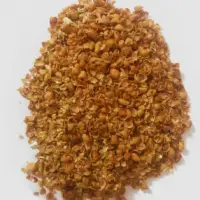
DDG crash corn is a by-product of the ethanol production process and has high nutrient feed valued suitable for the livestock. When ethanol plants produce ethanol, they use starch only from input grains like rice, corn, millets or wheat.
After starch extraction, the byproduct DDG crash corn contains protein, fiber, oil and essential amino acids suitable for livestock feed. This is an excellent animal feed as is containing high energy, mid-protein, and high digestible phosphorus content and this makes DDG crash corn a very attractive, partial replacement for some of the more expensive feed sources.
When DDG crash corn is added to properly formulated feeds, it results in excellent animal health, performance and food product quality. In dairy cow diets DDG crash corn can be included up to 20% and this result in greater milk production. When formulating diets containing DDG crash corn for lactating dairy cows, consideration should be given to type of forage, forage to concentrate ratio, crude fat content of DDG crash corn, and the need for supplemental crystalline lysine to achieve optimal performance.
DDG crash corn is relatively easy to digest and has high nutritional value. It has higher biological value than other gluten and has great health benefits for your livestock.
619 Grains Cereals Suppliers
Short on time? Let Grains Cereals sellers contact you.
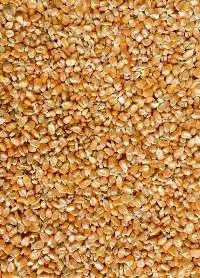
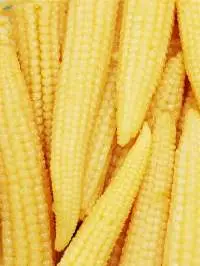
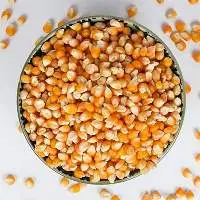
Field Corn, also known as cow corn is a North American term for maize (Zea mays) grown for livestock fodder (silage and meal), ethanol, cereal and processed food product. The principal field corn varieties are dent corn. A flint incudes blue corn (Zea mays amylacea) and waxy corn.
Field corn is primarily grown for livestock feed and ethanol production is allowed to mature fully before being shelled off the cob and being stored in silos, pits, bins, or grain "flats".
Field corn can also be harvested as high-moisture corn, shelled off the cob and piled and packed like silage for fermentation; or the entire plant may be chopped while still very high in moisture, with the resulting silage either loaded and packed in plastic bags, piled and packed in pits, or blown into and stored in vertical silos.
People may pick ears of field corn when its sugar content has peaked and cook it on the cob or eat it raw. Ears of field corn picked and consumed in this manner are commonly called sweet corn, or "roasting ears" due to the most commonly used method of cooking them.
Chick peas bran serves as a primary energy source for the farm animals (164 kcal per 100g). It is experimentally proved that chick peas bran provides all essential nutrients for ruminants (animals which only eat plants) to grow equally well and produce an equal amount and quality of milk. Non-ruminant diets can be made a whole-meal when some amount of chick peas bran is added to their feed. It also promotes egg production and meat growth.
Chick peas bran contains carbohydrates (27.42g per 100g) and is high in protein (8.86g per 100g). It also contains fat, vitamins, minerals and other nutrients. In common with other grain legumes, chickpeas contain few secondary compounds such as trypsin and chymotrypsin inhibitors. This leads to higher nutrition values and fewer digestive problems in non-ruminants.
Heat treatment is an effective method to increase the amount of protein availability for intestinal digestibility. Extrusion is a very good heat technique to destroy secondary components in legumes, since the proteins are irreversibly denatured. However, over-processing of chick peas bran may decrease the nutritional value and extrusion could lead to losses in minerals and vitamins, while dry heating does not change the chemical composition. Moreover, chick peas straw can also be used as an alternative forage in ruminant diets.