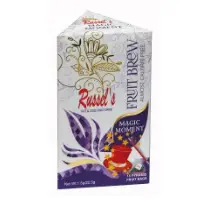
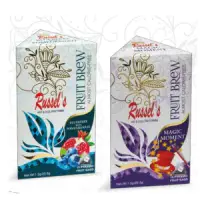
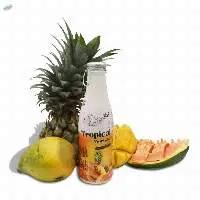
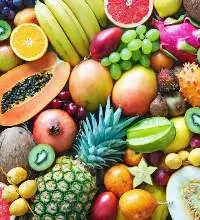
Unique hot and cool fruit drink, which contain pieces of fruit, making it easy to prepare an instant fruit juice.
15 Pyramid Fruit Bags with flavours 30g Forest Fruit, Tropical Fruit, Magic Moment, Bluberry with Pomegranate, Orange Manda rin
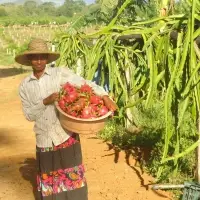
Currently, we are producing two types of Dragon Fruits.
Red color fruit coated with white color flesh
Red color fruit coat with red color flesh
Over 4.8 ha we have cultivated these two dragon fruit cultivars. Fruiting period of Dragon fruit continues up to November.
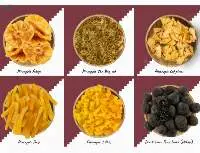
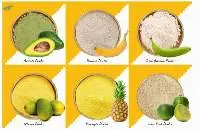
We have a wide range of fruit powders such as avacado powder, banana powder, green banana powder, mango powder, pineapple powder, lime fruit powder, sour sop powder, papaya powder, green papaya powder, papaya seed powder, casava flour, orange peel powder, jack fruit seed powder, mangosteen powder etc.
Name: Dragon Fruit.
Place of origin: Sri Lanka
Variety :White flesh - red skin.
Supply period :All year-round.
Feature : Attractive shape with red-colored skin and green-scaled leaves.
White flesh with small edible seeds.
Rich vitamins specially vitamin C.
Taste sweet mixed light sour like Kiwi fruit.
Grade type : Grade A: 90% red color up.
Grade B: 70% red color up.
Size : 10 kgs carton: + Big: 16 - 18 pieces.
+ Small: 22 - 26 pieces .
22 kgs carton: + Big: 38 - 42 pieces.
+ Small: 50 - 56 pieces.
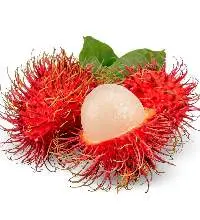
Rambutan is a medium-sized tropical tree in the family Sapindaceae. The name also refers to the edible fruit produced by this tree. The rambutan is native to Southeast Asia. It is closely related to several other edible tropical fruits including the lychee, longan, pulasan and guinep.
The name "rambutan" is derived from the Malay word rambut meaning 'hair' referring to the numerous hairy protuberances of the fruits, together with the noun-building suffix -an. Similarly, in Vietnam, they are called chim chim (meaning 'messy hair).
Their taste is similar to lychee, as they belong to the same family. Rambutans have a sweet, fruity flavour with a hint of acidity reminiscent of strawberries and grapes. Additionally, there is a floral, tropical taste to it.
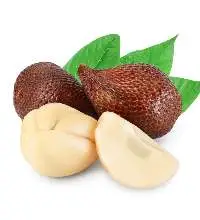
Salacca is a genus of about 20 species of palms native to Southeast Asia and the eastern Himalayas. They are dioecious (with the exception of Salak Bali) and pollinated by Curculionidae beetles.
They are very short-stemmed palms, with leaves up to 6-8 m long. The leaves have a spiny petiole; in most species, they are pinnate with numerous leaflets, but some species, notably S. magnifica, have undivided leaves. The fruit grows in clusters at the base of the plants, and is edible in many species, with a reddish-brown scaly skin covering a white pulp and one to two large inedible seeds.
The Salak (S. zalacca) or snake fruit is the species most widely grown for its fruit; the firm white pulp has a slightly acidic taste. The skin of the snake fruit has a unique texture not unlike that of a snake's skin, rough to the touch in one direction but smooth in the other.
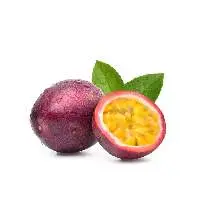
Native to the eastern coast of South America, passion fruit is grown across all tropical and subtropical regions for its sweet, tangy fruit. Beginning its life as a striking purple flower, the plant soon develops round-shaped, purple-fleshed fruit. Inside each fruit is a slightly acidic flesh with crunchy, edible seeds.
Passion fruits are round or oval, and range from a width of 1.5 to 3 inches. They can be yellow, red, purple, or green. The fruits have a juicy edible center composed of a large number of seeds.
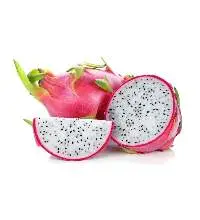
Dragon fruit is a tropical fruit that's low in calories and high in fiber and antioxidants. Some people say it tastes like a cross between a pear and a kiwi. You can slice and eat the fruit as-is, try it with yogurt, or add
it to a smoothie or salad.
The plant is native to southern Mexico and Central America. Today, it is grown all over the world.
It goes by many names, including pitaya, pitahaya, and strawberry pear. The two most common types have bright red skin with green scales that resemble a dragon hence the name.
The most widely available variety has white pulp with black seeds, though a less common type with red pulp
and black seeds exist as well.
Another variety referred to as yellow dragon fruit has yellow skin and white pulp with black seeds.
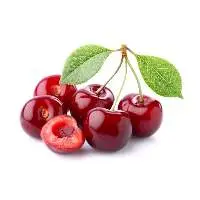
A cheery is the fruit of many plants of the genus Prunus and is a flesh drupe (stone fruit). Commercial cherries are obtained from cultivars of several species, such as the sweet Prunus avium and the sour Prunus cerasus.
The name 'cherry' also refers to the cherry tree and its wood, and is sometimes applied to almonds and visually similar flowering trees in the genus Prunus, as in " Ornamental cherry" or "cherry blossom".
Like most temperate-latitude trees, cherry trees require a certain number of chilling hours each year to break dormancy and bloom and produce fruit. The number of chilling hours required depends on the variety. Because of this cold-weather requirement, no member of the genus Prunus can grow in tropical climates.
Dried fruits are rich in plant compounds with protective antioxidant properties, these include anthocyanins, catechins and phenols. These compounds may be associated with health benefits such as improved blood flow and a lower risk of certain diseases, including heart disease, cancer and type 2 diabetes.