Please click here to check who's online and chat with them.

Find Verified Caustic Potash Suppliers, Manufacturers and Wholesalers

Top Supplier Cities : -   Colombo   Athurugiriya  
VERIFIED
May-16-23

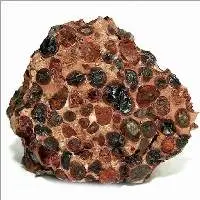
Bauxite (Aluminium Ore)

MOQ: 5,000  Metric Tonnes
Supplier From Colombo, WP, Sri Lanka
 Inquire Now  
Bauxite is a naturally occurring, heterogeneous material composed primarily of one or more aluminum hydroxide minerals, plus various mixtures of silica, iron oxide, titania, aluminosilicate, and other impurities in minor or trace amounts.

Bauxites are typically classified according to their intended commercial application:� � abrasive, cement, chemical, metallurgical, refractory, etc.

The bulk of world bauxite production (approximately 85%) is used as feed for the manufacture of alumina via a wet chemical caustic leach method commonly known as the Bayer process.

MOQ 5,000MT

Supplied from Africa or India
VERIFIED
Apr-05-23
Supplier From Colombo, WP, Sri Lanka
 Inquire Now  
Himalayan salt is mined from the Salt Range mountains, the southern edge of a fold-and-thrust belt that underlies the Pothohar Plateau south of the Himalayas in Pakistan.
Himalayan salt comes from a thick layer of Ediacaran to early Cambrian evaporites of the Salt Range Formation. This geological formation consists of crystalline halite intercalated with potash salts, overlain by gypsiferous marl and inter-layered with beds
of gypsum and dolomite with infrequent seams of oil shale that accumulated between 600 and 540 million years ago. These strata and the overlying Cambrian to Eocene sedimentary rocks were thrust southward over younger sedimentary rocks, and eroded to create the Salt Range. The salt, which often has a pinkish tint due to trace minerals, is primarily used as a food additive to replace refined table salt but is also used for cooking and food presentation, decorative lamps and spa treatments.

Himalayan salt is a table salt. Analysis of a range of Khewra salt samples showed them to be between 96% and 99% sodium chloride, with trace presence of calcium, iron, zinc, chromium, magnesium, and sulphate, all at varying safe levels below 1%.

MOQ 5MT

Supplied from Pakistan.

 
VERIFIED
Apr-05-23
Supplier From Colombo, WP, Sri Lanka
 Inquire Now  
Himalayan salt is mined from the Salt Range mountains, the southern edge of a fold-and-thrust belt that underlies the Pothohar Plateau south of the Himalayas in Pakistan.
Himalayan salt comes from a thick layer of Ediacaran to early Cambrian evaporites of the Salt Range Formation. This geological formation consists of crystalline halite intercalated with potash salts, overlain by gypsiferous marl and inter-layered with beds
of gypsum and dolomite with infrequent seams of oil shale that accumulated between 600 and 540 million years ago. These strata and the overlying Cambrian to Eocene sedimentary rocks were thrust southward over younger sedimentary rocks, and eroded to create the Salt Range. The salt, which often has a pinkish tint due to trace minerals, is primarily used as a food additive to replace refined table salt but is also used for cooking and food presentation, decorative lamps and spa treatments.

Himalayan salt is a table salt. Analysis of a range of Khewra salt samples showed them to be between 96% and 99% sodium chloride, with trace presence of calcium, iron, zinc, chromium, magnesium, and sulphate, all at varying safe levels below 1%.

MOQ 5MT

Supplied from Pakistan.

 
Dec-13-19
Supplier From Sri Lanka, Sri Lanka
 Inquire Now
Aug-25-20
Supplier From Sri Lanka
 Inquire Now
24 Caustic Potash Suppliers
Short on time? Let Caustic Potash sellers contact you.
Jun-30-12
Supplier From Clombo, Sri Lanka
 Inquire Now
VERIFIED
May-19-23

Himalayan Pink Salt

MOQ: 5  Metric Tonnes
Supplier From Colombo, WP, Sri Lanka
 Inquire Now  
Himalayan salt is mined from the Salt Range mountains, the southern edge of a fold-and-thrust belt that underlies the Pothohar Plateau south of the Himalayas in Pakistan. Himalayan salt comes from a thick layer of Ediacaran to early Cambrian evaporites of the Salt Range Formation. This geological formation consists of crystalline halite intercalated with potash salts, overlain by gypsiferous marl and inter-layered with beds of gypsum and dolomite with infrequent seams of oil shale that accumulated between 600 and 540 million years ago. These strata and the overlying Cambrian to Eocene sedimentary rocks were thrust southward over younger sedimentary rocks, and eroded to create the Salt Range. The salt, which often has a pinkish tint due to trace minerals, is primarily used as a food additive to replace refined table salt but is also used for cooking and food presentation, decorative lamps and spa treatments.

Himalayan salt is a table salt. Analysis of a range of Khewra salt samples showed them to be between 96% and 99% sodium chloride, with trace presence of calcium, iron, zinc, chromium, magnesium, and sulphate, all at varying safe levels below 1%.

MOQ: 5 MT

Supplied from Pakistan.
VERIFIED
Apr-23-23
Supplier From Colombo, WP, Sri Lanka
 Inquire Now  
Himalayan salt is mined from the Salt Range mountains, the southern edge of a fold-and-thrust belt that underlies the Pothohar Plateau south of the Himalayas in Pakistan. Himalayan salt comes from a thick layer of Ediacaran to early Cambrian evaporites of the Salt Range Formation. This geological formation consists of crystalline halite intercalated with potash salts, overlain by gypsiferous marl and inter-layered with beds of gypsum and dolomite with infrequent seams of oil shale that accumulated between 600 and 540 million years ago. These strata and the overlying Cambrian to Eocene sedimentary rocks were thrust southward over younger sedimentary rocks, and eroded to create the Salt Range. The salt, which often has a pinkish tint due to trace minerals, is primarily used as a food additive to replace refined table salt but is also used for cooking and food presentation, decorative lamps and spa treatments.

Himalayan salt is a table salt. Analysis of a range of Khewra salt samples showed them to be between 96% and 99% sodium chloride, with trace presence of calcium, iron, zinc, chromium, magnesium, and sulphate, all at varying safe levels below 1%.

MOQ: 5 MT

Supplied from Pakistan.
VERIFIED
Apr-22-23
Supplier From Colombo, WP, Sri Lanka
 Inquire Now  
Himalayan salt is mined from the Salt Range mountains, the southern edge of a fold-and-thrust belt that underlies the Pothohar Plateau south of the Himalayas in Pakistan.
Himalayan salt comes from a thick layer of Ediacaran to early Cambrian evaporites of the Salt Range Formation. This geological formation consists of crystalline halite intercalated with potash salts, overlain by gypsiferous marl and inter-layered with beds
of gypsum and dolomite with infrequent seams of oil shale that accumulated between 600 and 540 million years ago. These strata and the overlying Cambrian to Eocene sedimentary rocks were thrust southward over younger sedimentary rocks, and eroded to create the Salt Range. The salt, which often has a pinkish tint due to trace minerals, is primarily used as a food additive to replace refined table salt but is also used for cooking and food presentation, decorative lamps and spa treatments.

Himalayan salt is a table salt. Analysis of a range of Khewra salt samples showed them to be between 96% and 99% sodium chloride, with trace presence of calcium, iron, zinc, chromium, magnesium, and sulphate, all at varying safe levels below 1%.

MOQ 5MT

Supplied from Pakistan.
VERIFIED
Apr-17-23
Supplier From Colombo, WP, Sri Lanka
 Inquire Now  
Himalayan salt is mined from the Salt Range mountains, the southern edge of a fold-and-thrust belt that underlies the Pothohar Plateau south of the Himalayas in Pakistan.
Himalayan salt comes from a thick layer of Ediacaran to early Cambrian evaporites of the Salt Range Formation. This geological formation consists of crystalline halite intercalated with potash salts, overlain by gypsiferous marl and inter-layered with beds
of gypsum and dolomite with infrequent seams of oil shale that accumulated between 600 and 540 million years ago. These strata and the overlying Cambrian to Eocene sedimentary rocks were thrust southward over younger sedimentary rocks, and eroded to create the Salt Range. The salt, which often has a pinkish tint due to trace minerals, is primarily used as a food additive to replace refined table salt but is also used for cooking and food presentation, decorative lamps and spa treatments.

Himalayan salt is a table salt. Analysis of a range of Khewra salt samples showed them to be between 96% and 99% sodium chloride, with trace presence of calcium, iron, zinc, chromium, magnesium, and sulphate, all at varying safe levels below 1%.

MOQ 5MT

Supplied from Pakistan.

 
Mar-09-21
Supplier From Talawatugoda, Colombo, Sri Lanka
 Inquire Now
Oct-01-20
Supplier From Ranala, Western Province, Sri Lanka
 Inquire Now
Mar-09-21
Supplier From Sri Lanka
 Inquire Now
Apr-07-25
Supplier From Colombo, Sri Lanka
 Inquire Now
Jul-16-25
Supplier From Athurugiriya, Sri Lanka
 Inquire Now
May-07-25
Supplier From Sri Lanka
 Inquire Now
Apr-01-14
Supplier From Borupona, Ratmalana, Sri Lanka
 Inquire Now
Mar-09-21
Supplier From Sri Lanka
 Inquire Now
Mar-27-18
Supplier From Colombo, Western, Sri Lanka
 Inquire Now
Jul-04-20
Supplier From Sri Lanka
 Inquire Now
24 Caustic Potash Suppliers
Short on time? Let Caustic Potash sellers contact you.
Explore Caustic Potash related import export discussions