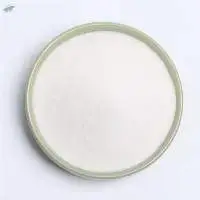
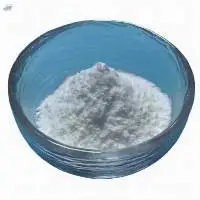
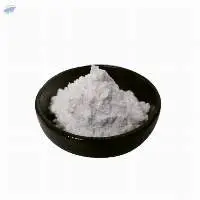
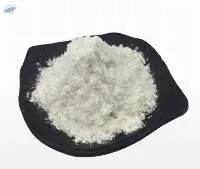
Sorbic acid is a new, safe, nontoxic and effective food preservative. It is unsaturated fatty acid. It can
participate in normal metabolism and finally be oxidized to water and carbon dioxide, does not accumulate in the human body and has high safety. Its toxicity is only half of salt, 1/ 40 of sodium benzoate.
Food grade sorbic acid has been approved of using in worldwide and successfully used in the food industry in many ways. It has obvious inhibition of molds, yeasts and aerobic bacteria, whose effect on inhibit the growth of bacteria is stronger than the effect on destroy bacteria. It combines with sulfhydryl group in microbial enzyme system to destroy the role of enzymes, so that achieve the purposes of bacteriostasis and antisepsis. It also can prevent from the growth and breeding of botox, staphylococcus and salmonella and other harmful microorganisms. Under acidic conditions (pH value less than 5-6), the effect of bacteriostasis is better, and the food composition has no any impact of preservative effect, so it effectively extends the storage time of food and keep the original flavor of food. However, there is no effect on anaerobic bacteria Bacillus and Lactobacillus acidophilus and other beneficial micro-organisms.
Product Name: Sorbic Acid
"Type: Food/Feed Additives
Origin: China
CAS No.: 110-44-1
AUCO No.: 415
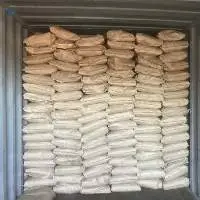
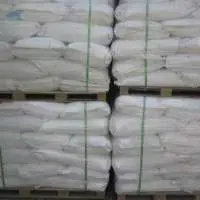
Packing: 25kg bag"
Items Standard
Identification Conform To Standard
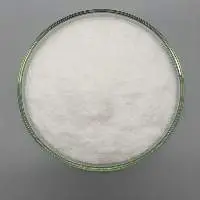
Appearance White Crystal powder
Assay 99.0-101.0%
Sublimation Point 80
Melting Point 132-135
Heavy Metal(as Pb) 10 ppm
Arsenic(as As) 3 ppm
Loss on Drying 0.5%
Lead 2ppm
Mercury 1ppm
Aldehyde 0.1%
Residue on ignition 0.2%
Sorbic Acid, E200, CAS no.110-44-1, food preservative, manufacturing process via chemical synthesis, malonic acid and trans-butenal as raw materials, also can be produced from isomeric hexadecenoic acids. Sorbic acid is used in it's salt forms (sodium sorbate, Potassium sorbate, and calcium sorbate) as a preservative in the production of drinks and food to prevent the growth of any mold, yeast, and fungi. It can be used to preserve wines, beverages, soy sauces, picked products, seafood, and meat products. The preservative efficiency of Sorbic Acid is 5-10 times the effectiveness of Sodium benzoate.
As an experienced Sorbic Acid manufacturer and supplier, we has been supplying and exporting Sorbic Acid for almost 10 years, please be assured to buy from us. Any inquiries about price and the market trend please feel free to contact us, we will reply you within 1 working day.
Sorbic Acid powder/granular food grade Specification
ITEM STANDARD
Appearance White crystalline powder or granular
Identification Conforms
Heat Stability Not change in color after heating for 90 minutes at 105
Odor Slight characteristic odor
Purity 99.0-101.0%
Water 0.5%
Melting Range () 132-135
Residue on Ignition 0.2%
Aldehydes (as Formaldehyde) 0.1% Max
Lead (Pb) 5 mg/kg
Arsenic (As) 2 mg/kg
Mercury (Hg) 1 mg/kg
Heavy Metals (as Pb) 10 mg/kg
Commodity : Potassium sorbate
Molecular formula : C6H7KO2
Molecule Weight : 15022
HS code : 29161900
CAS : 24634615Ã?Â
Specifications
appearance : White crystal granule
Production Standard : FCCIV
Content : 9801010
K2CO3 : 1 max
Loss on drying : 1 max
Chloride : 001 max
Heavy metalsas : Pb 0001 max
Packing in carton 25kgs net weight
Quantity 14MT loaded into 1 x 20GP
Excellent preservative properitesproperites Sorbic Acid Potassium Sorbate can restrain effectively the activity of mould yeast and aerophile bateria Restrain growth and reproduction of the pernicious micro organism as pseudomonas staphylococcus salmonella action to restrain growth is more powerful than killing Meanwhile it can not restrain useful microoranganim growth ad Anaerobicbearing barilli acidophil therefore to lengthen food store peroid and remain food original flavor The preservative efficiency of sorbic acid Potassium sorbate is 510 times sodium benzoate
High safety Sorbic Acid Potassium Sorbate is one kind of nonsuturated fatty acid compounds It can be absorbed by human body rapidly then decomposed into CO2 and H2Omoreover no remaining in body ADI 025mgkg based on sorbic acid FAOWHO 1994 LD50 4920 mgkglarge mouse by mouth GRASFDA 1823640 1994 Its toxicity only 112 times table salts and 140 times sodium benzoate
Good stability Sorbic Acid Potassium Sorbate is stable in sealed staus will not be decomposed until 270C It will be oxidized into colored ones and absorbing moisture in case exposed in air for a long time
Wide application At the momentSorbic Acid Potassium Sorbate has been used extensively in food drinkvegetables in soy tabacco drugs cosmetics agricultural products forage and other domain Its applicaion should be wide and wide in the world
As acidic preservative Sorbic Acid Potassium Sorbate is also used well in neutral foodph6065 The preservative efficiency of sodium benzoate will decrease clearly and have a bed taste while ph4
Applicaion flexibilitySorbic Acid Potassium Sorbate can be used by direct adding sprayingretting dry spraying using in packing material and other method
39250 Sorbic Acid Suppliers
Short on time? Let Sorbic Acid sellers contact you.
Potassium sorbate is a commonly used food preservative with a wide range of applications. Potassium sorbate is derived from sorbic acid, which was originally extracted from sorbus fruit. Nowadays, it is mainly prepared by chemical synthesis. Potassium sorbate has good preservative effect and safety, so it has been widely used in the food industry and other industries.
Potassium sorbate, the potassium salt of sorbic acid, is a commonly used preservative in food with the European food additive number E202. Generally, it is synthetic, vegan and gluten-free.
This ingredient is used to protect food from spoilage and therefore prolong the food shelf life by slowing the growth of molds and yeasts. You may have seen it in the label of wines, cheeses, cider, mead, soft drinks, and baked goods
During Hindalco's copper production process, by-products such as sulphuric acid and copper slag are formed. Sulphuric acid is partly converted into phosphoric acid, which is then made to react with ammonia to make di-ammonium phosphate (DAP) fertiliser. During the process of making phosphoric acid, phosphogypsum and hydrofluosilicic acid (HFA) are formed. HFA is partly utilised to make aluminium fluoride, and rest is sold in the market.
Sulphuric acid
Hindalco produces sulphuric acid of IS 266/1993 technical grade. The sulphuric acid plants use the double contact double absorption (DCDA) process, and are designed by Monsanto Envirochem (USA).
Phosphoric acid
Hindalco's phosphoric acid plant is based on the Prayon Mark IV dihydrate technology provided by SNC Lavalin (Belgium).
Phosphogypsum
Phosphogypsum is a by-product of Hindalco's phosphoric acid plant.
Copper slag (iron silicate)
Copper slag is produced during the smelting process at Hindalco's copper smelter located at Dahej.
Aluminium fluoride
Hindalco produces aluminium fluoride by reacting HFA (a by-product of the phosphoric acid plant) with aluminium hydroxide (from Hindalco's aluminium manufacturing facilities).
Versatile industrial chemicals widely used in manufacturing, metal treatment, cleaning, pH control, and chemical synthesis, playing a key role in enhancing product performance and process efficiency.
Form: Liquid (most common), sometimes concentrated solutions
Appearance: Clear to slightly colored liquid (depending on acid type)
Purity / Assay : 30% - 99.9% (varies by acid type)
Appearance : Clear / colorless to slightly yellow liquid
Odor : Pungent / characteristic acidic smell
Density : Varies by acid (1.0 - 1.84 g/cm typical)
Solubility Completely miscible with water (most acids)
pH : Strongly acidic (pH 0 - 3 typical)
Concentration: 98% min (industrial grade)
Appearance: Clear to slightly oily liquid
Density: ~1.84 g/cm
Key use: Fertilizers, chemicals, batteries
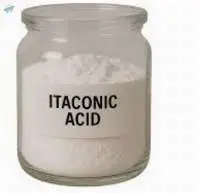
Itaconic Acid (CAS No. 97-65-4) is a white crystalline unsaturated dicarboxylic acid widely used in the chemical, polymer, and specialty materials industries. It is primarily produced through fermentation processes and serves as an important bio-based building block for the manufacture of resins, coatings, adhesives, plastics, and superabsorbent polymers. Itaconic Acid is extensively utilized to enhance polymer flexibility, adhesion, and biodegradability, making it valuable in environmentally friendly and sustainable material formulations. It also finds applications in water treatment chemicals, detergents, and pharmaceutical intermediates. Known for its renewable origin, high reactivity, and versatility, Itaconic Acid is an important raw material in green chemistry and advanced industrial applications.
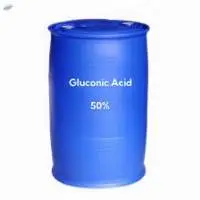
Gluconic Acid 50% (CAS No. 526-95-4) is a clear, light-colored aqueous solution widely used in food, pharmaceutical, cosmetic, and industrial applications. It is a mild organic acid derived from glucose and is known for its excellent chelating, sequestering, and pH-regulating properties. Gluconic Acid 50% is extensively utilized in cleaning formulations, metal surface treatment, textile processing, concrete admixtures, and water treatment systems. In the food and pharmaceutical industries, it is used as a stabilizer, acidity regulator, and mineral supplement component. Known for its biodegradability, safety, and versatility, Gluconic Acid 50% is a valuable ingredient in modern industrial and consumer product formulations.
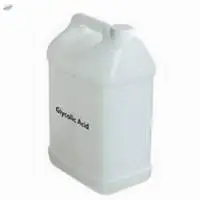
Glycolic Acid (CAS No. 79-14-1) is a colorless to white crystalline organic acid widely used in the pharmaceutical, cosmetic, and industrial sectors. It is the smallest alpha-hydroxy acid (AHA), known for its excellent skin penetration and exfoliating properties. Glycolic Acid is extensively utilized in skincare formulations for chemical peels, anti-aging treatments, acne control, and skin renewal products due to its ability to remove dead skin cells and promote collagen production. It is also used in textile dyeing, leather processing, cleaning agents, and polymer synthesis. Known for its high purity, effectiveness, and multifunctional applications, Glycolic Acid is a valuable ingredient in personal care, healthcare, and industrial chemical markets.
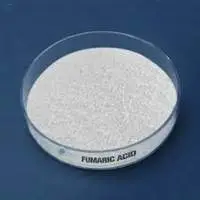
Fumaric Acid (CAS No. 110-17-8) is a white, crystalline organic acid widely used in the food, pharmaceutical, and industrial sectors. It occurs naturally in various plants and is primarily utilized as an acidity regulator, flavor enhancer, and preservative in food and beverage products. Fumaric Acid is extensively used in bakery products, beverages, confectionery, and processed foods to improve taste stability and shelf life. In the pharmaceutical industry, it serves as an important intermediate and pH-adjusting agent in tablet formulations and medicinal compounds. It is also used in unsaturated polyester resins, alkyd resins, and specialty chemical applications. Known for its high purity, stability, and safety, Fumaric Acid is a versatile and valuable ingredient in global food, healthcare, and chemical industries.
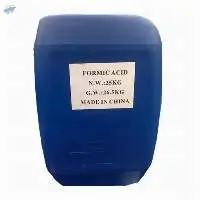
Formic Acid (CAS No. 64-18-6) is a clear, colorless, and highly corrosive organic acid with a sharp pungent odor. It is one of the simplest carboxylic acids and is widely used across the chemical, textile, leather, rubber, and agricultural industries. Formic Acid serves as an important intermediate in chemical synthesis and is extensively utilized in leather tanning, textile dyeing, rubber coagulation, and as a preservative and antibacterial agent in livestock feed. It is also used in pharmaceuticals, cleaning agents, and various industrial formulations due to its strong reducing and acidic properties. Known for its high reactivity and broad industrial applicability, Formic Acid is an essential chemical in global manufacturing and processing industries.
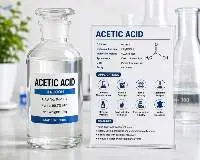
Acetic Acid is a clear, colourless liquid with a characteristic sharp, vinegar-like odour. Glacial Acetic Acid is the high-purity form, typically containing 99.5%+ acetic acid. It is an important organic acid and versatile raw material used across chemical, textile, pharmaceutical, food and industrial sectors.
Applications of Acetic Acid
Chemical Industry: Used as a raw material for producing acetates, acetic anhydride, vinyl acetate and other chemicals.
Textile Industry: Used in dyeing, finishing and textile processing.
Pharmaceuticals: Used as a chemical intermediate and in pharmaceutical manufacturing processes.
Food Industry: Diluted acetic acid is used as an acidity regulator and preservative where permitted.
Paints & Coatings: Used in the manufacture of resins, coatings and related chemicals.
Leather Processing: Used for pH adjustment and processing in leather manufacturing.
Cleaning Products: Used in selected cleaning and descaling formulations.
Laboratories: Used as a reagent and solvent in chemical analysis and research.
Adhesives & Polymers: Used in the production of vinyl acetate and polymer-related materials.
Appearance: white crystalline powder
Cas No:501-30-4
EINECS No: 207-922-4
Molecular Formula: C6H6O4
Model:
Cas No:501-30-4
Brand:
Soleado
Kojic acid is an organic compound with a chemical formula of C6H6O4. It is mainly used as a whitening agent, food additive, and also as a preservative, preservative, and color-protecting agent.
Packaging plastic woven bag, 25kg net composite paper-plastic bags or 3-ply kraft paper bags with PE liner, 500kg or 1000kg net PP woven Jumbo bags
Storage Kept in a light-proof, well-closed, dry and cool place
Main Usage Citric Acid is mainly used as acidulant, flavoring agent, preservative and antistaling agent in food and beverage industry.it is also used as antioxidant, plasticizer and detergent in chemical, cosmetics and cleaning industries.
We can supply Acetic Acid Industrial Grade and Food Grade.
Commodity:Acetic acid.
Other name: Glacial acetic acid
Molecular formula CH3COOH
CAS:64-19-7
EC No.200-580-7
Introduction:
Annual capacity of our glacial acetic acid is 350,000.the raw material is methanol.we use a new technical process to produce: Methanol decomposition.
the most important characteristic of this way are as following:
mild oder; high quality--can reach 99.99%min; low cost--30% lower than oil decomposition and ethanol decomposition way.
Specifications:
Apha color:<10
Freezing point: 16
Specific gravity:1.04
Acetid acid: 99.8%
Acetaldehyde: 0.004%
Formic acid: 0.06%
Iron: 0.00004%
Non-Volatile Matter: 0.003%
The heavy metal(As Pb counts): 0.00002%
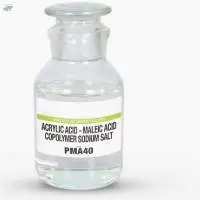
CAS 52255-49-9
Appearance: colorless to light yellow, transparent to viscous liquid.
Solubility: soluble in water, insoluble in toluene, isopropanol and ethanol.
Properties and main functions:
1. Capatible with alkylaryl suphates and other sulfonated, sulfated, anionic and non-ionic surfactants.
2. Buffering pH to reduce the stimulation to skin, acting efficiently in a pH zone greater than 7.
3. Reducing the consumption of water and energy during processing in slurry preparation of low viscosity and high solids content, improving the efficiency of the detergent spray dry plant by reducing caking and blockages.
4. Improving shape, glossiness & hardness of sprayed particles, reducing the quantity of fine powder.
5. Scattering dirt and preventing re-deposition, inhibiting the growth of CaCO3 in the washing liquid.
6. Stable to the changes of temperature, no precipitant.