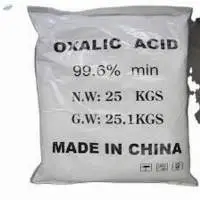
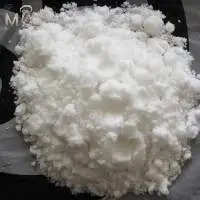
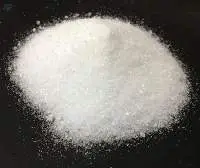
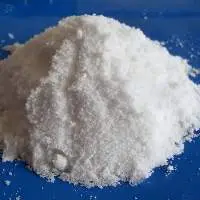
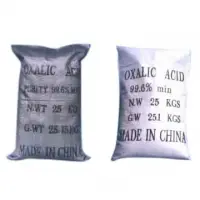
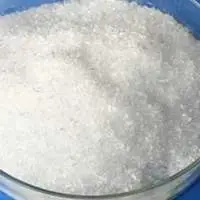
Oxalic Acid (CAS No. 144-62-7) is a white crystalline organic dicarboxylic acid widely used across the chemical, textile, metal treatment, pharmaceutical, and industrial sectors. It is a strong reducing agent and chelating compound, commonly utilized for rust removal, metal cleaning, bleaching of wood and textiles, and as a precipitating agent in various chemical processes. Oxalic Acid is also used in dyeing, leather processing, pharmaceuticals, and specialty chemical synthesis. In industrial applications, it plays a key role in cleaning formulations and surface treatment processes due to its excellent ability to bind metal ions. Known for its high purity, effectiveness, and versatility, Oxalic Acid is an important chemical in global manufacturing and maintenance industries.
Oxalic acid is an organic substance, chemical form HCO It is a metabolite of living organisms. It is a moderately strong acid. It is widely distributed in plants, animals, and fungi, and performs different functions in different living organisms. Studies have found that more than 100 kinds of plants are rich in oxalic acid, especially spinach, amaranth, beet, purslane, taro, sweet potato and rhubarb and other plants have the highest content. Because oxalic acid can reduce the bioavailability of mineral elements, it is easy to form calcium oxalate with calcium ions in the human body and lead to kidney stones, so oxalic acid is often considered as an antagonist for the absorption and utilization of mineral elements. Its anhydride is carbon sesquioxide.
Oxalic acid acts as a reducing agent for metal oxides to remove tarnish as well as rust or ink stains. It is used commercially as a laundry rinse, wood-bleaching agent, and calcium remover. Oxalic acid can remove some paints and varnishes. It is also used as a mordant in dyeing textiles and in the manufacture of Ink.
For price, specification and other details please contact us
Product description, including the following details - At our company, we always try to give the best quality Oxalic Acid. We are known as the finest exporter in the market. We believe in providing and delivering the best services within the discussed time. We give a personalized touch to our services to create better relationships with our customers.
Price of product - Price will decide at the time of Inquiry Bcoz it is depend on Quantity Requirement and Market Situation
Product Description :
1. In Metallurgy industry: as precipitating and separating function for Rare-earth metal.
2. In Dyeing and printing industry: as reducing agent for dyeing and printing industry, as bleaching agent for textile, substitute for Acetic acid, as coloring mordant for fast pigment dyestuff.
3. In organic synthetic: used in 2133 resin, Urea-formaldehyde molding powder, Butadiene catalyst, etc.
4. In electron industry: preparation of chemicals raw material for porcelain capacitor, preparation of electron equipment detergent.
5.In Light industry: polishing for Marble, rust-remover, bleaching, dirt-remover, leather-remover. bleaching.
6. In other aspects: as analysis reagent, raw material of chemicals."
Price of product ( USD price or FOB price) :
USD 460 ~ USD 490/MT
During Hindalco's copper production process, by-products such as sulphuric acid and copper slag are formed. Sulphuric acid is partly converted into phosphoric acid, which is then made to react with ammonia to make di-ammonium phosphate (DAP) fertiliser. During the process of making phosphoric acid, phosphogypsum and hydrofluosilicic acid (HFA) are formed. HFA is partly utilised to make aluminium fluoride, and rest is sold in the market.
Sulphuric acid
Hindalco produces sulphuric acid of IS 266/1993 technical grade. The sulphuric acid plants use the double contact double absorption (DCDA) process, and are designed by Monsanto Envirochem (USA).
Phosphoric acid
Hindalco's phosphoric acid plant is based on the Prayon Mark IV dihydrate technology provided by SNC Lavalin (Belgium).
Phosphogypsum
Phosphogypsum is a by-product of Hindalco's phosphoric acid plant.
Copper slag (iron silicate)
Copper slag is produced during the smelting process at Hindalco's copper smelter located at Dahej.
Aluminium fluoride
Hindalco produces aluminium fluoride by reacting HFA (a by-product of the phosphoric acid plant) with aluminium hydroxide (from Hindalco's aluminium manufacturing facilities).
Lactic acid has characteristics,such as hot stability natural purely with soft and certain tart flavor,etc.Widely used in the food,pharmaceutical,electroless plating industries,etc.
Basical Information:
CAS#: 50-21-5
M.F.: C3H6O3
EINECS NO.: 200-018-0
Appearance: Colorless Transparent Viscidity Liquid
Lactic Purity: 80.0-90.0%
Item Unit Quality Standards Analysis Results
Color Appearance Smell
Chromaticity Hazen Colorless to pale yellow, Transparent liquid,No odor or slightly
characteristic odor, Max.100 Light yellow Transparent liquidNo odor<100
Identification --- Pass Test Pass
Lactic acid content % w/w 95%-105% 80.20
L(+)Lactic acid to total lactic acid content % L(+) Min. 97.5 >97.5
Burning residue % w/w Max. 0.1 0.04
Chloride ppm Max. 20 <20
Sulfate ppm Max. 50 <50
Iron ppm Max.10 <10
Reducing substances (sugars) --- Pass Test Pass Test
Citric acid, oxalic acid, tartaric acid and phosphoric acid --- Pass Test Pass Test
Easy Carbon Compounds --- Pass Test Pass Test
Cyanide mg/kg Max. 1 <1
Lead mg/kg Max. 2.0 0.5351
Arsenic mg/kg Max. 1.0 0.6315
Versatile industrial chemicals widely used in manufacturing, metal treatment, cleaning, pH control, and chemical synthesis, playing a key role in enhancing product performance and process efficiency.
Form: Liquid (most common), sometimes concentrated solutions
Appearance: Clear to slightly colored liquid (depending on acid type)
Purity / Assay : 30% - 99.9% (varies by acid type)
Appearance : Clear / colorless to slightly yellow liquid
Odor : Pungent / characteristic acidic smell
Density : Varies by acid (1.0 - 1.84 g/cm typical)
Solubility Completely miscible with water (most acids)
pH : Strongly acidic (pH 0 - 3 typical)
Concentration: 98% min (industrial grade)
Appearance: Clear to slightly oily liquid
Density: ~1.84 g/cm
Key use: Fertilizers, chemicals, batteries
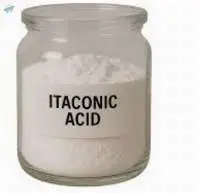
Itaconic Acid (CAS No. 97-65-4) is a white crystalline unsaturated dicarboxylic acid widely used in the chemical, polymer, and specialty materials industries. It is primarily produced through fermentation processes and serves as an important bio-based building block for the manufacture of resins, coatings, adhesives, plastics, and superabsorbent polymers. Itaconic Acid is extensively utilized to enhance polymer flexibility, adhesion, and biodegradability, making it valuable in environmentally friendly and sustainable material formulations. It also finds applications in water treatment chemicals, detergents, and pharmaceutical intermediates. Known for its renewable origin, high reactivity, and versatility, Itaconic Acid is an important raw material in green chemistry and advanced industrial applications.
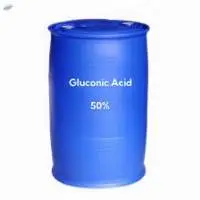
Gluconic Acid 50% (CAS No. 526-95-4) is a clear, light-colored aqueous solution widely used in food, pharmaceutical, cosmetic, and industrial applications. It is a mild organic acid derived from glucose and is known for its excellent chelating, sequestering, and pH-regulating properties. Gluconic Acid 50% is extensively utilized in cleaning formulations, metal surface treatment, textile processing, concrete admixtures, and water treatment systems. In the food and pharmaceutical industries, it is used as a stabilizer, acidity regulator, and mineral supplement component. Known for its biodegradability, safety, and versatility, Gluconic Acid 50% is a valuable ingredient in modern industrial and consumer product formulations.
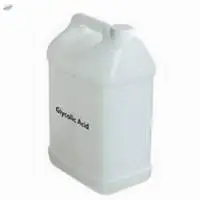
Glycolic Acid (CAS No. 79-14-1) is a colorless to white crystalline organic acid widely used in the pharmaceutical, cosmetic, and industrial sectors. It is the smallest alpha-hydroxy acid (AHA), known for its excellent skin penetration and exfoliating properties. Glycolic Acid is extensively utilized in skincare formulations for chemical peels, anti-aging treatments, acne control, and skin renewal products due to its ability to remove dead skin cells and promote collagen production. It is also used in textile dyeing, leather processing, cleaning agents, and polymer synthesis. Known for its high purity, effectiveness, and multifunctional applications, Glycolic Acid is a valuable ingredient in personal care, healthcare, and industrial chemical markets.
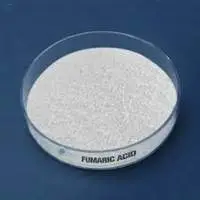
Fumaric Acid (CAS No. 110-17-8) is a white, crystalline organic acid widely used in the food, pharmaceutical, and industrial sectors. It occurs naturally in various plants and is primarily utilized as an acidity regulator, flavor enhancer, and preservative in food and beverage products. Fumaric Acid is extensively used in bakery products, beverages, confectionery, and processed foods to improve taste stability and shelf life. In the pharmaceutical industry, it serves as an important intermediate and pH-adjusting agent in tablet formulations and medicinal compounds. It is also used in unsaturated polyester resins, alkyd resins, and specialty chemical applications. Known for its high purity, stability, and safety, Fumaric Acid is a versatile and valuable ingredient in global food, healthcare, and chemical industries.
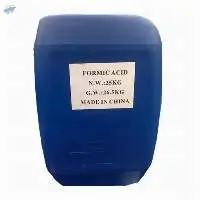
Formic Acid (CAS No. 64-18-6) is a clear, colorless, and highly corrosive organic acid with a sharp pungent odor. It is one of the simplest carboxylic acids and is widely used across the chemical, textile, leather, rubber, and agricultural industries. Formic Acid serves as an important intermediate in chemical synthesis and is extensively utilized in leather tanning, textile dyeing, rubber coagulation, and as a preservative and antibacterial agent in livestock feed. It is also used in pharmaceuticals, cleaning agents, and various industrial formulations due to its strong reducing and acidic properties. Known for its high reactivity and broad industrial applicability, Formic Acid is an essential chemical in global manufacturing and processing industries.
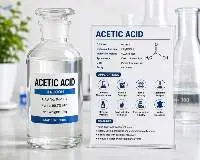
Acetic Acid is a clear, colourless liquid with a characteristic sharp, vinegar-like odour. Glacial Acetic Acid is the high-purity form, typically containing 99.5%+ acetic acid. It is an important organic acid and versatile raw material used across chemical, textile, pharmaceutical, food and industrial sectors.
Applications of Acetic Acid
Chemical Industry: Used as a raw material for producing acetates, acetic anhydride, vinyl acetate and other chemicals.
Textile Industry: Used in dyeing, finishing and textile processing.
Pharmaceuticals: Used as a chemical intermediate and in pharmaceutical manufacturing processes.
Food Industry: Diluted acetic acid is used as an acidity regulator and preservative where permitted.
Paints & Coatings: Used in the manufacture of resins, coatings and related chemicals.
Leather Processing: Used for pH adjustment and processing in leather manufacturing.
Cleaning Products: Used in selected cleaning and descaling formulations.
Laboratories: Used as a reagent and solvent in chemical analysis and research.
Adhesives & Polymers: Used in the production of vinyl acetate and polymer-related materials.
Appearance: white crystalline powder
Cas No:501-30-4
EINECS No: 207-922-4
Molecular Formula: C6H6O4
Model:
Cas No:501-30-4
Brand:
Soleado
Kojic acid is an organic compound with a chemical formula of C6H6O4. It is mainly used as a whitening agent, food additive, and also as a preservative, preservative, and color-protecting agent.
Packaging plastic woven bag, 25kg net composite paper-plastic bags or 3-ply kraft paper bags with PE liner, 500kg or 1000kg net PP woven Jumbo bags
Storage Kept in a light-proof, well-closed, dry and cool place
Main Usage Citric Acid is mainly used as acidulant, flavoring agent, preservative and antistaling agent in food and beverage industry.it is also used as antioxidant, plasticizer and detergent in chemical, cosmetics and cleaning industries.
We can supply Acetic Acid Industrial Grade and Food Grade.
Commodity:Acetic acid.
Other name: Glacial acetic acid
Molecular formula CH3COOH
CAS:64-19-7
EC No.200-580-7
Introduction:
Annual capacity of our glacial acetic acid is 350,000.the raw material is methanol.we use a new technical process to produce: Methanol decomposition.
the most important characteristic of this way are as following:
mild oder; high quality--can reach 99.99%min; low cost--30% lower than oil decomposition and ethanol decomposition way.
Specifications:
Apha color:<10
Freezing point: 16
Specific gravity:1.04
Acetid acid: 99.8%
Acetaldehyde: 0.004%
Formic acid: 0.06%
Iron: 0.00004%
Non-Volatile Matter: 0.003%
The heavy metal(As Pb counts): 0.00002%
Package:
IBC drum, 30kgs/HDPE drum and ISO tank
39318 Oxalic Acid Suppliers
Short on time? Let Oxalic Acid sellers contact you.