Please click here to check who's online and chat with them.

Find Verified Ores Minerals Suppliers, Manufacturers and Wholesalers

Top Supplier Cities : Doha   -   Qatar  
Mar-13-23
 Inquire Now  
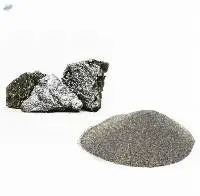
High Carbon Ferro Chrome (HC FeCr)
Mar-13-23
 Inquire Now  
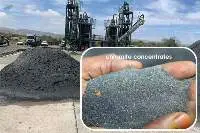
Chromite Ore
Mar-13-23
 Inquire Now  
Copper Concentrate
Mar-13-23
 Inquire Now  
Antimony Ore
Mar-13-23
 Inquire Now  
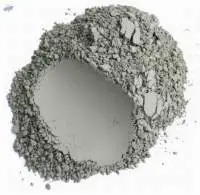
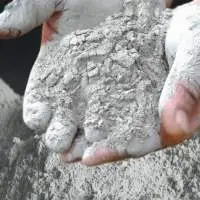
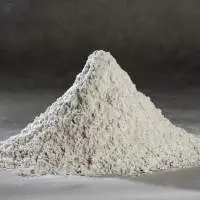
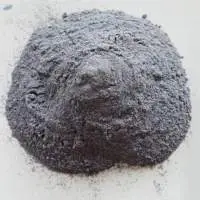
Fly ash is a finely divided residue made from the combustion of pulverized coal that can be used to increase concrete durability and workability, while reducing permeability.

As fly ash contains aluminous and siliceous components, it may form cement when mixed with water if the calcium content of the fly ash is high enough. Similarly, mixing fly ash with lime and water can create a substance similar to Portland cement.

Fly ash can be separated into two main types, known as:

Class F
Class F fly ash contains particles covered in a type of melted glass allowing it to reduce the risk of concrete expansion and increase resistance to sulfates and alkali-aggregate reactions.

Class C
Class C fly ash contains a higher percentage of calcium oxide, making it more effective in strengthening structural concrete.


Applications & Benefits of Fly Ash:
Fly ash is used in commercial and industrial sectors for improving the durability and workability of concrete mixes.
Fly ash is also used as filler in paints, adhesives, and metal and plastic composites.
It's commonly used as structural fill for road construction and fly ash can be used to make bricks, ceramic tiles, plaster, Portland cement, and ready-mix cement.
119 Ores Minerals Suppliers
Short on time? Let Ores Minerals sellers contact you.
Mar-13-23
 Inquire Now  
Pozzolan is a siliceous or siliceous and aluminous material that in itself possesses little or no cementitious value but will, in finely divided form and in the presence of moisture, chemically react with calcium hydroxide at ordinary temperatures to form compounds having cementitious properties. It is therefore classified as a cementitious material. There are both natural and artificial pozzolans. The quantification of the capacity of a pozzolan to react with calcium hydroxide and water is given by measuring its pozzolanic activity.
Mar-13-23
 Inquire Now  
GGBFS
Ground granulated blast furnace slag (GGBFS)

The ground granulated blast furnace slag (GGBFS) is a by-product of iron manufacturing which when added to concrete improves its properties such as workability, strength and durability. This material is obtained by the heating of iron ore, limestone and coke at a temperature about 1500 degree Celsius. The process is carried out in a blast furnace. The formation of GGBFS is not direct. The by-product of iron manufacturing is a molten slag and molten iron. The molten slag consists of alumina and silica, also with the certain amount of oxides. This slag is later granulated by cooling it. For this, it is allowed to pass through a high-pressure water jet. This result in quenching of the particles which results in granules of size lesser than 5mm in diameter. The main constituents of blast furnace slag are CaO, SiO2, Al2O3 and MgO. These are the minerals that are found in most of the cementitious substances. The particles are further dried and ground in a rotating ball mill to form a fine powder, known as ground granulated blast furnace slag cement. Now different methods can be employed to perform the main process called as the quenching.

Applications & Benefits of GGBFS:
In concrete:
The incorporation of ground granulated blast furnace slag in concrete manufacture gains many advantages which are mentioned below:

GGBFS in concrete increases the strength and durability of the concrete structure.
It reduces voids in concrete hence reducing permeability
GGBFS gives a workable mix.
It possesses good pumpable and compaction characteristics
The structure made of GGBFS constituents help in increasing sulphate attack resistance.
The penetration of chloride can be decreased.
The heat of hydration is less compared to conventional mix hydration.
The alkali-silica reaction is resisted highly.
These make the concrete more chemically stable.
Gives good surface finish and improves aesthetics.
The color is more even and light.
Lower chances of efflorescence.
The maintenance and repair cost of structures are reduced thus increasing the life cycle of concrete structures.
Unlike cement, GGBFS does not produce carbon dioxide, sulphur dioxide or nitrogen oxides.
White Cement:
White Portland Cement is of high quality, whiteness and strength, it essentially has the same properties and characteristics as gray cement, except for color.

It is widely used in numerous applications such as precast concrete, cast-in-place concrete, terrazzo, median barriers, curbs, tile grout, paint, masonry units, swimming pools, glass fibre reinforced surface bonding mortars.
Mar-13-23
 Inquire Now  
Microsilica (silica fume) is a by-product of silicon metal or ferrosilicon industries, is an amorphous silicon dioxide SiO2. This product reacts chemically with the calcium hydroxide in the cement paste which yields a calcium silicate hydrate gel that significantly enhances strength and durability. The super fine microsilica fills the voids between cement particles creating a very dense, less permeable concrete.

Physical characteristics:
Color: gray or gray white powder

Bulk density: 320-700 kg/m3

Chemical composition:
Items SiO2 Al2O3 Fe2O3 MgO CaO Na2O Moisture
Content
75-98%
1.0-0.2%
0.9-0.3%
0.7-0.1%
0.3-0.1%
1.3-0.2%
Fineness:
the fineness of the silica fume is less than 1 1/4m, and the average particle size is 0.1 0.3 1/4m, and the specific surface area is 20 - 28 m2/g. The fineness and specific surface area are about 80-100 times of cement and 50-70 times of fly ash.

Maxtech Micro Silica supplies will be as per QCS 2014 (ASTM C1240):
SiO2: >/= 92%

LOI: <6

Moisture Content: <1%

Activity Index at 7 days: > 105%

Application & Benefits of Microsilica (Silica fume):
In concrete:
The micro silica fume powder can be well filled in the cement particle space and make the slurry denser, mainly in the following:

Increase strength
Increase the density
Frost resistance
Early strength
Anti abrasion and anti-cavitation resistance
In Refractories:
Microsilica powder is widely used in the refractory industry. It has an important effect on the improvement of the amorphous refractory.
The production of amorphous and shaped refractory products as additives makes the strength and high temperature performance greatly improved.
Other Application:
Elastomers/Polymers

Fertilizer

Oil & Gas Well

Fiber Cement

Shotcrete

Wallboard
Nov-06-23
Supplier From Qatar
 Inquire Now
Feb-14-21

Gypsum, Clinker, Bauxite, Fly Ash, Gbfs, Silica

$20
MOQ: 5000  Metric Tonnes
Sample Available
Supplier From Qatar
 Inquire Now  
Gypsum, Clinker, Pozzolan, Bauxite, Laterite, Limestone, Bitumen, Fly Ash, GBFS, GGBFS, Micro Silica, Gabbro, Glass and other materials
Sep-08-25
Supplier From Qatar
 Inquire Now
Oct-01-21
Supplier From Izmir, Buca, Qatar
 Inquire Now
Feb-19-19
Oct-01-22

Nano Fe3O4

$850
MOQ: Not Specified
 Inquire Now  
NANO Fe3O4, 20-200 nm, Purity 97%, 6.5 tons are ready for shipment from Turkey.
Apr-10-23
Supplier From Doha, Qatar
 Inquire Now
Apr-30-25
Supplier From Qatar
 Inquire Now
Oct-29-12
Supplier From Doha, Qatar
 Inquire Now
Jan-28-20
Supplier From Qusais, Dubai, Qatar
 Inquire Now
May-21-23
Supplier From Qatar
 Inquire Now
Nov-27-23
Supplier From Doha, Qatar
 Inquire Now
119 Ores Minerals Suppliers
Short on time? Let Ores Minerals sellers contact you.
See what buyers and suppliers are discussing in Ores Minerals import export community

Frequently Asked Questions (FAQs)


1. Which ores and minerals are in high demand?

Iron ore, copper ore, lithium ore, and nickel ore are currently the most in-demand minerals because of their use in steelmaking, electronics, and renewable energy.

2. What are the key factors to consider when selecting ores and minerals suppliers for international trade?

When selecting reliable ores and minerals suppliers, you should always check the supplier's certifications, export experience, quality consistency, and ability to meet delivery timelines.

3. How can the quality of ores and minerals be verified before shipment?

In order to check the quality of ores and minerals, buyers often request a third-party inspection or testing certificate. Before shipment, make sure you are partnering with verified suppliers.

4. What international standards apply to the export and import of ores and minerals?

The global trade of ores and minerals usually follows ISO, ASTM, or BIS standards, depending on the mineral type and destination country.

5. Which countries are the major ores and minerals exporters?

When we talk about ores, Turkey, China, and the United States are the top exporters. On the other hand, the European Union, the United States, and Lithuania are the top minerals exporters globally.

6. How do global market trends affect the pricing of ores and minerals?

There are several market trends that affect the pricing of ores and minerals, including industrial demand, global steel production, and changes in the energy and construction sectors.

7. What certifications or licenses are required for exporters of ores and minerals?

Ores & minerals exporters should hold valid export licenses, certificates of origin, and often third-party quality verification documents.

8. How can I ensure the sustainability and ethical sourcing of ores and minerals?

If you want to ensure the sustainability and ethical sourcing of ores and minerals, make sure to work with suppliers who comply with local mining laws, maintain environmental standards, and hold sustainability certifications such as ISO 14001.