Jet A1 is a high-quality aviation turbine fuel specifically designed for use in commercial jet aircraft, business jets, and turbine-powered aircraft. It is a kerosene-grade fuel produced to stringent international aviation standards, ensuring reliable performance, safety, and efficiency under a wide range of operating conditions. Jet A1 has a lower freezing point than Jet A fuel, making it suitable for international flights operating at high altitudes and extremely low temperatures.
Typical Applications :
Commercial Airlines
Cargo Aircraft
Private and Business Jets
Military Aircraft
Helicopters with Turbine Engines
Airport Fuel Supply Operations
High purity 99% Refined White Mineral Oil. With SDS, FDA, REACH and other certifications, it meets the compliance requirements of various countries.
White mineral oil, also known as paraffin oil or white oil. This product is colorless, odorless, and has good safety. Antioxidant, light and heat resistant, not easily spoiled, long shelf life.
Enhances cosmetic texture, Mild and non irritating, with good extensibility, enhancing the skin feel of the product
Multi domain security application: Cosmetic Grade White Oil,Food Grade White Mineral Oil,Industrial White Mineral Oil,Pharmaceutical White Mineral Oil.
Provide different viscosities. Full viscosity range (5cSt-100cSt) with customizable solutions.
30 years as a factory manufacturer. Stable bulk supply, technical guidance, and export documentation support.
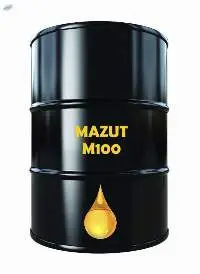
Mazut-100 is a fuel oil that is manufactured to GOST specifications, for example GOST 10585-99. Mazut is almost exclusively manufactured in the Russian Federation, Kazakhstan, Azerbaijan, and Turkmenistan. The most important thing when grading this fuel is the sulphur content.
Light Cycle Oil, also known as LCO, is a refined product derived from the processing of crude oil. It has a higher density and boiling point range compared to diesel fuel but lower than heavy fuel oil. LCO is commonly used as a feedstock for fluid catalytic cracking units (FCCU) and is also used as a blend component for marine fuels.
MAZUT M100
Heavy fuel oil meeting GOST 10585-2013 specifications, primarily used for heating and power generation in industrial applications.
Specifications
Specification: GOST 10585-2013
MOQ: 50,000 - 200,000 MT/Month
Technical Details:
Sulfur Content: 0.5-2.0%
Viscosity at 100C: 50 cSt max
Flash Point: 110C min
Pour Point: 25C max
Trading Details
Origin: Republic of Kazakhstan
Incoterms: CIF/FOB
Loading Ports: Port of Aktau, Rotterdam, Houston, etc.
Payment Guarantee: SBLC, DLC
Payment Terms: MT103 or TT
Performance Bond: 2% PB
Contract Term: 12 months minimum (with rolls and extensions)
Inspection: SGS, CIQ or similar
14646 Industrial Oil Suppliers
Short on time? Let Industrial Oil sellers contact you.
Technical Details:
Penetration at 25C: 60-100
Softening Point: 46-52C
Flash Point: 230C min
Ductility at 25C: 100 cm min
Trading Details
Origin: Republic of Kazakhstan
Incoterms: CIF/FOB
Loading Ports: Port of Aktau, Rotterdam, Houston, etc.
Payment Guarantee: SBLC, DLC
Payment Terms: MT103 or TT
Performance Bond: 2% PB
Contract Term: 12 months minimum (with rolls and extensions)
Inspection: SGS, CIQ or similar
This bitumen is primarily used for the construction of extra-heavy bitumen pavements that have to bear significant traffic loads. Bitumen VG30 is the most widely used type of bitumen in road construction, insulation, building construction industries, and also in the production of cutback bitumen. it is better to know that this vg30 bitumen can be used instead of 60/70 penetration bitumen grade.
VG40 bitumen is used in areas in which high pressure comes from heavy traffic loads, such as intersections, near tolls booths, and truck parking lots.
Due to the high viscosity of this bitumen, it is more appropriate for improving resistance to shoving and other problems associated with higher temperatures and heavy traffic loads. It's long time that industries use vg-40 instead of the penetration grade bitumen 40/50.
VG10 bitumen is the softest grade of viscosity bitumen. This type of bitumen is widely used for spraying applications and surface coating.
VG 10 bitumen means that your bitumen is also suitable for paving roads in a very cold climate instead of the old 80/100 penetration grade. The air temperature that matches VG10 bitumen ranges from -10 C to 25 C.
Due to the high temperatures in hot climatic zones, the application of VG10 cannot provide desirable rutting resistance.
This type of bitumen is also used to manufacture bitumen emulsions and modified bitumen products especially in India.
As a viscosity grade bitumen, VG10 has a better performance incold weather. To know vg10 latest price contact us.
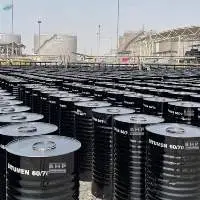
Bitumen penetration grade 60/70 is semi-hard penetration grade bitumen using as paving grade bitumen suitable for road construction and repair conjointly for the production of asphalt pavements with below technical specifications. This grade of bitumen is mainly used in the manufacture of hot combine asphalt for bases and wearing courses. Bitumen 60/70 is the most used bitumen grade and basic material for all alternative bituminous products.
Bitumen Penetration Grade 60/70 is mainly used in the manufacture of hot mix asphalt for bases and wearing courses. Penetration Grade Bitumen supplied by RAHA GROUP is petroleum grade bitumen, manufactured from fractional / vacuum distillation of crude oil. The Bitumen supplied by RAHA GROUP is produced from vacuum residue (short residue) feedstock.
RAHA Penetration Grade bitumens are specified by the penetration and softening point test. The designation is by penetration range only. The penetration grade bitumens have a thermoplastic property which causes the material to soften at high temperatures and to harden at lower temperatures. This unique temperature/ viscosity relationship is important when determining the performance parameters such as the adhesion, rheology, durability and application temperatures of bitumen.
Bitumen Penetration Grade 85/100 is a standard penetration grade Bitumen usually used as a Paving Grade Bitumen suitable for road construction and for the production of asphalt pavements with superior properties. This grade of Bitumen is mainly used in the manufacture of hot mix asphalt for bases and wearing courses. is petroleum grade bitumen, manufactured from fractional / vacuum distillation of crude oil. This bitumen is produced through aeration on vacuum bottom (the raw material used for making bitumen left in vacuum distillation column in oil refineries) in bitumen production units. Its penetration grade ( the measure of bitumen hardness) is between 85 to 100.
Penetration Grade bitumens are specified by the penetration and softening point test. The designation is by penetration range only. The penetration grade bitumens have a thermoplastic property which causes the material to soften at high temperatures and to harden at lower temperatures. This unique temperature/ viscosity relationship is important when determining the performance parameters such as the adhesion, rheology, durability and application temperatures of bitumen.
The Bitumen mode is dependent on temperature. The temperature-vs-stiffness relationship of bitumen is dependent on the type of crude oil and its refining method. Bitumen penetration grade 85/100 is semi hard penetration grade bitumen used as a paving grade bitumen which is suitable for road construction and repair. It is also used for the production of asphalt pavements with the below technical specification. This grade of bitumen is mainly used in the manufacturing of hot mix asphalt for bases and wearing courses. Bitumen 85/100 is one of the most used bitumen grades and a basic material for all other bituminous products.
Penetration determines the hardness of bitumen by measuring the depth to which a standard loaded the needle will vertically penetrate in 5 seconds, in a sample of bitumen maintained at a temperature of 25 degrees Celsius.
Base oil SN 150 is known as a light grade base oil at the lower end of the specifications for Grade I light base oils. It is mostly used in lubricant and lubricant additives production. It is a Group I base oil which has undergone solvent refining processes. To finish the refining it was hydrogen treated to clear out any impurities.
Applications :
Base oil SN 150 works as a base stock for several industrial lubricants.
General purpose oils
Mould oil
Transmission fluids
Gear oils
Metal working fluids
Additives
Hydraulic oils
Transformer oils
Base Oil SN 500 is defined as a light-grade base oil at the upper end of the specifications for Grade I base oils. It is mostly used in lubricant production. It is a Group I base oil that has undergone solvent refining processes. To finish the refining it was hydrogen-treated to clear out any impurities.
Applications :
Base Oil SN 500 works as a base stock for several industrial lubricants
Engine oils
Transmission fluids
Gear oils
Metal working fluids
Greases
Hydraulic oils
Transformer oils
Blown Bitumen 75/25 or Oxidized Bitumen or Blown Asphalt is produced by blowing hot air into the penetration bitumen. This action makes the bitumen more rubbery than its original formula and it becomes harder bitumen. This bitumen recovery the weight loss under heating. Due to low thermal sensitivity, the softening point is much higher than regular bitumen and the penetration index (PI) is higher than road construction bitumen (8>PI>2) due to the letter has a gel-like structure because of asphalt accumulation. Blown Bitumen 75-25 is Semi Solid grade of pure petroleum bitumen. Special physical properties of its grade can be used in different applications in the construction business.
Blown Bitumen 75/25 is produced by the air-blowing of penetration grade bitumen. This is done at high temperatures, resulting in a material of a much higher penetration index. RAHA Bitumen 75/25 is based on petroleum bitumen which is made by blowing bitumen 60/70 by very hot air. The designation of the Blown Bitumen 75/25 refers to the midpoint of the softening point acceptance criteria.
Our Bitumen partner Co. is also capable of producing other grades of Oxidized Bitumen according to the specifications of individual clients. Some of the major advantages of Oxidized Bitumen are that it is completely water resistant, highly flexible and durable. Further, it is chemically very stable. Oxidized bitumen is a very flexible compound that is not only chemically stable but also a very durable compound apart from being completely water resistant. Lastly, Oxidized Bitumen has some very prominent technical advantages that makes it a very sought after compound in various applications.
Uses of Blown Bitumen 75/25
Blown Bitumen 75/25 is a solid or semi-black solid material and gradually liquid when heated. Oxidized Bitumen grades are blown or oxidized Asphalt s which are produced by passing air through soft bitumen under controlled temperature conditions. This process gives the bitumen more rubbery properties than penetration or hard grade bitumens and a variety of uses in industrial applications.
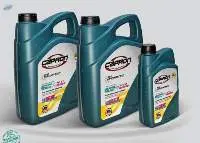
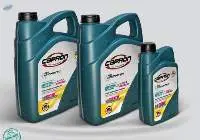
Capron Eco Magnatec is a four-season gasoline engine
oil produced with mineral base oil and good-quality
additives which features proper anti-rust and anti-corrosion properties.
Capron Eco Magnatec is a four-season gasoline engine
oil produced with mineral base oil and good-quality
additives which features proper anti-rust and anti-corrosion
properties.
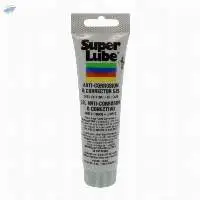
Super Lube Anti-Corrosion & Connector Gel is a specially formulated high molecular weight connector gel used as a dielectric compound and as a corrosion inhibitor. It demonstrates excellent film strength and long life protection against corrosion and rust.
Super Lube Anti-Corrosion & Connector Gel will provide much better protection than typical grease. The thin NLGI 0 viscosity of the product makes it easy to coat and prepare a barrier of protection that will outlast conventional greases. Note: Should not be used as a lubricant.
Super Lube Anti-Corrosion & Connector Gel is an effective dielectric compound and corrosion inhibitor for plugs and connectors, electrical fittings and coil connectors. It adds a superior oxidation barrier.
Super Lube Anti-Corrosion & Connector Gel remains pliable, will not harden or crack and resists change due to mechanical working. Quality control measures insure maximum storage life and no oil separation of the compound.
Stannous Chloride Anhydrous is a strong reducing agent and is used in many industrial processes, such as manufacturing dyes, phosphors, and polymers. The compound is a major ingredient in acid tin plating baths. Other uses are a mordant in dyeing; an additive to lubricating oil to prevent sludging; a stabilizer for perfume in soaps; in removing ink stains; a sensitizing agent for glass, paper, and plastics; and a soldering flux. Stannous chloride Anhydrous is used for preparing a number of tin(II) salts. It is a catalyst in many organic reactions. It is a common laboratory reagent.
Properties
Density 3.95 g/cm3
Composition Sn (+2) = 62.6%, Cl = 37.4% (Theoretical)
Melting Point 246 C (475o F)
Boiling Point 652C (1206o F)
Specifications
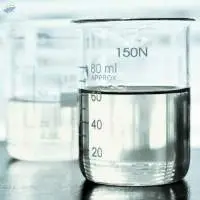
Base oil 150N is defined as a light base oil at the lower end of the specification compared to a Class II light base oil. They are mainly used in the production of lubricating additives and lubricants. . Because it is a Group II base oil, it has undergone hydrocrack treatment steps to remove any impurities.
14646 Industrial Oil Suppliers
Short on time? Let Industrial Oil sellers contact you.