Please click here to check who's online and chat with them.

Find Verified Mixed Metal Scrap Suppliers, Manufacturers and Wholesalers

Top Supplier Cities : -   Shanghai   Tianjin  
May-27-20

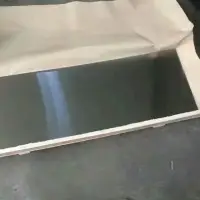
Titanium Sheet

$23
MOQ: Not Specified
 Inquire Now  
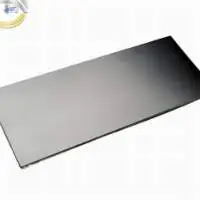
Titanium sheet are commonly used in manufacturing, and the most popular grade 2 and grade 5.Industrial pure titanium and titanium alloy have high corrosion resistance and specific strength. They are widely used in electric power, chemical,aerospace parts and other fields.
Apr-16-20

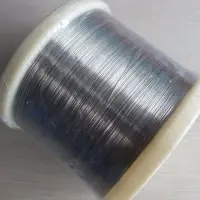
Titanium Wire

$170
MOQ: 10  Inches
Sample Available
 Inquire Now  
Titanium wire
Grade: Gr1, Gr2, Gr3, Gr4, Gr6, Gr7, Gr12, TA28, TC1, TC2, TC3

Diameter: 0.1-7.0

Supply status: heat processing, cold processing, annealed

Application: medical industry
Apr-17-20

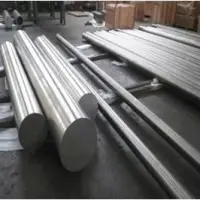
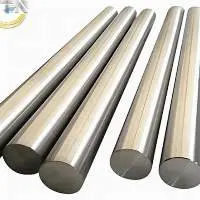
Titanium Bar

$18.70
MOQ: 200  Inches
Sample Available
 Inquire Now  
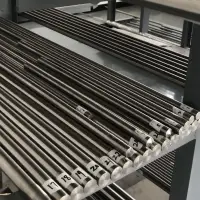
Specification: titanium bar

Grade: Gr1, Gr2, Gr3,Gr5(6AL-4V), Gr7,Gr12

Application: medical industry
Apr-17-20

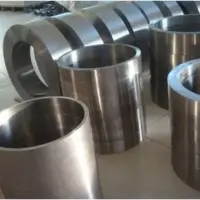
Titanium Ring

$21.42
MOQ: Not Specified
Sample Available
 Inquire Now  
Titanium ring Size: OD:200-400mm, ID:100-300mm, Height20-120mm, WTK40-150mm OD:400-700mm, ID:150-500mm, Height35-600mm, WTK40-250mm OD:700-1100mm, ID:300-900mm, Height45-600mm, WTK40-600mm Grade: Gr1, Gr2, Gr3, Gr4, Gr5(6AL-4V), Gr9, Gr12, Gr23(Gr5ELI) Standard: ASTM B381
Application: chemical industry
Apr-17-20

Titanium Tube Plate

$25.72
MOQ: Not Specified
Sample Available
 Inquire Now  
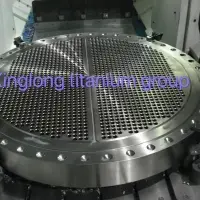
Titanium tube plate is mainly used in chemical industry.
1291 Mixed Metal Scrap Suppliers
Short on time? Let Mixed Metal Scrap sellers contact you.
Apr-17-20

Titanium Disc

$25.72
MOQ: Not Specified
Sample Available
 Inquire Now  
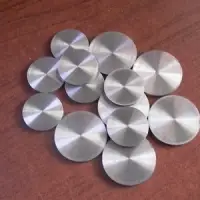
Specification: titanium disc
Grade: Gr1, Gr2, Gr3, Gr4, Gr5(6AL-4V), Gr9, Gr12, Gr23(Gr5ELI)

Standard: ASTM B381

Size: OD6-13mm, Max length 4m
OD13-120mm, Max length 15mm

Application :medical, aerospace, chemical industry etc.
Apr-16-20

Od 25 Tc4 Titanium Bar

$18.70
MOQ: 200  Inches
Sample Available
 Inquire Now  
OD25 Tc titanium bar is mainly used in mask machine ,and has a crazy sales in both home and abroad.
Jul-17-26

Ti6Al4V Eli Titanium Sheet Is05832-3, 1

$1 - $2 / Piece (CFR)
MOQ: Not Specified
 Inquire Now  
Ti6Al4V ELI Titanium Sheet IS05832-3
Product Inspection
1.With mill test certificate, accept the third party test.
2.100% ultrasonic or turbine flaw detection to eliminate metallurgical defects and non-ferrous impurities.
3.Characteristic: Stable physical properties, metallographic structure is better than the standard requirements, high strength or high plasticity can be customized.
Produce the medical titanium plate with the 650 Rolling Mill, to control the thickness tolerance, straightness and microstructure better. Our annual output of medical titanium plate is 300 tons. Marking the heat number, grade, size and rolling direction on the sheets.
We specializes in producing medical titanium plate. The ASTM F136 material has low density but high good properties, it is widely used for Skull plate, internal bone fixation plate and medical equipment. We take the quality as the first important thing during the production and quality process.
At present, we have become one of the top three suppliers of medical titanium rods/rods to Chinese titanium implant manufacturers. ISO 13485:2016 and ISO 9001:2015 certified.
Jul-17-26
 Inquire Now  
Titanium Bar Manufacturer for Medical & Industrial Applications

As a professional titanium bar manufacturer, we specialize in the production of high-performance titanium bars and rods for medical, aerospace, chemical processing, and industrial engineering applications.

Our manufacturing scope covers CP titanium and titanium alloy grades, supplied in compliance with international standards and tailored to project-specific requirements.

This page provides an overview of our titanium bar and rod manufacturing capabilities, material grades, standards, and typical application scenarios to support technical evaluation and RFQ preparation.
Titanium Bar & Rod Manufacturing Capabilities
As a vertically integrated� titanium bar factory, we control the full production process from raw material melting to finished bar inspection, ensuring consistent mechanical performance and material traceability.
Manufacturing scope includes:
Titanium bar and titanium rod manufacturing
Hot rolled, forged, and cold-finished bars
Straightened, ground, or peeled surface conditions
Cut-to-length supply based on drawing requirements
Typical size range:
Diameter: customized upon request
Length: fixed or random length available
Available Titanium Grades & Standards
We manufacture titanium bars and rods in commonly specified industrial and medical grades, supporting both standard and custom requirements.
Material Grades
Ti-6Al-4V (Grade 5)
Ti-6Al-4V ELI (Grade 23)
Applicable Standards
ASTM B348 - Titanium Bars and Billets
ASTM F136 - Medical Grade Ti-6Al-4V ELI
ISO and equivalent international standards upon request
Material selection support is available for applications requiring corrosion resistance, fatigue strength, or biocompatibility.
Application-Driven Titanium Bar Solutions
Our titanium bars and rods are widely used in demanding environments where strength-to-weight ratio, corrosion resistance, and material reliability are critical.
Typical application areas include:
Medical implants:� orthopedic fixation systems, spinal rods, surgical instruments
Aerospace components:� structural parts, fastener blanks, support shafts
Chemical processing equipment:� heat exchanger rods, corrosion-resistant shafts
Marine engineering:� components exposed to seawater environments
Industrial machinery:� high-load, lightweight precision parts
Each application sector may require different grades, tolerances, and surface conditions, which are supported through our manufacturing process.
Quality Control & Material Traceability
As a responsible� titanium rod manufacturer, quality control and traceability are integrated into every production stage.
Quality assurance includes:
Chemical composition analysis
Mechanical property testing (tensile, yield, elongation)
Dimensional inspection
Surface condition verification
Heat number traceability
Mill test certificates (EN 10204 3.1) and inspection reports are available to support procurement and regulatory documentation.
May-27-20

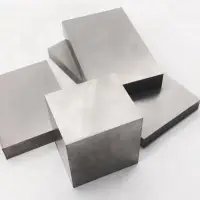
Titanium Block

$134
MOQ: 10  
Sample Available
 Inquire Now  
Titanium block and titanium alloy block have excellent properties, shrinkage cavity and shrinkage porosity, large dendrites, specific internal texture structure, uniform segregation and inclusion distribution, chemical machinery, environmental protection equipment, food equipment, papermaking can be used for forging stability Performance, salt production, alkali production, pump valves, marine equipment, mobile phone cases, chemical wastewater treatment.
Aug-01-23
 Inquire Now  
Mixed-metal Coated Titanium Anodes for Trivalent Chromium Plating is a material used as an anode in an electrochemical reaction, and it is usually made of pure titanium or a titanium alloy. During the electrochemical reaction, Mixed-metal Coated Titanium Anodes for Trivalent Chromium Plating absorbs electrons and is oxidized, forming an oxide coating on its surface, commonly known as titanium anodic oxide (TAO).
Parameter
Substrate material: titanium Grade 1, titanium Grade 2
Dimensions: customer drawing welcomed
Shape: Plate/Tube/Rod/Mesh shape
MMO coating: Ir-Ta coating
Coating thickness: 0.2-12m
Temperature:
Apr-24-23
 Inquire Now  
Sintered metal filters are a type of porous filter made by sintering metal powder particles together. Sintering is a process that involves heating metal powder to a temperature just below its melting point, allowing the particles to fuse together and form a solid structure. The resulting filter material is highly porous with a controlled pore size distribution that can filter out particles of a specific size.
The pore size of sintered metal filters can range from a few microns to several hundred microns, depending on the required filtration level. The pore size is controlled during the manufacturing process to ensure consistent and precise filtration.
Sintered metal filters provide high filtration efficiency due to their precise pore size distribution. They can filter out particles and contaminants of a specific size, making them suitable for a wide range of applications where filtration accuracy is critical. Additionally, sintered metal filters are easy to clean and can be reused multiple times, making them a cost-effective solution in many applications.
Products Features
Highly porous structure: Sintered metal filters have a highly porous structure that allows for efficient filtration of liquids and gases. The porosity is controlled during the manufacturing process to ensure consistent and precise filtration.
Precise pore size distribution: Sintered metal filters offer a precise pore size distribution, which allows for accurate filtration of particles and contaminants of a specific size. This makes them suitable for a wide range of applications where filtration accuracy is critical.
High strength and durability: Sintered metal filters are made from metal powders that are sintered at high temperatures, resulting in a strong and durable filter material. They can withstand high temperatures, corrosive environments, and high-pressure applications.
Chemical resistance: Sintered metal filters are available in various metals, each with different chemical properties. This allows for customization of the filter material to suit specific chemical environments and applications.
Easy to clean and maintain: Sintered metal filters can be easily cleaned and reused multiple times, making them a cost-effective filtration solution. They can be cleaned by backwashing, ultrasonic cleaning, or chemical cleaning, depending on the application requirements.
Products Applications
Sintered metal filters are used in a wide range of industries and applications, including oil and gas, chemical processing, pharmaceuticals, food and beverage, and water treatment. They are often used to filter out impurities, contaminants, and solids from liquids and gases. The filters can be made from various metals, including stainless steel, bronze, nickel, and titanium, depending on the specific application requirements.
Apr-28-23

Titanium Metal Powder

$5 - $150
MOQ: Not Specified
 Inquire Now  
Product Introduction

Titanium metal powder sintered porous fluidized plate is formed by high temperature forming and sintering of metal or alloy powder and has a rigid structure.
There are a lot of connected or partially connected pores in the substance. Powder particles that are both regular and irregular make up the pore structure. The size and distribution of the pores are related to the size of the particles. The porosity can be adjusted according to the combination of powder particle size and preparation process to meet the actual needs of customers.
Advantages: Good permeability, controllable pore size and porosity, stable shape, high filtration accuracy, wear resistance, good mechanical properties, good thermal conductivity, good heat resistance, heat dissipation, backwashing, and repeated use.
Titanium sintered porous materials are allowed to be used in the following environments: nitric acid of various concentrations (fuming nitric acid is prohibited), chlorine water, seawater, the aqueous solution of sodium hydroxide, carbonate, and chloride salt.


Properties of Porous Titanium Materials
High-temperature resistance, normal use 300 .
Excellent plasticity, high mechanical strength, and machinability.
Corrosion resistance, and anti-oxidation, can be used in nitric acid, liquid hydrogen, and liquid nitrogen environment.
Good molding process, one-time molding processing can be carried out according to customer drawings.
High filtration precision, good purification effect.
No particles fall off, the interior structure is steady, and the pores are uniform.
Good air permeability is easy to blowback and clean and can be regenerated online for repeated use.
Wear-resistant and impact-resistant, good mechanical properties
Production steps: powder sieving molding vacuum sintering
Apr-27-23

Titanium Metal Powder

$5
MOQ: Not Specified
 Inquire Now  
Titanium metal powder sintered porous fluidized plate is formed by high temperature forming and sintering of metal or alloy powder, and has a rigid structure.
There are a lot of connected or partially connected pores in the substance. Powder particles that are both regular and irregular make up the pore structure. The size and distribution of the pores are related to the size of the particles. The porosity can be adjusted according to the combination of powder particle size and preparation process to meet the actual needs of customers.
Advantages: Good permeability, controllable pore size and porosity, stable shape, high filtration accuracy, wear resistance, good mechanical properties, good thermal conductivity, good heat resistance and heat dissipation, backwashing, and repeated use.
Titanium sintered porous materials are allowed to be used in the following environments: nitric acid of various concentrations (fuming nitric acid is prohibited), chlorine water, sea water, aqueous solution of sodium hydroxide, carbonate and chloride salt.
Properties of Porous Titanium Materials
High temperature resistance, normal use 300
Excellent plasticity, high mechanical strength, and machinability.
Corrosion resistance, anti-oxidation, can be used in nitric acid, dilute liquid hydrogen, liquid nitrogen environment.
Good molding process, one-time molding processing can be carried out according to customer drawings.
High filtration precision, good purification effect.
No particles fall off, the interior structure is steady, and the pores are uniform.
Good air permeability, easy to blow back and clean, and can be regenerated online for repeated use.
Wear-resistant and impact-resistant, good mechanical properties
Production steps: powder sieving molding vacuum sintering
Apr-14-23

Metal Powder Filters

$5 - $150
MOQ: Not Specified
 Inquire Now  
Product Introduction

Metal powder serves as the only raw material for the sintered metal powder filter; no binders are used. It is generated by cold isostatic pressing and then sinters at high temperatures. By adjusting the process parameters and metal powder particle size, the pore size and distribution of the component can be changed. Utilize the pore structure, material composition, compressive strength, and other characteristics of different filter materials to develop filter products suitable for users.
When the filter cake on the surface of the sintered metal powder filter element reaches a certain thickness, due to its high-strength performance characteristics, by backwashing or backflushing the filter element under a specific reverse pressure, the filter element can be cleaned and reused.


Product parameters
Material: stainless steel powder, brass powder, titanium powder
Diameter:
Length: 5 inches (125mm) 10 inches (250mm) 12 inches (300mm) 20 inches (500mm) 30 inches (750mm) 40 inches (1000mm)
Interface form: M20 M30 222 226
Filtration accuracy: 0.45 micron 1 micron 3 microns 5 microns 10 microns 20 microns 30 microns 50 microns 80 microns 100 microns
Sep-13-19
 Inquire Now  
Specification for niobium metal
Chemistry (ppm) max.
Elements Nb Ta O N C Si Fe W Mo Ti Cu Cr Ni Zr
Specification Balance 2000 400 300 100 400 100 100 100 50 50 50 50 50
Actual content Balance 650 130 70 25 130 50 30 50 40 50 30 30 30

Baoji lihua non-ferrous metals co., ltd. Is specialized in titanium (ti), tantalum (ta), niobium(nb) and its alloy plate, sheet, foil, strip, target, tape, rod, bar, wire, tube, pipe.
Apr-26-12
 Inquire Now  
Chinese Std. GB HG ,U S Std. ASTM(ASME), International Std. ISO, Germany Std. DIN, Britain Std. BS, France Std. NF, Russia Std. OCT, Japanese Std.


According to customer requirements & drawings.
Apr-13-23

Sintered Metal Powder Filters

$5
MOQ: Not Specified
 Inquire Now  
Metal powder serves as the only raw material for the sintered metal powder filter; no binders are used. It is generated by cold isostatic pressing and then sinters at high temperatures. By adjusting the process parameters and metal powder particle size, the pore size and distribution of the component can be changed. Utilize the pore structure, material composition, compressive strength and other characteristics of different filter materials to develop filter products suitable for users.
Product parameters
Material: stainless steel powder, brass powder, titanium powder
Diameter:
Length: 5 inches (125mm) 10 inches (250mm) 12 inches (300mm) 20 inches (500mm) 30 inches (750mm) 40 inches (1000mm)
Interface form: M20 M30 222 226
Filtration accuracy: 0.45 micron 1 micron 3 micron 5 micron 10 micron 20 micron 30 micron 50 micron 80 micron 100 micron
Features
Strong resistance to corrosion
An inert metal with exceptional corrosion resistance is titanium. Strong alkali and strong acid media can be filtered using the titanium metal rod filter element. It has a wide range of applications in the chemical industry and in the filtering of the pharmaceutical industry's organic lysozyme production process.
Good tolerance to high temperatures
The titanium filter element has a high temperature resistance that goes up to 300C. In operational situations with high temperatures, this function is frequently used. The temperature resistance of the filter element made of polymer materials is normally limited to 50 C. The support and filter membranes will alter if the temperature goes beyond 50 C. It is frequently employed in the filtration of high-temperature liquids and steam filtration (steam filtration in fermentation processes), despite having a significant accuracy variance.
Superior mechanical qualities
With external pressure of 20 kg and internal pressure of 10 kg of destructive force, the titanium rod filter element has strong mechanical qualities and may be utilized in high pressure and quick filtration processes. The pore size of other polymer filter components will fluctuate or even break down when the external pressure is more than 0.5 MPa.
Good regeneration
Due to its superior corrosion resistance, high temperature resistance, and high strength performance, titanium rod filters have a good regeneration effect. There are two types of regeneration: chemical regeneration and physical regeneration treatment.
Physical regeneration method:
(1) Pure water recoil
(2) Steam blowback
(3) Ultrasonic cleaning
Chemical treatment method:
(1) Alkaline washing
(2) pickling
Applications
Catalyst filtration and separation;
Filtration of fluidized bed tail gas in petrochemical facilities and of high-temperature gas in the petrochemical industry;
High-temperature flue gas purification in the metallurgical industry;
May-08-23

Sintered Metal Filter Screen

$5 - $150
MOQ: Not Specified
 Inquire Now  
Product Introduction

A metal sintered filter screen is a type of porous material made by sintering metal wire meshs together into a solid structure. The material is typically made from stainless steel or other metals, and it features a network of interconnected pores that allow liquids or gases to pass through while trapping solids or other impurities.

Sintered metal filter screens are often used in industrial applications where high temperatures, pressure, or corrosive environments are present, as they offer excellent durability and resistance to wear and tear. The filters can be manufactured in various shapes and sizes, and their precise filtration capabilities can be tailored to meet specific application requirements.


Parameters

Brand: TOPTITECH

Origin: Baoji, China

Material: SUS304 (AISI304), SUS316 (AISI316) and SUS316L (AISI316L)

Size: 500 �? 1000ã??ã??600 �? 1200ã??ã??1000 �? 1000mmã??1200 �? 1200mm(customized)

Craft: Sintering


Features

1. High Durability: Metal sintered filter screens are highly durable and can withstand harsh environments, high temperatures, and pressure. They are resistant to wear and tear, making them ideal for long-term use in industrial applications.

2. Precise filtration: Metal sintered filter screens have a precise filtration capability, which can be tailored to meet specific application requirements. They have a high retention rate for contaminants, providing a superior level of filtration compared to other types of filters.

3. Easy to Clean: Sintered metal filters are easy to clean and maintain, which reduces downtime and maintenance costs. They can be cleaned by backwashing, ultrasonic cleaning, or other cleaning methods, depending on the type of filter and the application.

4. Reusability: Metal sintered filter screens are reusable, making them highly cost-effective in the long run. They can be cleaned, sterilized, and reused multiple times, reducing the need for frequent replacement and minimizing waste. This also makes them environmentally friendly.
Mar-20-23
 Inquire Now  
The metal microporous filter cartridge processed by stainless steel irregular powder can be isostatically pressed, molded and extruded. It has good permeation filtration performance and high filtration accuracy, as well as certain strength and toughness, and can be used at a high temperature of 600 C.
The metal microporous filter cartridge is mainly used in basic industries such as petroleum, chemical industry, and environmental protection as filter materials, porous electrode materials, sound-absorbing materials, shock-absorbing materials, divergent cooling materials, catalysts and catalytic reduction materials, antifreeze and buffer materials.
Product Parameters
Material: SUS304, 304L, 316, 316L
Shape: tube, plate, sheet, disc, ring, rod and cone
Filtration accuracy: 0.22um-100um
Applicable temperature: 600
Porosity: 30%-40%
Thickness: 1.0mm-10mm
Length: customized
Features
1. High porosity
The pore size is uniform, easy to blow back, can be regenerated online, easy to clean, strong regeneration ability, and long service life.
2. High mechanical strength
It is easy to install and use, easy to maintain, good in assembly, and can be welded, bonded and machined. Uniform pores, ideal for situations needing high consistency, such as fluid dispersion and homogenization treatment. Good mechanical performance, low pressure difference, large flow rate, pressure filtration and suction filtration, and simple operation.
3. Good molding process
The total unwelded length is up to 1200 mm. Stainless steel powder products are manufactured at one time without cutting, resulting in a high effective utilization rate of raw materials and maximum material savings. It is particularly suited to components with huge batch sizes and complex architectures.
1291 Mixed Metal Scrap Suppliers
Short on time? Let Mixed Metal Scrap sellers contact you.
Explore Mixed Metal Scrap related import export discussions