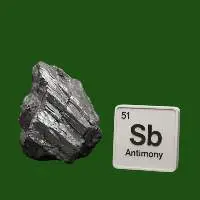
1. Grade A: 40â??50% Sb
High-purity Antimony ore, ideal for direct use in semiconductors and specialized alloys requiring precise control of electronic properties or hardness.
2. Grade B: 25â??39.9% Sb
This intermediate grade of Antimony ore is typically processed further for use in fire-retardant chemicals (antimony trioxide) and to make lead-acid battery alloys.
3. Grade C: 14â??24.9% Sb
This lower-grade Antimony ore is a practical source for various antimony compounds used as pigments, enamels, and glass clarifying agents.
Antimony Ore is primarily used in flame retardants, lead alloys, and semiconductor applications, offering consistent quality for industrial and metallurgical use.
- Barite Powder Grade 4.20SG
4.20 SG graded Barite under API 13A 19th Edition Section 7. The purity can be expected with a minimum of 90% BaSO4 concentration having a specific gravity of minimum 4.20g/ml.
- Barite Powder Grade 4.10SG
4.10 SG graded Barite under API 13A 19th Edition Section 7. It consists of a minimum 80 - 90% BaSO4 concentration with a minimum specific gravity of 4.10g/ml.
- Barite Powder Grade 4.15 SG
4.15 SG graded Barite which consists of 80-90% BaSO4 concentration with a minimum specific gravity 4.15 g/ml.
- Barite Powder Grade 4.0SG
4.0 SG graded Barite which consists of 70 - 80% BaSO4 concentration with a minimum specific gravity 4.0 g/ml.
- Grade A: 40 - 50% Sn
High-grade concentrate is for direct smelting to produce pure tin metal. The essential for lead-free solder in electronics, and specialized industrial alloys.
- Grade B: 30â??39.9% Sn
Intermediate-grade tin concentrate is used as a feedstock for smelters, manufacturing solder in general electronics, tin alloys , and tin chemicals.
- Grade C: 20â??29.9% Sn
Lower-grade is used for basic tin chemicals, ceramic glazes, and glass manufacturing additives.
Tin Ore is primarily used in solder, tin plating, and alloy production, offering high-purity ore suitable for industrial applications.
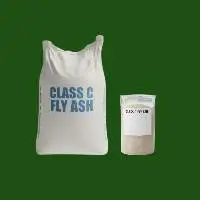
- Source: Produced from the combustion of younger lignite or sub- bituminous coals.
- Composition: Contains a high percentage of calcium oxide (CaO), typically more than 20%. It also includes silica, alumina, and iron oxide.
- Properties: Exhibits both pozzolanic and self-cementing properties. The high lime content allows it to harden and gain strength independently when mixed with water.
- Key uses: Used in concrete when early-stage strength development is needed. Its self-cementing properties can allow for a partial replacement of cement in a concrete mix.
9 Mining Metallurgy Suppliers
Short on time? Let Mining Metallurgy sellers contact you.
- Source: Derived from the combustion of harder, older anthracite or bituminous coals.
- Composition: Primarily composed of silica (silicon dioxide, SiO2), alumina (aluminum oxide, Al2O3), and iron oxide (Fe2O3). It has a low calcium content, typically less than 10%.
- Properties: Possesses pozzolanic properties, meaning it requires a cementing agent like hydrated lime or Portland cement to react with water and form a cementitious compound. It has no self-cementing properties on its own.
- Key uses: Used in concrete to increase its long-term strength, reduce permeability, and enhance resistance to sulfate attacks.
- Bauxite with 4.5 < Al/Si < 5.5: This lower-grade bauxite is primarily used to produce high-alumina cement. The higher silica content is incorporated to create cement that sets quickly and is resistant to corrosive chemicals and high temperatures.
- Bauxite with 5.5 < Al/Si < 6.5: This higher-grade bauxite, with its lower silica impurity, is most suitable for manufacturing high-quality refractory materials and abrasives. The purity ensures these products can withstand extreme temperatures and perform effectively for industrial cutting and polishing applications.