Supplier From
Jodhpur,
Rajasthan,
India
Supplier From
Jodhpur,
Rajasthan,
India
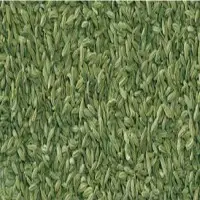
Botanical Name - Foeniculum vulgare
Category - Spices/Medicinal
Form - Dry
Part Used - Seeds
General Information - Foeniculum vulgare Mill. is a biennial medicinal and aromatic plant belonging to the family Apiaceae (Umbelliferaceae). It is a hardy, perennial umbelliferous herb with yellow flowers and feathery leaves. It grows to a height of up to 2.5 m with hollow stems. The leaves grow up to 40 cm long; they are finely dissected with the ultimate segments filiform (thread like) of about 0.5 mm wide. The flowers are produced in terminal compound umbels. The fruit is a dry seed 4â??10 mm long. It is generally considered indigenous to the shores of Mediterranean Sea but has become widely naturalised in many parts of the world especially on dry soils near the sea coast and on the river banks. Some authors distinguish two sub-species of fennel, piperitum and vulgare: sub-species piperitum has bitter seeds, while sub-species vulgare has sweet seeds which are used as flavouring agents in baked goods, meat and fish dishes, ice creams, alcoholic beverages, etc due to their characteristic anise odour. Foeniculum vulgare (Apiaceae) commonly known as fennel is a well known and important medicinal and aromatic plant widely used as carminative, digestive, lactogogue and diuretic and in treating respiratory and gastrointestinal disorders. Its seeds are used as flavourings in baked goods, meat and fish dishes, ice cream, alcoholic beverages and herb mixtures. Phenols, phenolic glycosides and volatile aroma compounds such as trans-anethole, estragole and fenchone have been reported as the major phytoconstituents of this species. Different pharmacological experiments in a number of in vitro and in vivo models have convincingly demonstrated the ability of F. vulgare to exhibit antifungal, antibacterial, antioxidant, antithrombotic and hepatoprotective activities, lending support to the rationale behind several of its therapeutic uses.
Phytochemicals- F. vulgare has been reported to contain 6.3% of moisture, 9.5% protein, 10% fat, 13.4% minerals, 18.5% fibre and 42.3% carbohydrates. The minerals and vitamins present in F. vulgare are calcium, potassium, sodium, iron, phosphorus, thiamine, riboflavin, niacin and vitamin C.