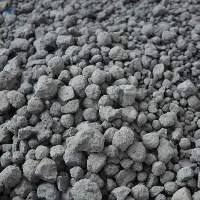
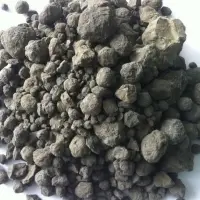
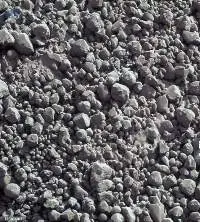
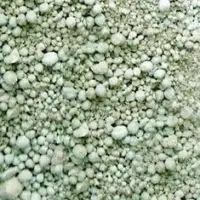
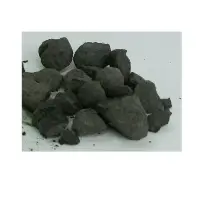
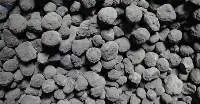
Cement clinkers is our first product in our cement manufacturing process. Some of our clients prefer our cement clinkers due to its adherence to stringent quality standards during its manufacture - as a result, they do not have to worry about producing superior quality cement as their end product.
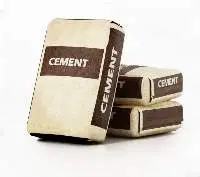
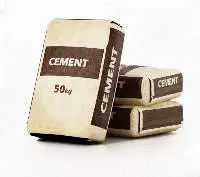
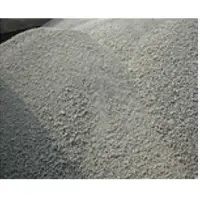
Cement, our main product of our cement manufacturing process, is widely used in various types of construction projects - industrial or domestic alike. Our clients prefer our superior quality cement because of our adherence to quality standards.
Specification : Descriptions
CaO : 63.50% to 64.00%
SiO2 : 21.20% to 21.70%
Al2O3 : 4.80% to 5.40%
Fe2O3 : 3.50% to 4.20%
MgO : Upto 3.90%
SO3 : Upto 1.12%
K2O : Upto 0.60%
Na2O : Upto 0.40%
Laira Group is one of the prominent trading companies promoting white clinker Type I-425 and Clinker Type II to local and international markets as it is the main ingredient in cement production.
Product Description:
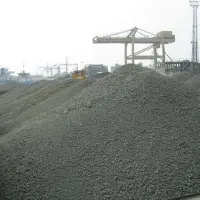
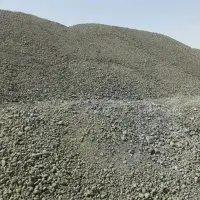
Clinker, if stored in dry conditions, can be kept for several months without appreciable loss of quality. Because of this, and because it can easily be handled by ordinary mineral handling equipment, Clinker is also shipped to grinding plants in areas where cement-making raw materials are not available.
Dear Sir
Thank you for your interest in our product. We are pleased to offer you shipment of our product, details as below:
Date of offer:12th Dec, 2018
Commodity:Clinker in bulk
Specification:As enclosed with commercial offer
Product Origin:Vietnam
Price:USD 52/MT FOB Nghi Son Port, Vietnam
Period:End of JAN DEC 2019
Loading rate:Loading 5000 MTs PWWD no demurrage no dispatch
Loading port:At berth Nghi Son Port, Vietnam
Payment Term : 100% of contract' s value will be paid in advance by TT within 2 days after
the contract signed
We hope our offer meets your requirement and look forward to receive your acceptance. Shall there
be any additional requirement, please donot hesitate to let us know.
Thank you,
Clinker is a high-quality cement product that complies with Egyptian standards and internationally described specifications. It delivers excellent performance across various construction projects thanks to its advanced composition. It provides strength and durability to buildings, making it ideal for large-scale construction. It comes in a 1-ton size with adaptable dimensions that make transport and use easier. A reliable solution for engineers and developers at every stage of the project.
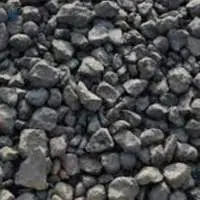
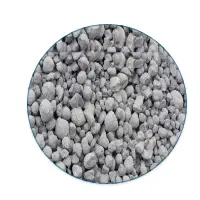
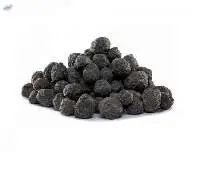
Clinker is a nodular material produced in the kilning stage during the production of cement and is used as the binder in many cement products. The lumps or nodules of clinker are usually of diameter 3-25 mm and dark grey in color. It is produced by heating limestone and clay to the point of liquefaction at about 1400�°C-1500�°C in the rotary kiln. Clinker, when added with gypsum (to control the setting properties of cement and ensure compressive strength) and ground finely, produces cement. Clinker can be stored for long periods of time in a dry condition without degradation of quality, hence it is traded internationally and used by cement manufacturers when raw materials are found to be scarce or unavailable.
* Clinker, in the manufacture of Portland Cement, is a granular substance that occurs as lumps or nodules, usually in the diameter of 3 to 25 millimeters. Clinker is available in grey, powdered, or lumps.
* Shree Trading and Services are renowned Clinker Suppliers with ample years of experience in providing the raw materials of cement â?? Clinker, serving our customers from leading Cement factories. We have long-lasting, trusted relationships with our customers to supply various types of clinkers required for the production of Cement.
Applications
* The primary use of Clinker is in the production of cement. In the cement industry, the Clinker is also known as the Portland Cement Clinker. The Portland cement clinker is ground to fine powder, which is applied as the binder in many cement products. A small amount of Gypsum is added to enhance the property of comprehensive strength. It is also mixed with a chemical to produce different types of cement such as:
Slag cement
Pozzolana cement
Silica Fume cement
Types of Clinker
The most common type of clinker is produced for Portland Cement and its combination. Clinker types vary depending on the type of cement for which the clinker is manufactured.
Ordinary Portland Clinker
Sulfate Resistant Clinker
Low Heat Clinker
White Cement Clinker
Low-alkali Clinker
Belite-Calciumsulfoaluminate-Ternesite (BCT)
Quality
* As a leading supplier of clinker, we are committed to supplying the best quality cement clinker of any type based on customer requirements from top manufacturers. This has raised our company's reputation high and earned a stronger bond with our customers. We strictly supervise and monitor the cement clinker supply as per the international trade policy.
Transportation & Packaging
* The clinker cement is either supplied in bulk shipment or as per customer requisition. Our facilities are specialized in packing the clinker cement and are shipped across to different destinations in 40/50 kgs or as per the customer specifications.
* Since cement clinker can be stored in a dry condition for several months, it is shipped in large volumes
Product Description:
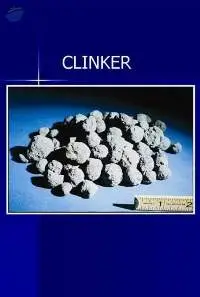
- Cement clinker is a solid material produced in the manufacture of Portland cement as an intermediary product. Clinker occurs as lumps or nodules, usually 3 millimeters (0.12 in) to 25 millimeters (0.98 in) in diameter. It is produced by sintering (fusing together without melting to the point of liquefaction) limestone and aluminosilicate materials such as clay during the cement kiln stage.
Clinker export from Pakistan is a lucrative business. Pakistan is currently one of the leading clinker exporters, Clinker is defined as a material that occurs as lumps during the cement kiln stage. The primary use of this product is to manufacture cement. It is especially useful in the production of Portland cement. This kind of cement is manufactured from chalk and clay. These two materials harden underwater and begin to resemble the color of Portland stones. Portland cement clinker is added to the process of cement making to control the productâ??s setting properties. We provide high-quality clinker which will result in a topnotch final product.
For the time being, we can supply our cement clinker products to markets in China and the Philippines.
Our customers in these countries can benefit greatly due to exponentially growing demands and the ability to offer competitive prices on our products. Our load rate from Pakistan can be maintained up to 8,000 tons per day for bulk vessel and we are more than capable to supply up to 150,000 tons of clinker each month. If you're looking for reliable clinker suppliers, do get in touch with Shamima Trading!
Cement clinker is a solid material produced in the manufacture of portland cement as an intermediary product. Clinker occurs as lumps or nodules, usually 3 millimetres (0.12 in) to 25 millimetres (0.98 in) in diameter. It is produced by sintering (fusing together without melting to the point of liquefaction) limestone and aluminosilicate materials such as clay during the cement kiln stage
SRC is a type of cement where its clinker is blended with specific proportions of gypsum and bypass materials. This combination not only makes it durable against sulfate-induced damage but also provides a strong and reliable construction material.
SRC distinguishes itself by its minimal Tri Calcium Aluminate (C3A) content, a crucial characteristic. C3A is a chemical reaction with sulfate ions found in soil and water, which can lead to concrete expansion and cracking. As sulfate attack progresses, the affected concrete's strength and durability can significantly decrease. Sulfate attack can also manifest as surface scaling and deterioration of the concrete.
The concrete may become discolored, pitted, and crumbly. If sulfate attack continues unabated, it can lead to structural issues, including reduced loadbearing capacity, which can compromise the safety and integrity of the concrete structure. This unique property of SRC plays a vital role in inhibiting such expansion and cracking, strength and durability deterioration, especially in areas where the soil has elevated sulfate levels.
SRC is employed in a wide range of construction endeavors, including the infrastructure in sulphate-rich soils, construction of dams, coastal and marine structures like ports and platforms, sewage and Water treatment plants, repair and rehabilitation, underground Structures, and foundational work.