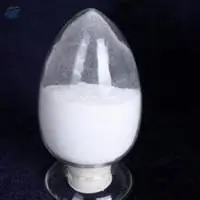
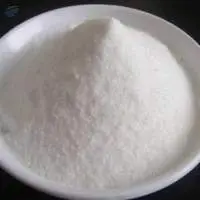
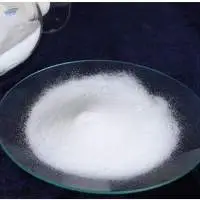
Sodium hyaluronate is the sodium salt of hyaluronic acid. Hyaluronic acid is also named hyaluronan. It is an anionic, nonsulfated glycosaminoglycan, naturally present in the human body. It is found in the highest concentrations in fluids in the eyes and joints.Sodium hyaluronate is odorless white powder, soluble in water, insoluble in organic solvents. Sodium hyaluronate has excellent moisturizing property and anti-inflammatory property. Sodium hyaluronate powder is helpful for promoting skin health, speeding wound healing, relieving joint pain, relieving dry eye and eye discomfort.Sodium hyaluronate powder can be used during certain eye surgeries, it can be used to treat osteoarthritis and various joint disorders, it can be made into eye drops, it can be used in supplement, and it can also be used in cosmetics for skin care.
5. Performance: White crystalline powder or flaky crystal, specific gravity 2.220, loses crystal water at 100â??, soluble in hydrochloric acid and nitric acid, slightly soluble in water (1.8%).
6. Uses: In the food industry, it is used as a leavening agent, a dough conditioner, a buffer, a tissue modifier, a curing agent, a nutritional supplement, a chelating agent, etc.
7. Packing: lined with polyethylene plastic bag, outer layer of composite plastic woven bag, net weight 25 kg per bag.
8. Storage and transportation: This product should be stored in a dry, ventilated and clean warehouse. When loading and transporting, it should be handled lightly to prevent damage to the package, prevent moisture and heat, and prevent rain and moisture during transportation. It should be isolated from toxic substances
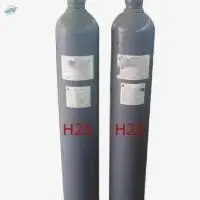
Hydrogen sulfide is a hydride of sulfur with the chemical formula H2S. It is a colorless, foul-smelling (rotten egg) highly toxic gas. It is soluble in water and ethanol, with a specific gravity of 1.1906. The melting point is -85.5�°C, the boiling point is -60.4�°C, the critical temperature is 100.4�°C, and the critical pressure is 90.06�?105 Pa. The autoignition point is 260�°C, and it is flammable. It can cause explosive combustion when it encounters a spark. When mixed with air, it can cause an explosion, and the explosion limit is 4% to 44% (volume). It can react chemically with a variety of ions to produce water-insoluble sulfides, which can turn the surface of copper and silver black. It is widely present in the manufacturing industries of metal smelting, natural gas, hydrochloric acid and sulfuric acid. When manufacturing various sulfides such as sulfate pulp, rayon, artificial cotton, rubber, carbon disulfide, etc., hydrogen sulfide gas is often discharged. In some chemical reactions, unstable sulfur-containing compounds will also decompose into hydrogen sulfide. For example, in coking, refined petroleum and metal smelting, hydrogen sulfide, as a conventional waste gas, is very easy to leak into the air. The decomposition of sulfur dyes can also release hydrogen sulfide gas.
Chemical properties Hydrogen sulfide is a colorless, acidic gas with a rotten egg-like odor. Relative density 1.5392 (0â??). Melting point 85.5â??. Boiling point -60.3â??. Critical temperature 100.5â??. Critical pressure 9.0�?103Pa. Heat of vaporization 18.67kJ/mol; heat of fusion 23.80kJ/mol. Vapor pressure 2.7kPa (25.5â??). Vapor relative density 1.19. Ignition point 260â??. Explosion limits: lower limit is 4.3% (volume), upper limit is 40.0% (volume). The allowable concentration in the air is 10�?10-6 (ppm). Soluble in water, ethanol, glycerol, Chemicalbook, carbon disulfide. Extremely soluble in organic amines. Also highly soluble in caustic soda solutions. Burns in excess oxygen to produce sulfur dioxide and water, and produces water and free sulfur when oxygen supply is insufficient. Stable at room temperature. Uses Hydrogen sulfide is used in the synthesis of phosphors, electroluminescence, photoconductors, photoelectric exposure meters, etc. Reducing agent for organic synthesis. Used in metal refining, pesticides, medicines, and catalyst regeneration. General reagent. Preparation of various sulfides. Uses Used to separate and identify metal ions, purify hydrochloric acid and sulfuric acid, and prepare elemental sulfur Uses Can be used to convert sulfur and sulfuric acid, produce sodium sulfide and sodium hydrosulfide, or to produce organic sulfur compounds such as thiophene, mercaptans, and thioethers
Copper oxide is a yellow or even red crystalline powder. The difference in color is caused by the size of particles. The structure is a chalcopyrite type structure (cubic crystal system) with a relative density of 6.04. The melting point is at 232 â?? and the heat of formation is 166.67 kJ/mol. At 1800 â??, it loses oxygen and is insoluble in water but soluble in ammonia water. It reacts with concentrated hydrochloric acid to produce white cuprous chloride crystalline powder.
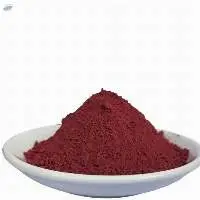
Cuprous oxide, also named Copper I Oxide, is the inorganic compound with the formula Cu2O. It is one of the principal oxides of copper. This brownish red powder is a component of some antifouling paints. Cuprous nanoparticles is a stable, red solid powder formed by the reduction of Cu2+ solutions and contains Cu+ ions in linear coordination to oxygen.
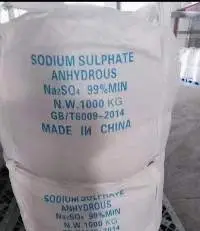
1. The chemical industry is used to manufacture sodium sulfide, sodium silicate, water glass and other chemical products.
2. A cooking agent used in the manufacture of kraft pulp in the paper industry.
3. Glass industry is used to replace soda ash as cosolvent.
4. The textile industry is used to prepare vinylon spinning coagulant.
5. Used in nonferrous metal metallurgy, leather, etc.
6. It is used to make sodium sulfide, pulp, glass, water glass and porcelain glaze. It is also used as a laxative and an antidote to barium salt poisoning. It is a by-product of hydrochloric acid produced from salt and sulfuric acid. In chemical industry, it is used to manufacture sodium sulfide, sodium silicate, etc. The laboratory is used to wash away barium salts. In industry, it is used as raw material for the preparation of NaOH and H so. It is also used in papermaking, glass, printing and dyeing, synthetic fiber, leather making, etc. Sodium sulfate is one of the most commonly used post-treatment desiccants in organic synthesis laboratory.
7. It is mainly used as filler for synthetic detergent. A cooking agent used in the manufacture of kraft pulp in the paper industry. Glass industry is used to replace soda ash. The chemical industry is used as raw materials for manufacturing sodium sulfide, sodium silicate and other chemical products. The textile industry is used to prepare vinylon spinning coagulation bath. The pharmaceutical industry is used as a laxative. It is also used in nonferrous metallurgy, leather, etc.
8. The hydration product calcium sulphoaluminate is formed faster, which speeds up the hydration and hardening speed of cement. The content of sodium sulfate is generally 0.5% ~ 2% of the cement quality, which can improve the early strength of concrete by 50% ~ 100%. The 28 day strength sometimes increases and sometimes decreases, and the increase range is about 10%, which varies with the cement variety, curing conditions and content. It is also used as filler for synthetic detergent, paper industry, glass industry, chemical industry, textile industry and pharmaceutical industry.
9. It is used as analytical reagent, such as dehydrating agent, digestion catalyst in nitrogen determination, and interference inhibitor in atomic absorption spectrometry. It is also used in the pharmaceutical industry.
10. It is used in chemical industry, papermaking, glass, dyestuff, printing and dyeing and pharmaceutical industry. It is also used in the manufacture of synthetic fiber, tanning, non-ferrous metallurgy and enamel. It is also used as an additive in detergent and soap.
11. It can be used as a buffer in sulfate zinc plating to stabilize the pH value of the bath.
220 Hydrochloric Acid Suppliers
Short on time? Let Hydrochloric Acid sellers contact you.
L-Lysine Monohydrochloride, CAS No.657-27-2, is a hydrochloride salt of L-Lysine, available as white crystal or crystalline powder. L-Lysine Monohydrochloride is a common form of L-Lysine, widely used as nutritional supplements in food and beverage. It is one of the eight essential amino acids in the human body. It appears as a white or light brown crystalline powder, often used as a food additive in potatoes, rice and flour. It is also used to deodorize and keep fresh in canned food.
L-Lysine Monohydrochloride can also be used in animal feed as source of L-Lysine. L-lysine is manufactured by fermentation from carbohydrate sources and neutralize with hydrochloric acid. L-lysine HCl meets USP, EP and JP standards.
As an experienced L-Lysine Monohydrochloride manufacturer and supplier, we has been supplying and exporting L-Lysine Monohydrochloride for almost 10 years, please be assured to buy from us. Any inquiries about price and the market trend please feel free to contact us, we will reply you within 1 working day.
L-Lysine Monohydrochloride food grade Specification
ITEM STANDARD
Specific Roation[a]D20 +20.4-+21.4
Assay % 98.5-101.5
Loss on Drying % 0.4
Heavy Metals( As Pb) % 0.0015
Residue on Ignition % 0.1
Chloride(As Cl) % 19.0-19.6
Sulfate(SO4) % 0.03
Iron( As Fe) % 0.003
Organic Volatile Impurities Meet The requirement
Lysine feed grade 65%
L-Lysine Monohydrochloride food grade Specification
ITEM FC12062509
Apperance White or Light-brown granules
Identification Positive
[C6H14N2O2].H2SO4Content(Dry basis) â?¥ % 51.0
Loss on drying â?¤ % 3.0
Residue on ignitionâ?¤ % 4.0
Chloride(As Cl) â?¤ % 0.02
PH 3.0-6.0
Lead â?¤ % 0.02
Arsenic( As As) â?¤ % 0.0002
Heavy Metals ( As Pb) â?¤ % 0.003
Lysine feed grade 98.5%
ITEM FC12062601
Apperance White or Light-brown granules
Identification Positive
[C6H14N2O2].H2SO4Content(Dry basis) % 98.5
Specific Roation[a]D20 +18-+21.5
Loss on drying % 1.0
Residue on ignition % 0.3
Chloride(As Cl) % 0.02
PH 5.6-6.0
Ammonium(As NH4) % 0.04
Arsenic( As As) % 0.003
Heavy Metals ( As Pb) % 0.003
Monel 400 (UNS N04400, NCu30) The structure of Monel 400 alloy is a high-strength single-phase solid solution. It is a corrosion-resistant alloy with the largest amount, the widest application and excellent comprehensive performance. This alloy has excellent corrosion resistance in hydrofluoric acid and fluorine gas medium, and also has excellent corrosion resistance to hot concentrated lye. At the same time, it is also resistant to corrosion by neutral solutions, water, sea water, atmosphere, organic compounds, etc. An important feature of this alloy is that it generally does not produce stress corrosion cracks and has good cutting performance.
The alloy has excellent corrosion resistance in fluorine gas, hydrochloric acid, sulfuric acid, hydrofluoric acid and their derivatives. At the same time, it is more corrosion resistant than copper-based alloys in seawater.
â?² Acid medium: M400 is corrosion-resistant in sulfuric acid with a concentration of less than 85%. M400 is one of the very few important materials in durable hydrofluoric acid.
â?² Water corrosion: M400 alloy not only has excellent corrosion resistance under most water corrosion conditions, but also pitting corrosion and stress corrosion are rarely found, and the corrosion rate is less than 0.25mm/a.
â?² High temperature corrosion: The maximum temperature of M400 continuous work in the air is generally around 600�°C, and in high temperature steam, the corrosion rate is less than 0.026mm/a.
â?² Ammonia: Due to the high nickel content of Monel 400 alloy, it can resist corrosion under anhydrous ammonia and ammoniation conditions below 585�°C.
American standard designation: UNS N04400, Specifications: ASTM B164, ASTM B127, ASTM B165, ASTM B725, ASTM B163, ASTM B366, ASTM B164, ASTM B564, ASTM B164, AMS 4574, AMS 4675, AMS 4730, AMS 4731, AMS 4544, AMS 4574, AMS 4675, AMS 4730, AMS 4731, AMS 4544.
German standard designation: W.Nr. 2.4360, Specifications: DIN 17743, DIN 17750, DIN 17752, DIN 17753, DIN 17754.
Japanese standard designation: JIS NW4400, Specifications: JIS G4902, JIS G4903, JIS G4904, JIS G4905, JIS G4906, JIS G4907.
Chinese standard designation: NS111, Specifications: GB/T 2054, GB/T 2055, GB/T 2056, GB/T 2057, GB/T 2058, GB/T 2059, GB/T 2060, GB/T 2061.
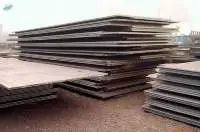
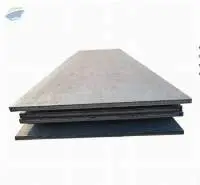
We can provide the following the form:Monel alloy 400 coil; Monel alloy 400 strip;Monel alloy 400 plate; Monel alloy 400 sheets; Monel alloy 400 tube; Monel alloy 400 pipe;
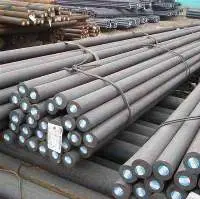
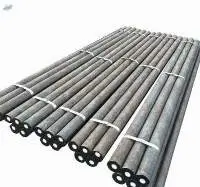
Monel alloy 400 flat; Monel alloy 400 bar
GB: NS111 ;JIS:NW4400;UNS:N04400;W.Nr:2.436
This alloy is mainly used for
1. Seamless water pipes and steam pipes in power plants
2. Sea water exchanger and evaporator
3. Sulfuric acid and hydrochloric acid environment
4. Crude oil distillation
5. The pump shaft and propeller of the equipment used in seawater
6. The nuclear industry is used to manufacture equipment for uranium refining and isotope separation
7. Manufacture of pumps and valves used in the production of hydro
Monel R-405 alloy (UNS N04405) increases the sulfur content in the Monel 400 composition to enhance the machinability and become a free-cutting Monel alloy. Alloy 405 is an easy-to-machine version of Alloy 400. Alloy 405 adds a certain amount of sulfur, and the sulfide produced has chip breaking effect during machining, so it is suitable for automatic nut machine.
Like Alloy 400, Alloy 405 is resistant to corrosion by seawater, steam, and alkaline solutions at elevated temperatures. Alloy 405 is a solid solution alloy that can only be hardened by cold working. This nickel-based alloy also exhibits good corrosion resistance, weldability and high strength. The alloy exhibits low corrosion rates in fast-flowing brine and seawater environments and is well resistant to stress corrosion cracking in freshwater environments. Good corrosion resistance makes it widely used in marine and non-oxidizing chloride solution environment
American standard designation: UNS N04405, Specifications: ASTM B164, ASTM B127, ASTM B165, ASTM B725, ASTM B163, ASTM B366, ASTM B164, ASTM B564, ASTM B164, AMS 4674, AMS 7234.
Chinese standard designation: NS111, Specifications: GB/T 2054, GB/T 2055, GB/T 2056, GB/T 2057, GB/T 2058, GB/T 2059, GB/T 2060, GB/T 2061.
We can provide the following the form:Monel alloy405 coil; Monel alloy 405 strip;Monel alloy 405 plate; Monel alloy 405 sheets; Monel alloy 405 tube; Monel alloy 405 pipe;Monel alloy 405 flat; Monel alloy 405 bar
GB:NS111/JIS/UNS:N04405/W.Nr:2.436
This alloy is mainly used for
1. Seamless water pipes and steam pipes in power plants
2. Sea water exchanger and evaporator
3. Sulfuric acid and hydrochloric acid environment
4. Crude oil distillation
5. The pump shaft and propeller of the equipment used in seawater
6. The nuclear industry is used to manufacture equipment for uranium refining and isotope separation
7. Manufacture of pumps and valves used in the production of hydrochloric acid equipment
Hastelloy C-2000 is a high-performance nickel-molybdenum-chromium alloy with copper and tungsten additions, known for its exceptional resistance to a wide range of corrosive media, including sulfuric acid, hydrochloric acid, nitric acid, and their mixtures.
Hastelloy C-2000 was developed by Haynes International as an improved version of the original Hastelloy C alloy, with enhanced corrosion resistance and improved mechanical properties. Its chemical composition includes approximately 59% nickel, 16% molybdenum, 16% chromium, 1.6% copper, 0.6% tungsten, and smaller amounts of iron, manganese, silicon, carbon, and aluminum.
Hastelloy C-2000 has excellent resistance to localized corrosion, including pitting, crevice corrosion, and stress corrosion cracking, as well as to intergranular attack and corrosion from wet chlorine gas. It also has good resistance to oxidizing and reducing environments, making it suitable for use in a wide range of industrial applications, including chemical processing, pollution control, and pulp and paper production.
In terms of mechanical properties, Hastelloy C-2000 has a minimum tensile strength of 620 MPa and a minimum yield strength of 270 MPa, along with a minimum elongation of 45%. It has a hardness range of HB 215-335.
Overall, Hastelloy C-2000 is a highly versatile alloy that offers excellent resistance to a wide range of corrosive media, combined with good mechanical properties and ease of fabrication. It is a popular choice for applications where corrosion resistance is critical, such as chemical processing, pollution control, and pulp and paper production.
Here are the national standards for Hastelloy C-2000 alloy:
United States: AMS 4675, AMS 7233, ASTM B366, ASTM B574, ASTM B575, ASTM B619, ASTM B622, ASTM B626, UNS N06200
Europe: EN 2.4675
Germany: DIN 17744
France: AFNOR NU-30M
United Kingdom: BS HR 505
Japan: JIS NW 6200
We can offer the following products:Hastelloy C-276 coil; Hastelloy C-276 strip;Hastelloy C-2000 plate; Hastelloy C-2000 sheets; Hastelloy C-2000 tube; Hastelloy C-2000 pipe;Hastelloy C-2000 flat; Hastelloy C-2000 bar
GB:GH3600/JIS:NW 6200/UNS:N06200/W.Nr:2.4675
Hastelloy C-2000 is a high-performance nickel-molybdenum-chromium alloy with copper and tungsten additions, known for its exceptional resistance to a wide range of corrosive media, including sulfuric acid, hydrochloric acid, nitric acid, and their mixtures.
Hastelloy C-2000 was developed by Haynes International as an improved version of the original Hastelloy C alloy, with enhanced corrosion resistance and improved mechanical properties. Its chemical composition includes approximately 59% nickel, 16% molybdenum, 16% chromium, 1.6% copper, 0.6% tungsten, and smaller amounts of iron, manganese, silicon, carbon, and aluminum.
Incoloy Alloy 926 is a super-austenitic nickel-based alloy with high levels of molybdenum, nitrogen, and chromium. It is known for its excellent corrosion resistance in a variety of challenging environments, including sulfuric acid, hydrochloric acid, and seawater. Here is a detailed introduction to Incoloy Alloy 926 and its applications:
Incoloy alloy 926 is a super-austenitic nickel-based alloy with high corrosion resistance and excellent mechanical properties at high temperatures. It has a chemical composition of 22% chromium, 25% molybdenum, 6% tungsten, and 0.5% nitrogen, with nickel and iron making up the balance. The alloy also contains small amounts of copper and titanium.
Incoloy alloy 926 is known for its excellent resistance to a wide range of corrosive environments, including chloride ion stress-corrosion cracking and pitting and crevice corrosion. It also has good resistance to sulfuric acid and phosphoric acid, as well as seawater and brine solutions. The alloy's high nickel and molybdenum content provides excellent resistance to reducing environments, while its chromium content enhances its resistance to oxidizing environments.
In terms of mechanical properties, Incoloy alloy 926 exhibits high strength and toughness, along with excellent weldability and formability. It can be fabricated using a variety of techniques, including hot and cold working, machining, and welding.
Due to its excellent corrosion resistance and mechanical properties, Incoloy alloy 926 is commonly used in a variety of industries, including chemical processing, oil and gas, nuclear, marine, and desalination. It is often used in applications involving sour gas environments, such as in the production of oil and gas, as well as in heat exchangers, pressure vessels, and piping systems.
The international standards and specifications for Incoloy alloy 926 are as follows:
United States: ASTM B649, AMS 5737, AMS 5853, UNS N08926 Europe: EN 1.4529, SEW 400 Germany: DIN 17752, DIN 17754, DIN 17750, W.Nr. 1.4529
We can provide the following the form:Incoloy alloy926 coil; Incoloy alloy926 strip;Incoloy alloy926 plate; Incoloy alloy926 sheets; Incoloy alloy926 tube; Incoloy alloy926 pipe;Incoloy alloy926 flat; Incoloy alloy926 bar
5. Performance: White monoclinic crystal powder, odorless and tasteless, soluble in dilute hydrochloric acid, nitric acid, slightly soluble in water, insoluble in ethanol. The relative density is 2.32, which is stable in the air, and starts to lose water to form calcium hydrogen phosphate at 75 �°C.
6. Uses: Used as bulking agent, dough improver, buffer, nutritional supplement, stabilizer, emulsifier, stabilizer, etc. in the food industry. Such as leavening agent for flour, cakes, cakes, bakery products, compound bread modifier, fried food modifier. Also used in biscuits, milk powder, cold drinks, ice cream powder as nutritional supplements or quality improvers.
7. Packing: lined with polyethylene plastic bag, outer layer of composite plastic woven bag, net weight 25 kg per bag.
8. Storage and transportation: This product should be stored in a dry, ventilated and clean warehouse. When loading and transporting, it should be handled lightly to prevent damage to the package and prevent moisture and heat.
Incoloy Alloy 908 is a high-temperature, high-strength, and highly corrosion-resistant alloy composed of elements such as nickel, chromium, molybdenum, and iron. It is a single-phase austenitic alloy, typically formed by casting and forging.
Chemical composition: The chemical composition of Incoloy Alloy 908 is composed of elements such as nickel, chromium, iron, molybdenum, vanadium, manganese, tantalum, silicon, carbon, phosphorus, and sulfur. Nickel content is 40-45%, chromium content is 20-23%, iron content is 16-19%, and molybdenum content is 8-10%.
Mechanical properties: Incoloy Alloy 908 has excellent high-temperature and high-strength performance. Its tensile strength is 135 ksi (930 MPa) (minimum), yield strength is 70 ksi (480 MPa) (minimum), and elongation is 25% (minimum).
Physical properties: The density of Incoloy Alloy 908 is 8.14 g/cm�³, the melting point is 1338�°C (2440�°F), the thermal conductivity is 11.7 W/m�·K (100�°C), and the coefficient of thermal expansion is 13.7 �¼m/m-K (20-100�°C).
Corrosion resistance: Incoloy Alloy 908 has excellent corrosion resistance, especially in high-temperature, high-pressure, and highly corrosive environments. It can withstand the corrosion of corrosive media such as sulfuric acid, hydrochloric acid, nitric acid, and fluoride, and can resist chloride stress corrosion cracking (SCC).
The international standard designations for Incoloy alloy 908 include UNS N09908 and W.Nr. 1.4876. There are also corresponding standards and specifications in different countries and regions, such as AMS and ASTM standards in the United States, EN standards in Europe, and JIS and JPI standards in Japan.
Here are the specific standards and designations for Incoloy alloy 908 in different countries:
United States: AMS 5545, AMS 5546, AMS 5547, AMS 5549, ASTM B408, UNS N09908
Germany: DIN 17752, DIN 17753, DIN 17754, W.Nr. 1.4876
United Kingdom: BS HR 6
Europe: EN 10095
Japan: JIS H4551, JPI-SB46
We can provide the following the form:Incoloy alloy908 coil; Incoloy alloy908 strip;Incoloy alloy908 plate; Incoloy alloy908 sheets; Incoloy alloy908 tube; Incoloy alloy908 pipe;Incoloy alloy908 flat; Incoloy alloy908 bar
Monel 400 (UNS N04400, NCu30) The structure of Monel 400 alloy is a high-strength single-phase solid solution. It is a corrosion-resistant alloy with the largest amount, the widest application and excellent comprehensive performance. This alloy has excellent corrosion resistance in hydrofluoric acid and fluorine gas medium, and also has excellent corrosion resistance to hot concentrated lye. At the same time, it is also resistant to corrosion by neutral solutions, water, sea water, atmosphere, organic compounds, etc. An important feature of this alloy is that it generally does not produce stress corrosion cracks and has good cutting performance.
The alloy has excellent corrosion resistance in fluorine gas, hydrochloric acid, sulfuric acid, hydrofluoric acid and their derivatives. At the same time, it is more corrosion resistant than copper-based alloys in seawater.
â?² Acid medium: M400 is corrosion-resistant in sulfuric acid with a concentration of less than 85%. M400 is one of the very few important materials in durable hydrofluoric acid.
â?² Water corrosion: M400 alloy not only has excellent corrosion resistance under most water corrosion conditions, but also pitting corrosion and stress corrosion are rarely found, and the corrosion rate is less than 0.25mm/a.
â?² High temperature corrosion: The maximum temperature of M400 continuous work in the air is generally around 600�°C, and in high temperature steam, the corrosion rate is less than 0.026mm/a.
â?² Ammonia: Due to the high nickel content of Monel 400 alloy, it can resist corrosion under anhydrous ammonia and ammoniation conditions below 585�°C.
American standard designation: UNS N04400, Specifications: ASTM B164, ASTM B127, ASTM B165, ASTM B725, ASTM B163, ASTM B366, ASTM B164, ASTM B564, ASTM B164, AMS 4574, AMS 4675, AMS 4730, AMS 4731, AMS 4544, AMS 4574, AMS 4675, AMS 4730, AMS 4731, AMS 4544.
German standard designation: W.Nr. 2.4360, Specifications: DIN 17743, DIN 17750, DIN 17752, DIN 17753, DIN 17754.
Japanese standard designation: JIS NW4400, Specifications: JIS G4902, JIS G4903, JIS G4904, JIS G4905, JIS G4906, JIS G4907.
Chinese standard designation: NS111, Specifications: GB/T 2054, GB/T 2055, GB/T 2056, GB/T 2057, GB/T 2058, GB/T 2059, GB/T 2060, GB/T 2061.
We can provide the following the form:Monel alloy 400 coil; Monel alloy 400 strip;Monel alloy 400 plate; Monel alloy 400 sheets; Monel alloy 400 tube; Monel alloy 400 pipe;Monel alloy 400 flat; Monel alloy 400 bar
GB:NS111;JIS:NW4400;UNS:N04400;W.Nr:2.436
This alloy is mainly used for
1. Seamless water pipes and steam pipes in power plants
2. Sea water exchanger and evaporator
3. Sulfuric acid and hydrochloric acid environment
4. Crude oil distillation
5. The pump shaft and propeller of the equipment used in seawater
6. The nuclear industry is used to manufacture equipment for uranium refining and isotope separation
7. Manufacture of pumps and valves used in the production of hydrochlo
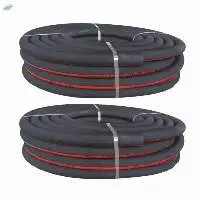
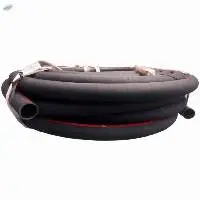
Application: For bulk loading and unloading gasoline and fuel oil from storage tanks and tank trucks at refineries, bulk plants and service stations. Hard type hose. Construction: Smooth tube reinforced with braided cord yarn and a helix of spring steel wire Oil and abrasion-resistant weatherproof
Construction:
Inner Tube:Black Extruded NBR synthetic rubber.
Reinforcement: High tensile textile cord with steel wire helix spiraled.
Cover:High tensile synthetic abrasion and weather resistant NBR & CR rubber, black wrapped surface.
Working Pressure: Constant Pressure 20 Bar /300 psi
Temperature Range:-40 +80 (-40 F 176 F)
Application:The Oil Tank Truck Hose was used to heavy duty suction and delivery for the petroleum products up to 50% aromatic content for the tank truck, it withstands the full vacuum, it is anti-static cover conform full to PTB specifications.
Nitrile tube designed for use with oil, gasoline and other petroleum products. Ideal for pressure,gravity flow or suction service from tank trucks, tank cars or bulk plants. Steel wire helix is spiraled between multiple plies of tire cord to reinforce hose to resist crushing and kinking. Black neoprene cover is abrasion, oil and weather resistant. A very flexible economical,lightweight designed for transfer of petroleum products. Excellent for use in oil field applications. A medium duty petroleum suction and transfer hose designed to be highly flexible with a hose cover that provides extra abrasion resistance to meet the demanding requirements of the industry. A tank truck service, including oil field vacuum truck service, where
full suction is required. Ideal for handling crude oil, salt &fresh water, tank bottoms, drilling mud, along with diluted solutions of hydrochloric acids and diesel fuels.
Petroleum Hose for Oilfield Applications will include hose specs that utilize high-quality Nitrile rubber liners for ultimate oil resistance. This section covers hoses for oils, finished petroleum products, medium and heavy hydrocarbons, diesel fuels and other petroleum applications. Petroleum hose for oilfield applications are used in the high-pressure transfer of multiple types of hydraulic fracking fluids from tank trucks. These hoses are constructed with a dual steel helix wire to obtain a high vacuum rating. Oilfield uses may include:
Filling and emptying petroleum tanks at the fracking site
Application: For bulk loading and unloading gasoline and fuel oil from storage tanks and tank trucks at refineries, bulk plants and service stations. Hard type hose. Construction: Smooth tube reinforced with braided cord yarn and a helix of spring steel wire Oil and abrasion-resistant weatherproof.
Construction:
Inner Tube:Black Extruded NBR synthetic rubber.
Reinforcement: High tensile textile cord with steel wire helix spiraled.
Cover:High tensile synthetic abrasion and weather resistant NBR & CR rubber, black wrapped surface.
Working Pressure:Constant Pressure 10 Bar /150 psi
Temperature Range:-40 +80 (-40 F 176 F)
Application:The Oil Tank Truck Hose was used to heavy duty suction and delivery for the petroleum products up to 50% aromatic content for the tank truck, it withstands the full vacuum, it is anti-static cover conform full to PTB specifications.
Nitrile tube designed for use with oil, gasoline and other petroleum products. Ideal for pressure,gravity flow or suction service from tank trucks, tank cars or bulk plants. Steel wire helix is spiraled between multiple plies of tire cord to reinforce hose to resist crushing and kinking. Black neoprene cover is abrasion, oil and weather resistant. A very flexible economical,lightweight designed for transfer of petroleum products. Excellent for use in oil field applications. A medium duty petroleum suction and transfer hose designed to be highly flexible with a hose cover that provides extra abrasion resistance to meet the demanding requirements of the industry. A tank truck service, including oil field vacuum truck service, where
full suction is required. Ideal for handling crude oil, salt &fresh water, tank bottoms, drilling mud, along with diluted solutions of hydrochloric acids and diesel fuels.
Petroleum Hose for Oilfield Applications will include hose specs that utilize high-quality Nitrile rubber liners for ultimate oil resistance. This section covers hoses for oils, finished petroleum products, medium and heavy hydrocarbons, diesel fuels and other petroleum applications. Petroleum hose for oilfield applications are used in the high-pressure transfer of multiple types of hydraulic fracking fluids from tank trucks. These hoses are constructed with a dual steel helix wire to obtain a high vacuum rating. Oilfield uses may include:
Filling and emptying petroleum tanks at the fracking site
Application: For heavy-duty service unloading and loading petroleum products at terminals and docks where maximum flow rates are desired. Construction: Premium quality materials, highly flexible, light in weight. Synthetic fabric plies reinforced with a helix of spring steel wire.
Construction :
Inner Tube: Black Extruded NBR synthetic rubber.
Reinforcement: High tensile textile cord, steel wire helix can be made when the customer request.
Cover: High tensile synthetic abrasion and weather resistant rubber, black wrapped surface.
Working Pressure: Constant Pressure 20 Bar / 300 psi
Temperature Range:-20 +80 (-4 F 176 F)
Application:Mainly used to deliver gasoline, diesel, fuel oil, hydraulic oil for all kinds of industrial, agriculture or mining equipment.
Nitrile tube designed for use with oil, gasoline and other petroleum products. Ideal for pressure, gravity flow or suction service from tank trucks, tank cars or bulk plants. Steel wire helix is spiraled between multiple plies of tire cord to reinforce hose to resist crushing and kinking. Black neoprene cover is abrasion, oil and weather resistant. A very flexible economical,lightweight designed for transfer of petroleum products. Excellent for use in oil field applications. A medium duty petroleum suction and transfer hose designed to be highly flexible with a hose cover that provides extra abrasion resistance to meet the demanding requirements of the industry. A tank truck service, including oil field vacuum truck service, where full suction is required. Ideal for handling crude oil, salt &fresh water, tank bottoms, drilling mud, along with diluted solutions of hydrochloric acids and diesel fuels.
Petroleum Hose for Oilfield Applications will include hose specs that utilize high-quality Nitrile rubber liners for ultimate oil resistance. This section covers hoses for oils, finished petroleum products, medium and heavy hydrocarbons, diesel fuels and other petroleum applications. Petroleum hose for oilfield applications are used in the high-pressure transfer of multiple types of hydraulic fracking fluids from tank trucks. These hoses are constructed with a dual steel helix wire to obtain a high vacuum rating. Oilfield uses may include:
Filling and emptying petroleum tanks at the fracking site
Calcium carbonate is used as raw material for building materials, ceramics, glass, lime, cement, etc; It is also used to make chalk, putty, artificial stone, filler, pigment, neutralizer and polishing agent; Sugar clarifier; Ultrafine calcium carbonate can be used in medicine. Light calcium carbonate is mainly used in paper industry, interior decoration materials, handicrafts and medicine.
Calcium carbonate is an inorganic compound, commonly known as limestone, limestone, stone powder, marble, etc. Calcium carbonate is alkaline, basically insoluble in water and soluble in hydrochloric acid. It is one of the common substances on the earth. It exists in aragonite, calcite, chalk, limestone, marble, travertine and other rocks. It is also the main component of animal bones or shells.
Calcium carbonate is also an important building material, which is widely used in industry. Calcium carbonate is used as raw material for building materials, ceramics, glass, lime, cement, etc; It is also used to make chalk, putty, artificial stone, filler, pigment, neutralizer and polishing agent; Sugar clarifier; Ultrafine calcium carbonate can be used in medicine. Light calcium carbonate is mainly used in paper industry, interior decoration materials, handicrafts and medicine.