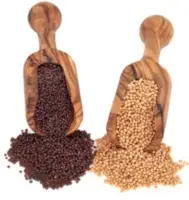
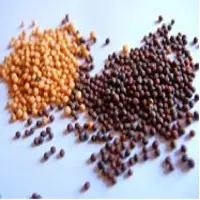
Mustard seeds generally about 1 to 2 mm in diameter and may be coloured from yellowish white to black. Mustard seeds are a rich source of protein and oil.
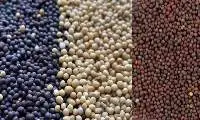
The seed has oil as high as 46-48%, and whole seed meal has 43-44% protein. It carries a healthy amount of minerals and vitamins. Canada grows three types of mustard seeds which are yellow, brown and oriental mustard seeds.
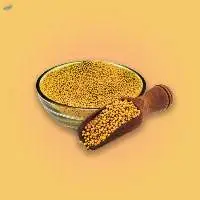
Falvon exports supreme quality of Brown and Yellow Mustard Seeds and offers a reliable source of this commodity.
Add a burst of pungent, slightly spicy flavor to your dishes with our Mustard Seeds. Used in pickles, curries, and spice blends, they bring a distinct tang to your meals.
Mustard seeds
Europeans are the biggest market for the brown mustard, while Americans consume mostly yellow mustard, but one this is for sure, both varieties get their start in Canadian soil
Canadian Mustard Seeds are known for its quality. In Canada Mustard is mainly categorized into 4 Grades:
No .01 Canada
No. 02 Canada
No.03 Canada
No. 04. Canada
Domestic Mustard seed is Classified as:
Domestic Mustard Seed, Yellow, Canada comes from white/Yellow mustard plant with Approximate size from 2 mm or less in diameter, Shape: Spherical or Oval.
Domestic Mustard Seed, Brown, Canada comes from brown Indian mustard plant with Approximate size from 2 mm or less in diameter, Shape: Spherical or Oval.
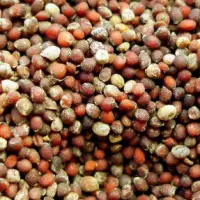
Domestic Mustard Seed, Oriental, Canada comes from black mustard plants with Approximate size from 1.2 to 2.0 mm in width & 1.6 to 3.0 in length, Shape: Oval.
Mustard is one of the worldâ??s most important spice crops. Throughout history it has been adapted into many different cuisines by many different cultures. In more recent times, mustard has been increasingly used in food preparation for its unique properties. Mustard also has many applications outside of traditional food ingredient uses. Some types offer biological and insecticidal properties, and the oil can be used in the manufacture of bio-diesel and other industrial products.
Canadian Mustard Production
Mustard production began in western Canada in 1936 with 40 hectares grown in southern Alberta. At that time, the states of California and Montana monopolized production, but Canadian acreage increased because of higher yields and better quality. During the 1950s and 1960s, mustard production migrated east and today, Saskatchewan accounts for about 75 per cent of Canadian mustard production.
The mustard plant is actually a member of the Brassica family. Other members include the cabbage, broccoli and Brussel sprouts. This family is well known for the nutritional benefits.
7 Mustard Seeds Suppliers
Short on time? Let Mustard Seeds sellers contact you.
Immerse yourself in the robust, peppery flavor of our Mustard Greens. Packed with nutrients, these greens make a tasty and healthy addition to your diet.