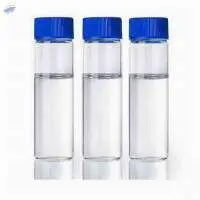
Chlorobenzene is an organic compound with the formula C6H5Cl. It is the result of a hydrogen atom in the benzene ring being replaced by a chlorine atom. The following is a detailed description of the properties, uses, manufacturing methods and safety information of chlorobenzene:
Nature:
- Appearance: colorless liquid or white crystal.
- Boiling point: 131C.
- Density: 1.11g /ml.
- Melting point: -46C.
- Soluble: Soluble in organic solvents such as ethanol and ether, insoluble in water.
Chlorobenzene exists in a variety of isomers, such as o-chlorobenzene, M-chlorobenzene, and P-chlorobenzene.
Purpose:
- Industrial use: chlorobenzene is widely used in organic synthesis reactions and industrial production, and can be used as a solvent, antibacterial agent, flame retardant, insecticide, pickling agent, etc.
- Medical use: chlorobenzene can be used in the synthesis of drugs, fungicides and pesticides.
- Laboratory use: Chlorobenzene can be used as a solvent and reaction intermediate for organic synthesis experiments.
HEDP is highly effective organic phosphorus class anti- is filthy corrosion inhibitor. These compounds are widely used as scale inhibitor, deflocculant, sequestrant and water stabilizer in cooling water systems. They have a greater pH value and are even stable under high temperature. Our product portfolio for EDTA comprises of EDTA Pure Acid Disodium Salt, Tetra Sodium (powder), Tetra Sodium (liquid), Trisodium (powder), etc.
Specifications :
Product Name : CHELATRON H-100
Color & Physical Form : Colorless Liquid
Molecular Weight : 206/286
PH of 1% solution ; 2/5/11
Application :
NTA Ttrisodium is used in textile industry, water treatment, and industrial detergent.
Packing :
25 kg PP bag with LDPE liner inside / 500 kg and 1000 kg Jumbo bag.
Product Name : Trisodium NTA ( Powder )
Formula : Nitrilo Tri Acetic Acid, Trisodium salt, Bis (carboxymethyl) glycine, trisodium salt; n, n-Bis (carboxymethyl) - Glycine, Trisodium salt; NTA Trisodium salt; Nitrilotriacetato de trisodio; Nitrilotriacétate de trisodium
Application :
DTPA Copper is a stable water soluble metal chelate, mainly used in agriculture and horticulture as a micronutrient, to prevent and correct copper deficiencies.
Applicable in Foliage fertilizers, in trickle irrigation, absorbed in NPK etc.
DTPA Copper provides healthy growth to plant and maximizes crop yield.
Packing :
25 kg PP bag with LDPE liner inside / 500 kg and 1000 kg Jumbo bag.
We are one of the leading manufacturer and supplier of Amino Acid /Copper Amino Acid Chelate. We obligated to meet the quality standards as per the customer demand.
Application:
Zinc citrate is mainly used in dental care products such as toothpastes, mouthwashes and chewing gums
It is used in pharmaceuticals
It is used in food supplements, functional foods and beverages.
Packing:
25 kg PP bag with LDPE liner inside / 500 kg and 1000 kg Jumbo bag.
Other information:
EINECS No. :
Category : Non Hazardous
Reach Registration : No
MSDS : Available on request
We are involved in manufacturing and exporting a potassium citrate which is also known as tripotassium citrate. It is a hygroscopic crystalline powder which is white in colour. It contains 38.3% potassium. The potassium citrate is benefited to reduce pain and frequency of urination. It is also used for dogs and cats.
Application:
It is used as a flavoring, stabilizing agent and acidulant in food Industry.
It is also used as an alkalizing agent in the treatment of mild urinary tract infections such as cystitis.
Potassium Citrate is used as a pharmaceutical aid in veterinary practice.
It is also used in many pharmacopoeia and other preparations like potassium hydroxide solution, Cresol solution, Soap solution etc.
It works as a buffer for juices like real, R-cola etc.
Packing:
25 kg PP bags / 250 kg HDPE drum.
Other information:
EINECS No. : 201-069-1
Category: Non Hazardous
Reach Registration : No
MSDS : Available on request
Citrates are manufactured by (partial) neutralization of citric acid with the alkaline calcium, magnesium, potassium or sodium source. These are available in different compositions such as Trisodium citrate, Ferric Ammonium Citrate etc. Our range of citrate finds special application in Food, Beverages, Pharmaceuticals, Personal care and other Industries.
Amino acid chelates consists of a metal ion comprising iron, zinc, manganese, magnesium, copper, calcium and mixtures thereof. These cheltaes are mostly used in nutrients, food supplements and fertilizers. The nutrients in chelated form, helps quick & easy absorption. We ensure that every batch of amino acid chelates are tested to ensure compliance with relevant industry standards. Different compositions of Amino Acid Chelates include Calcium Amino Acid Chelate, Copper Amino Acid Chelate, Iron Amino Acid Chelate, Magnesium Amino Acid Chelate, Manganese Amino Acid Chelate and Zinc Amino Acid Chelate.
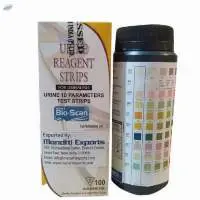
Ketone Reagent 10Parameter Urine Test Strips(Pack of 100)
Specifications: Keep away from light and moisture
Contains 100 test strips in sealed single pack. Immediately close cap and do not remove desiccants
Do not touch areas of reagents strips while testing as well as during result
Read instructions before use
Please note : This product is For Ketone analysis only (Not for Glucose)
Description
Ketone Reagent Test Strips for Urinalysis â?? Contains Pack of 100 Test Strips in sealed retail box pack.
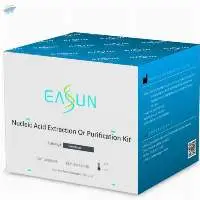
This product is intended to facilitate release of nucleic acid from cells or other materials containing genetic materials in a form suitable for amplification.
We guarantee our products are subjected to stringent quality policies to meet industry standards. Our organization has all the essential logistic resources and links to ensure on schedule delivery of order(s).
Solubility 0.1 % (MeOH) = Clear solution
Absorption Maximum (in MeOH) ?1max = 640-645nm
Absorption Maximum (in MeOH) ?2max = 522-525nm
Absorptivity (A1%1cm in MeOH at ?1max on dried substance) = >900
Absorptivity (A1%1cm in MeOH at ?2max on dried substance) = >650
Loss On Drying (110�°C) = <8%
Suitability for microscopy = Passes test.
Product Description:
Leishman's stain is applied in conventional staining techniques to uniformly stain chromosomes. These techniques leave centromers constricted, thus enabling the measurement of chromosome length, centromeric position, and arm ratio. Slides can be easily destained and banded by most banding procedures.
Solubility 0.1 % (MeOH) = Clear solution
Absorption Maximum(in MeOH) ?1max = 640-650 nm
Absorption Maximum(in MeOH) ?2max = 520 - 525 nm
Absorptivity (A1%1cm in MeOH at ?1max on dried substance) = 950-1150
Absorptivity (A1%1cm in MeOH at ?2max on dried substance) = 600-750
Loss On Drying (110�°C) = <10%
Suitability for microscopy = Passes test.
Product Description:
Giemsa Stain is a laboratory reagent and stain for microscopy. A compound of eosin with methylene blue and its oxidation products. When blood films are stained using Giemsa stain, the nucleus and cytoplasm of white blood cells take on a characteristic blue or pink coloration. Giemsa stain functions by rearranging chromatin and inducing G bands producing a high quality stain for chromatin and the nuclear membrane. Giemsa stain is used to differentiate nuclear and/or cytoplasmic morphology of platelets, RBCs, WBCs, and parasites (1,2). The most dependable stain for blood parasites, particularly in thick films, is Giemsa stain containing azure B. Liquid stock is available commercially. The stain must be diluted for use with water buffered to pH 6.8 or 7.0 to 7.2, depending on the specific technique used.
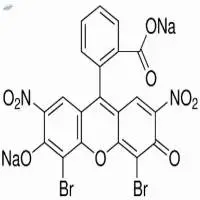
Product: Eosin Blue
C.A.S. No.: 548-24-3
CI NO.: 45400
M.F.: C20H6Br2N2Na2O9
M.W.: 624.09gm/mole
Specifications:
Dye content (By Gravimetry) = >85%
Solubility 0.1 % (Dist. Water) = Clear solution
Absorption maximum (Dist. water) ?max = 516-520nm
Absorptivity (A1%1cm in water at ?max) = >800
Loss On Drying (110�°C) = <8%
Product Description:
Eosin B sodium salt is a cell and tissue stain. Eosin B sodium salt is used as a counter stain for collagen, as a tissue stain for cell granules, nuclei, and microorganisms when coupled with Azure A (sc-203729), and as a stain for cell differentiation of the anterior pituitary.
Product Description :
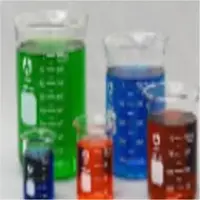
A beaker is a generally cylindrical container with a flat bottom to aid pouring, as shown in the picture. Beakers are available in a wide range of sizes, from one millilitre up to several litres.
Product Description :
Self-zeroing burette mounts on a glass bottle. Includes a PTFE needle valve stopcock, intermediate stopcock and rubber bellows. Class A, ASTM E-287, meets USP standards, individually serialized and certified. Includes Schellbach backing for easy reading of liquid levels. With amber graduations. Manufactured from precision bore tubing and calibrated To Deliver on computer-controlled machines.
Product Description :
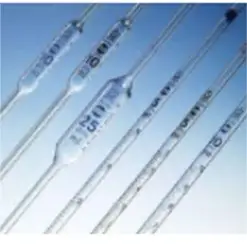
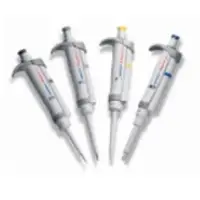
A pipette is a laboratory tool commonly used in chemistry, biology and medicine to transport a measured volume of liquid, often as a media dispenser. Pipettes come in several designs for various purposes with differing levels of accuracy and precision, from single piece glass pipettes to more complex adjustable or electronic pipettes. Many pipette types work by creating a partial vacuum above the liquid-holding chamber and selectively releasing this vacuum to draw up and dispense liquid
Product Description :
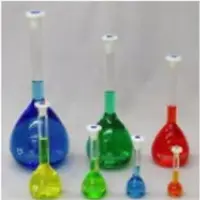
A volumetric flask is a piece of laboratory glassware, a type of laboratory flask, calibrated to contain a precise volume at a particular temperature. Volumetric flasks are used for precise dilutions and preparation of standard solutions.
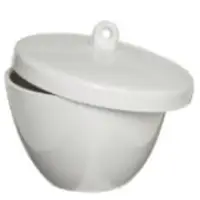
A crucible is a container that can withstand very high temperatures and is used for metal, glass, and pigment production as well as a number of modern laboratory processes. While crucibles historically were usually made from clay, ] they can be made from any material that withstands temperatures high enough to melt or otherwise alter.
Product Description :
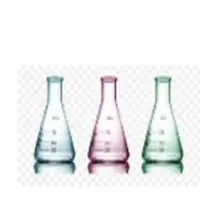
Flasks can be used for making solutions or for holding, containing, collecting, or sometimes volumetrically measuring chemicals, samples, solutions, etc. for chemical reactions or other processes such as mixing, heating, cooling, dissolving, precipitation, boiling or analysis.
Product Description :
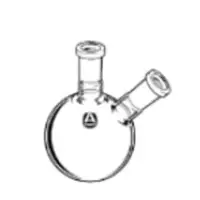
Round-bottom flasks (also called round-bottomed flasks, Flasks, round bottom, or R B Flasks) are types of flasks having spherical bottoms used as laboratory glassware, mostly for chemical or biochemical work.They are typically made of glass for chemical inertness; and in modern days, they are usually made of heat-resistant borosilicate glass. There is at least one tubular section known as the neck with an opening at the tip. Two or three-necked flasks are common as well. Round bottom flasks come in many sizes, from 5 mL to 20 L, with the sizes usually inscribed on the glass. In pilot plants even larger flasks are encountered.
Product Description :
A glass stirring rod, glass rod, stirring rod or stir rod is a piece of laboratory equipment used to mix chemicals and liquids for laboratory purposes. They are usually made of solid glass, about the thickness and slightly longer than a drinking straw, with rounded ends
Product Description :
Product Description :
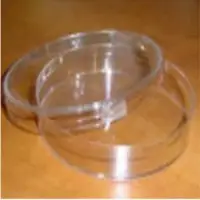
Petri dish (sometimes spelled "Petrie Dish" and alternatively known as a Petri plate or cell-culture dish),named after the Germanbacteriologist Julius Richard Petri,is a shallow cylindrical glass or plastic lidded dish that biologists use to culture cells[3] – such as bacteria – or small mosses
Product Description :
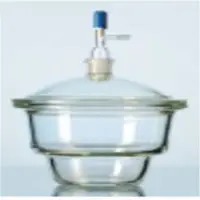
Desiccators are sealable enclosures containing desiccants used for preserving moisture-sensitive items such as cobalt chloride paper for another use.