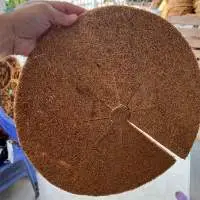
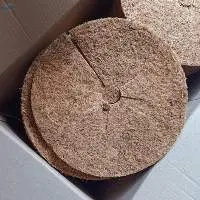
Coir needled felt mats are non-woven mats made from 100% coir fibre. The fibre is selected, dried and then weaved in the needle felt machine for required thickness. Then the needle is punched to achieve the desired degree of compaction.
The fibre is bonded to form long sheets. Needled felt mats have excellent moisture absorption capacity and water retention characteristics. It is an ideal medium for plant growth. It is also used for lawn development and landscaping.
Advantages
Environmental Friendly
Easy laying
Easy rooting for plants
Water retention capability
*Common Usage:
- Ideal for Weed Control
- Perfect protection against cold, ice and frost.
*Benefits:
- 100% Natural and Biodegradable
- Functions as a Soil Amendment
- Fulfills the Double Function of Mulching and as Wick in Soil Mantle
- Improved Plant Establishment
- Balanced and Healthy Growth
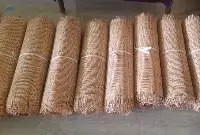
Cane Webbing is used for furniture that has a groove around the opening. It is also used for cabinet doors, speaker fronts and to provide ventilation for appliances. To determine how much you will need, measure from groove to groove (front to back and side to side) and add 1" to each measurement
Authentic Indonesian rattan, natural cane woven screen, furniture, chair, table, ceiling, background, wall material
Size: You can choose the size you want.
If you don't have the size you want, please contact us.
Material: natural Indonesian rattan
Other sizes available: width 45 cm, 55 cm, 65 cm, 70cm, 75cm, 80 cm, 85cm, 90cm, 95cm, 100cm
Jute (including kenaf) was an important foreign exchange earner for the producing countries during '60s. Even during the '70s, jute was an important commodity for most of the producing countries. However, during the '80s, bulk handling techniques and synthetic substitutes entered the market and jute started losing its predominant position in the market.
Jute (including kenaf) was an important foreign exchange earner for the producing countries during '60s. Even during the '70s, jute was an important commodity for most of the producing countries. However, during the '80s, bulk handling techniques and synthetic substitutes entered the market and jute started losing its predominant position in the market.
Jute (including kenaf) was an important foreign exchange earner for the producing countries during '60s. Even during the '70s, jute was an important commodity for most of the producing countries. However, during the '80s, bulk handling techniques and synthetic substitutes entered the market and jute started losing its predominant position in the market
Jute (including kenaf) was an important foreign exchange earner for the producing countries during '60s. Even during the '70s, jute was an important commodity for most of the producing countries. However, during the '80s, bulk handling techniques and synthetic substitutes entered the market and jute started losing its predominant position in the market.
Jute (including kenaf) was an important foreign exchange earner for the producing countries during '60s. Even during the '70s, jute was an important commodity for most of the producing countries. However, during the '80s, bulk handling techniques and synthetic substitutes entered the market and jute started losing its predominant position in the market.
Jute (including kenaf) was an important foreign exchange earner for the producing countries during '60s. Even during the '70s, jute was an important commodity for most of the producing countries. However, during the '80s, bulk handling techniques and synthetic substitutes entered the market and jute started losing its predominant position in the market.
Jute (including kenaf) was an important foreign exchange earner for the producing countries during '60s. Even during the '70s, jute was an important commodity for most of the producing countries. However, during the '80s, bulk handling techniques and synthetic substitutes entered the market and jute started losing its predominant position in the market.
Jute (including kenaf) was an important foreign exchange earner for the producing countries during '60s. Even during the '70s, jute was an important commodity for most of the producing countries. However, during the '80s, bulk handling techniques and synthetic substitutes entered the market and jute started losing its predominant position in the market.
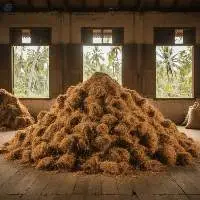
Coconut / Coir Fibre is a natural, durable, and eco-friendly fiber extracted from coconut husks. It is widely used in horticulture, agriculture, erosion control, mattress manufacturing, brush making, ropes, geotextiles, and various industrial applications.
Product Type : Natural Coconut Coir Fibre
Raw Material : 100% Coconut Husk
Fiber Types : Brown Coir Fibre / White Coir Fibre
Fiber Length : 5 mm - 300 mm (Customizable)
Moisture Content: Below 15 - 20%
Color : Natural Brown / Golden Brown / Light Brown
Processing : Cleaned, Dried, Combed, Graded
Strength : High Tensile Strength and Durability
10676 Jute Machinery Suppliers
Short on time? Let Jute Machinery sellers contact you.