Supplier : Telecom services, internet leased lines, sip trunk solutions, cctv security systems, networking solutions, intercom systems, it infrastructure, firewall security, wi fi solutions, cloud telephony, and business communication services for homes, offices, and enterprises.
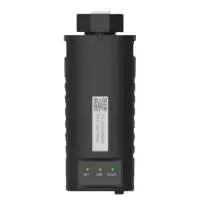
A Wi-Fi unit provides wireless internet connectivity, allowing multiple devices devices to connect and communicate over a local network without cables.
As an input device which reads the encoded data when we hold an ID Card within a distance from the front of a reader, it sends the decoded data to ACU.
Function
- Single unit card reader controller( Stand-alone Type)
- It can be used as a reader by connecting to an entry control system controller.
- With Serial Port(RS485,RS232,IR)
- User Registration: 20,000 persons
- Entry Recording: 100,000 cases
- Compatible with all HID Cards
ã??· - Card Only - PID Only - Card + PID - Card or PID
- Possible to select various operating modes
ã??· - Card Only - - PID Only - Card + PID - Card or PID
As a near-by card reader, it reads the inherent information from an entry card, and sends the data to entry control system.
Function
- ISO 14443A/Mifare type Card is supported.
It functions as a recognition device by connecting to entry control system controller.
Tamper Alarm Function
- Alarm of the detachment and opening of a card reader (Alarm Sound is emitted.)
- It is possible to send alarm data in using RS-485 communication way.
Voice Guidance Service Function (Option)
Specification
- Communication with a Controller
RS-485/Wiegand Output
Metal Cabinet
- Tamper Alarm HOST
RS-485 1PORT, 9600/19200/38400 bps
AUX. : RS-485 1PORT, 9600/19200/38400 bps
T-Motion is an optimized and integrated solution that combines various solutions used in contact center. Particularly, this multi-functional all-in-one contact center solution is designed to maximize the productivity and efficiency of small and medium sized business.
It consists of CTI, IVR, Recording, Wallboard, Auto Dialing, T-Softphone, EMS and CRM
Feel empowered as the new "grid manager" of your home's energy production.
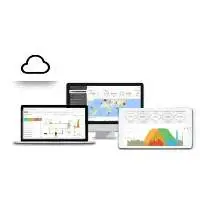
Through Wi-Fi or 4G connection, the PowerPillar ESS
mobile app and data suite let you monitor real-time
power output, usage, and savings data from your ESS
grid.
Control your energy savings preferences
Evaluate historical trends
Prevent performance issues with alerts and support
options if the equipment isn't performing optimally.
Fire suppression systems are crucial for protecting both lives and property from the devastating effects of fires. These systems are designed to detect, suppress, and prevent the spread of fires, reducing the risk of significant damage and ensuring safety. In a fire emergency, having a reliable fire suppression system can be the difference between a small incident and a major disaster. Whether for residential, commercial, or industrial properties, fire suppression systems play an essential role in fire safety strategies.
What is a Fire Suppression System?
Fire suppression systems are crucial for protecting both lives and property from the devastating effects of fires. These systems are designed to detect, suppress, and prevent the spread of fires, reducing the risk of significant damage and ensuring safety. In a fire emergency, having a reliable fire suppression system can be the difference between a small incident and a major disaster. Whether for residential, commercial, or industrial properties, fire suppression systems play an essential role in fire safety strategies.
In India, fire suppression systems are widely implemented across various sectors, including data centers, manufacturing facilities, and commercial buildings. Leading fire suppression system suppliers in India offer comprehensive solutions tailored to specific needs, ensuring compliance with national safety standards. Regular fire safety audits and maintenance services are also provided to ensure optimal system performance.
Types of Fire Suppression Systems
Water-Based Systems: sprinklers are the most common type of fire suppression system used in both residential and commercial properties. They are highly effective for fighting fires that involve ordinary combustibles, such as wood, paper, and textiles. Water-based systems include automatic sprinkler systems and deluge systems that use water to cool down the fire and limit its spread.
Foam-Based Systems: Foam fire suppression systems are used to control fires involving flammable liquids, such as oils, chemicals, or fuels. These systems create a layer of foam that covers the fire, cutting off the oxygen supply and preventing the fire from reigniting. Foam-based systems are especially useful in industries like aviation, oil refineries, and chemical manufacturing.
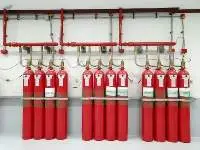
Chemical-Based Systems: Chemical fire suppression systems, also known as clean agent systems, use specific chemicals to extinguish fires without leaving residue. These systems are ideal for sensitive environments like computer rooms, data centers, and libraries, where water damage from sprinklers could be harmful. Common agents include FM-200, Novec 1230, and CO2.
Fire suppression systems are crucial for protecting both lives and property from the devastating effects of fires. These systems are designed to detect, suppress, and prevent the spread of fires, reducing the risk of significant damage and ensuring safety. In a fire emergency, having a reliable fire suppression system can be the difference between a small incident and a major disaster. Whether for residential, commercial, or industrial properties, fire suppression systems play an essential role in fire safety strategies.
What is a Fire Suppression System?
Fire suppression systems are crucial for protecting both lives and property from the devastating effects of fires. These systems are designed to detect, suppress, and prevent the spread of fires, reducing the risk of significant damage and ensuring safety. In a fire emergency, having a reliable fire suppression system can be the difference between a small incident and a major disaster. Whether for residential, commercial, or industrial properties, fire suppression systems play an essential role in fire safety strategies.
In India, fire suppression systems are widely implemented across various sectors, including data centers, manufacturing facilities, and commercial buildings. Leading fire suppression system suppliers in India offer comprehensive solutions tailored to specific needs, ensuring compliance with national safety standards. Regular fire safety audits and maintenance services are also provided to ensure optimal system performance.
Types of Fire Suppression Systems
Water-Based Systems: sprinklers are the most common type of fire suppression system used in both residential and commercial properties. They are highly effective for fighting fires that involve ordinary combustibles, such as wood, paper, and textiles. Water-based systems include automatic sprinkler systems and deluge systems that use water to cool down the fire and limit its spread.
Foam-Based Systems: Foam fire suppression systems are used to control fires involving flammable liquids, such as oils, chemicals, or fuels. These systems create a layer of foam that covers the fire, cutting off the oxygen supply and preventing the fire from reigniting. Foam-based systems are especially useful in industries like aviation, oil refineries, and chemical manufacturing.
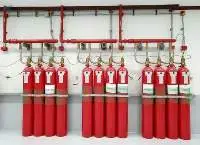
Chemical-Based Systems: Chemical fire suppression systems, also known as clean agent systems, use specific chemicals to extinguish fires without leaving residue. These systems are ideal for sensitive environments like computer rooms, data centers, and libraries, where water damage from sprinklers could be harmful. Common agents include FM-200, Novec 1230, and CO2