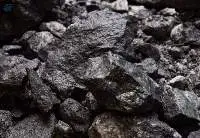
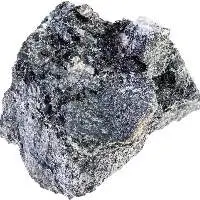
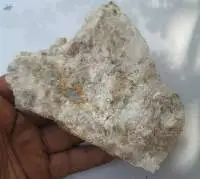
Lithium Ore: Essential for powering the future of renewable energy and electric vehicles
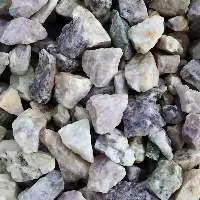
Lithium Ore is a vital mineral resource that plays a key role in powering the future of renewable energy and electric vehicles. Widely used in the production of rechargeable batteries, lithium ore supports the growing demand for clean energy technologies, including electric cars, solar energy storage systems, and portable electronic devices.
As global industries shift toward sustainable energy solutions, lithium has become one of the most valuable and strategic minerals in the modern world.
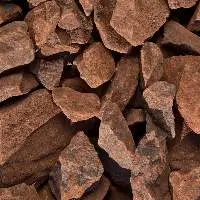
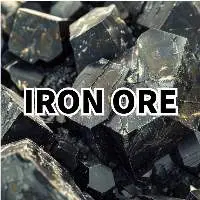
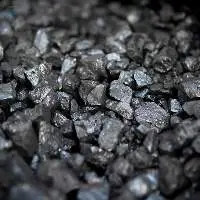
Iron ores are rocks and minerals from which metallic iron can be economically extracted. The ores are usually rich in iron oxides and vary in color from dark grey, bright yellow, or deep purple to rusty red. The iron is usually found in the form of magnetite (Fe3O4, 72.4% Fe), hematite (Fe2O3, 69.9% Fe), goethite (FeO(OH), 62.9% Fe), limonite (FeO(OH)n(H2O), 55% Fe) or siderite (FeCO3, 48.2% Fe).
Ores containing very high quantities of hematite or magnetite (greater than about 60% iron) are known as natural ore or direct shipping ore, meaning they can be fed directly into iron-making blast furnaces. Iron ore is the raw material used to make pig iron, which is one of the main raw materials to make steel 98% of the mined iron ore is used to make steel.
Item Specification
Fe: 57 Min
SiO2: 4 Max
Al2O3: 5.5 Max
Moist: 12 Max
P: 0.08 Max
S: 0.04 Max
+40mm: 5 Max
-6mm: 20 Max
LOI: 7 About
TI: 70 Min
AI: 15 Max
RI: 60 Min
RDI: 25 Max
DI: 10 Max
Our Iron Ore is a high-grade raw material essential for steel production and various industrial applications. Sourced from top mining locations, our iron ore ensures superior quality and consistent performance for your manufacturing needs.
Key Features:
1. High Purity: Contains a high percentage of iron content, ensuring maximum efficiency in steel production.
2. Consistent Quality: Sourced from reputable mines, our iron ore maintains uniform quality and performance standards.
3. Versatile Applications: Suitable for various uses, including steel production, ironmaking, and as a raw material in other industrial processes.
Applications:
1. Steel Production: Primary raw material used in blast furnaces and direct reduction iron (DRI) processes to produce high-quality steel.
2. Ironmaking: Essential for producing pig iron, which is a precursor for various iron-based products.
3. Industrial Uses: Used in cement production, heavy machinery manufacturing, and as a catalyst in certain chemical processes.
Iron ore mining methods vary by the type of ore being mined. There are four main types of iron ore deposits worked currently, depending on the mineralogy and geology of the ore deposits. These are magnetite, titanomagnetite, massive hematite and pisolitic ironstone deposits.
Origin :- Mexico , Brazil, South Africa
Iron Ore is a naturally occurring mineral from which metallic iron is extracted. It is one of the most essential raw materials used in the production of steel and plays a vital role in infrastructure, construction, automotive, engineering, and manufacturing industries worldwide.
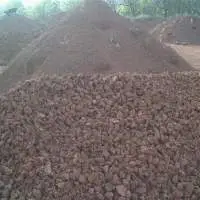
Iron ore is processed and supplied in various forms such as lumps, fines, pellets, and concentrates depending on industrial requirements.
High iron (Fe) content
Low impurities
Excellent metallurgical properties
Consistent quality
Suitable for steel and sponge iron production
Iron (Fe) Content 58% to 65%+
Size Lumps: 6 - 40 mm / Fines: Below 10 mm
Moisture 6% to 12%
Phosphorus (P) Low
Sulphur (S) Low
Color Reddish Brown to Dark Black
As a vital raw material for steel manufacturing, infrastructure, and industrial development, our iron ore is available in multiple purity grades to meet diverse operational needs:
High-Grade (62% & 65%): Perfect for premium steel production, ensuring superior strength and quality.
Standard-Grade (52% & 58%): Cost-effective options for bulk steel manufacturing, optimizing value without compromising performance.
Iron Ore is a valuable natural resource widely used in industrial manufacturing, construction, and infrastructure development.
Carefully sourced and processed to meet high-quality standards, iron ore serves as a key raw material in the production of steel and other essential industrial products.
Known for its strength, durability, and versatility, iron ore plays a crucial role in supporting sectors such as construction, transportation, machinery, and heavy industries, making it an important commodity in global trade and economic growth.
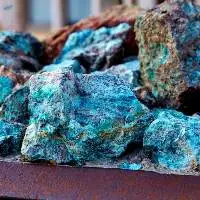
The main copper sulphide minerals are chalcopyrite (CuFeS2) chalcocite (Cu2S), covellite (CuS), bornite (Cu5FeS4), tetrahedrite ((Cu,Fe)12Sb4S13) and enargite (Cu3AsS4). The largest source of copper is from porphyry ore deposits in which one or a combination of the minerals occurs. A typical copper sulphide ore contains various levels of iron sulphide types that generally include pyrite (FeS2) and pyrrhotite (Fe1-xS). Often gold and silver are present which may either be associated with the sulphides or are free. The gangue particles can consist of a range of silicate minerals from quartz to talc and clays.
Item Specification
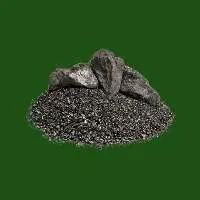
CR2O3: 42% Basis: 40% Min
CR/FE Ratio: 1.35:1
MGO: 14% Max
AL2O3: 16% Max
SIO2: 10% Max
P: 0.01% Max
S: 0.01% Max
Size 0-2 MM: (95% Min)
Moisture at 105C or 110C: 8% Max