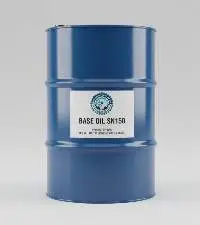
NSRIC Green Supplies Inc. (NGS) is your trusted, licensed intermediary for the secure and seamless global trade of Base Oil SN150. As a high-quality Group I or Group II base oil, SN150 is indispensable in the formulation of high-performance lubricants, greases, metalworking fluids, and various industrial oils. Its excellent oxidation stability, low volatility, and desirable viscosity index make it a foundational material for manufacturers worldwide.
At NGS, we leverage our extensive network to connect verified end-buyers with reputable global producers, ensuring your supply chain remains robust, secure, and profitable. We specialize in managing all logistical and compliance complexities inherent in international petroleum trade, guaranteeing product integrity and on-time delivery from source to destination port. Whether you require bulk volumes or tailored shipment plans, partner with NGS for a professional, transparent, and profit-optimized sourcing solution for Base Oil SN150. Contact us to discuss your current supply needs and secure a competitive trading arrangement.
Base oils are used to manufacture products including lubricating greases, motor oil and metal processing fluids. Different products require different compositions and properties in the oil. Chemical substances additives are added to the base oil to meet the quality requirements for the end products in terms of, for example, friction and cleaning properties.
Base oil SN 150 is known as a light grade base oil at the lower end of the specifications for Grade I light base oils. It is mostly used in lubricant and lubricant additives production. It is a Group I base oil which has undergone solvent refining processes. To finish the refining it was hydrogen treated to clear out any impurities.
Applications :
Base oil SN 150 works as a base stock for several industrial lubricants.
General purpose oils
Mould oil
Transmission fluids
Gear oils
Metal working fluids
Additives
Hydraulic oils
Transformer oils
Base Oil SN 500 is defined as a light grade base oil at the upper end of the specifications for Grade I base oils. It is mostly used in lubricant production. It is a Group I base oil which has undergone solvent refining processes. To finish the refining it was hydrogen treated to clear out any impurities.
Applications :
Base Oil SN 500 works as a base stock for several industrial lubricants
Engine oils
Transmission fluids
Gear oils
Metal working fluids
Greases
Hydraulic oils
Transformer oils
Paraffin waxes in a solid state are usually white, translucent, tasteless and odorless. They are hard, relatively brittle and have a slightly dry feel. In a molten state, paraffin waxes are clear, colorless liquids of low viscosity. When melted, these waxes increase in volume by about 5-8%, resulting in a decrease in density.
Paraffin will react at high temperatures with either oxidizing or halogenating agents. This reaction produces either fatty acids and hydroxy acids or halogen substitution products respectively. Although paraffin has many useful characteristics, most commercial applications are based on its resistance to water and vapor and its glossy appearance when polished.
What is Parraffin Wax?
Paraffin wax is made from natural crude oil,available in white slab and granule,odorless without physical impurity, water and
additives.
Crude paraffin with high oil content is mainly used for making matches, fiberboard, awning canvas, etc. Fully refined paraffin and semi refined paraffin wax are widely used. They are mainly used as ingredients and packaging materials for food and certain commodities (such as wax paper, crayons, candles, carbon paper), coating materials for baking containers, preservation of fruits, insulation of electrical components, improvement of aging resistance and flexibility of rubber. It can also be used for oxidation to produce fatty acids. Fully refined paraffin and semi refined paraffin wax are widely used. They are mainly used for food and some products (such as wax paper, crayons, candles, carbon paper) components and packaging materials, coating materials for baking containers, for fruit preservation, insulation of electrical components, improving rubber aging resistance and increasing flexibility, etc
.It can also be used for oxidation to produce fatty acids.
Property: The fully refined paraffin wax has a white solid appearance with block or granular structures. It has high melting point and low oil contains. It also has features of no bonding, no sweating, no greasy feeling, waterproof, moisture-proof and electrical insulation under normal temperature. Due to the depth of refinement, the products are of low content of polycyclic aromatic hydrocarbons, good chemical stability and light stability, strong toughness, good plasticity, white color, no mechanical impurities and water, and no smell. Fully refined paraffin can be dissolved in: benzene, ether, chloroform, carbon disulfide, carbon tetrachloride, turpentine, petroleum, and fixed oil.
Application: Candle Making
Melting Point:56-58
Forms: Solid
Oil Content (%):0.5
Refinement: Fully Refined
Crystalline Index:99%
Scale of Deoiling:99%
material: paraffin wax
color: white
Odor: 2Max
Mechanical Impurity and Water: Negative
Acid and Alkali with Water solubility :Negative
FDA :Passed
characteristics: High melting point, low oil, white color
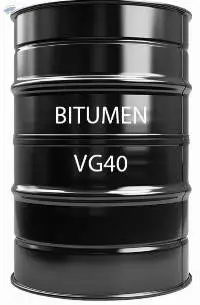
Bitumen VG40 is a high-viscosity grade asphalt binder used in road construction for heavy-traffic areas like highways, intersections, and airport runways, providing enhanced resistance to rutting and deformation in hot climates due to its stiffness and durability. The "VG" stands for Viscosity Grade, and "40" refers to its kinematic viscosity (around 400 cSt at 135�°C), with specific standards ensuring performance under heavy loads and high temperatures, replacing older penetration grades.
Key Characteristics
High Viscosity: Offers greater stiffness for stronger, more durable pavements.
Heavy Traffic Use: Ideal for roads with substantial vehicle loads, intersections, and truck bays.
Hot Weather Performance: Resists shoving and deformation in high temperatures.
Standardized: Meets Indian Standards (IS) for specific properties like softening point, penetration, and viscosity.
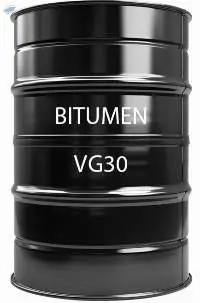
Bitumen VG30 (Viscosity Grade 30) is a premium, heavy-duty asphalt binder used in road construction, especially for high-traffic areas and hot climates, offering superior strength, adhesion, and temperature stability compared to older grades like 60/70, preventing rutting, and improving pavement life. It's classified by its flow (viscosity) at specific temperatures, making it ideal for major highways, runways, and urban roads needing resistance to heavy loads and extreme heat, aligning with standards like ASTM D3381.
Key Characteristics & Uses:
High Viscosity: Provides stiffness, resisting deformation under heavy traffic.
Superior Adhesion: Bonds better with aggregates, reducing stripping and extending pavement life.
Temperature Stability: Maintains structural integrity in hot weather, preventing bleeding and rutting.
Applications: Heavy-traffic roads, runways, industrial surfaces, overlays, and reinforcing concrete slabs.
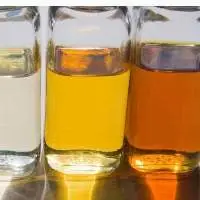
Base oil is a type of oil which is used as a base for lubricants. The main element of lubricants (volume wise) is base oil and it forms about 95% of lubricants weight. In some lubricants (Compressor and hydraulic oil) 99% of the oil is consisted of base oil and only the 1% which is left contains additives. Base oils can be reached from oil based and non-oil based resources. Most of the base oils used in the world are obtained from crude oil refining. Most of the compounds which form base oils are Paraphinic, Naphthenic and aromatic compounds.
Base oils chemical properties and their impact on the usage of final lubricant:
1 volatility: reduction of the oil, oil thickening, sediments
2 surface activity: foaming, pressure tolerance, air release, emulsion expansion
3 oxidations: sediments, oil thickening, metal oxidation, mud forming
4 Viscosity: Fluidity in lower degrees, energy waste, abrasion protection, proper cooling
5 being soluble: Motor neatness, sealant compatibility, process applications, formulation sustainability The base oil which is extracted from crude oil is called mineral base oil which is categorized in two types (Paraphinic and Naphtshic). Paraphinic oils are consisted of normal hydrocarbons and Iso hydrocarbons. Naphthic oils are consisted of annular full hydrocarbons. Paraphinic oils have certain attributes in comparison with naphthic oils such as;