Fresh fruits & vegetables, agricultural products, frozen fruits, dried fruits, potatoes, onions, citrus fruits, tomatoes, avocados
Arabica coffee bean, robusta coffee bean, palm sugar, coconut, shallot, clove, nutmeg, cinnamon, turmeric, natural honey, and indonesian spices
Of agricultural crops, fresh and chilled fruits and vegetables, including dates, onions, garlic, potatoes, citrus fruits and all kinds of other fresh and dry produce
Agriculture Products, Wheat Grain, Wheat Flour, Basmati Rice , Gram, Soybean, Chickpea And Red Onion, Garlic, Potato
Thai and brazillian sugar, thai fresh seasonal fruit, exotic fruit, golden mango, mango, durian, dragon fruit, rambutan, salak, longkong, jackfruit, cempedak, soursop, mangosteen, lychee, pulasan, star apple, pineapple, tamarind paste, green mango, rose apple, guava, avocado, sunflower oil, fresh baby corn, okra, ginger, lemongrass and organic turmeric, dried basil seed, sesame seed, pepper, jasmine rice, white rice, broken rice, rice berry, glutinous rice, parboiled rice, chilli (fresh, dry and frozen), onion, garlic
Vegetables Like Red/green Chili, Bird Eye Chili, Chinese Chive, Coriander, Fingerroot, Galangal, Ginger, Basil, Lemongrass, Kaffir Lime Leaves, Red Shallot, Turmeric, Young Peppercorn, Banana Leaves, Betel Leaves, Bitter Melon, Eggplant, Okra, Panda Leaves, Drumstick, Yard Long Bean, Baby Corn, Mushroom And Fruits Like Lychee, Guava, Durian, Rambutan, Custard Apple/sugar Apple, Pomelo, Mango, Mangosteen, Dragon Fruit, Jackfruit, Longan, Roseapple, Ripe Papaya, Zalacca, Jujube, Sweet Tamarind, Young Coconut
All types of beans i.e. light red kidney beans, lightly speckled beans, black beans, sorghum, green chili, mung beans, kidney beans, soybeans, coffee beans, sorghum, avocado, maize, ginger, matooke
Organic Products, Agri, Organic Honey, Lemon, Mirch, Chillies, Turmeric, Lemongrass, Lemongrass Oil, Essential Oil
Garments like kurti, sarees and also required spices like ginger, cardamom ,black paper red chili and garlic ,ceramic tile.
porcelain tile.
glass tile.
marble tile.
granite tile.
Fox Nuts, Yellow Dried Maize, Cattle Feed Grade Yellow Maize, Potatoes, Onions, Drumstick, Ginger, Chilli, Lichi, Mangoes, Other Fruit & Vegetables, Handicrafts
Agriculture Products, Wheat Grain, Wheat Flour, Basmati Rice , Gram, Soybean, Chickpea And Red Onion, Garlic, Potato
Seeds, spices, vegetables, millets, pulses, onion powder, moringa powder, jaggery powder, banana powder
Fresh giant ginger, fresh red ginger, dried ginger, ginger powder, fresh turmeric, dried turmeric, turmeric powder, whole & powder black pepper, whole & powder white pepper, fresh konjac, konjac chips, konjac powder, coconut shell charcoal, hardwood charcoal.
Different kind of vegetables like potato, onion, garlic, ginger, basmati and non basmati rice, cane and bamboo items, drinking water, lather bag , belt, wallet and leather jacket.
Fresh green, yellow lemon, apples, onions., almonds, hazelnuts, walnuts, chestnuts., natural honey., sun flower seeds, yellow corn., fresh wild truffles on season, wood pellets, wood charcoal, firewood pallets, european oak wine barrels
Fresh fruit like grapes, orange and vegetables like cabbage, carrot and fresh meat ( beef , goat & lamb )
Fresh and dried pineapple, matoke, cavendish bananas, avocado, sweet potatoes, habanero hot pepper, okra, dudhi, karelia and many other indian vegetables, sugarcane
Red onion, pomegranate, semi husked coconut, green chilli, rice, banana, mango
Jeans & denim wear, fresh vegetables like cabbage, carrot, grains & cereals like rice, wheat
Semi husked coconut, mango, tomato, tomato paste, mango pulp, sugar, sunflower oil, palm oil, groundnut oil and mustard oil
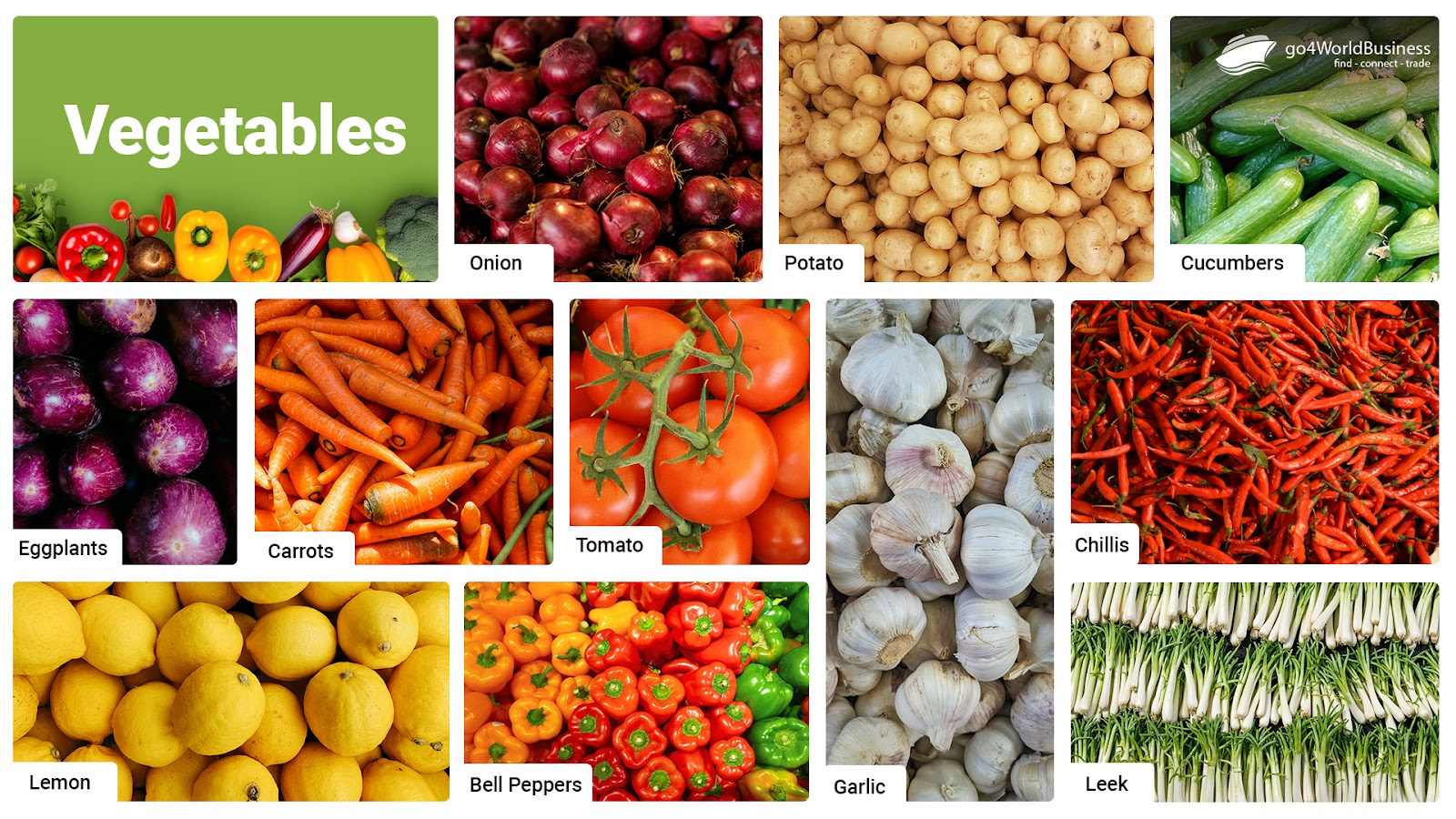
The edible part of plants is called vegetables. These plant parts can be roots, stems, flowers, fruits, seeds, and leaves. It is consumed by both humans and animals. The word “vegetable” came from Old French and was initially used for all plants. It is believed that vegetables originated between 10,000 BC to 7,000 BC. They have been a part of the human diet when people used to hunt to get food on their plates. The only difference is that they used to eat it in raw form, and now, people cook vegetables before eating them.
Vegetables contain a high amount of nutrients (minerals, fibres, vitamins, plant-based chemicals like Carotenoids). According to research, 469,551 participants observed that with every additional serving of green vegetables, you decrease the risk of getting heart disease or cancer by 4%. As per the study done by Nurses’ Health Studies and the Health Professionals, the right fruits and vegetables can also help in preventing obesity. Green leafy and non-starchy vegetables have a low glycemic index, which prevents hunger-causing sudden high sugar spikes. Moreover, various studies show that we should eat 5 servings of vegetables a day. To achieve this goal, you can add mixed vegetable curry along with vegetable salad to your daily meals.
Vegetables' demand in the global trade has witnessed an average increase of 3% from 2017 to 2022. This is because of the high consumer demands and the improved logistics in the global trading business. This shift towards vegetable dominance is because people are prioritizing healthier and low-carb foods. And what could be better than vegetables for fulfilling this purpose.
The processed forms of vegetables have also been in demand, especially for ready-to-eat meals. This is why the consumer demands have been consistent despite the high costs, as a consequence of the decreased production in the US and the EU. The improvements done in the production process, along with the development of more varieties of vegetables, have made the Northern Hemisphere regions expand their production seasons.
It is also important to note that the consumer demands run parallel to urbanization. So, as more people are moving into the cities and their incomes are increasing, the demands are also increasing unstoppably. Did you know that China is the largest vegetable producer in the world, producing around 600 million tons of vegetables every year. It is then followed by India, which has seen a 20% increase in its vegetable exports from the year 2023 to 2024. It exported 689k shipments of vegetables in 2024 to 9,461 international buyers.
How various research studies and campaigns are driving the global trade of vegetables:
Let’s now focus on what vegetables buyers need from the supplier, in terms of quality. Meeting all those requirements increases your chances of finding suitable importers quickly.
Vegetable Types & Other Related Categories in the Global Market
As an exporter who is exporting vegetables to other countries, you’ve already set a goal of expanding your business. You can scale up your business by broadening your product range. Sometimes, fresh vegetable buyers might also be looking for other related products like vegetable seeds and be vegetable seed buyers as well. Here is the list of other categories you can include:
Knowing market insights can help you understand the current market situation. Based on that data, you can then decide which importing countries you should target to connect with the wholesale vegetable market.
Global Market Size
Source: Precedence Research
Top Importing Countries for Vegetables (2023):
Source: Import Globals
Finding the right buyer is, without any doubt, the most important step in global trading. It becomes even more crucial when it comes to food items. So, here is how you can use multiple platforms to find potential vegetable buyers:
1. Which vegetable is high demand?
Potatoes, Tomatoes, Onions, and Okra are some of the most demanded vegetables. They’re used in cooking almost all types of cuisines.
2. Which country buys vegetables from India?
Bangladesh, UAE, Malaysia, the USA, and Sri Lanka are some of the top countries buying Indian vegetables.
3. Who are the leading vegetable importers globally?
The US, Germany, France, the US, Germany, and the UK are some of the leading importers in global trade.
4. What is the HS code for vegetables?
0709 is the HS code for vegetables. Different varieties of vegetables have different HS codes.
5. What are the profit margins in the vegetable export business?
The average profit margins in the vegetable exporting range from 15 to 30%. This totally depends on the specific vegetable variety, destination country, and production cost.
6. What are the major challenges in vegetable export?
A few of the major challenges faced in vegetable export include shelf life constraints, market competition, production issues (like post-harvest losses), long documentation processes, etc.
7. Who is the largest exporter of vegetables in the world?
China is the largest exporter of vegetables in the world. In 2023, China exported $10.55 billion worth of vegetables to the world. It is then followed by the Netherlands and Mexico.
8. Which vegetable is best for export?
Onions are the best vegetable for exporting due to their availability, accompanied by high demand from all across the world.
9. Which country is the largest producer of vegetables?
China is the largest producer of vegetables.
10. How to package vegetables for export?
For packing vegetables for export, you need to choose durable containers that can maintain cleanliness and have good air flow. You should also reduce the heat of vegetables before packing them. Do not forget to label the containers correctly and clearly.
11. What is India's rank in vegetable exports?
India ranks 11th in the list of the largest vegetable exporters.
Bangladesh vegetable exports have tripled in the 2024-25 fiscal year, with 58,766 tons of shipments. It is witnessing a 313% increase in its year-on-year growth. (Full story: Fresh Plaza)