Please click here to check who's online and chat with them.

Find Verified Mint Leaves Suppliers, Manufacturers and Wholesalers

Top Supplier Cities : -   Tashkent  
GOLD Member
Jul-24-25

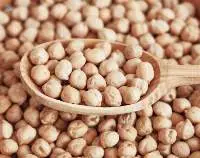
Chicken Peas, 1st

$1.40 - $3 / Kilogram (FOB)
MOQ: 10 tons  Metric Tonnes
Sample Available
Supplier From Tashkent, Uzbekistan
 Inquire Now  
Chickpea, Cicer arietinum, is a member of the legume, pea, or pulse family, ''Fabaceae. Also called Leguminosae, this family of flowering plants is one of the largest plant families and includes such important plants as beans, peas, peanuts, lupines, alfalfa, clover, and acacia, and many others. As a member of the Faboideae (or Papilionoideae) subfamily, chickpea is characterized by one petal being large and with a crease in it, while the two adjacent petals are on the sides, and the two bottom petals are joined together at the bottom, forming a boat-like structure.

The bushy 60-cm (2-foot) plants bear feathery pinnately compound leaves. The small white or reddish flowers often have distinctive veins in blue or purple and are usually self-pollinated. The yellow-brown or dark green beans are borne one or two to a pod. There are large- and small-seeded varieties.
GOLD Member
Jul-24-25

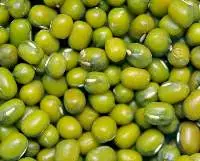
Mung Beans, 1st

$1 - $1.50 / Kilogram (FOB)
MOQ: 10 tons  Cartons
Sample Available
Supplier From Tashkent, Uzbekistan
 Inquire Now  
UZB Hs Code : 0713 31 000 1
Mung bean is an annual herbaceous plant. The root system is powerful, consists of a developed tap root with many lateral branches. The stem is erect, slightly branched, stiff-haired, ribbed, 20-150 cm high (in Russia, varieties 30-50 cm high are cultivated). The mung bean stem is herbaceous, sometimes lignified at the base, green, gray-green, maybe with anthocyanin coloration. Stipules glabrous, ovate or broadly ovate, 10 to 18 mm long, unpaired leaf almost triangular. The leaves are large, the first ones are simple, the subsequent ones are trifoliate, pubescent, yellowish-green or dark green in color.

The flowers are bisexual, large, golden, yellow, yellow-green in color. The corolla consists of five petals of a moth-like structure, the flowers are collected in inflorescences of 2-12 flowers each, the peduncles are short, located in the axils of the leaves. The fruit is thin, cylindrical beans with appressed pubescence, without a beak at the end, 6-18 cm long, with 6-15 seeds. Seeds are small, barrel-shaped, tuberculate, smooth, dull, shiny, 3-6 mm long. The color of the seeds is usually dark green, olive or yellow, less often there are varieties with brown, black or dark green with black speckles. Flowering begins from the lower branches.

Mung beans bloom in July-August, the seeds ripen in August-September (vegetation period is 80-100 days; in late-ripening varieties, the ripening period is delayed until October).

The fruit is a multi-seeded, pubescent, narrow bean, 5-20 cm long, cylindrical, brown (light brown) or black in color. The seeds are smooth, with a glossy sheen of the shell, oval in shape, small, yellow, brown or green in color (sometimes speckled).

Mung beans are usually harvested when the beans begin to darken. They are usually harvested by hand at weekly intervals. In newer cultivars, in which the plants ripen evenly, all plants are harvested and dried in the sun before threshing. After the beans have dried, the seeds are removed by beating or trampling.
GOLD Member
Jul-24-25

Sesame, 1st

$2 - $3 / Kilogram (FOB)
MOQ: 10 tons  Metric Tonnes
Sample Available
Supplier From Tashkent, Uzbekistan
 Inquire Now  
Sesame is a family of annual and perennial herbaceous plants, an oilseed crop. Homeland - Africa. The stem grows upright, gives off 4-6 long lateral branches. Leaves are simple, crowded, solitary or opposite, hairy. The flower is 1-3 in the leaf axil, 5-petaled. The fruit is small, elongated, flat, hairy. There are 20-300 pods in one bush. The pod is 2- or 4-lobed.

Length 3-5 cm. The weight of 1000 seeds is 2-5 g. The color of the seed is light or dark brown, sometimes white and black. Sesame is a heat-loving, light-loving, short-day plant. The seed germinates at 15-16�°�¡. The growing period is 90-110 (120-150) days.

Sesame is one of the most valuable oil crops, its seeds contain 65% oil, 16-19% protein, and 16-17% non-nitrogenous substances. Sesame grows abundantly on fertile, fertile land that has been freed from grain crops. Cultivation is carried out 2-3 times during the growing season, additional feeding is given twice with 40-50 kg of nitrogen per hectare. Water 1-2 times before flowering, 2 times during flowering.

Currently, 3 varieties of sesame are grown in Uzbekistan.

Black prince;
Tashkentsky -122;
Sadaf.
Regions recommended for planting: since 2012, it has been included in the State Register for planting on irrigated lands across the Republic.

The average height of the plant is 120-150 cm. The average vegetation period is 110-120 days. The average weight of 1000 seeds is 2.6-3.0 g, the seeds are black. Resistant to grain spillage.

Average yield: 17.6 s/ha. The amount of fat in the grain is 63%, oxyle is 24%. During the test period, there were no cases of damage by agricultural diseases and insects.

Recommended for planting in all regions of Uzbekistan.
GOLD Member
Jul-24-25

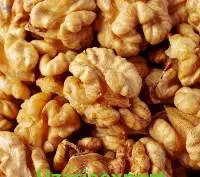
Walnut, 1st

$2 - $5 / Kilogram (FOB)
MOQ: 10 tons  Boxes
Sample Available
Supplier From Tashkent, Uzbekistan
 Inquire Now  
All parts of the nut are used. Walnut kernels are a very tasty and nutritious product, containing 60-70% fat, 11-20% protein, up to 20% carbohydrates and vitamins. Unripe nuts contain 3-5 times more vitamin C than peanuts.

In terms of nutrition, walnuts are superior to bread, meat and close to butter.

Walnuts have long been cultivated in Uzbekistan. The tree is up to 25-30 meters tall, 1.5-2 meters in diameter, the branches are spherical or domed, sparsely branched, the bark of old trees is cracked. The root system is vigorous, growing to a depth of 4 meters, spreading around 10-15 meters. At the base of the trunk and main branches are many dormant buds. Walnut trees are harvested in 8-10 years, grafted ones in 5-6 years. There are also varieties that bear fruit as early as 2 years after transplanting. Walnuts are fertile when they reach the age of 25-35 years and yield 100-150 kg from each tuber, and in some 300-500 kg. However, there is also a stagnation in nuts, which yields more in one year and less in the second. The fruits ripen from late August to early October.

Natural coconut groves in Bostanlyk district of Tashkent region of Uzbekistan are especially valuable. Walnut tree reaches a height of 25-30 m, diameter 1.5-2 m, the branches are spherical or domed, sparsely branched, the root system is vigorous - penetrates to a depth of 4 m, and spreads around 10-15 m.

Walnut kernels, rich in vitamins, which are necessary for the human body, strengthen the memory system, especially the activity of the human brain. Experts recommend that everyone consumes at least one or two nuts a day.

The sultan of medicine, Avicenna, in his book "Laws of Medicine" writes about the properties of walnuts, along with many medicinal plants. According to him, the juice made from the fruit, leaves, bark, core of the walnut tree cures and prevents various diseases. With this feature, walnut kernels are 7 times superior to beef. Walnut kernels contain iron, phosphorus, copper, serotonin, 58-77% fat, 12-25% protein and 5-25% carbohydrates.

Walnut trees bear fruit in 8-10 years, and grafted ones in 5-6 years, but there are also varieties that bear fruit in 2 years after transplanting.

Walnuts are productive when they reach the age of 25-30, with a yield of 100-150 kg from each bush and 300-500 kg from some. The fruits ripen from late August to early October.
Nov-20-24
 Inquire Now  
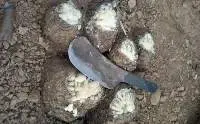
The Asafoetida (Ferula) family is a perennial herbaceous plant belonging to the family Apiaceae (Umbliferae). There are more than 160 species of Kovrak on Earth, 104 species in the Central Asian republics, and more than 50 species in Uzbekistan. The locals call it sassik kovrak, rova, ravshak, kamol, murcha kamol and other names depending on the different types of kovrak. There are 10 main types of resin glue used, such as foul fracture, rova, mountain fringe and other names, these species are very similar in appearance morphologically, but in nature foul fracture (Ferula assa-foetida) is common. The resin-glue produced in the republic and delivered to consumers is mainly of this type. Kovrak reaches a height of 1.5â??2 m, the root is up to 15â??20 cm thick, located deep in the beets. The plant stem grows and blooms once every 8-9 years â?? monocarp. The stem is erect, thick, branched at the top of the hollow inside. The rhizome leaves are banded, separated three times. The leaf segments are oblong, or lanceolate. The leaves on the stem are small, the outside is covered with a lot of feathers, and the stem is lined with hairs. The flowers are gathered in a complex umbrella. The flower is pale yellow, without cups, the crown is 5, the paternal is 5, the maternal node is two-chambered, located below. The fruit is a two-piece grain. It blooms in March-April, the fruits ripen in April-May. The aboveground parts of the plant live 1.5-2 months, depending on the growing environment and weather conditions
12 Mint Leaves Suppliers
Short on time? Let Mint Leaves sellers contact you.
Feb-07-25
 Inquire Now  
Artemia cysts are one of our main products. Artemia is rich in protein and fat (protein is about 65%, and fat is about 24%). Its nauplii also have high nutritional value. Therefore, Artemia as an important live bait has constantly attracted people's attention. At present, more than 85% of aquaculture farming uses Artemia cysts as live bait. Aral brand Artemia cysts (Artemia caviar) are mainly collected from the Aral Sea of â??â??Uzbekistan. We use the most advanced technology in the world for processing, and the hatching rate is more than 85%. Before leaving our factory, our products will be strictly tested by our own laboratory and the Uzbekistan Commodity Inspection Bureau, which ensures that our customers are satisfied with each batch of our products. If you are interested in importing Artemia cysts
May-31-25

Dried Parsley, 99.9�ª

$2 - $2.30 / Metric Ton (CIF)
MOQ: Not Specified
Supplier From Namngan, , Uzbekistan
 Inquire Now  
Dried green parsley leaves, broad and crushed leaves
Jan-19-17

Thermopsis Montana

$1.50
MOQ: Not Specified
Supplier From Tashkent, Uzbekistan
 Inquire Now  
A large colony of tall plants with elongated yellow flower clusters and three-parted leaves is easy to spot and identify; you are looking at the common and lovely golden banner. The plants grow quickly after snow melt and by late spring large colonies are in bloom under aspens. Like so many plants that form large colonies, golden banner spreads from underground roots. Thermopsis montana enjoys cool, moist forests and is often surrounded by lush vegetation.

Cured..

He flowers were commonly used by the natives as a source of yellow dye and were boiled in a tea as a cure for stomach ailments for people andhorses. The plant has toxic properties if ingested; symptoms of poisoning includevomiting, dizziness, and abdominal pain.
Oct-25-18
Supplier From Tashkent, Uzbekistan
 Inquire Now
Jun-18-26
Supplier From Uzbekistan
 Inquire Now
Jan-01-25
Supplier From Tashkent, Uzbekistan
 Inquire Now
Aug-21-19
Supplier From Tashkent, Uzbekistan
 Inquire Now
12 Mint Leaves Suppliers
Short on time? Let Mint Leaves sellers contact you.
Explore Mint Leaves related import export discussions