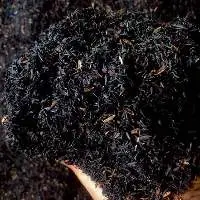
We are a direct manufacturer and supplier of 100% Natural Rice Husk Charcoal Organic Fertilizer from Kandy, Sri Lanka.
Our product is made from pure carbonized rice husk. It is eco-friendly, chemical-free and rich in Potassium and Silica.
Benefits:
- Improves soil fertility and water retention
- Natural pest control
- Best for paddy, vegetables, tea and home gardening
- pH neutral, lightweight, long-lasting
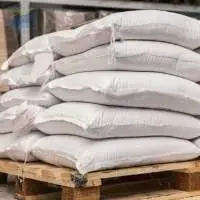
Packaging: 20kg, 50kg bags or custom packaging available.
Origin: Sri Lanka
Supply Capacity: 50 Tons per month
We can export worldwide.
We are Danu Product Fertilizer Sri Lanka, a leading manufacturer and exporter of high-quality organic fertilizers.
> Product: Organic Compost Fertilizer
> Origin: Sri Lanka
> Features: 100% Natural, Eco-Friendly, High Nutrients, Improves Soil Health
> Moisture: <20%
> Packing: 20kg bags or as per buyer request> We can supply bulk orders worldwide. Contact us for best price.
> Supply Ability: 100 Metric Tons per Month
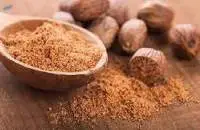
Sri Lankan grown seeds to meet International standards. Nutmeg and Mace are two separate spices and in fact the only tree in the world that produces two separate spices. From ancient times, Nutmeg is a spice which carries numerous culinary and exported from Sri Lanka in the form whole nutmeg, nutmeg oil, and ground nutmeg and mace
Nutmeg, Myristica fragrance, is a tropical evergreen tree in the family Myristicaceae grown for its seeds which are used as spices.
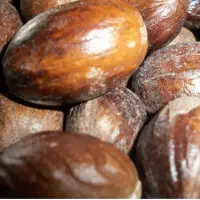
Nutmeg and Mace are two separate spices derived from the fruit of tree Myristica fragrans. The seed is shiny dark brown and oval in shape.
Nutmeg is a rich source of antioxidants, which help protect against the signs of aging and serious conditions such as cancer, heart disease, and liver disease and also has been shown to have antibacterial effects against potentially harmful strains of bacteria.
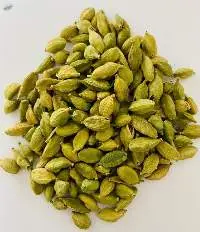
Green cardamom is a aromatic spice with a very wide range of uses. The plant has underground stems with leafy roots, large white or pale green leaves, pale green fruits and black seeds. The spice has a very warm aroma and pungent taste which it can retain for a very long time.
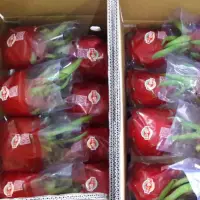
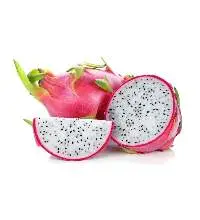
Name: Dragon Fruit.
Place of origin: Sri Lanka
Variety :White flesh - red skin.
Supply period :All year-round.
Feature : Attractive shape with red-colored skin and green-scaled leaves.
White flesh with small edible seeds.
Rich vitamins specially vitamin C.
Taste sweet mixed light sour like Kiwi fruit.
Grade type : Grade A: 90% red color up.
Grade B: 70% red color up.
Size : 10 kgs carton: + Big: 16 - 18 pieces.
+ Small: 22 - 26 pieces .
22 kgs carton: + Big: 38 - 42 pieces.
+ Small: 50 - 56 pieces.
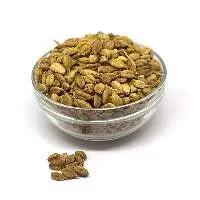
Premium Quality Organic Nutmeg without shell Nutmeg is the Dried Ripe seeds of Myristica fragrans and used for it ability to breakdown proteins in meat and especially for its bizarre central nervous system effects.Moisture 8% Max
Ash ; 3% Max
Volatile Oil : 7% max
Acid-insoluble ash : 0.5%
Extraneous Matter : 0.5% Min
Sri Lanka's Cardamom grows beneath the cozy roof of rain forests situated in mid part of the country.
The cardamom pods contains smallseeds that should ideally be dark gray or black.
Cardamom, both shell and seeds easily powdered in a mortar or in a coffee grinder for use in curries & desserts.
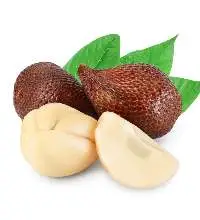
Salacca is a genus of about 20 species of palms native to Southeast Asia and the eastern Himalayas. They are dioecious (with the exception of Salak Bali) and pollinated by Curculionidae beetles.
They are very short-stemmed palms, with leaves up to 6-8 m long. The leaves have a spiny petiole; in most species, they are pinnate with numerous leaflets, but some species, notably S. magnifica, have undivided leaves. The fruit grows in clusters at the base of the plants, and is edible in many species, with a reddish-brown scaly skin covering a white pulp and one to two large inedible seeds.
The Salak (S. zalacca) or snake fruit is the species most widely grown for its fruit; the firm white pulp has a slightly acidic taste. The skin of the snake fruit has a unique texture not unlike that of a snake's skin, rough to the touch in one direction but smooth in the other.
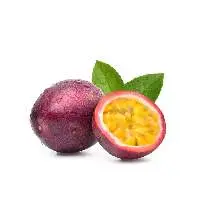
Native to the eastern coast of South America, passion fruit is grown across all tropical and subtropical regions for its sweet, tangy fruit. Beginning its life as a striking purple flower, the plant soon develops round-shaped, purple-fleshed fruit. Inside each fruit is a slightly acidic flesh with crunchy, edible seeds.
Passion fruits are round or oval, and range from a width of 1.5 to 3 inches. They can be yellow, red, purple, or green. The fruits have a juicy edible center composed of a large number of seeds.
Dragon fruit is a tropical fruit that's low in calories and high in fiber and antioxidants. Some people say it tastes like a cross between a pear and a kiwi. You can slice and eat the fruit as-is, try it with yogurt, or add
it to a smoothie or salad.
The plant is native to southern Mexico and Central America. Today, it is grown all over the world.
It goes by many names, including pitaya, pitahaya, and strawberry pear. The two most common types have bright red skin with green scales that resemble a dragon hence the name.
The most widely available variety has white pulp with black seeds, though a less common type with red pulp
and black seeds exist as well.
Another variety referred to as yellow dragon fruit has yellow skin and white pulp with black seeds.
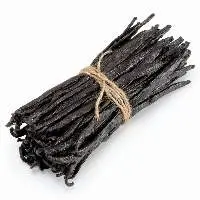
There are over 110 varieties of vanilla orchids. Only one, Vanilla planifolia, produces the fruit responsible for 99 percent of commercial vanilla.
Most often, vanilla beans are processed into vanilla extract, a common ingredient in baked goods and other food recipes.
Whole vanilla beans or their seeds are used in recipes, just not as frequently because of the higher cost. The tiny seeds add texture and the bean has an intense flavor, plus they can add to the beauty of a light-colored dessert. Vanilla beans are simple to prepare. They\'re also often used whole to infuse the natural flavor into sugar, syrups, and beverages.
MOQ: 10 MT
We can supply vanilla beans from Indonesia, India, Madagascar, etc.
Due to the unique flavour of green cardamom cultivated in Sri Lanka, formed by the country's unique terroir, green cardamom produced in Sri Lanka is known as Ceylon Cardamom. Ceylon Cardamom is available in various forms in the global market; The whole Cardamom is the whole pod, with seeds intact.
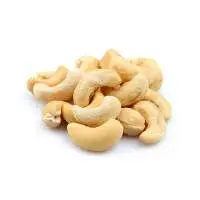
Cashew, (Anacardium occidentale), evergreen shrub or tree of the sumac family (Anacardiaceae), cultivated for its characteristically curved edible seeds, which are commonly called cashew nuts though they are not true nuts. It appears as though one of its ends has been forcibly sunk into a pear-shaped swollen stem (hypocarp), called the cashew apple. The cashew apple, which is an accessory fruit (not a true fruit), is about three times as large as the true fruit and is reddish or yellow.
Cardamom, is a small spindle shaped seedpod with black seeds inside. The covers are thin and pale green (Elettaria) or dark brown (Amomum). Cardamom is the third on the list of the world�?�?�?�¢??s most expensive spices, right behind vanilla and saffron. Cardamom is used as a cooking spice as well as flavoring (mainly for tea and coffee). It is also used in medicine. Cardamom is native to India, Pakistan, Indonesia, Bhutan, Nepal and Bangaladesh. Only a few other countries, like Sri Lanka, have also taken up cultivation.
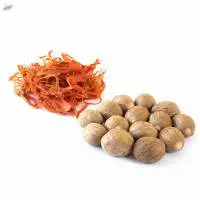
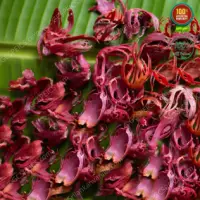
Nutmeg seeds covering from this flashy red surrounding called mace. Due to its pleasant flavor used in desserts, pastries, and sweet dishes. Whole form, ground form, and mace essential oil are mostly exported to global markets
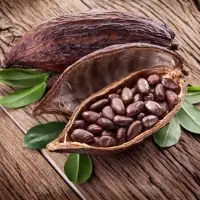
Theobroma cacao, also called the cacao tree and the cocoa tree, is a small evergreen tree in the family Malvaceae, native to the deep tropical regions of Mesoamerica. Its seeds, cocoa beans, are used to make chocolate liquor, cocoa solids, cocoa butter and chocolate.
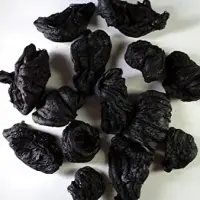
Garcinia gummi-gutta is a tropical species of Garcinia native to Indonesia. Common names include Garcinia cambogia, as well as brindleberry, Malabar tamarind, and kudam puli. The fruit looks like a small pumpkin and is green to pale yellow in color.
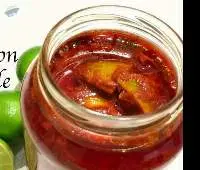
Method:
01.Clean and quarter 5 or 6 limes or the number that can fill the pickle jar you are using.
02.Fill or cover them with as much salt as you can and then put them in a clean jar or jam bottle. Cover the bottle and set aside for a day.
03. Uncover the bottle the next morning and place under the sunlight during the day-time. Cover the bottle in the night. Repeat this process for around 7 to 10 days.
04. After 7 or 10 days, squeeze the juice of about 10 limes. Add the turmeric powder, crushed fenugreek seeds and optional crushed chillies to the juice.
05. Pour the juice mixed with the spices into the jar of sun-dried limes. The juice needs to cover the limes in the bottle so if you need to, squeeze some more lime juice into the bottle.
06. Repeat the covering and uncovering process under sunlight for another 5 days.
07. At the end of around 15 days, the lime pickle is ready to be eaten.
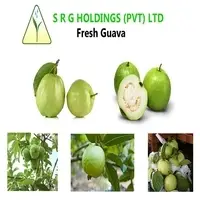
We mainly produce Bangkok Giant guava variety. The Bangkok Giant is a round fruit weighing approximately 250g - 500 g. The flesh is white and the taste is crispy and sweet. The skin is dark apple green in its salad days but turns light green in maturity when it is ripe for plucking. The flesh is white with pale yellow seeds and tends to be drier than the pink type of guavas. Bangkok Giant guavas are mildly sweet and have very little fragrance. The crunchy flesh and hard seeds are both edible.
Bangkok Giant Guava is rich in vitamins A and C with seeds that are rich in omega-3, omega-6 polyunsaturated fatty acids and especially dietary fiber. A single Giant Guava fruit contains over four times the amount of vitamin C as a single orange (over 200 mg per 100 g serving) and also has good levels of the dietary minerals, potassium, magnesium, and generally a broad, low-calorie profile of essential nutrients.
Harvest could be obtained throughout the year but March, April and July, August are the highest bearing seasons. Currently we have cultivated 7.1 ha with Bangkok Giant guava variety.