Please click here to check who's online and chat with them.

Find Verified Shallots Suppliers, Manufacturers and Wholesalers

Nov-26-19
 Inquire Now  
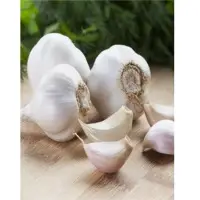
Garlic is a species in the onion genus, Allium. Its close relatives include the onion, shallot, leek,and Chinese nion.
Garlic is native to Central Asia and northeastern Iran, and has long been a common seasoning worldwide, with a history of several thousand years of human consumption and use.
It was known to ancient Egptians, and has been used both as a food flavoring and as a traditional medicine.In Ancient Rome, it was “much used for food among the poor”.China produces some 80% of the world’s supply of garlic.

health benefits of garlic
1. Garlic Contains Compounds With Potent Medicinal Properties
Garlic is a plant in the Allium (onion) family.
It is closely related to onions, shallots and leeks. Each segment of a garlic bulb is called a clove. There are about 10–20 cloves in a single bulb, give or take.
Garlic grows in many parts of the world and is a popular ingredient in cooking due to its strong smell and delicious taste.
However, throughout ancient history, the main use of garlic was for its health and medicinal properties (1Trusted Source).
Its use was well documented by many major civilizations, including the Egyptians, Babylonians, Greeks, Romans and Chinese (2Trusted Source).
Scientists now know that most of its health benefits are caused by sulfur compounds formed when a garlic clove is chopped, crushed or chewed.
Perhaps the most famous of those is known as allicin. However, allicin is an unstable compound that is only briefly present in fresh garlic after it’s been cut or crushed (3Trusted Source).
Other compounds that may play a role in garlic’s health benefits include diallyl disulfide and s-allyl cysteine (4Trusted Source).
The sulfur compounds from garlic enter the body from the digestive tract and travel all over the body, where it exerts its potent biological effects.

2. Garlic Is Highly Nutritious But Has Very Few Calories
Calorie for calorie, garlic is incredibly nutritious.
One clove (3 grams) of raw garlic contains
Manganese: 2% of the Daily Value (DV)
Vitamin B6: 2% of the DV
Vitamin C: 1% of the DV
Selenium: 1% of the DV
Fiber: 0.06 grams
Decent amounts of calcium, copper, potassium, phosphorus, iron and vitamin B1
This comes with 4.5 calories, 0.2 grams of protein and 1 gram of carbs.
Garlic also contains trace amounts of various other nutrients. In fact, it contains a little bit of almost everything you need.
Nov-26-19
 Inquire Now  
Ever wondered why some recipes call for a particular kind of onion and whether another can be substituted in its place? We certainly have.
All these onions vary slightly in flavor, texture, and color, but can usually be substituted for one another. In terms of cooking, they will all behave the same in the pan.
When buying onions, go for ones that feel heavy in your hand and firm. Avoid soft onions or ones that have a sharp oniony odor before peeling. These are indications that the onion is old. Except for sweet onions, all these onions can be stored for several weeks in a cool, dark pantry or cupboard.
The onion plant has a fan of hollow, bluish-green leaves and its bulb at the base of the plant begins to swell when a certain day-length is reached. The bulbs are composed of shortened, compressed, underground stems surrounded by fleshy modified scale (leaves) that envelop a central bud at the tip of the stem. In the autumn (or in spring, in the case of overwintering onions), the foliage dies down and the outer layers of the bulb become dry and brittle. The crop is harvested and dried and the onions are ready for use or storage. The crop is prone to attack by a number of pests and diseases, particularly the onion fly, the onion eelworm, and various fungi cause rotting. Some varieties of A. cepa, such as shallots and potato onions, produce multiple bulbs.
Types of onions
Yellow Onions
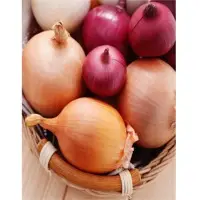
We consider this the all-purpose onion, and personally, it’s the one we use most often. Yellow onions have a nice balance of astringency and sweet in their flavor, becoming sweeter the longer they cook. They are usually fist-sized with fairly a fairly tough outer skin and meaty layers. Spanish onions are a particular kind of yellow onion and we find them to be slightly sweeter and more delicate in flavor.
Red Onions
With their deep purple outer skin and reddish flesh, these are really the odd-guys out in the onion family. They are fairly similar to yellow onions in flavor, though their layers are slightly less tender and meaty. Red onions are most often used in salads, salsas, and other raw preparations for their color and relatively mild flavor. The lovely red color becomes washed out during cooking. If you find their flavor to astringent for eating raw, try soaking them in water before serving
Oct-03-20
Supplier From Egypt
 Inquire Now
3 Shallots Suppliers
Short on time? Let Shallots sellers contact you.
  • First page
  • Next
Explore Shallots related import export discussions