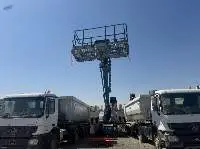
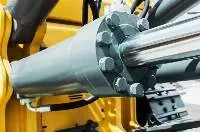
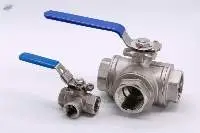
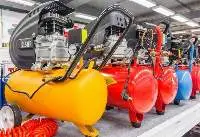
We are offering a massive, comprehensive inventory of commercial-grade assets, power generation units, and heavy construction machinery for immediate sale. This diversified fleet features top-tier global manufacturers and represents an excellent turnkey acquisition opportunity for equipment rental companies, large-scale construction contractors, infrastructure developers, and international procurement specialists.
All units in our inventory are fully structured, serialized, and available for immediate inspection and transfer.
Key Category Breakdown
1. Heavy Machinery & Compaction
Earthmoving & Excavation: Well-maintained units including JCB Mini Backhoe Loaders, Hyundai & JCB Mini Excavators, and Case/JCB Skid Steer Loaders.
Material Handling: High-capacity Wheel Loaders from industry leaders including Caterpillar (Models 972G, 966H) and Hyundai.
Soil Compaction: Industrial-grade rollers and compactors featuring Hamm (Double Drum 3-Ton), Caterpillar (CR22), and Dynapac (CA-250 10-Ton) models.
2. Commercial Logistics & Fleet Vehicles
Utility Pickups: A robust fleet of Mitsubishi L200 Pickups (both 4x2 and 4x4 variants, Petrol & Diesel models from 2018â??2019), Isuzu 3.0-Ton Pickups, and Toyota Dyna Single/Double Cabin utility trucks.
Transport & Logistics: Heavy-duty transport assets including Iveco Truck Heads, high-volume Gorica Tipper Trailers (22\text{ m}^3), 12\text{ KL} Water Tankers, and dedicated 26-seater transport buses.
Specialized Maintenance: Mobile site support units including road sweepers, car park cleaning machinery, and SAE-Climber Working Platforms (Scaffolding).
3. Power Generation & Site Lighting (02kVA to 167kVA)
Heavy-Duty Industrial Power: High-capacity prime and standby diesel generators ranging from 50kVA to 167kVA, engineered by world-class manufacturers like Volvo Penta, Perkins, and AKSA.
Medium & Light-Duty Utility: Mid-range site power units (10kVA to 45kVA) driven by reliable Kubota and Perkins engines, alongside compact utility generators/tower lights (02kVA to 09kVA) from Honda, Mosa, and Generac.
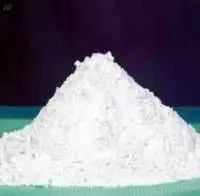
Microsilica (silica fume) is a by-product from silicon metal or ferrosilicon industries, is an amorphous silicon dioxide SiO2. This product reacts chemically with the calcium hydroxide in the cement paste which yields a calcium silicate hydrate gel that significantly enhances strength and durability. The super fine microsilica fills the voids between cement particles creating a very dense, less permeable concrete.
White Cement advantages:
Sustainability:
Solar Reflectance Index (SRI): Floors finished with white or pastel color concrete will have a much higher SRI than floors with gray concrete, therefore they will reflect light better, and generate energy savings for the lifetime of the floors.
Reduction of Heat Island effect: By constructing buildings with white concrete roofs or light-colored roof tiles, the Heat Island Effect is reduced from surfaces generating less heat and improved reflectivity.
Architectural Concrete:
White Portland Cement is ideal for decorative concrete and Architectural Concrete applications, Masonry and Cementitious Building Products. A key advantage of using white cement for these applications is that it provides a base color that can be tinted to custom colors to meet any color spectrum demand.
A fire fighting nozzle is a control device attached to a fire hose used to regulate water flow, pressure, and spray pattern during firefighting operations. It is a critical component of hydrant systems, fire hose reels, and fire brigade equipment.
Advantages
Controlled Water Discharge: Adjusts flow rate and spray pattern as needed
Improved Fire Control: Helps target fire precisely for faster suppression
Multiple Spray Patterns: Jet, fog, and shut-off options available
High Pressure Handling: Designed for strong firefighting water pressure
Easy Operation: Simple twist or lever mechanism
Durable Construction: Built for harsh emergency conditions
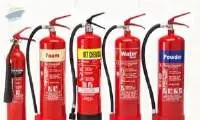
Fire extinguishers are portable fire safety devices designed to control or extinguish small fires in emergency situations. They are widely used in homes, offices, industries, vehicles, and public buildings as a first response safety measure before fire spreads.
Advantages
Quick Emergency Response: Helps control fire in initial stages
Portable & Easy to Use: Simple operation during emergencies
Reduces Fire Damage: Prevents escalation of fire incidents
Multiple Fire Class Protection: Suitable for different fire types
Mandatory Safety Equipment: Required in most commercial buildings
Cost-Effective Safety Solution: Low cost compared to fire damage prevention
535 Earthing Equipments Suppliers
Short on time? Let Earthing Equipments sellers contact you.
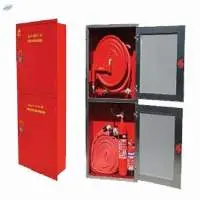
A Fire Hose Reel Cabinet is a protective steel or stainless-steel enclosure used to store a fire hose reel system (hose, nozzle, and valve). It is part of a building's first-aid fire fighting system, designed for immediate use during the early stage of a fire.
It is commonly installed in commercial buildings, factories, warehouses, malls, hospitals, airports, and residential complexes.
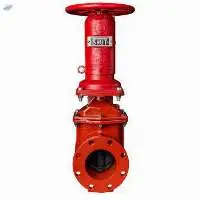
An Indicator Post is a fire protection device used to show the open/closed status of an underground valve (usually a gate valve controlling water supply to hydrants or sprinkler systems). It is commonly called a Post Indicator Valve (PIV).
Working Principle
The indicator post is connected to an underground valve stem.
When the valve is operated (open/close), the indicator window or flag moves.
It clearly shows:
OPEN (water supply ON)
SHUT / CLOSED (water supply OFF)
This allows quick visual confirmation during fire emergencies.
A hydrant (commonly called a fire hydrant) is a water outlet installed on a pipeline network that provides quick access to high-pressure water for firefighting and emergency use. It is a key part of a fire protection system in buildings, factories, streets, and industrial plants.
Types of Hydrants
1. Pillar / Above-ground Hydrant
Visible above ground level
Easy access for firefighters
Common in cities, factories, and commercial areas
2. Underground Hydrant
Installed below ground with a cover box
Space-saving and protected from damage
Used in roads, airports, and industrial zones
3. Wall Hydrant (Indoor Hydrant)
Installed inside buildings
Connected to fire hose reels or cabinets
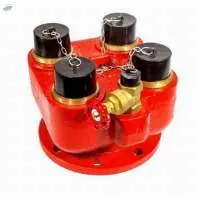
A breeching inlet is a fire-fighting connection point installed outside buildings. It allows fire brigade vehicles to pump water directly into the building's hydrant or sprinkler system during emergencies.
It is an essential part of dry riser and wet riser fire protection systems, especially in high-rise buildings and industrial facilities.
Advantages
Direct Fire Brigade Connection: Enables external water supply injection
Faster Emergency Response: Reduces fire control time in critical situations
Supports High-Rise Safety: Essential for tall buildings where direct access is difficult
Reliable Water Pressure Support: Maintains hydrant/sprinkler system pressure
Durable & Weather Resistant: Built for outdoor installation
Mandatory Safety Compliance: Required in most building fire codes
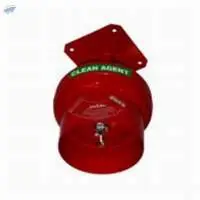
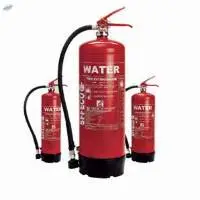
A fire extinguisher is a portable fire safety device used to control or extinguish small fires in emergency situations. It is one of the most important components of fire protection systems in residential, commercial, and industrial environments.
Advantages
Immediate Fire Response: Helps control fire at early stage before it spreads
Portable & Easy Operation: Can be used quickly during emergencies
Life & Property Protection: Reduces risk of major fire damage
Multiple Fire Class Coverage: Suitable for different types of fire hazards
Mandatory Safety Equipment: Required in most buildings and industries
Cost-Effective Protection: Low investment compared to fire loss prevention
Major Types of Fire Extinguishers
1. Dry Chemical Powder (ABC Type)
2. Carbon Dioxide (CO2) Type
3. Foam Type
4. Water Type
5. Wet Chemical Type
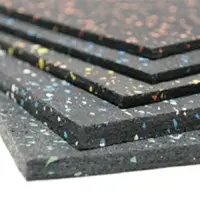
Rubber sheet is one of the most durable products for sports flooring and it stands repeated dropped weights. This product is shock absorbent, eco-friendly flooring that is
made from the highest quality of rubber and it comes with EPDM granules. It best
works as a base, coated with polyurethane that creates a high-shock absorption
and it is long-lasting.
Greenhouse polythene sheets, UV treated and 250 microns thick, are a specialized plastic film used to cover greenhouses, creating a barrier between the internal and external environments. Made from high-density polyethylene, these sheets are vapor impermeable, flexible, resistant to various elements, and highly durable. Despite their thinness, they don't tear or crack, providing excellent greenhouse coverage without harmful substances or odors. Qatar Polymer's greenhouse film, a quick and cost-effective choice, offers UV protection and impressive tensile strength. Its translucency diffuses light effectively, promoting optimal plant growth, and it is easy to install with basic tools and skills.
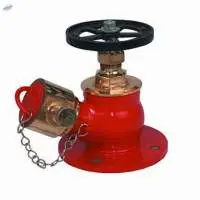
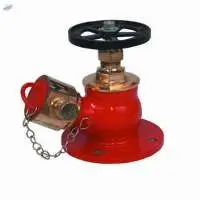
A landing valve is a key fire-fighting component installed in hydrant systems. It is fixed on a wet or dry riser inside buildings and provides a controlled water outlet for connecting fire hoses during emergencies.
It is widely used in commercial buildings, industries, warehouses, and public infrastructure as part of fire safety systems.
Pozzolan is a siliceous or siliceous and aluminous material that in itself possesses little or no cementitious value but will, in finely divided form and in the presence of moisture, chemically react with calcium hydroxide at ordinary temperatures to form compounds having cementitious properties. It is therefore classified as a cementitious material. There are both natural and artificial pozzolans. The quantification of the capacity of a pozzolan to react with calcium hydroxide and water is given by measuring its pozzolanic activity.
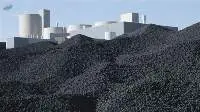
Fly ash is a finely divided residue made from the combustion of pulverized coal that can be used to increase concrete durability and workability, while reducing permeability.
As fly ash contains aluminous and siliceous components, it may form cement when mixed with water if the calcium content of the fly ash is high enough. Similarly, mixing fly ash with lime and water can create a substance similar to Portland cement.
Fly ash can be separated into two main types, known as:
Class F
Class F fly ash contains particles covered in a type of melted glass allowing it to reduce the risk of concrete expansion and increase resistance to sulfates and alkali-aggregate reactions.
Class C
Class C fly ash contains a higher percentage of calcium oxide, making it more effective in strengthening structural concrete.
Applications & Benefits of Fly Ash:
Fly ash is used in commercial and industrial sectors for improving the durability and workability of concrete mixes.
Fly ash is also used as filler in paints, adhesives, and metal and plastic composites.
It's commonly used as structural fill for road construction and fly ash can be used to make bricks, ceramic tiles, plaster, Portland cement, and ready-mix cement.
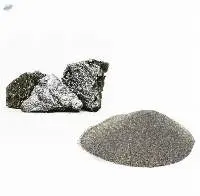
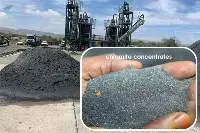
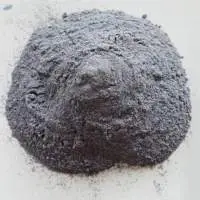
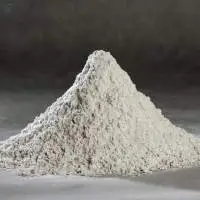
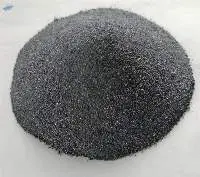
Microsilica (silica fume) is a by-product of silicon metal or ferrosilicon industries, is an amorphous silicon dioxide SiO2. This product reacts chemically with the calcium hydroxide in the cement paste which yields a calcium silicate hydrate gel that significantly enhances strength and durability. The super fine microsilica fills the voids between cement particles creating a very dense, less permeable concrete.
Physical characteristics:
Color: gray or gray white powder
Bulk density: 320-700 kg/m3
Chemical composition:
Items SiO2 Al2O3 Fe2O3 MgO CaO Na2O Moisture
Content
75-98%
1.0-0.2%
0.9-0.3%
0.7-0.1%
0.3-0.1%
1.3-0.2%
Fineness:
the fineness of the silica fume is less than 1 1/4m, and the average particle size is 0.1 0.3 1/4m, and the specific surface area is 20 - 28 m2/g. The fineness and specific surface area are about 80-100 times of cement and 50-70 times of fly ash.
Maxtech Micro Silica supplies will be as per QCS 2014 (ASTM C1240):
SiO2: >/= 92%
LOI: <6
Moisture Content: <1%
Activity Index at 7 days: > 105%
Application & Benefits of Microsilica (Silica fume):
In concrete:
The micro silica fume powder can be well filled in the cement particle space and make the slurry denser, mainly in the following:
Increase strength
Increase the density
Frost resistance
Early strength
Anti abrasion and anti-cavitation resistance
In Refractories:
Microsilica powder is widely used in the refractory industry. It has an important effect on the improvement of the amorphous refractory.
The production of amorphous and shaped refractory products as additives makes the strength and high temperature performance greatly improved.
Other Application:
Elastomers/Polymers
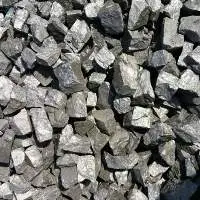
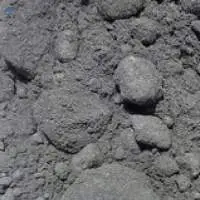
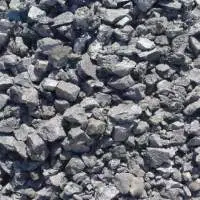
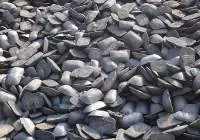
The ground granulated blast furnace slag (GGBFS) is a by-product of iron manufacturing which when added to concrete improves its properties such as workability, strength and durability. This material is obtained by the heating of iron ore, limestone and coke at a temperature about 1500 degree Celsius. The process is carried out in a blast furnace. The formation of GGBFS is not direct. The by-product of iron manufacturing is a molten slag and molten iron. The molten slag consists of alumina and silica, also with the certain amount of oxides. This slag is later granulated by cooling it. For this, it is allowed to pass through a high-pressure water jet. This result in quenching of the particles which results in granules of size lesser than 5mm in diameter. The main constituents of blast furnace slag are CaO, SiO2, Al2O3 and MgO. These are the minerals that are found in most of the cementitious substances. The particles are further dried and ground in a rotating ball mill to form a fine powder, known as ground granulated blast furnace slag cement. Now different methods can be employed to perform the main process called as the quenching.
Applications & Benefits of GGBFS:
In concrete:
The incorporation of ground granulated blast furnace slag in concrete manufacture gains many advantages which are mentioned below:
GGBFS in concrete increases the strength and durability of the concrete structure.
It reduces voids in concrete hence reducing permeability
GGBFS gives a workable mix.
It possesses good pumpable and compaction characteristics
The structure made of GGBFS constituents help in increasing sulphate attack resistance.
The penetration of chloride can be decreased.
The heat of hydration is less compared to conventional mix hydration.
The alkali-silica reaction is resisted highly.
These make the concrete more chemically stable.
Gives good surface finish and improves aesthetics.
The color is more even and light.
Lower chances of efflorescence.
The maintenance and repair cost of structures are reduced thus increasing the life cycle of concrete structures.
Unlike cement, GGBFS does not produce carbon dioxide, sulphur dioxide or nitrogen oxides.
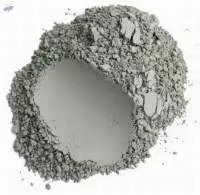
White Cement:
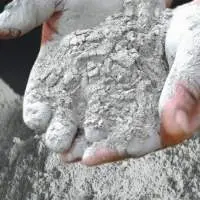
White Portland Cement is of high quality, whiteness and strength, it essentially has the same properties and characteristics as gray cement, except for color.
It is widely used in numerous applications such as precast concrete, cast-in-place concrete, terrazzo, median barriers, curbs, tile grout, paint, masonry units, swimming pools, glass fibre reinforced surface bonding mortars.
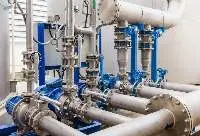
Industrial Power Generation Equipment for Sale including high-capacity industrial generators, original ABB electrical systems, PMCC & MCC control panels, switchgear and electrical distribution systems in excellent operating condition.
The equipment is well maintained, ready for inspection and operation, and suitable for industrial projects, utility companies, and energy sector buyers.
Polypropylene thread is crucial for plastic bag strength, durability, and flexibility. Despite environmental concerns, it's recyclable, and efforts for sustainable alternatives are ongoing. Qatar Polymer's thread, resistant to chemicals and abrasion, is available in various sizes and lubrication options. Widely supplied to industries for upholstery, filtration, packaging, and furnishings, its role may evolve with increasing eco-friendly demands.