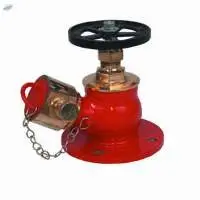
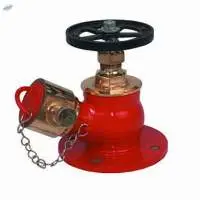
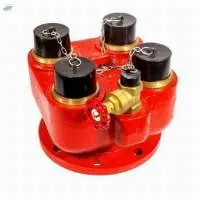
A landing valve is a key fire-fighting component installed in hydrant systems. It is fixed on a wet or dry riser inside buildings and provides a controlled water outlet for connecting fire hoses during emergencies.
It is widely used in commercial buildings, industries, warehouses, and public infrastructure as part of fire safety systems.
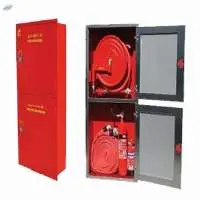
A Fire Hose Reel Cabinet is a protective steel or stainless-steel enclosure used to store a fire hose reel system (hose, nozzle, and valve). It is part of a building's first-aid fire fighting system, designed for immediate use during the early stage of a fire.
It is commonly installed in commercial buildings, factories, warehouses, malls, hospitals, airports, and residential complexes.
A hydrant (commonly called a fire hydrant) is a water outlet installed on a pipeline network that provides quick access to high-pressure water for firefighting and emergency use. It is a key part of a fire protection system in buildings, factories, streets, and industrial plants.
Types of Hydrants
1. Pillar / Above-ground Hydrant
Visible above ground level
Easy access for firefighters
Common in cities, factories, and commercial areas
2. Underground Hydrant
Installed below ground with a cover box
Space-saving and protected from damage
Used in roads, airports, and industrial zones
3. Wall Hydrant (Indoor Hydrant)
Installed inside buildings
Connected to fire hose reels or cabinets
A breeching inlet is a fire-fighting connection point installed outside buildings. It allows fire brigade vehicles to pump water directly into the building's hydrant or sprinkler system during emergencies.
It is an essential part of dry riser and wet riser fire protection systems, especially in high-rise buildings and industrial facilities.
Advantages
Direct Fire Brigade Connection: Enables external water supply injection
Faster Emergency Response: Reduces fire control time in critical situations
Supports High-Rise Safety: Essential for tall buildings where direct access is difficult
Reliable Water Pressure Support: Maintains hydrant/sprinkler system pressure
Durable & Weather Resistant: Built for outdoor installation
Mandatory Safety Compliance: Required in most building fire codes
152 Clock Movements Parts Suppliers
Short on time? Let Clock Movements Parts sellers contact you.
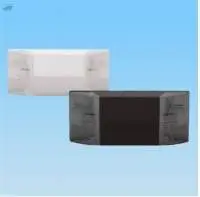
The LX-682L Emergency Light is a dual-head LED emergency lighting unit designed to provide automatic illumination during power failure. It is mainly used for corridors, staircases, exit routes, and commercial safety systems in buildings.
It is part of a common UL 924-compliant emergency lighting series used in international fire safety installations.
Key Features
Dual Adjustable Heads: Two lamp heads can be rotated for directional lighting
Automatic ON Function: Activates instantly when main power fails
Rechargeable Battery Backup: Built-in lead-acid battery supports emergency operation
Test Button: Allows manual testing of system performance
Charging Indicator LED: Shows charging and power status
Wall/Ceiling Mountable: Flexible installation options
Fire-Retardant Housing: ABS material for safety and durability
Available in LED / Halogen versions
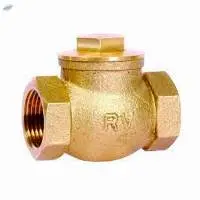
Swing Check Valve Advantages :
Automatic Operation: Opens and closes automatically based on fluid flow, requiring no manual operation.
Prevents Backflow: Effectively stops reverse flow, protecting pumps, compressors, and pipelines.
Low Pressure Drop: The swing disc provides minimal resistance when fully open.
Simple and Reliable Design: Fewer moving parts ensure dependable performance and easy maintenance.
Durable Construction: Available in cast iron, ductile iron, carbon steel, stainless steel, and bronze for long service life.
Suitable for High Flow Rates: Ideal for medium and large-diameter pipelines.
Versatile Applications: Compatible with water, oil, gas, steam, chemicals, and wastewater systems.
Long Service Life: Designed to withstand continuous operation in demanding industrial environments.
Available with Optional Lever & Weight: Helps reduce water hammer and improves closing performance.
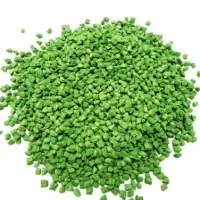
ECOFEL is an infill material for artificial turf structure. It provides a softer, shock absorbent surface and improves physical movement in artificial turf sports.
This product works as an alternative for SBR Rubber Granules, which is applied as an infill in grass. It is also an economical solution that replaces EPDM when the accurate composition is applied. It has a wide range of application & it does not leave neither a smell nor leave marks.
Application Fields:
Football field - infill
Tennis courts
Golf course
Running tracks
Athletic facilities
Additional Information:
Alternative for the EPDM infill in football fields,
No smell and marks
Bag weight: 20 Kgs
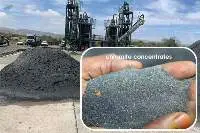
Microsilica (silica fume) is a by-product from silicon metal or ferrosilicon industries, is an amorphous silicon dioxide SiO2. This product reacts chemically with the calcium hydroxide in the cement paste which yields a calcium silicate hydrate gel that significantly enhances strength and durability. The super fine microsilica fills the voids between cement particles creating a very dense, less permeable concrete.
White Cement advantages:
Sustainability:
Solar Reflectance Index (SRI): Floors finished with white or pastel color concrete will have a much higher SRI than floors with gray concrete, therefore they will reflect light better, and generate energy savings for the lifetime of the floors.
Reduction of Heat Island effect: By constructing buildings with white concrete roofs or light-colored roof tiles, the Heat Island Effect is reduced from surfaces generating less heat and improved reflectivity.
Architectural Concrete:
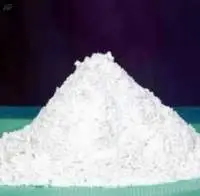
White Portland Cement is ideal for decorative concrete and Architectural Concrete applications, Masonry and Cementitious Building Products. A key advantage of using white cement for these applications is that it provides a base color that can be tinted to custom colors to meet any color spectrum demand.
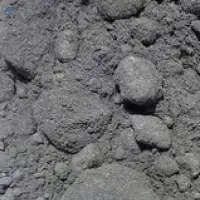
Pozzolan is a siliceous or siliceous and aluminous material that in itself possesses little or no cementitious value but will, in finely divided form and in the presence of moisture, chemically react with calcium hydroxide at ordinary temperatures to form compounds having cementitious properties. It is therefore classified as a cementitious material. There are both natural and artificial pozzolans. The quantification of the capacity of a pozzolan to react with calcium hydroxide and water is given by measuring its pozzolanic activity.