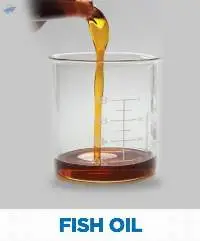
Premium Omani Fish Oil -Pure Omega-3 from the Arabian Sea
Sourced from the pristine waters off the coast of Oman, this high-quality Fish Oil is rich in essential Omega-3 fatty acids (EPA & DHA) that support heart, brain, joint, and overall health. Made from wild-caught fish and processed under strict quality standards, Omani Fish Oil reflects the purity and natural bounty of the Arabian Sea.
-Rich in Omega-3 (EPA & DHA)
-Supports heart, brain, and joint health
-Sustainably harvested from Omani waters
-Molecularly distilled for purity
-No artificial additives or aftertaste
Naturally pure. Responsibly sourced. Proudly from Oman.
Marine-derived fish oil (Min 22 % EPA + DHA) delivers concentrated omega-3 fatty acids for enhanced energy and health in aquaculture, poultry, and livestock feeds.
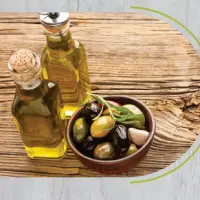
Our olive oil is sourced from trusted Mediterranean producers known for their commitment to quality and tradition. Cold-pressed and rich in antioxidants, it delivers a pure, balanced flavor ideal for culinary and nutritional use. Available in various grades to suit diverse applications, from gourmet cooking to large-scale food processing.
Refined fish oil is used in various industries, including food, pharmaceuticals, and industrial applications. It's also a source of omega-3 fatty acids for human consumption through supplements.
SLO is commercially produced from several species of deep sea sharks' livers. SLO is a major natural source of squalene, a natural organic compound, and alkylglycerol's, compounds that may fight cancer.
Shark liver oil (SLO) is obtained from several species of sharks, including the deep sea shark (Centrophorus squamosus), the dogfish shark (Squalus acanthias), and the basking shark (Cetorhinus maximus).
Omega-3 fatty acids are thought to help reduce the risk of heart disease. They have been used along with diet and exercise to help lower levels of a certain blood fat (triglyceride) and to raise levels of "good" cholesterol (HDL).Some supplement products have been found to contain possibly harmful impurities/additives.
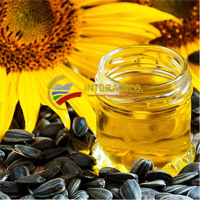
NTGRAINCO. is a grain Supplier for customers all over the world. Sourced from farmers, we supply large quantities and types of grains for both milling and feed purposes throughout the world. This is done through both forward and free market grain contracts. We are specialized in: - Barley - Corn - Wheat - Sun flower oil - Rye - Animal feed - Rice -Chickpeas - Mills Products - Beans - Yellow&GreenPeas - Red and Green Lentils
Neem oil is a natural vegetable oil. In India Neem Oil is probably the best product currently available for treating psoriasis. Neem Oil is used as a "liquid plant feed" or liquid fertilizer. Neem oil is also excellent moisturizing oil and contains various compounds that have insecticidal and medicinal properties.
Number 1: a volatile distillate oil intended for vaporizing pot-type burners. It is the kerosene refinery cut that boils off right after the heavy naphtha cut used for gasoline. Older names include coal oil, stove oil and range oil.
Number 2: a distillate home heating oil. Trucks and some cars use similar diesel fuel with a cetane number limit describing the ignition quality of the fuel. Both are typically obtained from the light gas oil cut.
Number 3: a distillate oil for burners requiring low-viscosity fuel. ASTM merged this grade into the number 2 specification and the term is rarely used.
Number 4: a commercial heating oil for burner installations not equipped with preheaters. It may be obtained from the heavy gas oil cut.
Number 5: a residual-type industrial heating oil requiring preheating to 170 – 220 °F (77 – 104 °C) for proper atomization at the burners. This fuel is sometimes known as Bunker B. It may be obtained from the heavy gas oil cut, or it may be a blend of residual oil with enough number 2 oil to adjust viscosity until it can be pumped without preheating. Also called Navy Special Fuel Oil, Navy Special or Furnace Fuel Oil.
Number 6: a high-viscosity residual oil requiring preheating to 220 – 260 °F (104 – 127 °C). Residual means the material remaining after the more valuable cuts of crude oil have boiled off. The residue may contain various undesirable impurities including 2 percent water and one-half percent mineral soil. This fuel may be known as residual fuel oil (RFO), by the Navy specification of Bunker C, or by the Pacific Specification of PS-400. Also called Furnace Fuel Oil.
Mazut: a residual fuel oil often derived from Russian petroleum sources and is either blended with lighter petroleum fractions or burned directly in specialized boilers and furnaces. It is also used as a petrochemical feedstock.
Bunker Fuels :
Bunker fuels are also a type of fuel oil, used aboard ships. Bunker fuel is often used as a synonym for No. 6 fuel oil which is the most common bunker fuel.
Bunker A : No. 2 fuel oil
Bunker B : No. 4 or 5 fuel oil
Bunker C : No. 6 fuel oil
Marine Fuels
Other types of classification used in the maritime field also include :
ESPO Crude Oil - The Gateway to Unmatched Energy! Sourced from the vast, pristine reserves of Eastern Siberia, ESPO Crude Oil is a light, sweet grade favored for its low sulfur content and superior refining qualities. Ideal for producing high-demand light distillates such as gasoline and jet fuel, it's the preferred choice for leading refineries aiming for efficiency and environmental compliance. Tap into the power of Siberia with ESPO Crude Oil, your solution for a cleaner, more sustainable energy future.
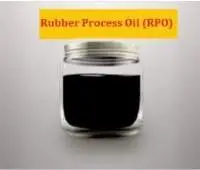
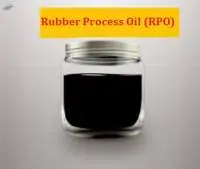
Rubber Process Oil (RPO) is a category of oil used to produce various rubber compounds, enhancing their workability and extending their physical properties. It acts as a plasticizer, reducing the mix viscosity, and improving the dispersion of fillers. RPO is critical in manufacturing tires, rubber sheets, and other rubber products contributing to the elasticity and strength of the final product.
Group I base oils are classified as less than 90 percent saturates, greater than 0.03 percent sulfur and with a viscosity-index range of 80 to 120. The temperature range for these oils is from 32 to 150 degrees F. Group I base oils are solvent-refined, which is a simpler refining process. This is why they are the cheapest base oils on the market.
Group II base oils are defined as being more than 90 percent saturates, less than 0.03 percent sulfur and with a viscosity index of 80 to 120. They are often manufactured by hydrocracking, which is a more complex process than what is used for Group I base oils. Since all the hydrocarbon molecules of these oils are saturated, Group II base oils have better antioxidation properties. They also have a clearer color and cost more in comparison to Group I base oils. Still, Group II base oils are becoming very common on the market today and are priced very close to Group I oils.
Group III base oils are greater than 90 percent saturates, less than 0.03 percent sulfur and have a viscosity index above 120. These oils are refined even more than Group II base oils and generally are severely hydrocracked (higher pressure and heat). This longer process is designed to achieve a purer base oil. Although made from crude oil, Group III base oils are sometimes described as synthesized hydrocarbons. Like Group II base oils, these oils are also becoming more prevalent.
Group IV base oils are polyalphaolefins (PAOs). These synthetic base oils are made through a process called synthesizing. They have a much broader temperature range and are great for use in extreme cold conditions and high heat applications.
Group V base oils are classified as all other base oils, including silicone, phosphate ester, polyalkylene glycol (PAG), polyolester, biolubes, etc. These base oils are at times mixed with other base stocks to enhance the oil’s properties. An example would be a PAO-based compressor oil that is mixed with a polyolester. Esters are common Group V base oils used in different lubricant formulations to improve the properties of the existing base oil. Ester oils can take more abuse at higher temperatures and will provide superior detergency compared to a PAO synthetic base oil, which in turn increases the hours of use.
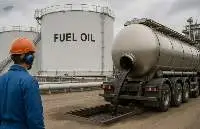
Premium-grade Fuel Oil (Mazut) a heavy residual hydrocarbon product derived from the distillation of crude oil. It is primarily used as an industrial fuel for power generation, marine engines, and large-scale heating systems. The product offers excellent combustion efficiency, stable viscosity, and consistent energy output.
Grade: Industrial / Marine / Power Generation Grade
Applications:
Fuel for thermal power plants and industrial boilers
Marine bunker fuel for large vessels
Used in furnaces, kilns, and heavy industrial heating systems
Feedstock for further refining and bitumen production
Specifications:
Appearance: Dark brown to black viscous liquid
Density: 0.96-1.02 g/cm3 (at 15C)
Viscosity: 180-380 St (at 50C)
Sulfur Content: 3.5% (as per grade)
Flash Point: Above 60C
Calorific Value: Approx. 40,000 kJ/kg
Packaging: Bulk or tanker shipment under controlled temperature
This product meets international ISO 8217 and ASTM D396 standards, ensuring high energy performance, stable combustion, and safety for industrial and marine applications.
Rubber Process Oil (RPO) Tailored to enhance your rubber products, our RPO is the choice for those who demand flexibility, durability, and performance. It integrates seamlessly with various rubber compounds, delivering exceptional results in tires, automotive parts, and industrial rubber goods.
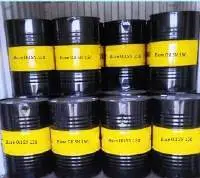
Premium Base Oil - The Foundation of Excellence in Lubrication! Our range of Base Oils (SN100,
SN150, SN300, SN500) is refined to perfection, offering unparalleled performance for lubricants. With
varying viscosities and superior purity, they form the ideal base for creating high-quality oils that
protect and enhance machinery performance. Choose the foundation that ensures your machinery
runs like a dream.
SN 150: A light-grade base oil used predominantly in the formulation of automotive lubricants,
industrial oils, and process oils. SN 150 is characterized by its good solvent properties, making it
suitable for a wide range of lubricant products requiring stable viscosity and thermal properties.
SN 500: A heavier grade base oil than SN 150, SN 500 is utilized in a broader spectrum of
lubricant production, including higher-viscosity applications. It offers excellent blend stability
and performance in extreme conditions, making it a preferred choice for heavy-duty engine oils
and industrial lubricants.
Perfectly refined to ensure supreme quality, our Base Oils SN 500 and SN 150 are the lifeblood of high-performance lubricants. Ideal for a wide range of applications, these oils guarantee enhanced protection and efficiency for machinery and automotive engines.
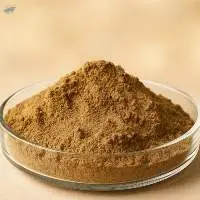
Sunflower Meal
Nutritious sunflower meal (43-45% protein) provides a fibre-rich,
palatable plant protein source that supports balanced nutrition and optimal growth in poultry, livestock, and aquaculture feeds.
High-quality soybean meal (44-48% protein) delivers balanced amino acids and metabolizable energy to support robust growth in poultry, livestock, and aquaculture feeds.
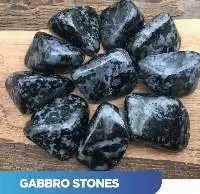
Gabbro stone is a hard, dense igneous rock widely used as aggregate in construction, concrete production, road base, asphalt mixes, railway ballast, and marine works.
Rock Type : Gabbro (Igneous Rock)
Color : Dark gray to black
Specific Gravity : 2.80- 3.10
Bulk Density : 1.50 -1.80 t/m
Water Absorption : 1.0%
Porosity : Low
Hardness : High
Durability : Excellent
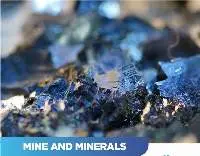
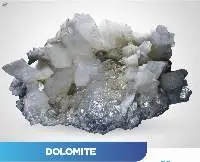
Dolomite is a carbonate mineral composed mainly of calcium magnesium carbonate (CaMg(CO)). It is widely used in steelmaking, cement, glass, ceramics, agriculture, and refractory industries.
Chemical Formula : CaMg(CO
CaCO + MgCO Content : 90�??99% (combined)
Moisture : 0.5 - 5% (processed vs raw)
Color : White, off-white, grey
Appearance : Lumps or powder
Hardness (Mohs) : 3.5- 4
Specific Gravity : 2.8 - 2.9
Urea is a high-nitrogen fertilizer widely used in agriculture. It contains the highest nitrogen content among solid nitrogen fertilizers and is available in prilled or granular form.
Chemical Formula : CO(NH)
Nitrogen (N) Content : 46%
Physical Form : Prilled or Granular
Color : White
Odor : Odorless
Moisture : 0.3 - 1.0%
Biuret Content : 1.0 - 1.5%
Particle Size : 1 - 4 mm (granular/prilled)
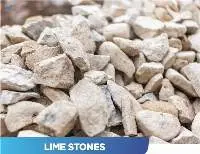
Limestone is a sedimentary rock mainly composed of calcium carbonate (CaCO). It is widely used in cement, steel, construction, agriculture, chemical, and glass industries.
Chemical Composition : CaCO-based material
CaCO Content : 70 - 99% (depends on grade)
Moisture : 0.5 - 5%
Color : White, grey, brown (depends on impurities)
Appearance : Lumps or powder
Hardness (Mohs) : 3 - 4
Specific Gravity : 2.6 - 2.8