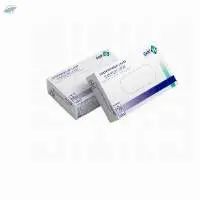
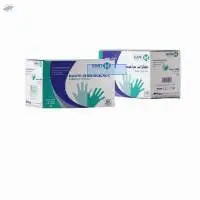
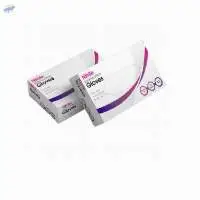
Latex-Examination Gloves, Prepowdered
Medical, Care, and Hygiene Sector
Two-way protection
PRODUCT:
Fifty human dentin discs were obtained from intact third molars and randomly assigned into two control groups and three treatment groups. The first control group received no treatment. The second control group (no medicament group) was irrigated with sodium hypochlorite (NaOCI), stored in a humid environment for four weeks, and then irrigated with ethylenediaminetetraacetic acid (EDTA). The three treatment groups were irrigated with NaOCl, treated for four weeks with either 1 g/mL triple antibiotic paste (TAP), 1mg/mL methylcellulose-based triple antibiotic paste (DTAP), or calcium hydroxide [Ca(OH)2], and finally irrigated with EDTA. After treatment, one-half of each dentin disc was subjected to Vickers microhardness (n = 10 per group), and the other half was used to evaluate the chemical structure (phosphate/amide I ratio) of treated dentin utilizing attenuated total reflection Fourier transform infrared spectroscopy (n = 5 per group). One-way ANOVA followed by Fisher.
Specifications:
Design: Rolled edge, ambidextrous, roughened surface
Material: Latex material mixture
Strength Sleeve (min): 0.12-0.14
Strength Palme (min): 0.17-0.19
Strength Finger (min): 0.18-0.20
Tensile Strength: 6N min (before aging), 6N min (after aging). 800% min (before aging), 760% min (after aging)
Risk Analysis: Acc. *Loery Method 18,9 ug protein /g of glove Acc. *HPLC Method 10,9 ug protein /g of glove
Quality Standards: Certification according to DIN EN ISO9001 DIN EN ISO 455-1/-2/-3/-4, ISO 14001, ISO 13485 and ISO 11135
Quality Controls: Production according to GMP - Permanent control of production lots Random check up by supervisors - Inspection report before shipment
Marketing: Traceability by LOT numbers
Packing: Hygienically packed in a dispenser, 100 pieces each, 1000 pieces in each carton
Special Remarks: Not suitable for dangerous materials (especially aggressive materials)
Size Length Width
S 240-250 80-85
M 240-250 90-95
L 240-250 100-105
XL 240-250 110-115
Latex-Surgical Gloves, Prepowdered
Medical, Care, and Hygiene Sector
Two-way protection
PRODUCT:
Fifty human dentin discs were obtained from intact third molars and randomly assigned into two control groups and three treatment groups. The first control group received no treatment. The second control group (no medicament group) was irrigated with sodium hypochlorite (NaOCI), stored in a humid environment for four weeks, and then irrigated with ethylenediaminetetraacetic acid (EDTA). The three treatment groups were irrigated with NaOCl, treated for four weeks with either 1 g/mL triple antibiotic paste (TAP), 1mg/mL methylcellulose-based triple antibiotic paste (DTAP), or calcium hydroxide [Ca(OH)2], and finally irrigated with EDTA. After treatment, one half of each dentin disc was subjected to Vickers microhardness (n = 10 per group), and the other half was used to evaluate the chemical structure (phosphate/amide I ratio) of treated dentin utilizing attenuated total reflection Fourier transform infrared spectroscopy (n = 5 per group). One-way ANOVA followed by Fisher.
Specifications:
Design: Rolled edge, ambidextrous, roughened surface
Material: Latex material mixture
Strength Sleeve (min): 0.22 min
Strength Palme (min): 0.26 min
Strength Finger (min): 0.32 min
Tensil Strength: 9N min (before aging), 9N min (after aging). 800% min (before aging), 760% min (after aging)
Risk Analysis: Acc. *Loery Method 18,9 ug protein /g of glove Acc.
HPLC Method 10,9 ug protein /g of glove
Sterilization: Ethylene Oxide
Quality Standards: Certification according to DIN EN ISO9001 DIN EN ISO 455-1/-2/-3/-4 ISO 14001, ISO 13485 and ISO 11135
Quality Controls: Production according to GMP - Permanent control of production lots Random check up by supervisors - Inspection report before shipment
Marketing: Traceability by LOT numbers
Packing: Wrapped by 1 pair in a cleanroom of class C, every 50 pairs are packed in box of 50 pairs, then in a 500-pairs carton
Nitrile Examination Gloves, Powder Free
Medical, Care, and Hygiene Sector
Two-way protection
PRODUCT:
Fifty human dentin discs were obtained from intact third molars and randomly assigned into two control groups and three treatment groups. The first control group received no treatment. The second control group (no medicament group) was irrigated with sodium hypochlorite (NaOCI), stored in a humid environment for four weeks and then irrigated with ethylenediaminetetraacetic acid (EDTA). The three treatment groups were irrigated with NaOCl, treated for four weeks with either 1 g/mL triple antibiotic paste (TAP), 1mg/mL methylcellulose-based triple antibiotic paste (DTAP), or calcium hydroxide [Ca(OH)2] and finally irrigated with EDTA. After treatment, one half of each dentin disc was subjected to Vickers microhardness (n= 10 per group) and the other half was used to evaluate the chemical structure (phosphate/amide I ratio) of treated dentin utilizing attenuated total reflection Fourier transform infrared spectroscopy (n = 5 per group). One-way ANOVA followed by Fisher.
Specifications:
Design: Rolled edge, ambidextrous, roughened surface
Material: Nitrile material mixture
Strength Sleeve (min): 0.12-0.14
Strength Palme (min): 0.17-0.17
Strength Finger (min): 0.18-0.20
Tensile Strength: 6N min (before aging), 6N min (after aging). 800% min (before aging), 760% min (after aging)
Risk Analysis: Protein Free
Quality Standards: Certification according to DIN EN ISO9001 DIN EN ISO 455-1/-2/-3/-4 ISO 14001, ISO 13485 and ISO 11135
Quality Controls: Production according to GMP - Permanent control of production lots, Random check up by supervisors - Inspection report before shipment
Marketing: Traceability by LOT numbers
Size Length Width
S 240-250 80-85
M 240-250 90-95
L 240-250 100-105
XL 240-250 110-115
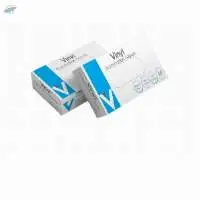
Vinyl Examination Gloves, Powder Free
Medical, Care, and Hygiene Sector
Two-way protection
PRODUCT:
Fifty human dentin discs were obtained from intact third molars and randomly assigned into two control groups and three treatment groups. The first control group received no treatment. The second control group (no medicament group) was irrigated with sodium hypochlorite (NaOCI), stored in a humid environment for four weeks, and then irrigated with ethylenediaminetetraacetic acid (EDTA). The three treatment groups were irrigated with NaOCl, treated for four weeks with either 1 g/mL triple antibiotic paste (TAP), 1mg/mL methylcellulose-based triple antibiotic paste (DTAP), or calcium hydroxide [Ca(OH)2], and finally irrigated with EDTA. After treatment, one half of each dentin disc was subjected to Vickers microhardness (n= 10 per group), and the other half was used to evaluate the chemical structure (phosphate/amide I ratio) of treated dentin utilizing attenuated total reflection Fourier transform infrared spectroscopy (n = 5 per group). One-way ANOVA followed by Fisher.
Specifications:
Design: Rolled edge, ambidextrous, roughened surface
Material: PVC material mixture
Strength Sleeve (min): 0.12-0.14
Strength Palme (min): 0.17-0.17
Strength Finger (min): 0.18-0.20
Tensile Strength: 6N min (before aging), 6N min (after aging). 800% min (before aging), 760% min (after aging)
Risk Analysis: Protein Free
Quality Standards: Certification according to DIN EN ISO9001 DIN EN ISO 455-1/-2/-3/-4 ISO 14001, ISO 13485 and ISO 11135
Quality Controls: Production according to GMP - Permanent control of production lots, Random check up by supervisors - Inspection report before shipment
Marketing: Traceability by LOT numbers
Size Length Width
S 240-250 80-85
M 240-250 90-95
L 240-250 100-105
XL 240-250 110-115
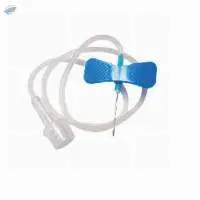
The scalp vein needle is mainly for clinical use, matched with a disposable infusion (transfusion) device or syringe for human intravenous infusion of medicine (blood) liquid. Single wing design, meets different requirements of clinical operation, easy to fix, specification identified by the color of the wing, easy to distinguish and use.
Specifications:
Material: Epicranial needles and tubes: Non-toxic medical grade PVC, ISO 10993 Connector: Non-toxic medical grade ABS, ISO 10993
Tube packaging seal: Non-toxic medical grade polyethylene, free from latex and phthalates
Biocompatibility: In accordance with ISO 10993 standard
Device type: Single-use medical device
Sterilization method: Ethylene oxide in accordance with ISO 11135 standard
Quality Control: Quality control during the process and on the finished product in accordance with ISO 2859 standard
Packaging: Micro infusion set in a pouch or in a blister pack packaged in boxes
Storage Instructions: Store in a cool, dry place away from chemicals
Shelf Life: 5 years from the production date in undamaged packaging
Packaging Material: Blister: Low-density polyethylene film Box: Cardboard, Packaging: Corrugated cardboard
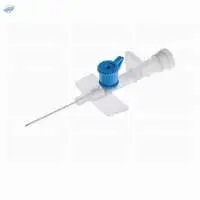
IV cannula catheter is a technique in which a cannula is placed inside a vein to provide venous access. Venous access allows sampling of blood as well as administration of fluids, medications, parenteral nutrition, chemotherapy, and blood products.
Specifications:
Material: Catheter: FEP (Perfluoroethylene and Propylene Copolymer + BaSO4) Catheter Hub: Polypropylene
Packing Piece: POM (Polyoxymethylene) - Packing Piece: POM (Polyoxymethylene)
Lubricant: Aminofunctionalized Polydimethylsiloxane Copolymer
Biocompatibility: According to the ISO 10993 standard
Device type: Single-use medical device
Sterilization method: Ethylene oxide in accordance with ISO 11135 standard
Quality Control: Quality control during the process and on the finished product in accordance with ISO 2859 standard
Packaging: Catheter in blister pack package in boxes
Storage Instructions: Store in a cool, dry place away from chemicals
Shelf Life: 5 years from the production date in undamaged packaging
Packaging Material: Blister: Medical paper - Blister: Low-density polyethylene film - Box: Cardboard
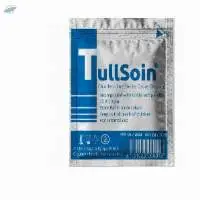
Paraffin Gauze Sterile is made from medical degreased gauze or non-woven together with Vaseline. It can lubricate the skin and protect it from cracks. It is widely used on clinics.
Specifications:
Material: 100% gauze with vaseline
Design: Facilitates air circulation and hastens healing
Application: Scratch and wound - second degree burns and skin plant Surgery of nails - Surgical wound - Chronic wound: bed sore, leg ulcer, DIAB, etc.
Advantages: Not to adhere to the wound. Remove without pain. No blood - Accelerate the healing at appropriate moisture environment.
Convenient to use. No oil feeling - Soft and comfortable to use. Especially use on hands, feet, limbs and other parts which are difficult to fix .
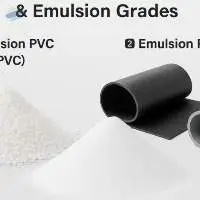
We supply high-quality Polyvinyl Chloride (PVC) resins available in both Suspension (S-PVC) and Emulsion (E-PVC) grades, suitable for a wide range of industrial applications.
1. Suspension PVC (S-PVC):
Appearance: White, free-flowing powder
K-Value: 57-70
Excellent processability and thermal stability
Applications: Pipes, profiles, films, sheets, bottles, and rigid molded parts
2 Emulsion PVC (E-PVC):
Appearance: Fine white powder with uniform particle size
K-Value: 65-80
High paste viscosity and superior dispersion
Applications: Synthetic leather, flooring, gloves, cable insulation, and coatings
Key Features:
High strength, chemical and weather resistance
Excellent molding and coating performance
Compatible with various plasticizers and stabilizers
Packaging: 25 kg bags or jumbo bags on pallets
Supply Capacity: Bulk quantities available for export
Price: Negotiable based on quantity and delivery terms
* Micro texture finished
* Reduced allergens by D.C.P. technology
* Natural rubber latex
* Non-sterile, single use
* Appropriate for general medical purposes
* Sizes S, M and L
* Hypoallergenic
* Resistant to chemicals, oil, solvents, grease & lubricants
* Easy removal from hypoallergenic packaging
* Adhesive and leucoplast tape
* Non-sterile, single use
* Appropriate for general medical purposes, laboratories & healthcare industry
* Sizes S, M and L