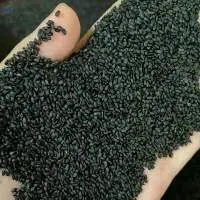
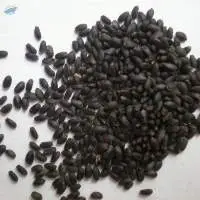
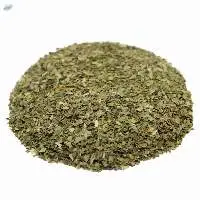
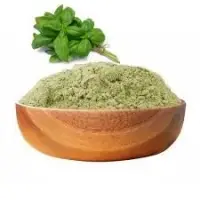
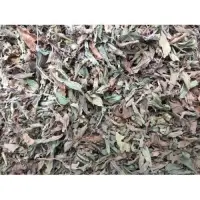
Type: Basil
Storage Type: cool and dry place
Specification: 100g
Manufacturer: 99 Gold Data
Address: Ho Chi Minh
Place of Origin: Vietnam
Shelf Life: 12 months
Style: Dried
Color: natural
Weight (kg): 1
Brand Name
99 Gold Data
Model Number
Basil contains a large range of vitamins, minerals and phytonutrients essential for wellbeing.
Weight loss Basil seeds can added for weight management plan as they are low calorie.
Helps in digestion- Basil seeds are very rich in fiber and aids in digestion
Cold and Cough - Basil seeds provide relief from influenza, fever and cold.
Cooling agent - Basil seeds lower body heat which makes them very useful in summer drinks.
Relief in Acidity â?? Basil seeds have cooling and relaxing effects.
Skin and hair - Basil seeds are rich in vitamin K, protein and iron. Basil seeds mixed with coconut oil works wonders for skin and hair.
Ocimum tenuiflorum, commonly known as holy basil or tulsi, is an aromatic perennial plant in the family Lamiaceae. It is native to the Indian subcontinent and widespread as a cultivated plant throughout the Southeast Asian tropics
Ocimum tenuiflorum, commonly known as holy basil or tulsi, is an aromatic perennial plant in the family Lamiaceae. It is native to the Indian subcontinent and widespread as a cultivated plant throughout the Southeast Asian tropics.
Ocimum tenuiflorum, commonly known as holy basil or tulsi, is an aromatic perennial plant in the family Lamiaceae. It is native to the Indian subcontinent and widespread as a cultivated plant throughout the Southeast Asian tropics.
Ocimum tenuiflorum, commonly known as holy basil or tulsi, is an aromatic perennial plant in the family Lamiaceae. It is native to the Indian subcontinent and widespread as a cultivated plant throughout the Southeast Asian tropics.
Ocimum tenuiflorum, commonly known as holy basil or tulsi, is an aromatic perennial plant in the family Lamiaceae. It is native to the Indian subcontinent and widespread as a cultivated plant throughout the Southeast Asian tropics.
Ocimum tenuiflorum (synonym Ocimum sanctum), commonly known as holy basil or tulsi, is an aromatic perennial plant in the family Lamiaceae. It is native to the Indian subcontinent and widespread as a cultivated plant throughout the Southeast Asian tropics.
Tulsi is cultivated for religious and traditional medicine purposes, and also for its essential oil. It is widely used as a herbal tea, commonly used in Ayurveda, and has a place within the Vaishnava tradition of Hinduism, in which devotees perform worship involving holy basil plants or leaves.
Tulsi Vana (Holy Basil) is native to India, Sri Lanka, Java and the northern and eastern parts of Africa. It is a perennial, woody bush basil that can grow up to 2m high with highly aromatic, slightly hairy green leaves with a strong clove scent and spicy flavor.
Ocimum tenuiflorum (synonym Ocimum sanctum), commonly known as holy basil or tulsi, is an aromatic perennial plant in the family Lamiaceae. It is native to the Indian subcontinent and widespread as a cultivated plant throughout the Southeast Asian tropics.
Tulsi is cultivated for religious and traditional medicine purposes, and also for its essential oil. It is widely used as a herbal tea, commonly used in Ayurveda, and has a place within the Vaishnava tradition of Hinduism, in which devotees perform worship involving holy basil plants or leave
Tulsi Vana (Holy Basil) is native to India, Sri Lanka, Java and the northern and eastern parts of Africa. It is a perennial, woody bush basil that can grow up to 2m high with highly aromatic, slightly hairy green leaves with a strong clove scent and spicy flavor.
Ocimum tenuiflorum, commonly known as holy basil or tulsi, is an aromatic perennial plant in the family Lamiaceae. It is native to the Indian subcontinent and widespread as a cultivated plant throughout the Southeast Asian tropics.
Ocimum tenuiflorum (synonym Ocimum sanctum), commonly known as holy basil or tulsi, is an aromatic perennial plant in the family Lamiaceae. It is native to the Indian subcontinent and widespread as a cultivated plant throughout the Southeast Asian tropics.
Tulsi is cultivated for religious and traditional medicine purposes, and also for its essential oil. It is widely used as a herbal tea, commonly used in Ayurveda, and has a place within the Vaishnava tradition of Hinduism, in which devotees perform worship involving holy basil plants or leave
Tulsi Vana (Holy Basil) is native to India, Sri Lanka, Java and the northern and eastern parts of Africa. It is a perennial, woody bush basil that can grow up to 2m high with highly aromatic, slightly hairy green leaves with a strong clove scent and spicy flavor.
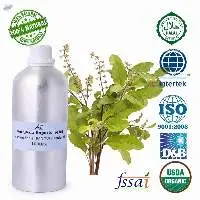
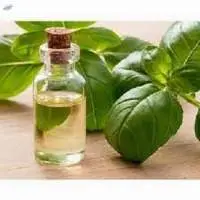
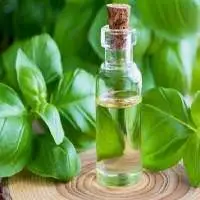
Basil Essential Oil emits a warm, sweet, freshly floral and crisply herbaceous scent that is further characterized as airy, vibrant, uplifting, and reminiscent of the scent of licorice. In aromatherapy, Sweet Basil Essential Oil is reputed to stimulate, clarify, calm, fortify, energize and uplift the mind.
Methyl Chavicol (Estragole )is a phenylpropene; a natural organic compound. Its chemical structure consists of a benzene ring substituted with a methoxy group and a propenyl group. This is a natural compound that is present in basil oil and is isolated by the process of fractional distillation.
The product is pale yellow to yellowish in colour, with the sweet and pungent characterisic odour of Eugenol. Eugenol and Caryophyllene are major components in Holy Basil Oil. This oil is mainly used in medicinal and flavouring preparations.
Basil Essential Oil emits a warm, sweet, freshly floral and crisply herbaceous scent that is further characterized as airy, vibrant, uplifting, and reminiscent of the scent of licorice. In aromatherapy, Sweet Basil Essential Oil is reputed to stimulate, clarify, calm, fortify, energize and uplift the mind.
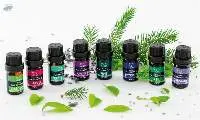
We represent a set that consists of 6 types of essential oil - peppermint, basil, salvia, lavender, juniper, pine.
Every bottle consist of 10 ml pure and with the highest quality essential oil.
All products are certified and 100 % natural.