
Please click here to check who's online and chat with them.

Find Verified Linen Blends Suppliers, Manufacturers and Wholesalers

Top Supplier Cities : -   Nantong   Shanghai  
May-14-20
 Inquire Now  
1. Environmental protection PU leather backrest
The backrest adopts environmentally friendly and durable PU leather with breathability, firmness, flexibility and other characteristics
2. Steel handrails are intimately covered.
Intimate leather edging, smooth chamfered armrests, better fit the arms.
3. Stripe cushion design
Striped cushion for better support, soft and comfortable
4. Rear-mounted pendant bracket
Pendant support bar for towels and linen
5. The bow structure is better supported.
Curved design, ergonomic principles, better support
6. Stainless steel frame with PU roller.
Electroplated anti-oxidation steel five-star feet, bright and smooth, strong and durable, and not easy to rust.
Dec-21-20
 Inquire Now  
We are cashmere supplier, major client is Loro Piana since 1992

First grade 100% Cashmere yarn with 26/2. Micro: 16.3, Length: 34-36mm, The yarn was collected and produced in Inner-Monogolia, China. Moreover, it was made by the top quality Chinese cashmere blended with Mongolia cashmere.
Aug-01-12
 Inquire Now  
Cashmere blend yarn specification:
1.Wool/cashmere blended yarn
2.Competitve price , excellent quality
3.Soft
4.Best service
5.Pure goat cashmere yarn

We make the greatest efforts to meet customer specific requirements. Our products are inexpensive but in high quality. We sincerely hope that with the merchants all over the establishment of long-term win-win relationship.


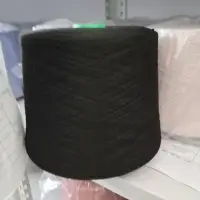
Cones in carton
Aug-07-23
 Inquire Now  
Bulk Blending Fertilizer System
Bulk blending fertilizer system include belt-scale-batching fertilizer blending line, floor batching fertilizer blending line, mini fertilizer batching and blending machine. Belt-scale-batching fertilizer blending line and floor batching fertilizer blending line are used for the batching, mixing and packaging of granular fertilizers. Floor batching fertilizer blending line is a piece of practical equipment developed by Beidou with automatic batching, automatic blending, and automatic packaging functions. Mini fertilizer batching and blending machine are more suitable for small-scale production by small manufacturers.
Aug-23-17
 Inquire Now  
Construction:
Tube:Black, smooth SBR blended.
Reinforcement:High tensile synthetic yarn textile braided.
Cover:EPDM/SBR blended, black, or red yellow, weather and ozone resistant.
Temperature range: -40°C to +90°C.

Application:

Wide range service in general industrial services, mobiles shop pneumatic tools, etc.
57 Linen Blends Suppliers
Short on time? Let Linen Blends sellers contact you.
Nov-20-19

Soap Noodles

MOQ: Not Specified
Supplier From Tianjin, Tianjin, China
 Inquire Now  
Soap noodles are the main ingredient used in the production of soap bars. Soap noodles are the sodium salt of fatty acids from vegetable oil or animal fats. Applications include soaps for toilet, laundry and multi-purpose products.

A typical blend would be the 80:20 standard comprising of 80% palm oil and 20% palm kernel oil or coconut oil. While there are other blends available in the market such as 70:30, 60:40 and 90:10.
Aug-01-12
 Inquire Now  
Knitting cashmere yarn specification:

1) content: 100% cashmere and cashmere blended
2) percentage: 100%, 50/50, 30/70 or according to customers' requests
3) count:
A) single yarn: 1/54nm, 1/48nm, 1/60nm
B) winder doubling: 2/30nm, 2/40nm, 2/50nm
C) ply yarn: 1/4.7nm, 1/2.1nm, 1/1.5nm
4) min. And max. Count: 15nm - 100nm
5) color:
A) raw white
B) dyeing: according to customers' requests
6) end use: for knitting fabrics and sweaters and scarves
7) material:
A) cashmere:
I) fiber length: 36mm
Ii) micro: 15micron
Iii) cashmere content: more than 97%

B) others: wool, cotton, angora, silk, alpaca, tinsel, acrylic, bamboo

8) samples yarns:
A) 2/40nm 100% cashmere
B) 2/60nm 100% cashmere
C) 2/28nm 15% cashmere, 85% cotton
D) 2/36nm 5% cashmere, 75% silk, 20% cotton
E) 2/48nm 15% cashmere, 30% silk, 55% wool
F) 2/30nm 20% cashmere, 10% camel, 70% cotton

Packing:
1) cones: 1.0 - 1.5kg/cone, 30cones/carton
2) hanks: 250g/hank, 25kg/woven bag, 100kg/big woven bag

Conveyance:
Qty/20' fcl: about 6, 000 - 7, 000kg
Qty/40' fcl: about 12, 000 - 13, 000kg
Qty/40' hq: about 16, 000 - 17, 000kg.


Packed in bale, carton, or pallet, 30kgs/bale, 15ton/container.
Aug-01-12
 Inquire Now  
Knitting wool yarn

Product details:
Product type: blended yarn
Material: wool/nylon
Pattern: raw white/yarn dyed/top-dyed
Style: worsted/woollen
Techniques: ring spun
Use: knitting, weaving
Features: mercerized, single anti-shrink, eco-friendly
Evenness: uster
Twist: different twist for weaving and knitting
Yarn count: 20nm/1
Strength: good
Used for sweater, clothing, carpets, shawls, and socks, and so on
Colors: solid color, suitable for all colors
The moq of sample yarn: 10 to 15kg/color
The moq of bulk yarn: 500kg/color
Sample yarn leadtime: about 15 to 20 days (raw white); about 20 to 25 days (dyed yarn)
The bulk yarn: about 25 to 30 days (raw white); about 30 to 35 days after the color is confirmation (dyed yarn).


12/24 cones in a carton
Aug-01-12

Chunky Hand Kintting Cashmere Yarn

$10
MOQ: Not Specified
Supplier From Tianjin, China
 Inquire Now  
Chunky cashmere yarn

Name pure chunky cashmere yarn

Color
Various colors


Count
4/12 nm
Usage knitting, weaving

Advantage

Anti-pilling,


Moq

100kgs each color


Payment terms

L/c or t/t


Shipping port
Tianjing

Usual package

Inner package: transparent plastic bags

Outer package: carton:(70*36.5*53, 72*38*54, 55*40*40) we can also pack upon your requirement.

Dilivery time
Sample yarn: about 15-20 days(raw white)
About 20-25 days(dyed yarn)
Bulk yarn: about 25-30 days(raw white)
About 30-35 days after the color is confirmation(dyed yarn).


Outer package: carton:(70*36.5*53, 72*38*54, 55*40*40)
Sep-28-17
 Inquire Now  
Bio Mileager Gear Oil EP 140 Additives are extreme pressure hypoid gear oil. This oil is blended from selected base stocks and contain specific additive package to provide extreme pressure, anti wear characteristic
Sep-28-17
 Inquire Now  
Bio Mileager DX II Gear Oil is a premium quality multipurpose extreme pressure EP Type GL-5 gear oils, blended from highly refined group I group II base oils with good oxidation stability .
Jun-17-24
 Inquire Now  
BB fertilizer blend equipment
1, Own patented technology and develop independently.
2, Ensure quality and system stability.
3, High cost performance, energy-saving and efficient, with high production capacity.

If you have any ideas, please contact me.
Jul-10-18
Supplier From Tianjin, China
 Inquire Now
Sep-28-17
 Inquire Now  
Bio Mileager UTTF Gear Oil is a premium quality transmission oil, blended from high quality solvent refined base stocks fortified with carefully selected additives, to give good detergent, thermal and oxidation stability, low temperature fluidity, seal compatibility, antifoam, anticorrosion and antiwear characteristics.
May-02-17
 Inquire Now  
Hotel bedding, disposable sanitary products
Aug-01-12
Supplier From Tianjin, China
 Inquire Now
Sep-28-17
 Inquire Now  
Bio Mileager Premium 2T is a superior product developed for all two stroke two & three wheeler engines using CNG, LPG, Petrol & is blended from highly refined base oils, additives & diluents to provide easy mixing with fuel. These products minimize spark plug fouling & pre ignition, prevent rusting & provide protection against scuffing, seizure & wear.
Sep-28-17
 Inquire Now  
Bio Mileager EP90 Gear Oil is a premium quality multipurpose extreme pressure EP Type GL-5 gear oils, blended from highly refined group I group II base oils with good oxidation stability. These oils are also doped with combinations of EP, antiwar additives to provide long running performance under sever duty conditions.
Sep-28-17
 Inquire Now  
Bio Mileager MP 80W-90 Gear Oil is a premium quality multipurpose extreme pressure EP Type GL-5 gear oils, blended from highly refined group I group II base oils with good oxidation stability. These oils are also doped with combinations of EP, antiwear additives to provide long running performance under sever duty conditions.
Sep-28-17
 Inquire Now  
Bio Mileager EP 140 Gear Oil is a premium quality gear oils EP Type GL-4 which are blended from highly refined group I & group II base oils having high viscosity index & good oxidation stability. These oils are also fortified with combinations of additives which provides outstanding load carrying properties, good anti foaming / anti wear characteristics for long term performance.
Mar-14-17
Supplier From Tianjin, China
 Inquire Now
May-19-16
Supplier From Tianjin, Tianjin, China
 Inquire Now
Mar-05-18
Supplier From Tianjin, China
 Inquire Now
Jun-02-20

Potassium Sulfate

$470 - $490
MOQ: Not Specified
 Inquire Now  
Quick Details

Classification:Potassium Fertilizer
Type:Potassium Sulphate
CAS No.:7778-80-5
Other Names:potassium sulfate/SOP
MF:K2SO4
EINECS No.:231-915-5
Release Type:Quick
State:Powder
Purity:50%-52%
Application:Agriculture ; Industry
Brand Name:x-humate
Relative density:2.109
Melting Point:83â??
Applicationï¼?
1.Used as potassium fertilizer in agriculture
2.Mainly used as the raw material of BLENDING NPK
3.Used as settling agent in glass industry

4.Used as intermediate in dyeing industry
5.Used for producing potassium sale, potassium carbonate, potassium persulphate
Oct-01-10
 Inquire Now  
(1)Features: it is one of most popular plasticizer, it has excellent performace as good blending capacity, high efficeincy, low volatility, anti cold and hot, waterproof and good electrical capacity.

(2)Application: Used for PVC, PE and Cellulose, such as film, cable, artificial leather, pipe, sheet materfial, mold plastic, or used as rubber softener.

(3)Specification:

Color(APHA)---------------------------30 max

Ester-----------------------------------99.5% min

Acid-------------------------------------0.010 g/cm3

Loss on dry(125C,3h)---------------0.3% max

Flash Point----------------------------192C min

Chroma(platinium-cobalt)----------40 max

Volume Resistivity 0.0m------------0.20 min


99.5 Packing: 200KG/ Iron Drum
Oct-20-17
 Inquire Now  
Construction:
Inner Tube:Polyester elastomer(cream color).
Reinforcement:One polyester braid.
Cover:Proprietary urethane blend("Tuff-Skin").
Cover color:Black,non-perforated(other colors available).
Temperature range: -40F-135F(-40C-57C)Limited to 150F(+66C)for water-based or fire resistant  fluids.(Delta) working length at rated WPSI:±2% max.
Features:

Bonded construction,slim profile and light weight,flexible and kink resistant,black color denotes 4000 psi,low coefficient of friction,excellent cut,gouge and abrasion resistance 4000psi working pressure.

Applications:

High pressure water cleaning ,lateral sewer lines,water jetting equipment,not for hydraulic applications.
May-19-26

Microcrystalline Wax Used For Candle, 1

$1 - $1 / Ton (US) (FOB)
MOQ: Not Specified
 Inquire Now  
The principle behind the use of microcrystalline wax in candle manufacturing is primarily based on its unique physical and chemical properties, including a high melting point, low shrinkage rate, good flexibility, and compatibility with oil phases.
â??Reduced wax and oil dripping: Its low shrinkage rate and good ductility prevent shrinkage cracks or surface oil separation during the candle cooling process, making it particularly suitable for blending with plant-based waxes prone to oil separation, such as soy wax and coconut wax.
Enhanced surface smoothness and luster: Microcrystalline wax develops a luster through friction and has a pure white color, giving candles a translucent appearance reminiscent of cellophane, thereby enhancing the product's quality and appeal.
Apr-14-26

Microcrystalline Wax 80# Used As Lubricant, 80#

$1 - $1 / Ton (US) (FOB)
MOQ: Not Specified
 Inquire Now  
Microcrystalline wax can be used as a lubricant, with its applications primarily falling into the following categories:
As a thickening agent for greases: Microcrystalline wax possesses good gel strength and adhesion, and is commonly used as a thickening agent in the manufacture of greases for instrumentation and sealing, as well as in petrolatum-based products, effectively regulating the consistency and stability of the grease.
Direct use as an industrial lubricant: Microcrystalline wax reduces friction between mechanical components, protects metal surfaces and extends equipment lifespan, whilst also offering some rust-preventive properties.
Blending with other materials: Microcrystalline wax can be mixed with paraffin wax, mineral oil and other substances to improve lubrication performance; it is widely used as a processing aid in the rubber, plastics and textile industries.
Mar-16-20
Supplier From Tianjin, China
 Inquire Now
Apr-22-26

Microcrystalline Wax For Casting, 80#

$1 - $1 / Ton (US) (FOB)
MOQ: Not Specified
 Inquire Now  
Main applications of microcrystalline wax in casting:
â??As a component of wax patterns: Microcrystalline wax is commonly used in the formulation of precision casting wax compounds. It is blended in specific proportions with paraffin, resins, natural waxes and other materials to enhance the flexibility, resistance to deformation, surface finish and dimensional stability of the wax patterns.
Suitable for high-precision castings: Widely used in fields with high demands for surface quality and dimensional accuracy, such as aeroengine blades, medical devices, automotive components and jewellery.
Improved demoulding performance: Microcrystalline waxâ??s low-temperature plasticity and high-temperature stability facilitate the precise forming of wax patterns within complex moulds and help maintain their shape during the pouring process.
Reduced post-processing: Castings produced using microcrystalline wax have a smooth, fine surface finish and typically require no additional polishing.
Jul-23-12
Supplier From Tianjin, China
 Inquire Now
Sep-22-25

Microcrystalline Wax 160S For Candle, 1

$1 - $1 / Ton (US) (FOB)
MOQ: Not Specified
 Inquire Now  
Microcrystalline wax has the following primary applications in candle making:
Improving Texture and Performance
Microcrystalline wax enhances candle hardness and surface smoothness while improving flexibility and extensibility, preventing cracking or deformation. For instance, adding hard microcrystalline wax increases paraffin's hardness and gloss, while soft microcrystalline wax is suitable for soft waxes like beeswax, improving demolding and reducing bubbles. â??
Enhancing Adhesion and Stability
Microcrystalline wax blends well with various waxes (e.g., soy wax, paraffin). By adjusting the melting point (e.g., using food-grade microcrystalline wax with a melting point below 60�°C), it improves the adhesion of essential oils or decorative materials while reducing white streaks and cup separation issues.
Extended Burn Time
Candles containing microcrystalline wax burn more stably, resist dripping or black soot, and exhibit higher combustion efficiency.
Jan-06-26

Microcrystalline Wax Used For Mould Lubricant, 1

$1 - $1 / Ton (US) (FOB)
MOQ: Not Specified
 Inquire Now  
Microcrystalline wax offers core advantages as a mould lubricant: Firstly, its excellent heat resistance and lubricity enable it to form a stable film during high-temperature injection moulding or die casting, reducing friction between the mould and moulded material, preventing sticking, and enhancing demoulding efficiency. Secondly, its good adhesion and film-forming properties ensure uniform coverage of the mould surface, providing sustained lubrication even within complex geometries and reducing mould wear. Furthermore, its high gel strength and crack resistance help maintain structural integrity during repeated thermal cycles, extending mould service life.
In practical applications, microcrystalline wax is commonly employed as a pure product or in compound form: For instance, in rubber or plastic moulds, it may serve directly as a release agent or be blended with paraffin wax to enhance the latter's flexibility; in metal die casting, its lubricating properties reduce surface defects and improve product finish.
Sep-15-25

Refined Fischer Tropsch Wax For Adhesive, 1

$1 - $1 / Ton (US) (FOB)
MOQ: Not Specified
 Inquire Now  
Specific Advantages in Hot-Melt Adhesive Applications
Adjustability:
Fischer-Tropsch wax effectively modulates the initial gelation temperature and curing time of hot-melt adhesives, enhancing their plasticity and tensile properties.
Low Viscosity and High Melting Point Advantages:
Low-viscosity, high-melting-point Fischer-Tropsch wax also reduces the viscosity of polymers and resins, facilitating efficient resin blending and smooth hot melt adhesive pumping while maintaining appropriate surface wetting of polymers and resins.
Food Contact Safety:
Refined Fischer-Tropsch wax is contamination-free and odorless, making it suitable for hot melt adhesive applications requiring compliance with food contact standards. Its elevated melting point confers superior heat resistance to the adhesive. Low penetration enhances the adhesive's strength. The narrow carbon distribution range shortens open time and reduces curing time. The wax's stability ensures no migration or leaching, further optimizing hot melt adhesive performance.
Feb-26-26

Microcrystalline Wax Used For Crayon Processing, 1

$1 - $1 / Ton (US) (FOB)
MOQ: Not Specified
 Inquire Now  
The Core Role of Microcrystalline Wax in Crayons
Enhancing Product Performance: Microcrystalline wax possesses excellent flexibility and high elongation, effectively increasing the plasticity and flexibility of crayons, making them less prone to breakage. Simultaneously, it prevents oil migration, avoiding grease seepage that could contaminate packaging or surfaces, and facilitates demoulding during production.
Improving Production Processes: Microcrystalline wax exhibits excellent compatibility with paraffin wax, various mineral waxes, vegetable waxes, and pigments, ensuring thorough blending and uniform crayon texture. Its broad melting point range (typically 60â??90�°C) allows adjustment of overall crayon hardness, melting temperature, and solidification rate by selecting waxes with different melting points.
Expanding application domains: Microcrystalline wax is a key component in manufacturing water-soluble crayons. When combined with non-ionic emulsifiers, it enables crayons to self-emulsify in water, facilitating easy cleaning. It is also employed in producing multi-coloured and eco-friendly crayons to enhance tactile feel and antimicrobial properties.
Feb-03-04
Supplier From Tianjin, China
 Inquire Now
Mar-09-19
Supplier From Tianjin, China
 Inquire Now
Aug-22-25

Micronized Wax For Spinning And Weaving, 1

$1 - $1 / Ton (US) (FOB)
MOQ: Not Specified
Supplier From Tianjin, , China
 Inquire Now  
Micronized wax is primarily applied to textiles in the finishing process by blending it with other finishing agents (such as resins, adhesives, etc.) and applying it to the fabric through methods like padding, coating, or printing. Its main functions include:
Improving and Adjusting Hand Feel:
Smoothness: This is the core function of Micronized wax. The wax powder forms an extremely thin, uneven film on the fiber surface, effectively reducing the friction coefficient between fibers, thereby imparting excellent smoothness, softness, and a fluffy hand feel to the fabric.
Softness: It compensates for the stiffness that some resin finishes may cause, making the fabric more comfortable to the touch.
Anti-Blocking Properties:
For coated fabrics, films, or synthetic fabrics (especially nylon and polyester), which are prone to sticking together under heat or pressure, Micronized wax creates micro-protrusions on the surface, reducing the actual contact area between materials. This effectively prevents adhesion, facilitating subsequent cutting and sewing processes.
Abrasion and Scratch Resistance:
The wax particles act like "ball bearings" on the fiber surface, allowing external friction objects to glide over more easily rather than directly scraping the fibers. This protects the fibers and coatings, enhancing the fabric's durability.
Matting Effect:
Micronized wax causes diffuse reflection of light, disrupting specular reflection, thereby reducing the fabric's gloss to some extent and creating a soft, elegant matte effect. This is related to its particle size and dosage.
Sep-27-13
Supplier From Tianjin, Wuqing, China
 Inquire Now
Oct-30-25

Industry Grade Wax With 70-80, 1

$1 - $1 / Ton (US) (FOB)
MOQ: Not Specified
Supplier From Tianjin, , China
 Inquire Now  
The primary applications of industrial-grade microcrystalline wax are categorised and detailed as follows:
1. Fats and Lubricants Industry
This represents one of the largest application areas for microcrystalline wax.
Petroleum jelly: Serving as the principal thickener and gelling agent, it blends with high-viscosity mineral oils to form petroleum jelly's characteristic paste-like structure. This directly addresses your previous query.
Greases: Within greases, microcrystalline wax functions as a thickener or modifier, enhancing adhesion, sealing properties, and water resistance.
Rust Inhibitors: Microcrystalline wax can be formulated into solvent-based or emulsifiable rust-preventative oils/greases. It forms a soft, dense, and highly adherent protective film on metal surfaces, effectively isolating moisture and air to prevent corrosion.
2. Rubber and Tyre Industry
Microcrystalline wax serves as a guardian in this sector.
Physical Anti-Ageing Agent: This represents its most crucial function within rubber compounds. During rubber compounding, microcrystalline wax disperses uniformly. When vulcanised rubber products (such as tyres) develop microscopic â??ozone cracksâ?? from bending and stretching during use, the wax slowly migrates to the surface, forming a thin, dense wax film. This layer effectively blocks ozone attack, significantly slowing rubber ageing and extending product lifespan.
3. Coatings, Paints and Inks Industry
Utilised for its water resistance, gloss enhancement and flexibility.
Polishing agents: Employed in floor waxes, automotive polishes, etc., to impart gloss and abrasion resistance.
Coating modification: Incorporated into specialised coatings (e.g., marine paints, waterproof coatings) to enhance water resistance, flexibility, and chemical resistance.
Printing ink additives: Used to improve ink abrasion resistance, scratch resistance, and provide anti-slip properties.
Aug-21-24
 Inquire Now  
For hexagonal metal wires with galvanized layer, use metal wires with a wire diameter of 0.3mm to 2.0mm. If it is a PVC-coated metal wire woven twisted mesh, use PVC with an outer diameter of 0.8mm to 2.6mm. (metal) wire. Twist it into a hexagonal shape, and the lines on the edge of the outer frame can be made into single-sided, double-sided, movable edge wires. English name hexagonal wire netting hexagonal wire mesh Weaving method: forward twist, forward and reverse twist (reverse twist).
characteristic: (1) Easy to use, just tile the mesh into the wall or building cement to use (2) Construction is simple and no special skills are required (3) Strong ability to withstand natural damage, corrosion and harsh weather effects (4) It can withstand a wide range of deformation without collapse. Acts as fixed thermal insulation (5) Excellent process foundation ensures uniformity of coating thickness and stronger corrosion resistance (6) Save transportation costs: it can be reduced into a small roll and wrapped in moisture-proof paper, taking up very little space. (7) Heavy-duty twisted mesh is woven with high-quality low-carbon steel wires, galvanized large wires, the tensile strength of the steel wires is not less than 38kg/m2, the diameter of the steel wires can reach 2.0mm-3.2mm, and the surface of the steel wires is usually hot-plated Zinc protection, the thickness of the galvanized protective layer can be made according to customer requirements, and the maximum galvanizing amount can reach 300g/m2. (8) Galvanized wire plastic-coated twisted mesh is to cover the surface of galvanized iron wire with a PVC protective layer and then weave it into various specifications of twisted mesh. This PVC protective layer will greatly increase the service life of the net, and through the selection of different colors, it can blend with the surrounding natural environment.
Jun-13-11
Supplier From Tianjin, China
 Inquire Now
Nov-29-24
 Inquire Now  
Microcrystalline wax, a white or yellow solid made from paraffin wax or other petroleum processing by-products. Due to its inertness, stability and low melting point, microcrystalline wax is widely used in various fields, which we will introduce one by one below.
Construction Materials: The main use of microcrystalline wax is in the construction materials industry. It is usually used as a plasticizer and lubricant, blended in various mixtures to improve the workability and ductility of materials. It is also used in the production of waterproofing materials, encapsulation materials, anti-cracking materials and a number of other building materials with low loss, low viscosity and low permeability coefficient.
Textile sector: In addition to the construction industry, microcrystalline wax is also widely used in the textile sector. It is usually added to the viscose of textiles to improve the firmness and toughness of textiles. In addition, microcrystalline wax can also be used as an auxiliary for dyeing in the production of dyestuffs to enhance the resistance to pollution and durability of the dyestuffs.
Printing Ink: Microcrystalline wax is also widely used in printing ink. In the production of printing inks, microcrystalline wax is usually used as an additive, so that the ink can better adhere to the surface of the material, and at the same time, the use of microcrystalline wax in printing inks can also improve the gloss and water resistance of the printed materials, and can avoid caking and film phenomenon of the ink after printing.
Cosmetic industry: In addition, microcrystalline wax is widely used in the cosmetic industry. It is usually used as a thickener, filler and emollient, etc., thus improving the gloss and texture of cosmetics. Another common application of microcrystalline wax in cosmetics is as a carrier for photosensitive dyes. It stabilizes the dye color and does not cause reactions such as skin irritation or allergy in cosmetics and skin care products.
Other Uses: In addition to the above applications, microcrystalline wax can be used in the production of food packaging, plastic bottle production, candle making, rubber and emulsion production, vibration control, coatings and surface treatment. In addition, due to its inertness, stability and low toxicity, microcrystalline wax is also widely used in medical and metallurgical fields.
57 Linen Blends Suppliers
Short on time? Let Linen Blends sellers contact you.
Explore Linen Blends related import export discussions