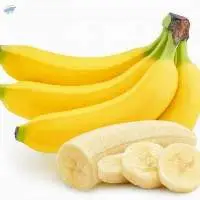
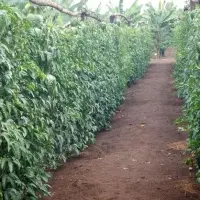
Bananas are extremely healthy and delicious. They contain several essential nutrients and provide benefits for digestion, heart
health and weight loss. Aside from being very nutritious, they are also a highly convenient snack food.
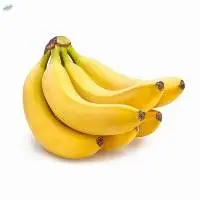
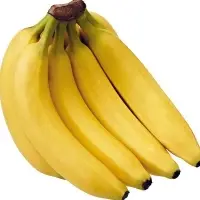
Experience the rich, tropical flavour of Kenyan Cavendish bananas, grown in sun-drenched plantations across Kenya's coast and semi-arid regions like Makueni, Embu, Kitui, and Kilifi. Our Cavendish bananas are known for their exceptional sweetness, smooth texture, and rich aroma, making them a top choice for both fresh consumption and processing.
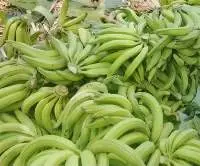
Experience the authentic tropical taste of Kenyan plantains, cultivated in the fertile soils of Meru and other rich agricultural regions of Kenya. Our plantains are prized for their firm texture, natural starchiness, and wholesome flavour, making them ideal for boiling, frying, roasting, or processing into chips and flour. Grown under sustainable farming practices, Kenyan plantains are a reliable choice for both household consumption and large-scale food industries.
The banana fibre products are popular for their household utility use. These are items like laundry basket, office waste paper basket, and fruit or egg trays. There are also banana fibre products that serve as house deco. These are art scenes depicting African culture, animals, and nativity products. Of late, the Kikuyu ethnic women community from central province have introduced Banana fiber "Kiondo" basket. Unlike the sisal baskets, the banana fibre "kiondo" do not need any colouring.
As for the hand woven banana fibre basketry, the producers are based in Central and western province and even in slum areas. 90% of banana fibre basketry producers are middle-aged women who make the banana basketry to supplement their sources of income. It is also an activity that instills a sense of belonging and security. Most of the producers lifetime dream is to educate their children and acquire or build a better house which has a security of tenure.
Like in most slum areas, a majority of the women take both the role of the bread earner and house head. There are many reasons behind it such as having been widowed, divorced or even migrated from rural areas in search of greener pastures in Nairobi just to find themselves in the slum life. Traditionally unlike men, women do not have property right or inherit from their place of origin thus rural land. Therefore their best alternative is to adapt to urban slum life where basic social amenities are not only lacking but inadequate to serve the usually high population of maginalized citizens. The problems that face the slum community and their rural counterpart is poverty and unemployment. Many of the slum dwellers rely on unreliable source of income such as temporary construction work while their women combine their respective source of income with child rearing among other household chores.
In order to fight the odds against them, women unlike men have formed their own Banana fibre groups. The common objective is to work as a team as a way of seeking recognition and to empower the group members. This is realised through networking with the powers that be. These women slum groups, source the banana fibre raw material from the rural areas where banana plant is grown. The fibre are collected from the garden while dry and later softened by soaking the fibre overnight before usage.
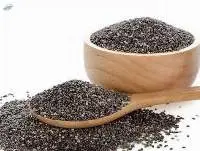
Who does not like chia seeds Even our farmers enjoy a spoon of chia in their tea.
Chia is a relatively new crop in Kenya. It provides an additional income to farmers as it can be intercropped/rotated with other cash and food crops like coffee, banana and local variety beans.
Lima is the only local processor of chia in the region we work hence we provide employment and technical training to people in the region. We pre-clean our chia with a purity of greater than 98%.
Our chia is certified organic (NOP and EU). Also availble conventional. Please contact us for more information regarding availability and prices.
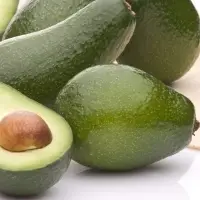
Type: High-Quality Fresh Hass and Fuerte Avocado, Country of Origin: Kenya, Packaging: 4kg and 10kg per carton, Size: 12 to 24 and for 10kg Carton 26-32. Port of Shipping: Nairobi by Air and Mombasa by Sea, Incoterm: FOB, CNF, CIF Minimum Quantity: 1000kg/1 Ton, Payment Terms: LC, TT Certification: Phytosanitary Certificate