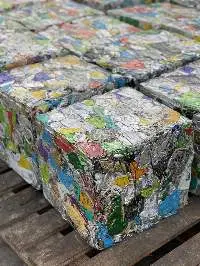
Product : Aluminum UBC Scraps
Price : $1,700/MT
Origin : Kenya
Attachment : Less than 3%
Transit Time : Within 30 Days
Payment Terms : Our company policy has it that our payment terms are 30% on signing of contract 40% on loading and SEALING of container and 30% on original documentation AKA OBL#aluminium #ubc #scrap #aluminiumubcscrapdealer #ubcscrap #aluminiumubc
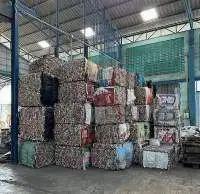
Used beverage can scrap, sorted and baled for recycling. Price depends on cleanliness, contamination, and bale density.
Advantages :
High Recyclability: Aluminium can be recycled repeatedly without losing its fundamental properties.
Lightweight: Offers an excellent strength-to-weight ratio, making it valuable for various aluminium applications.
Energy Efficient: Recycling aluminium generally requires substantially less energy than producing primary aluminium.
Good Recovery Value: Clean and properly sorted UBC scrap is a widely traded recyclable material.
Easy to Process: Baled and sorted UBC scrap can be efficiently transported and processed by recycling facilities.
Strong Industrial Demand: Used as feedstock for aluminium sheet, ingot, and other aluminium products.
Environmentally Beneficial: Supports resource conservation and reduces the need for primary aluminium production.
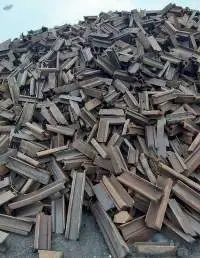
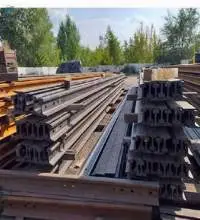
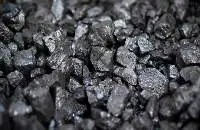
Used rail scrap for ferrous recycling and steel reprocessing. Price varies widely by grade, condition, and bulk size.
Advantages
High Steel Content: Provides valuable ferrous material for steel production.
Strong & Durable: Railway rails are manufactured from high-strength steel, making them suitable for recycling.
Recyclable: Can be melted and reused in the production of new steel products.
Cost-Effective: Offers an economical alternative source of ferrous raw material.
Industrial Demand: Used by steel mills, foundries, and metal recycling facilities.
Reduced Waste: Recycling used rails helps recover valuable metal and reduces landfill disposal.
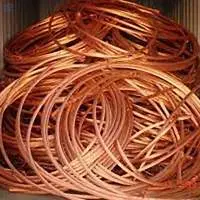
Clean copper wire scrap with high recovery value, based on Melbourne market scrap ranges. Suitable for recycling and remelting.
Clean Copper Wire Scrap- Advantages
High Copper Recovery: Clean, unalloyed copper wire scrap offers excellent recoverable copper content.
High Conductivity: Recycled copper retains the excellent electrical and thermal conductivity associated with copper.
Cost-Effective Raw Material: Provides manufacturers and recyclers with a valuable secondary source of copper.
Recyclable: Copper can be recycled repeatedly without significant loss of its essential properties.
Wide Industrial Demand: Used as a raw material for producing copper rods, wires, cables, tubes, and other copper products.
Easy Processing: Clean wire with minimal contamination can be efficiently sorted, processed, and recycled.
Environmentally Beneficial: Recycling copper reduces the need for primary mining and can lower energy consumption compared with producing copper from virgin ore.
We supply used rails (R50 and R65) Sourced from reliable suppliers and suitable for recycling and industrial use. The material is free from hazardous and radioactive contamination and complies with international scrap standard. Inspection can be conducted by SGS or other internationally recognised agencies at the loading and destination ports. We offer flexible shipment options including containerized and bulk cargo under CIF terms
4061 Industrial And Automotive Suppliers
Short on time? Let Industrial And Automotive sellers contact you.
We supply high-quality Aluminium UBC(used Beverage can)Scrap sourced from verified suppliers. The material is processed, cleaned and baled with high Aluminium purity and minimal contamination. It is suitable for recycling and remelting for industrial use. Supply is available in bulk quantities with reliable shipment under CIF terms.
Third partie inspection can be arranged upon buyer request to ensure quality and transparency.
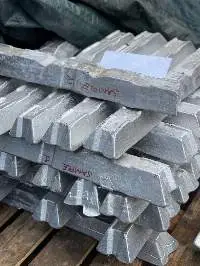
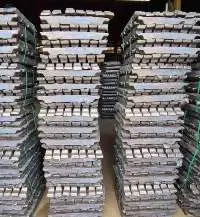
Product : Aluminum Ingots A7 Price : $2,800/MT
Quantity : 500MT
Purity : 99.7
Origin : Kenya
Loading Port : MOMBASA
Incoterms : CIF/FOB
Payment : TT
Payment Terms 50% after signing the contract and 30% after loading and sealing of the container and 20% against bill of landing
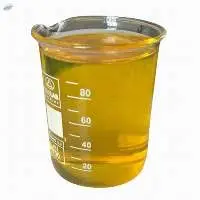
Capron Magnatec Plus is a premium-quality four-season gasoline engine oil produced with semi-synthetic base oil and high-quality additives that features excellent anti-rust and anti-corrosion properties.
Engine Oil 10W-40 is a multi-grade lubricant formulated to provide reliable engine protection across a wide range of operating temperatures. It helps reduce friction and wear, maintain engine cleanliness, and support smooth engine performance. It is commonly used in passenger cars, commercial vehicles, motorcycles, and other compatible gasoline or diesel engines, depending on the formulation and OEM requirements.
Advantages
Excellent protection against engine wear
Good cold-start performance
Maintains viscosity at high operating temperatures
Helps reduce sludge and deposit formation
Supports smooth and efficient engine operation
Good oxidation and thermal stability
Suitable for a variety of automotive applications
Base oils are important basic raw materials for any lubricants included engine oils, gear oils, industrial oils, metal working fluids, hydraulic fluids and also greases. In most of the lubricants 70-90% ingredient is base oils. As per API classification Base oils can be grouped majorly into five groups, i.e., Group-I/II/III/IV/V. The base oil characteristics are very important in determining the quality of the finished product. Group I base oils are solvent-refined, which is a simpler refining process. This is why they are the cheapest base oils on the market.
Base Oil SN 350 is a medium stock base oil produced from the vacuum distillates and residual components using the traditional refining methods. It has viscosity 8-9,5 cSt at 100C and 67-70 cSt at 40C. SN 350 is used in lubricant and lubricant additives production, mainly for industrial applications. The main benefits of SN 350 base oils are low sulphur content, high viscosity index, high oxidation stability and good susceptibility to the additives.
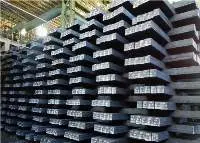
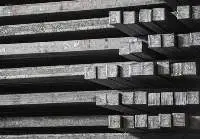
A billet is a length of metal that has a round or square cross-section, with an area less than 36 in2 (230 cm2). Billets are created directly via continuous casting or extrusion or indirectly via hot rolling an ingot or bloom. Billets are further processed via profile rolling and drawing. Final products include bar stock and wire.
Centrifugal casting is also used to produce short circular tubes as billets, usually to achieve a precise metallurgical structure. They are commonly used as cylinder sleeves where the inner and outer diameters are ground and machined to length. Because their size is not modified significantly, they are not always classified as semi-finished casting products.
A billet is a length of metal that has a round or square cross-section, with an area less than 36 in2 (230 cm2). Billets are created directly via continuous casting or extrusion or indirectly via hot rolling an ingot or bloom. Billets are further processed via profile rolling and drawing. Final products include bar stock and wire.
Centrifugal casting is also used to produce short circular tubes as billets, usually to achieve a precise metallurgical structure. They are commonly used as cylinder sleeves where the inner and outer diameters are ground and machined to length. Because their size is not modified significantly, they are not always classified as semi-finished casting products.
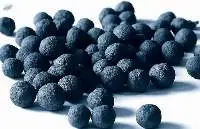
Our iron ore pellets and fines are made from magnetite and have high iron ore content pellets at around 67 percent concentration and fines over 70 percent. This means they have lower impact on the environment than competing pellets and products such as sintered hematite fines.
Using pellets instead of sinter (slightly larger pieces of iron ore) in customers pig iron processes saves emissions at steel plants. The high concentration of iron combined with the carefully tested and balanced additives in our pellets also result in lower emissions in customers ironmaking processes.
Iron ores are the raw material used to make iron and steel. Iron ore production has significantly expanded in recent years, owing to increasing steel demands in developing countries, such as China. As the content of iron ore in deposits has deteriorated, low-grade iron ore has been processed. Iron ore concentrate is an output product from processed iron ores that have been milled (crush, grind, magnetic separation, flotation) to separate deleterious elements and produce a high-quality product. Sintering and pelletizing are economic and widely used agglomeration processes to prepare iron ore fines/iron concentrate for ironmaking use. The quality requirements of sinter and pellet, such as physical, chemical, and metallurgical specifications, depend on each ironmaking furnace, and those requirements influence the operation of the iron ore sintering and pelletizing plant. Researchers have usually focused on the effect of the chemical, physical, and mineralogical characteristics of iron ore on these steps and the consequences for sinter/pellet quality and sintering/pelletizing performance. The present Special Issue on Iron Concentrate Particles will summarize the progress achieved in the last five years.
A billet is a length of metal that has a round or square cross-section, with an area less than 36 in2 (230 cm2). Billets are created directly via continuous casting or extrusion or indirectly via hot rolling an ingot or bloom. Billets are further processed via profile rolling and drawing. Final products include bar stock and wire.
Centrifugal casting is also used to produce short circular tubes as billets, usually to achieve a precise metallurgical structure. They are commonly used as cylinder sleeves where the inner and outer diameters are ground and machined to length. Because their size is not modified significantly, they are not always classified as semi-finished casting products.
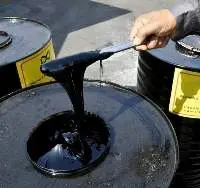
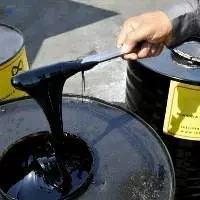
VG-20 bitumen is a grade of viscosity bitumen used in cold climatic and high altitude regions. This grade of bitumen is suitable for road construction in regions with 30 to 37 C average temperature.
In North India, vg20 is used for road construction in hot mix asphalt. The standard penetration value of bitumen viscosity grade VG-20 is 60 mm at 25 C. The absolute viscosity of VG-20 bitumen is 1600 to 2400 poise at 60 C.
Bitumen penetration grade 40/50 bitumen means the penetration value is in the range 40 to 50 at standard test conditions which commonly used as a Paving Grade. Bitumen is applicable for the production of hot mix asphalt for bases and pavements and for road construction. Penetration Grade Bitumen supplied by RABIT (RAHA BITUMEN) Co. This bitumen is produced through aeration on vacuum bottom (the raw material used for making bitumen left in vacuum distillation column in oil refineries) in bitumen production units. Its penetration grade ( the measure of bitumen hardness) is between 40 to 50. Bitumen is specified by the penetration and softening point test. Designing is by penetration range only. The penetration grade bitumen has a thermoplastic property which causes the material to soften at high temperatures and to harden at lower temperatures. This unique temperature-viscosity relationship is important when determining the performance parameters such as the adhesion, rheology, durability and application temperatures of bitumen.
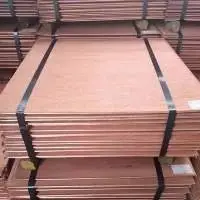
High-purity copper cathode suitable for wire rod, cable, and industrial manufacturing. Benchmark pricing reflects current global copper market levels.
Copper Cathode-Advantages
High Purity: Copper cathodes are commonly produced to very high purity levels, making them suitable for demanding industrial applications.
Excellent Electrical Conductivity: Ideal for manufacturing electrical wires, cables, transformers, motors, and other electrical components.
High Thermal Conductivity: Widely used in heat exchangers, cooling systems, and industrial equipment.
Corrosion Resistance: Provides reliable performance and long service life in various applications.
Excellent Ductility: Can be easily processed, drawn, rolled, and fabricated.
Global Industrial Demand: Copper cathodes are a key raw material for the electrical, construction, automotive, renewable-energy, and manufacturing industries.
Recyclability: Copper can be recycled repeatedly while retaining its essential properties.
Primary aluminium ingots for casting, manufacturing, and industrial supply.
Advantages
High Strength-to-Weight Ratio: Lightweight while providing good mechanical strength.
Excellent Corrosion Resistance: Naturally forms a protective oxide layer that helps resist corrosion.
Good Conductivity: Suitable for electrical and thermal applications.
Excellent Castability: Can be efficiently melted, cast, extruded, and fabricated.
Highly Recyclable: Aluminium can be recycled repeatedly while retaining its essential properties.
Wide Industrial Demand: Used extensively in automotive components, construction products, electrical equipment, machinery, and packaging.
Export-Friendly: Available in different alloy grades and ingot sizes according to buyer requirements.
We supply high-quality Coltan (Tantalite Ore) sourced from verified suppliers in Africa, with content ranging between 30% and 40%. Material is processed and prepared under strict supervision, with inspection and analysis conducted using internationally recognized methods such as XRF and ICP. Delivery is available under CIF terms, and all shipments comply with international regulations and conflict-free certification standards. Third-party inspection and assay verification are available upon buyer request.
4061 Industrial And Automotive Suppliers
Short on time? Let Industrial And Automotive sellers contact you.