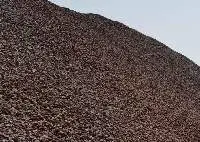
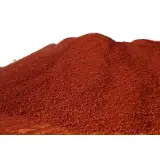
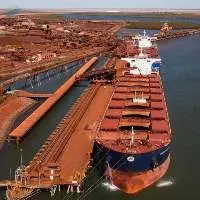
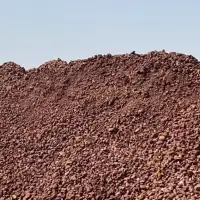
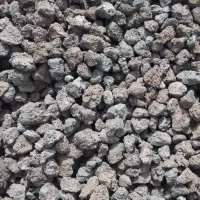
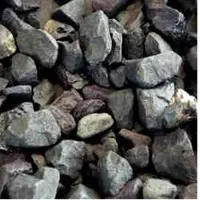
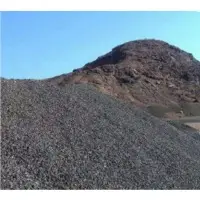
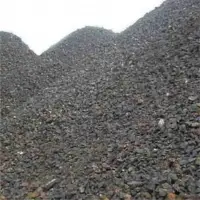
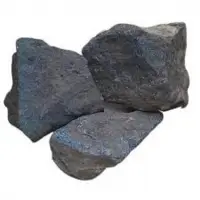
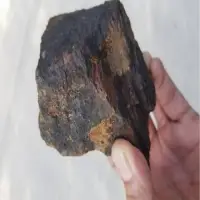
We are global suppliers of iron ore from South Africa. We trade iron ore in Lumps, Fines, Concentrates and Pellets. Our primary focus is export of iron ore to Japan, China, South Korea, Taiwan, Germany and Netherlands.
Commodity profile
Iron is the second most abundant metal in the earthâ??s crust (after aluminium). The iron ores, which are mainly the oxides, are reduced to iron with carbon (coke) at high temperatures in a blast furnace. Over 97% of this is converted directly to steel without even being allowed to solidify after leaving the furnace in which it is made. A relatively small amount is used as cast iron and wrought iron.
Iron ore is a key commodity and vital product portfolio for Berium Group. As rapidly growing suppliers of iron ore from South Africa, our approach is to lift the ore from where it is produced in South Africa and deliver it directly to industrial end users or trading houses in Asia and Europe where it is demanded.
Our offer for iron ore is priced off the main price indices. Berium Group is also able to supply niche products such as the iron ore pellets and fines for foundries, iron additives and ferroalloys.
Iron Ore Grades
Berium Group has reliable long term access and can assure steadfast supply of 64.5% Fe Base, 62% Fe Base, 58.3% Fe Base and 58.0 % Fe Base grades of iron ore. However the Fe% of every shipment may vary. If the iron ore shipped is at a higher or lower percentage than the Fe % Contracted Base, then the price paid for the shipment will escalate or reduce in accordance to the percentage of Fe in the ore that is actually supplied
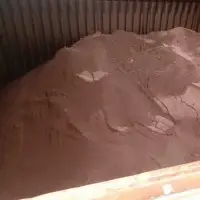
We have 120000Mt iron ore fines. The specification as following:
Fe 52% + 1.0%
P 0.050%
SiO2 10.64%
S 1.630%
MgO 0.63%
Al2O3 2.51%
Size
+1mm 8.9%
+0.106mm 51.1%
-1mm 91.1%
Payment: TT or lC at sight
if you are interesting pls contact with me asap'
Brand Name: Iron Ore Magnetite
Place of Origin: Egypt, South Africa, Mexico
FE: 50-55%,60-65%
Supply ability: 50,000 MT/ month
Shipping terms: FOB-CIF-CFR
Loading port: Adabyia port, Egypt, South Africa Deep Sea
Mexico Deep Sea
Chemical Specifications:
Chemical Composition
Results %
P2O5
1.65
FE2O3
68.038
K2O
0.125
CAO
2.133
AL2O3
1.625
MGO
0.767
NA2O
0.11
SIO2
21.114
TIO2
0.154
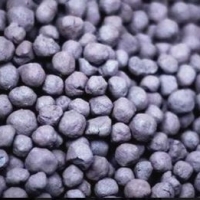
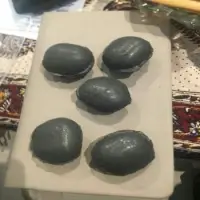
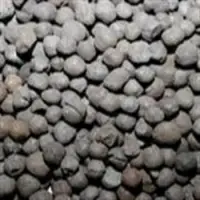
Pellets are small balls of iron ore used in the production of steel. They are made with technology that uses the powder that is generated during the ore extraction process, once considered waste.
The pellets are used in the production of steel which is used in the construction of bridges, cars, planes, bicycles, household appliances and much more.
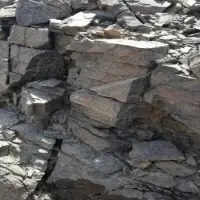
Iron ores are rocks and minerals from which metallic iron can be economically extracted. The ores are usually rich in iron oxides and vary in color from dark grey, bright yellow, deep purple, to rusty red. The iron itself is usually found in the form of magnetite (Fe3O4), hematite (Fe2O3), goethite (FeO(OH)), limonite (FeO(OH).n(H2O)) or siderite (FeCO3). Hematite is also known as "natural ore". The name refers to the early years of mining, when certain hematite ores contained 66% iron and could be fed directly into iron making blast
Iron ores are rocks and minerals from which metallic iron can be economically extracted. The ores are usually rich in iron oxides and vary in colour from dark grey, bright yellow, or deep purple to rusty red. The iron itself is usually found in the form of magnetite, hematite, goethite, limonite or siderite.
The primary use of iron ore is in the production of iron. Most of the iron produced is then used to make� steel.� Steel� is used to make automobiles, locomotives, ships, beams used in buildings, furniture, paper clips, tools, reinforcing rods for� concrete, bicycles, and thousands of other items.
It is used to manufacture steel and also used in civil engineering like reinforced concrete, girders etc. Iron is used to make alloy steels like carbon steels with additives such as nickel, chromium, vanadium, tungsten, and manganese
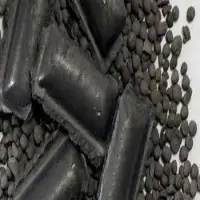
Hot Briquetted Iron (HBI) is a relatively new product, developed in the past 25 years, as a supplement for pig iron and scrap in electric furnace steel mills. It is a compacted form of direct reduced iron (DRI), which facilitates its handling, storage, and use
Direct reduced iron (DRI), also called sponge iron, is produced from the direct reduction of iron ore (in the form of lumps, pellets, or fines) to iron by a reducing gas or elemental carbon produced from natural gas or coal. Many ores are suitable for direct reduction.