High-purity Indonesian Silica Sand with superior chemical consistency and ultra-low iron content. Fully tested and certified by independent laboratory analysis (Sucofindo). Ideal for high-end glass manufacturing, solar panels, ceramics, and precision foundry casting.
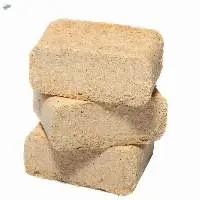
Compressed sawdust blocks are designed for efficient storage, transportation, and use in biomass fuel and industrial heating systems.
Wood sawdust blocks are solid biomass fuel blocks made by compressing dry sawdust and wood residues under high pressure. They are a dense, eco-friendly alternative to firewood and coal, widely used in industrial heating and commercial energy applications.
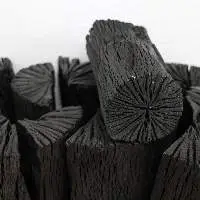
Natural hardwood charcoal produced from quality timber, offering strong heat output, low moisture content, and versatile industrial applications.
Hardwood charcoal is a natural charcoal produced by carbonizing dense hardwood logs (such as oak, teak, acacia, or mangrove wood) in a low-oxygen environment. It is widely used for BBQ grilling, industrial heating, metallurgy, and household cooking.
Sulphur is mostly produced in refineries as a by-product and used mainly to produce sulfuric acid, which is widely applied in the manufacture of phosphate fertilizers, detergents, plastics, and various other chemical products.
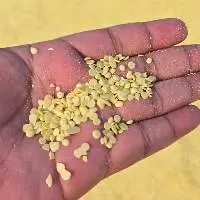
Granular sulphur is a form of sulphur that is easy to handle, has a uniform shape, and resembles small pea-like grains. It is also produced in refineries but through an additional process compared to lump sulphur. In this process, molten liquid sulphur is sprayed in a granulator unit and rapidly cooled to form solid sulphur granules.
Packing: Available according to customer requirements.
Handling and Storage: Store in a cool and dry place, away from moisture and heat. Protect the material from direct sunlight and rain during transportation.
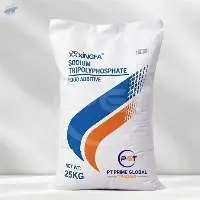
What is Sodium Tripolyphosphate (STPP)? Food & Industrial Uses
The Dual Power of STPP: Balancing Food Preservation and Industrial Efficiency
In the global chemical supply chain, few compounds pull double duty quite as effectively as Sodium Tripolyphosphate, commonly known as STPP.
To a food scientist, it is an invaluable tool for maintaining moisture, texture, and tenderness in proteins. To an industrial formulation chemist, it is a heavy-duty water softener and cleaning booster. This dual nature makes STPP an incredibly high-demand commodity across international trade networks, particularly in rapidly growing manufacturing hubs like Indonesia.
If you are a procurement professional or chemical formulator, understanding the distinct operational behaviors of STPP grades is critical to choosing the exact raw material for your factory lines.
What is Sodium Tripolyphosphate (STPP)?
STPP is an inorganic salt compound that appears as a white, water-soluble, granular powder. It is produced by carefully heating a precise stoichiometric mixture of disodium phosphate and monosodium phosphate under strict temperature controls.
Its chemical structure gives it two highly prized functional capabilities: moisture binding and metal ion chelating (binding to loose minerals in water). Because its applications are so wildly different, production lines are rigidly split into two distinct, non-overlapping categories.
5489 Detergent Chemicals Suppliers
Short on time? Let Detergent Chemicals sellers contact you.