Supplier From
Hangzhou,
China
Supplier From
Hangzhou,
China
Scale: 80Nm3/h 120,000Nm3/h Large, Medium and Small-scale ASU Unit, Liquid Plant, Liquefaction Plant, High Purity Nitrogen Generator, Rich Oxygen Unit
Application Fields: Metallurgy, Steel, Chemical Industry (Petrochemical Industry Coal Chemical Industry), Machinery, Environmental, Electronics, Pharmaceutical, Glass, Tires, Nuclear Industry, Aerospace, Polysilicon, Energy, etc
Air Separation Unit (ASU)
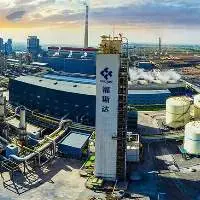
FORTUNE GAS innovated Large, Medium and Small Air Separation Unit, which was designed with low-pressure process. In operation, the advanced technics eliminated the high power consumption characteristic in conventional designs
Large-scale Air Separation Unit
Medium-scale Air Separation Unit
Small-scale Air Separation Unit
Rich Oxygen Unit
Nitrogen Generation Unit
Nitrogen Generation Units are designed and built with the highest standards of reliability and efficiency to meet customers various demands. The control system can be with remote control and full automation, if it is required by customers
Standard Air Separation Nitrogen Generator
Liquid Air Separation Unit
FORTUNE GAS adopted different process like air cycle process, nitrogen cycle process, low temperature refrigerating process etc. to reduce power consumption
Large-scale Liquid Air Separation Unit
Medium-scale Liquid Air Separation Unit
Small-scale Liquid Air Separation Unit
External Liquefaction Unit
How Does an Air Separation Unit Work?
At its core, the operation of an air separation plant involves transforming air into its constituent parts. Let's break down the process, often referred to as "air separation plant design":
Compression
Atmospheric air enters the ASU and is compressed. Fortune Gas, an innovator in this field, employs a low-pressure process that reduces energy consumption.
Purification
Impurities such as moisture (H2O) and carbon dioxide (CO2) are removed using a Pre-Purification Unit (PPU). This ensures that only clean, filtered air enters the next stage.
Cooling
The purified air is cooled to cryogenic temperatures using advanced heat exchangers, bringing it to a state where components can be separated based on their unique boiling points.
Separation (Distillation)
Inside the "ASU Cold Box," the core of an ASU, air components are separated through cryogenic distillation. For applications requiring advanced recovery, some systems are also capable of neon gas separation from ASUs, in addition to oxygen, nitrogen, and argon.