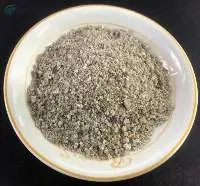
Our Sand filtration media is naturally clean and is helpful for applications like swimming
pools filtration, drinking, and wastewater filtration.
The sand media has an increased surface area that has a higher particulate holding
Keeping the diverse requirements of customers, we are providing filter silica sand.
Filter media is the portion of the filter bed that removes particulate matter from the water during the filtration process. Anthracite, silica sand and high-density sand. Properties of granular activated carbon when used as a filter media.
Sand or anthracite filter media used in a wide range of bed depths and particle sizes have produced satisfactory results. Selection of the bed depth or particle size to be use in any particular filter is the responsibility of the designer and should be done with careful consideration of raw water conditions and plant pretreatment facilities. In general, for a given pretreatment of raw water and at a given filtration rate, coarse media will permit longer filter runs between washings than fine media. With good pretreatment facilities and close technical control, coarse media will yield water of satisfactory quality. With all other conditions fixed, removal of particulate matter is a function of both media size and filter bed depth, and removal generally improves with greater filter depth or with smaller media size, or both.
Our affluent industrial knowledge helps us in presenting an extensive series of Filter Media Sand. Our products can also be customized as per necessities of our patrons.
Filter material, such as silica sand, high-density sand, granular activated carbon, or Anthracite, as well as support gravel, should be obtained from sources that are expressly qualified to produce and supply these materials for water treatment plants.
Our company holds immense experience in this domain and is involved in offering a wide assortment of Filter Media Sand.
Specification (Approx):
Calcium Content as Ca 0.16% to 0.30% maximum
Magnesium Content as Mg 0.10% to 0.20% maximum
Insoluble 0.40 % maximum
Sodium Chloride as NaCl 94.00% maximum
Moisture Content 4.00% maximum
Sulphate as SO4 0.48% maximum
We supply optimum quality of Quartz Sand which comprised of mineral quartz.
FILTER MEDIA SAND GRIT & GRAVELS
Our premium quality of quartz sand finds its use in glass making and for grinding and polishing metals. Some of its application areas include:
GGBS is a low-carbon hydraulic binder produced using a circular economy.
GGBS is an acronym for Ground Granulated Blast Furnace Slag, a by-product from the manufacture of Iron.
GGBS is an industrial by product that is diverted from landfill and up cycled into a commodity product. On exiting the iron processing system, molten blast furnace slag is rapidly quenched with water to form Granulated Blast furnace Slag (GBS). GGBS is produced by drying and grinding the GBS at normal cement Ball or VRM mills.
GGBS increases strength and durability, it is resistant to sulphates and chlorates, has an aesthetical appearance, providing a lighter shade and a superior finish.
A life cycle analysis of our GGBS has shown that it has a very low-carbon production process. it is currently the best low-carbon solution available on the market as a replacement for cement in concrete and other construction materials.
(GGBS) is a high-performance alternative to traditional cement that will increase the technical performance of concrete application, improve its appearance and minimize its environmental impact.
GGBS is used in combination with Portland cement to produce superior longer lasting concrete. A replacement rate of up to 70% is permitted by I.S EN 206-1.
2.Raw Material: High-quality anthracite produced in Shanxi, China;
3.Method: Selection, crushing, screening and other craft processes, washed anthracite;
4.Application: Undergoing a series of strict processing procedures, the anthracite coal produced by our company is widely used in the water treatment of chemical industry, metallurgy, pyroelectricity, pharmacy, papermaking, printing and dyeing and food industry.
Anthracite Filter Media application:
1. Purification treatment of general acid, neutral and alkaline water
2. Necessary water purification materials in a double and three water purification filter.
3.For water treatment of chemical industry,pharmacy, papermaking,printing,dyeing and food industry
4.For variety of filter machines,filtering pools, water supply equipment,reverse osmosis,desalination.
Product Description
Dust Collector innovative concept is about filtering media which is placed on the two sides of filtering groove, and suction nozzles mounted on the suction arms which are then driven by patented mechanism revolves for intermittent dust collection.
Its convincing advantages: compact, reliable, efficient & economical.
â??
Working principle: Electrical unit consisted of the first-stage disc pre-filter and the second stage multiple round cage dust-filter. The first stage filter is used to extract, separate, collect the fibrous dust in the processing air; The second stage filter is used to filter out the fine dust from the air exhausted from the first stage filter.
Cairo Minerals Offer the Silica sand with High Quality for horse racing track
High purity 96.7-99%
Natural sand100%
Dry sand no wet
High practical size Distribution
Rounded sand
Free of organic and impurities materials
Free of radiation
Free of toxic
Turbidity less than 100
No Dust
No heavy metals
Silica Sand for Artificial Grass
Cairo Minerals Offer High Graded and processed and sieved silica sand for artificial grass , which is natural grains, Silica sand is processed in our own screening plant after Extracting and transported to our site for screening, in our site we can grade and meet all required practical sizes according to FIFA.
The silica sand for artificial grass has become Hot Request in the last 5 years which means high World production of artificial grass,
and replaces natural grass.
FIFA has Encouraged and Recommended using Artificial grass instead of Natural grass,
for that Reason Silica sand has been ordered from many buyers,
included football federation, individual companies, Sports Clubs, landscaping, Houses.
Silica sand is used for Artificial Grass and football pitches,
beach volleyball, tennis court, tennis soccer.
What is common sizes of silica sand are normally used in filling artificial grass?
The sand is used for both tennis and football artificial turf and therefore 2 different granulation are used:
1. Tennis: sand 0,4-0,8 mm (should not exceed 1,00 mm in any case).
2. Football: 0,5-1,25 mm (should not exceed 1,50 mm in any case).
Generally, the silica sand granulation depend on the density of the synthetic grass, when the grass is quite dense ( more than 45000 stitches) we have to use the smaller granulation ( 0,5-0,7 mm) so that the sand can be placed into the grass pile when the grass is very dense, the sand cannot be placed inside In case of lower density ( soccer around 10 000 stitches), you can easily install the bigger granulation, but never higher then 1,5 mm ( even though some companies install even bigger but it is not according to any standards or international requests).
What is common sizes of silica sand are normally used in filling beach volleyball?
Silica Sand for beach volley, normally here simply use the Sand from the beach on seaside (I suppose that should be the same granulation as for football synthetic grass).
What is common sizes of silica sand are normally used in filling tennis court and tennis soccer?
I already explained above for both soccer and tennis.
How much quantity of silica sand can be filled per square meter?
As said earlier, always depending on the density of the grass and its height, we install different quantities.
For tennis, we install 12 kg/sqm on very dense and short grass (11 mm) and for less dense tennis grass with higher pile we install sometimes 25-30 kg/sqm.
For soccer, the things are more clear, we install from 18-25 kg/sqm, depends on the grass height.
Foundry Sand
High Quality and high deposit foundry sand since thousands of years with Huge Reserve in Egypt which available in ZAFARAN AND ABOU ZNIEMA and yellow silica sand with quality greater than 98$while the WITH Quality of 99.10% Sio2 with and Iron content average from 0.018% -0.0.35% with practical size Distribution from 0.075 mm 0.85 mm,its High Quality with high whiteness and Low Al 2o3 support high casting products which used by Best Car factories. High Frequency Vibrating Screen supports us to produce different fines which meet multi casting uses. Because we are in Egypt land of a large various of minerals, in al sharqeya, we have Brown Silica sand with Purity of 96.5%-97% SIO 2.
foundry sand
where to find white silica sand?
-White silica sand can be found in tow main places in Egypt
-South Sinai where Abou zenima port main port which most Exported silica sand to India, UAE ,Turkey
Zafrana quarries which far away from Cairo about 350 km
What is purity of white silica sand?
Sio 2 minimum 99%
Which AFS grades can graded from white silica sand?
In fact , White silica sand mostly AFS from AFS 45 AFS 55 as its grain size mostly from 0.075 mm 0.850 mm
Properties
High Strength and High RESISTANCE meets ASTM
Advantages
ISO 9001 Certified
High strength, superior casting finishes in all binder systems and metals
Foundry Sand Specifications
We can meet different AFS grades
processed from Abou zniema quarries and Sharqeya quarries
stored and Exported in Bulk shipment For Large Quantity from port ABOU ZNIEMA PORT (red sea port)
vessel of 5000-25000 M tons Max can be loaded the port of Abou zenima As Draft of the port 9.50 Meter
for orders of 1000 tons or less can be packed in big bags of 1250kg-1500kg
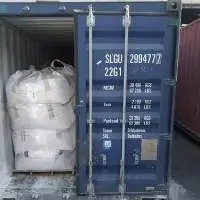
containers of 20 feet can be stuffed with 25-27 tons
Each container load about 20 big bags
big bags can be used in good condition or new upon customer Request
What is main Requirements of silica sand used in foundry?
Here Is What You Should Do For Your FOUNDRY Silica sand
Rounded silica sand
Sand Size Distribution
Chemical and Thermo Physical Properties
The Acid Demand Value test
Fines and Clay
Egypt is one of the best places which you can find the Highest and purist Quality Silica-sand, CairoMinerals offer Quality Products with Competitive Prices since 2004 but we are not only in the market, you can find many companies in Egypt as well deal with white silica-sand
What is silica sand ?
Silica (SiO2) sand is generally the sand which you can get all over a beach and it also happens to be the most commonly used sand. It is most commonly composed by either crushing sandstone or else it is most commonly taken from natural occurring points or locations, such as beaches and river beds. The fusion point of purest form of silica is 1,760 �°C (3,200 �°F), however the sands which is used for extraction of silica exhibits a lower melting point due to impurities. For casting which requires high melting point, such as steels, at least 98% pure should be used; however for metals having lower melting points, like cast iron and non-ferrous metals, the sand have low purity can be used (between 94 and 98% pure).
Silica-sand happens to be the most commonly used sand because it is found in abundance, and thus it costs low (therein being its greatest advantage). However there are some disadvantages of sand as well. The disadvantages of silica are high thermal expansion, which can result in casting defects in metals having high melting point, and low thermal conductivity, which can very easily result in defective casting. Apart from there that, there comes some more barriers with it. It also cannot be used in sync with some of the basic metals because it will chemically react with the metal, resulting in surface defects. Finally, it releases silica particles during the pour, risking silicosis in foundry workers.
Silica Sand for Sale
Commercial Silica-Sand is most commonly used as a means of proppant by companies which deals in oil and natural gas recovery in conventional and unconventional resource plays. The resource is also utilized in industrial processing to manufacture regular use items such as glass, construction materials, personal care materials, electronics, and even renewable materials.
Industrial sand happens to be a word which normally refers to silica-sand-products having extremely high purity with closely controlled sizing. It generally happens to be a clearer product than common concrete and asphalt gravels.
The name Silica (SiO2) is provided to a handful of minerals solely made up of silicon and oxygen. Mostly it is found in the crystalline state. It is also found in an amorphous form which comes as a result of weathering or plankton fossilization
Silica-sand deposits are generally mined and dig out in open pit processes. Extracted ore is subjected a lot of processing to enhance the silica content by reducing impurities. After that it is dried and sized to manufacture the best sized particle size distribution for the intended application.
Silica Sand for the water filtration
What do you know about filter sand and gravel
At first, we need to know where the idea of using sand and gravel in filtering process came from?
The idea of filtering water to obtain clean drinking water dates back to the Pharaonic Era, i.e. 4000 BC, where researchers found traces of a sand filter in Alexandria dating back to the year 50AD. This filter was used to filter water to obtain safe drinking water. Since then, the idea of using sand filters to treat surface water came to light, with the purpose of purifying such water to obtain safe drinking water.
At the beginning of the application of the theory of filtering by sand and gravel, slow sand filters were designed, where they were used extensively in England and Scotland. This was followed by the expanded use of slow sand filters about fifty years later in the United States of America.
In 1880, Patrick Clark developed the slow sand filter, increased the filtering rate and reduced the area of land used to construct filters in the United States of America, in particular the State of New Jersey. Developed sand filters with high filtering rates were called Rapid Sand Filters. Such filters were of great benefit in case of not using treatment by chemical clarification, which is followed by the sedimentation process.
After that, several types of filters were invented, as they were classified according to filtering rates, operating methods, direction of water flow and method of controlling the sedimentation process.
That's where the research started to know how to choose the filtering medium for filters, as many kinds of natural materials were used as a filtering medium, including:
Silica Sand
Anthracite Coal
Granet
Ilmenite
â?»After several experiments, it was found out that the first type, i.e. silica sand, is the most commonly used type in Egypt and it was brought from sand quarries, as it was found out that silica sand is cheap compared to other types and there are large quantities in Egypt.
When taking a sample of sand or gravel from any area in the quarry, we notice that it contains grains of different diameters.
In order to find out the percentage of components of sand sample on the basis of diameters, we use a set of sieves placed over each other to pass a specific weight of sand and know the weights of sand with different diameters in each sieve, in order to indicate the percentage of weights of sand grains with different diameters. This process is known as (testing sand grains by sieves). We will address this topic in detail in the next article, God willing.