General information
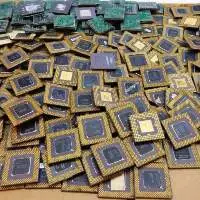
Type CPU / Microprocessor
Market segment Server
Family Intel Xeon
Model number E5640
CPU part number AT80614005073AB (SLBVC)
Box part number BX80614E5620 (SLBVC)
Frequency (MHz) 2667
Bus speed (MHz) 2933 MHz QPI
Package 1366-land Flip-Chip Land Grid Array (FC-LGA10)
Socket Socket 1366 (LGA1366)
Size 1.77" x 1.67" / 4.5cm x 4.25cm
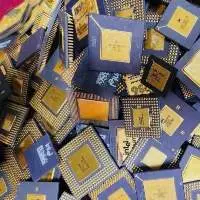
Material Composition Mixed ceramic & plastic CPUs (with/without pins)
Gold Content (Ceramic) ~0.25 to 1.0 grams per CPU (varies by model)
Gold Content (Plastic) ~0.05 to 0.15 grams per CPU
Palladium/Silver Content Present in trace amounts (optional recovery)
Weight per CPU ~25g to 45g (depends on type)
Ash Content (Post Burn) ~85-95% burn loss (for ceramic types)
Condition Used/Non-working; No batteries; No contaminants
Impurities No hazardous components (like mercury/cadmium)
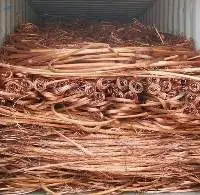
High Quality Cheap Copper Wire Scrap/Millberry 99.99% Copper Wire Scrap
1) Our copper scrap includes wires, tubes, and plates, etc.
2)The size is chips or other.
3) Copper content could meet customers need.
Application:
Electrical, light industry, machinery,national defense industry .
Copper Scrap is industry a important sources of the raw materials, all kinds of can be recycled Recycling waste production with copper
We export premium electronic scrap from Kenya, including CPUs, memory chips, and mixed circuit boards. Clean and processed for high-value metal recovery.
Server Scrap High-Grade Electronic Equipment for Precious Metal Recovery
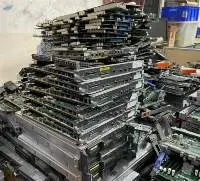
Our server scrap consists of decommissioned or obsolete server units sourced from data centers, IT infrastructure, and enterprise systems. These units contain a wide range of valuable components, including circuit boards, CPUs, memory modules, power supplies, and wiring, which hold recoverable precious and non-ferrous metals such as gold, silver, palladium, and copper.
The scrap is typically supplied as complete server units or dismantled components, depending on the requirement. Server scrap is considered high-grade electronic waste due to its higher concentration of valuable components compared to standard consumer electronics, making it highly suitable for professional recycling and metal recovery processes.
Key Features:
Sourced from enterprise and data center servers
Contains CPUs, motherboards, RAM, and internal components
Rich in recoverable precious metals (gold, silver, palladium)
Includes copper wiring and non-ferrous materials
Available as complete units or dismantled components
Sorted for efficient processing and recycling
High-value e-waste for precious metal recovery industries
Suitable for professional e-waste recycling and refining
Available in bulk for wholesale and export supply
Requires specialized handling and processing in certified facilities
Aluminum scrap refers to discarded aluminum materials that can be recycled to produce new aluminum products. It is a highly valued commodity due to its cost-effectiveness and environmental benefits, as recycling aluminum significantly reduces energy consumption and greenhouse gas emissions.
1. Product Overview
Aluminum scrap is sourced from various end-of-life products, manufacturing processes, and consumer goods. It can be categorized into different grades based on purity and form, including:
Type Description
Post-Consumer Scrap : Scrap is obtained from used products like cans.
Pre-Consumer Scrap
Scrap generated during manufacturing processes.
Dirty Alloys
Scrap that contains impurities or mixed alloys.
2. Recycling Process
The recycling of aluminum involves several steps:
Collection: Gathering scrap from various sources.
Sorting: Classifying scrap by type and quality.
Melting: Heating aluminum scrap to its melting point.
Casting: Forming new aluminum products from the molten metal.
3. Benefits of Recycling Aluminum
Energy Savings: Recycling requires only about 5% of the energy needed to produce new aluminum from ore.
Reduced Waste: Diverts scrap from landfills, promoting sustainability.
Economic Value: Recycled aluminum can be sold at a higher value compared to other recycled materials.
Heavy metal scrap consists of recyclable metals such as lead, copper, zinc, and nickel, which are collected from various sources including industrial waste, discarded machinery, and construction materials. These metals are critical for reuse in industries like automotive, construction, and electronics.
Product Overview:
Heavy metal scrap refers to used or discarded metallic materials, particularly those with high atomic weights or densities, such as lead, copper, zinc, and nickel. These metals are highly recyclable and play a vital role in reducing the need for new raw material extraction.
Features:
High Density: Heavy metals such as lead, copper, and zinc have significant weight and strength properties, making them suitable for various heavy-duty industrial applications.
Recyclability: Heavy metal scrap is widely reused in industries to create new products, minimizing environmental impact by conserving natural resources.
Applications:
Heavy metal scrap is extensively used in industries such as automotive, aerospace, construction, and electronics. It can be melted and reshaped into new parts, reducing production costs and energy consumption compared to new metal manufacturing.
Environmental Impact:
Recycling heavy metals significantly reduces the environmental footprint by minimizing mining activities and reducing hazardous waste from industrial processes.
Aluminium 6063, also known as architectural aluminum, is one of the most popular aluminum alloys for extrusion. This alloy is widely used for its excellent mechanical properties, corrosion resistance, and suitability for forming into complex shapes. Its ease of welding, heat treatability, and smooth finish make it a preferred choice in a variety of applications.
Composition and Alloying Elements
Aluminium 6063 is primarily composed of aluminum (Al) with two main alloying elements: magnesium (Mg) and silicon (Si). These form the intermetallic compound Mgâ??Si, which is crucial for its mechanical strength. Other trace elements may include iron (Fe), manganese (Mn), and chromium (Cr), which contribute to its extrudability and corrosion resistance.
Mechanical Properties
Aluminium 6063 is known for its moderate strength. It has a yield strength of around 290 MPa and a tensile strength ranging from 310 to 340 MPa. Though it is not as strong as other aluminum alloys like 6061, its mechanical properties make it ideal for structural applications where strength is secondary to appearance or corrosion resistance.
Corrosion Resistance
One of the defining characteristics of aluminium 6063 is its high resistance to corrosion. This is due to the presence of magnesium and silicon, which protect the material from oxidation and environmental damage. This makes it ideal for outdoor applications like window frames, door frames, and architectural finishes.
Thermal and Electrical Conductivity
Aluminium 6063, like other aluminum alloys, is an excellent conductor of heat and electricity. Its heat treatable properties allow it to be strengthened through processes like tempering, making it suitable for heat exchangers, radiators, and electronic applications.
Applications of Aluminium 6063
Extrusion: Aluminium 6063 is widely used in extruded profiles such as rods, bars, and tubes. It is the preferred alloy for producing complex shapes due to its excellent extrudability.
Construction: Known for its appearance and durability, 6063 is used extensively in architectural applications like window frames, curtain walls, and other building components.
Automotive and Aerospace: Its lightweight properties and corrosion resistance make it a viable option for non-critical structural components in vehicles and aircraft.
Used aluminium car engine scrap is recyclable and in demand for manufacturing industries. It consists primarily of aluminium engine blocks from old or discarded cars, often sold in bulk. This material is ideal for companies seeking affordable and eco-friendly sources of aluminium
Used aluminium car engine scrap refers to discarded engine blocks from automobiles, made primarily from cast aluminium. These scraps are an excellent resource for recycling due to the high aluminium content, which is both lightweight and durable. Aluminium scrap is used extensively in automotive, aerospace, and other industrial manufacturing processes. The scrap is usually free of contaminants and sold in large quantities, such as 5 to 25 metric tons, making it a cost-effective solution for businesses needing raw aluminium material.
Cathode copper refers to high-purity copper produced through the electrolytic refining process. Cathode copper is characterized by its high electrical conductivity, excellent thermal conductivity, and good formability.
Standard: ASTM, GB, DIN, BS, EN, JIS
We have copper wire scrap in Large quantity we are ready and able to supply 2000Mt a month and more. our copper wire scrap is 99.78% pure. quality brass wire