Product Description
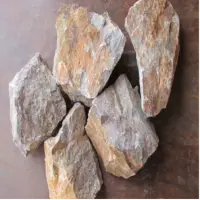
Barite, or baryte, (BaSO4) is a mineral consisting of barium sulfate. The baryte group consists of barite, celestine, anglesite and anhydrite. Barite itself is generally white or colorless, and is the main source of barium. Barite and celestine form a solid solution (Ba,Sr) SO4.
Barite occurs in a large number of depositional environments, and is deposited through a large number of processes including biogenic, hydrothermal, and evaporation, among others. Barite commonly occurs in lead-zinc veins in limestones, in hot spring deposits, and with hematite ore. It is often associated with the minerals anglesite and celestine. It has also been identified in meteorites.
Some 77% worldwide is used as a weighting agent for drilling fluids in oil and gas exploration to suppress high formation pressures and prevent blowouts. As a well is drilled, the bit passes through various formations, each with different characteristics. The deeper the hole, the more barite is needed as a percentage of the total mud mix. An additional benefit of barite is that it is non-magnetic and thus does not interfere with magnetic measurements taken in the borehole, either during logging-while-drilling or in separate drill hole logging. Barite used for drilling petroleum wells can be black, blue, brown or gray depending on the ore body. The barite is finely ground so that at least 97% of the material, by weight, can pass through a 200-mesh (75-pm) screen, and no more than 30%, by weight, can be less than 6 pm diameter. The ground barite also must be dense enough so that its specific gravity is 4.2 or greater, soft enough to not damage the bearings of a tricone drill bit, chemically inert, and containing no more than 250 milligrams per kilogram of soluble alkaline salts.